








West Point Gold Corp. (TSX-V: WPG) (OTCQB: WPGCF) (FSE: LRA0) is pleased to announce step-out drill results from the high-grade Northeast Tyro Zone at its flagship Gold Chain Project in Arizona. Grades continue to remain strong as evidenced in hole GC26-140, where an 18.3 metre interval grading 6.05 grams per tonne gold was returned. Holes reported herein represent step-outs of up to 140m to the northeast of previously reported results. High-grade mineralization intersected has now increased the volume of mineralization by adding over 100m along strike and 100m to depth. The high-grade NE Tyro Zone has a strike extent of over 400m and projects to greater than 300m depth while still remaining open in all directions. To date, 17,536m of the ongoing drill program at the Gold Chain project has been completed. Results are pending from the Tyro Main Zone, NE Tyro, Bull 8 and Black Dyke targets, representing 29 holes (5,424m).
Highlights:
“The continued expansion of the high-grade zone at NE Tyro bodes well for the maiden resource. Additionally, as this zone expands towards the Frisco Graben, it increases the probability of the Frisco Graben hosting a gold deposit. It appears that the consistency of grade and structure, both along strike and at depth, suggests that we are unlikely to close off this zone with the planned maiden resource later this year. We continue to be on track to complete the ongoing 20,000m drill program at Gold Chain in Q2 this year and have results pending from multiple zones, including the depth extensions of Tyro and two step-out targets”, stated Derek Macpherson, President and CEO.
Table 1: Drill Results
| Holes | From (m) | To (m) | Width (m) | Grade (g/t Au) |
| GC26-140 | 181.4 | 199.6 | 18.3 | 6.05 |
| Including | 181.4 | 187.5 | 6.1 | 13.46 |
| GC26-145 | 214.9 | 243.8 | 28.9 | 1.22 |
| GC26-147 | 283.5 | 295.8 | 12.2 | 1.68 |
| Including | 285.0 | 286.5 | 1.5 | 7.83 |
| GC26-151 | 167.6 | 202.7 | 35.1 | 2.23 |
Note: All widths shown are downhole; true widths are approximately 60-95% of downhole widths.
Figure 1: Plan View of the NE Tyro Vein, Frisco Mine Fault and Frisco Graben Showing Geology and Drilling Conducted in 2021, 2023, 2024, 2025, and 2026. Note the Location of Hole Nos. GC26-140, GC26-145, GC26-147, and GC26-151.
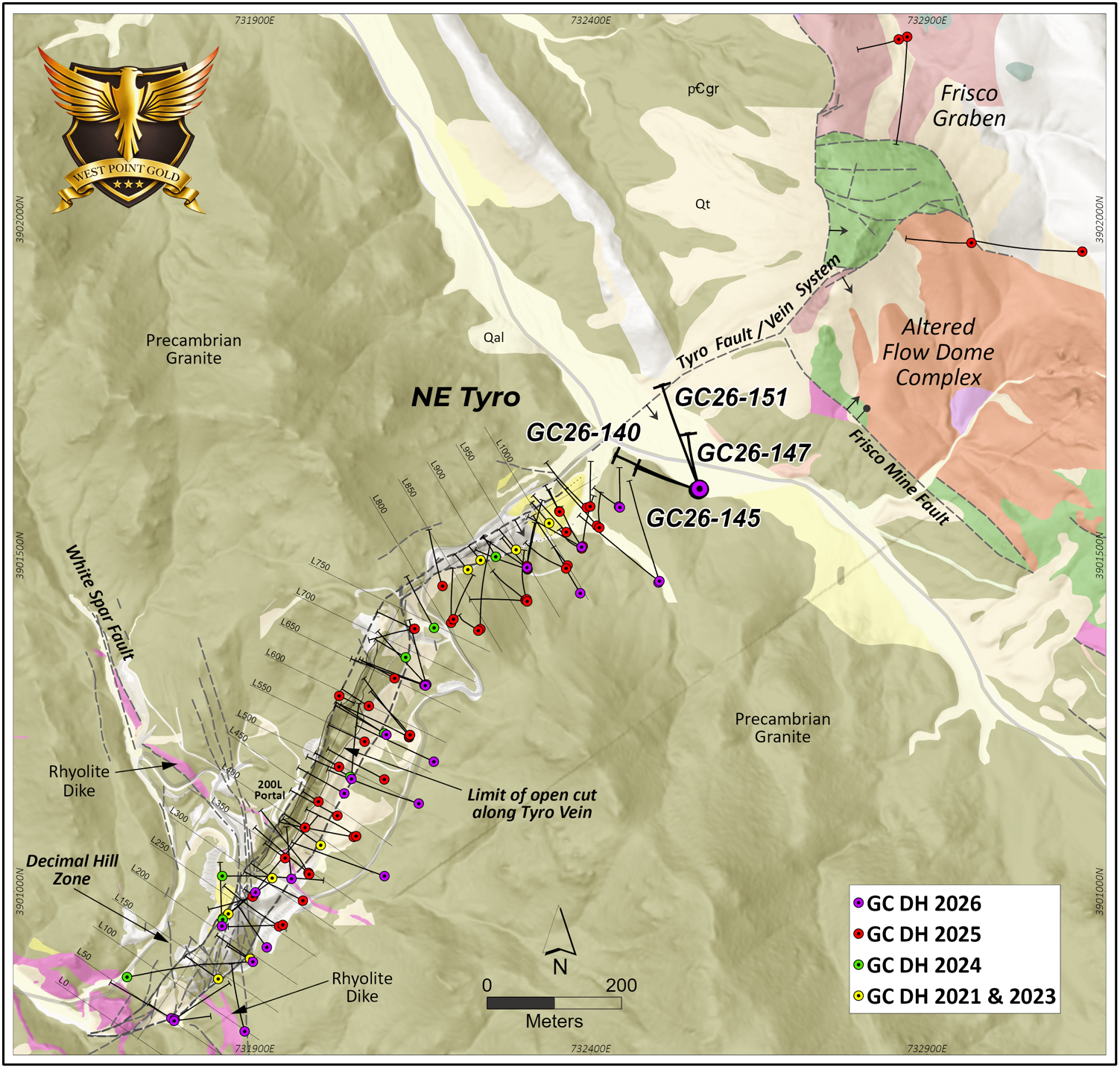
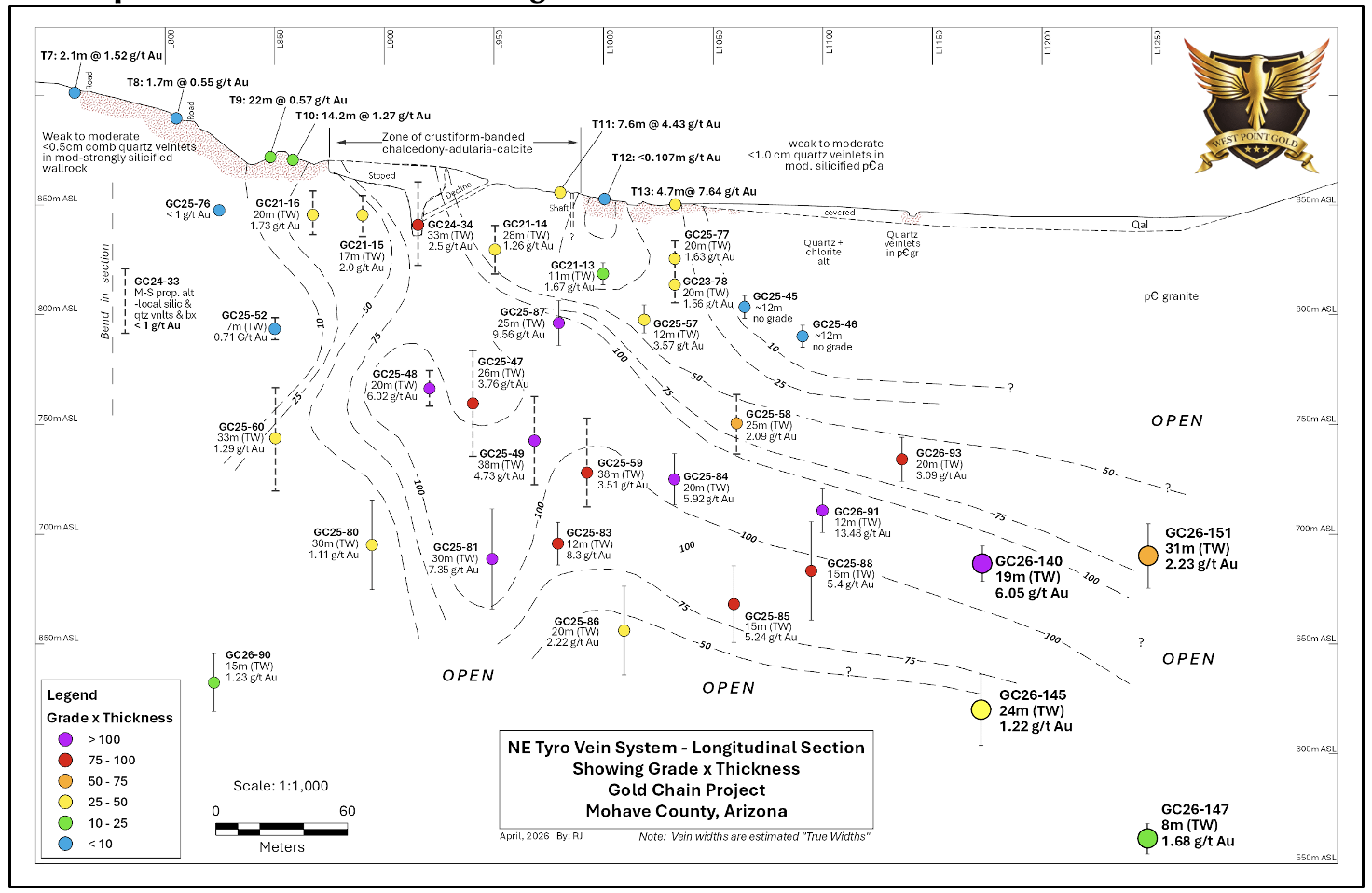
Figure 2. Longitudinal Section Along the NE Tyro Zone Showing Drill Hole Pierce Points, Estimated True Width and Intercept Grade. Grades are Colour Coded to Better Illuminate the Shape and Orientation of the High-Grade Zone.
Summary
Holes GC26-140, GC26-145, GC26-147, and GC26-151 have extended the partially defined NE Tyro vein system about 140m to the northeast and considerably closer to the Frisco Mine fault and the strongly altered flow domes and associated volcanic rocks of the Frisco Graben (Figure 1). The four holes comprising this release represent 1,196m of RC drilling along two drill profiles (Figures 3 and 4).
Each hole is briefly described below and graphically presented in both sectional and longitudinal views. Additionally, Figure 2 is a generalized longitudinal view of the NE Tyro zone showing the intercept’s mid-point, composite gold grade and estimated true width based upon geologic sections. The core of this zone is supported by a grade x thickness (GT) estimate of greater than 50 (max. is 239) and remains mostly open to the northeast, up-dip and to depth. Figure 2 indicates that considerable drilling will be required to fully define the mineralized zone.
These holes are notably important to West Point Gold and represent an aggressive step-out owing to receipt of the Exploration Plan of Operations (POO #1). The identification of a broad zone of quartz veining and breccia in all four holes confirms vein continuity and carries exploration closer to the extensive areas of steam-altered felsic flow domes of the Frisco Graben. Drilling conducted by the Company in the Frisco Graben in 2025 identified broad expanses of strong kaolinite-silica-iron oxides, leading to the conclusion that suspected gold mineralization is likely deeper in the system. This remains likely, but current drilling in the footwall of the Frisco Mine fault is carrying gold values toward a potential ‘front door’ of this prospective environment.
Drilling is ongoing at the Tryo Main zone with one rig chasing the veining to depth along the entire strike length. Two drills are currently operating in the NE Tyro zone in an effort to push the limits of gold mineralization down-dip from surface vein exposures and laterally to the northeast. These efforts will continue through May and will likely exceed West Point Gold’s planned 20,000m drill program.
Holes GC26-140 and GC26-145
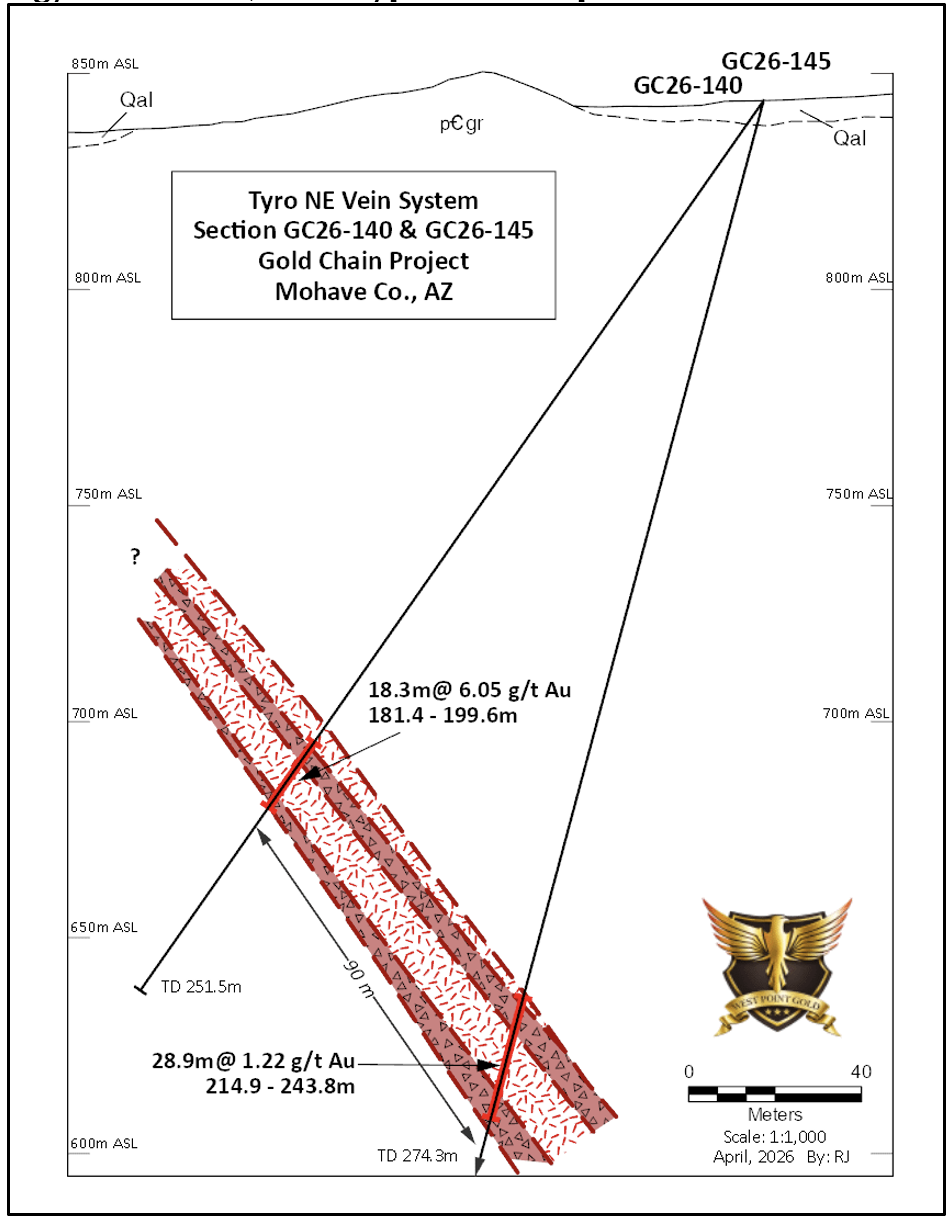
Hole GC26-140 was drilled from outside of the Tyro patented claims (Figure 1) and was designed to offset hole GC26-93 which contained 30.5m of 3.09 g/t Au at about 120m below the surface. Hole GC26-140 encountered the high-grade zone at about 150m below the surface which assayed 6.05 g/t Au over 18.3m (181.4-199.6m) in a split vein complex (Figure 3). Any surface expression related to this mineralization is concealed by a broad valley floored by alluvium.
Hole GC26-145, drilled from the same site at GC26-140, traversed the vein complex about 80 metres down-dip (Figure 3) cutting a broader, but lower grade, vein complex with vein/hydrothermal breccia in both the hanging wall and foot wall portions of the vein. The veining occurred at 214.9 to 243.8m hosting 1.22 g/t Au over 28.9m. It is notable that Figure 3 reveals a flattening in the vein system where a 50-degree inclination can be observed versus greater than 70 degrees in sections to the SW and NE.
Figure 3. Geologic Section Drawn Along Holes GC26-140 and GC26-145 Showing Interpreted Geology of the Vein, Vein Type and Composited Gold Values.
Holes GC26-147 and GC26-151
Hole GC26-147 was drilled from the same site as holes GC26-140 and GC26-145, but targeted the Tyro structural corridor further to the north, toward the intersection of the Tyro vein and the Frisco Mine fault. Hole GC26-147 was designed to test the vein about 300m below the surface (Figure 4) and beneath the broad, alluvium-filled valley. The hole encountered a broad zone of quartz veining hosting a more restricted interval hosting 12.2m at 1.68 g/t Au between 283.5-295.8m, including 1.5m of 7.83 g/t Au.
This hole was followed up by hole GC26-151, which traversed the vein system about 130m up-dip (Figure 4), consisting of a broad interval of quartz veinlets with narrow veins or breccia bodies. From 167.6 to 202.7m, the veined interval contained 2.23 g/t Au over 35.1m. This interval is about 150m below the surface, where the Tyro vein system has been projected into the Frisco Graben. Albeit subtle, local outcrop exposures in this area contain minor quartz veinlets in strongly propylitized granite, consistent with drill results. Additional drilling will try to define this broad, low-grade zone closer to the surface.
Figure 4. Geologic Section Drawn Along Holes GC26-147 and GC26-151 Showing Interpreted Geology of the Vein, Vein Type and Composited Gold Values.
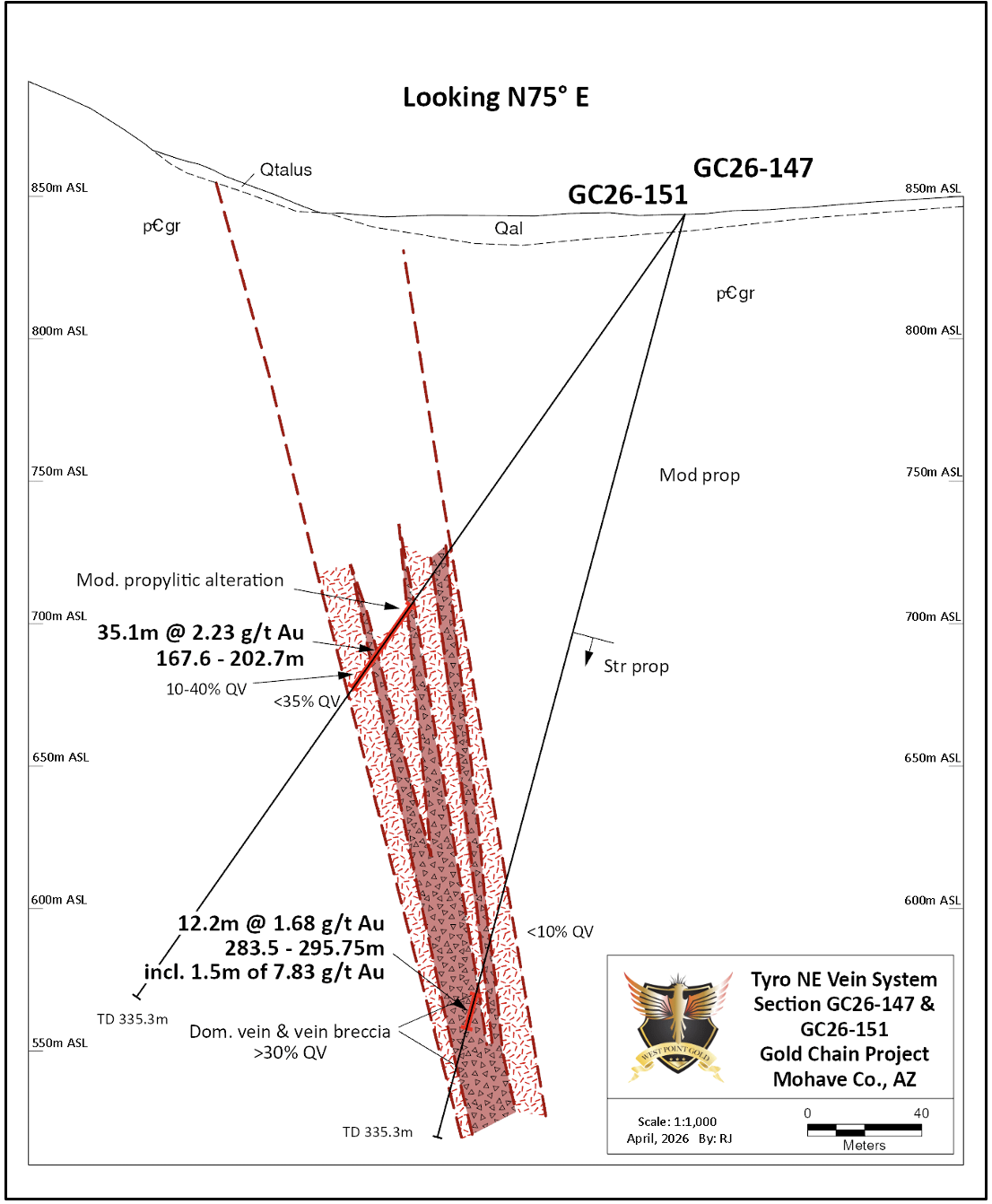
Table 2: Drill Hole Locations and Descriptions
| Hole No. | Azimuth (degrees) | Inclination (degrees) | Easting | Northing | Length |
| GC26-140 | 290 | -55 | 732,559 | 3,901,597 | 251.5 |
| GC26-145 | 290 | -75 | 732,560 | 3,901,597 | 274.3 |
| GC26-147 | 340 | -75 | 732,562 | 3,901,598 | 335.3 |
| GC26-151 | 340 | -55 | 732,562 | 3,901,599 | 335.3 |
Qualified Person
Robert Johansing, M.Sc. Econ. Geol., P. Geo., the Company’s Vice President, Exploration, is a qualified person as defined by NI 43-101 and has reviewed and approved the technical content of this press release. Mr. Johansing has also been responsible for overseeing all phases of the drilling program, including logging, labelling, bagging and transport from the project to American Assay Laboratories of Sparks, Nevada. Drillholes have a diameter of about 10cm, and samples have an approximate weight of 5 to 10kg. Samples were then dried, crushed and split, and pulp samples were prepared for analysis. Gold was determined by fire assay with an ICP finish, and over-limit samples were determined by fire assay and gravimetric finish. Silver plus 15 other elements were determined by Aqua Regia ICP-AES (IM-2A16), and over-limit samples were determined by fire assay and gravimetric finish. Both certified standards and blanks were inserted on site along with duplicates, standards and blanks inserted by American Assay. The results summarized above have been carefully reviewed with reference to the QA/QC results. Standard sample chain of custody procedures were employed during drilling and sampling campaigns until delivery to the analytical facility.
About West Point Gold Corp.
West Point Gold is an exploration and development company focused on unlocking value across four strategically located projects along the prolific Walker Lane Trend in Nevada and Arizona, USA, providing shareholders with exposure to multiple discovery opportunities across one of North America’s most productive gold regions. The Company’s near-term priority is advancing its flagship Gold Chain Project in Arizona.
For further information regarding this press release, please contact:
Aaron Paterson, Corporate Communications Manager
Phone: +1 (778) 358-6173
Email: info@westpointgold.com
Stay Connected with Us:
LinkedIn: linkedin.com/company/west-point-gold
X (Twitter): @westpointgoldUS
Facebook: facebook.com/Westpointgold/
Website: westpointgold.com/
Brutus Mining Inc. (CSE: BRU) (FSE: ZI3) is pleased to announce that it has closed its non-brokered ... READ MORE
Jaguar Uranium Corp. (NYSE American: JAGU) is pleased to announce an independent Mineral Resource E... READ MORE
Auro Metals Inc. (TSX-V: AURO) (OTCQB: AURFF), is pleased to announce the assay results of the fina... READ MORE
Endeavour Silver Corp. (NYSE: EXK) (TSX: EDR) is pleased to announce that repairs to the primary bal... READ MORE
Scorpio Gold Corp. (NASDAQ: SGLD) (TSX-V: SGLD) (OTCQB: SRCRF) (FSE: RY9) is pleased to announce re... READ MORE