






The Garneau Titanium Project Features Ilmenite-Rich Boulder with Grab-Sample Assays of 65.1% Fe₂O₃, 32.4% TiO₂, and 2,260 ppm Vanadium
SAGA Metals Corp. (TSX-V: SAGA) (OTCQB: SAGMF) (FSE: 20H), a North American exploration company focused on critical mineral discoveries, is pleased to announce that it has completed the acquisition from Rio Tinto Exploration Canada Inc of a 100% interest in the Garneau project comprised of 120 claims covering 6,450.54 hectares located near Havre-Sainte-Pierre, Quebec. RTEC is a Canadian subsidiary of the Rio Tinto Group (NYSE: RIO) (LSE: RIO) (ASX: RIO).
Garneau Project Highlights
Michael Garagan, CGO & Director of SAGA Metals commented:
“The acquisition of the Garneau Project from Rio Tinto marks a significant strategic advancement for SAGA Metals. We have secured a highly prospective titanium asset in Quebec’s premier ilmenite district, located in the same anorthosite complex as Rio Tinto’s world-class Lac Tio operation. The geophysical signature on the Garneau property represents a clear target for further exploration. Not only does the geophysical signature display a basin-like morphology directly comparable to Lac Tio, but a massive, ilmenite-rich boulder returning a sample of 32.4% TiO₂ is a very encouraging start to the project.
We are equally excited by the major infrastructure advantages now in place, including the recently completed Romaine hydroelectric complex and the new Hydro-Québec access road located only 4.5 km from the property. This rare combination of exceptional geology and modern regional infrastructure has all t he hallmarks of the Radar Project—significantly enhancing the project’s potential and adding the growing Ti complex benefiting SAGA’s shareholders.”
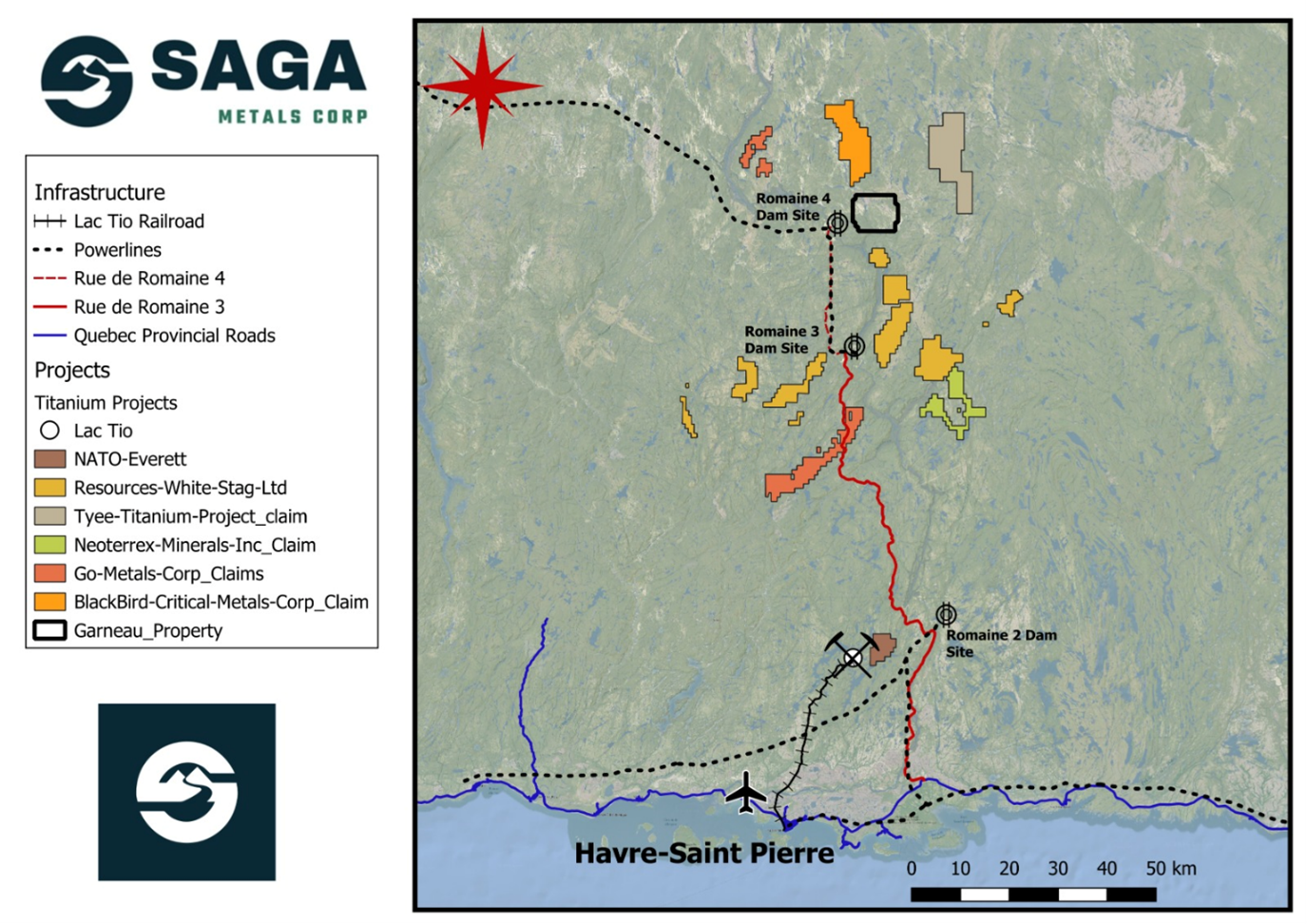
Figure 1: Garneau Titanium Property Location Map
Geology
The Garneau Project is within Havre-Saint-Pierre Anorthosite Complex of Quebec, a globally significant titanium-bearing district. The region hosts Rio Tinto’s renowned Lac Tio Mine deposit, one of the highest-grade hard rock titanium operations globally [1].
The Havre-Saint-Pierre anorthosite suite, located within Québec’s Grenville Province, is a globally recognized geological setting for magmatic iron–titanium (Fe–Ti) oxide mineralization. Formed during Mesoproterozoic AMCG (anorthosite–mangerite–charnockite–granite) magmatism, the suite hosts a range of ilmenite- and hemo-ilmenite-dominated deposits, including the world-class Lac Tio operation.
Mineralization in the district occurs as massive ilmenite bodies, as well as layered or disseminated Fe–Ti–P systems containing associated vanadium and apatite. This well-established metallogenic environment underpins the strong exploration potential of the region, where large-scale geophysical anomalies and ilmenite-bearing occurrences are considered indicative of prospective Fe–Ti oxide systems.
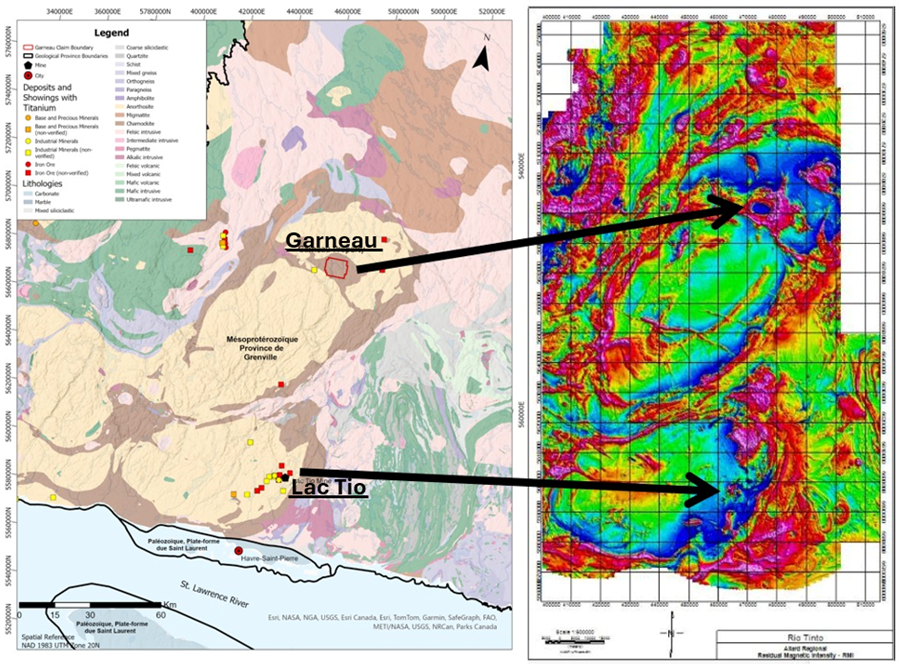
Figure 2: Regional Residual Magnetic Intensity (RMI) (RTX 2022 Assessment Report) Geophysical map showing comparative targets of Lac Tio & Garneau Titanium
The Garneau Target: Exceptionally Intense Magnetic Anomaly
The Garneau Project is in an area of covered by a mantle of glacial till and sediment, covering over 85% of the project area. Outcrops are sparse. Airborne geophysical surveys by Rio Tinto detected a large and coherent magnetic anomaly. Exploration has outlined a distinctive ovoid-shaped magnetic low measuring approximately 4.5 km by 7.5 km, positioned along the central axis of the anorthosite complex—an environment considered highly prospective for ilmenite-bearing systems.
Lac Tio is the clearest analogue. Québec governme nt work describes the Lac Tio hemo-ilmenite orebody as producing sharply defined negative magnetic anomalies, with magnetic intensity about 3,500 gammas below the surrounding rocks, and attributes that negative response to the orebody’s own magnetic polarization/remanence. More recent work on Allard Lake hemo-ilmenite also emphasizes the high and stable natural remanent magnetization of these ores.
Lac Tio, currently in production, produces ore that is 60-80% hemo-ilmenite [2]. Titanium is the main commodity mined, however iron and REEs like Scandium (Sc) are economic byproducts. The minable horizon at Lac Tio is a about 1 km wide by 150-300 m thick, funnel shaped mass of hemo-ilmenite within anorthosite.
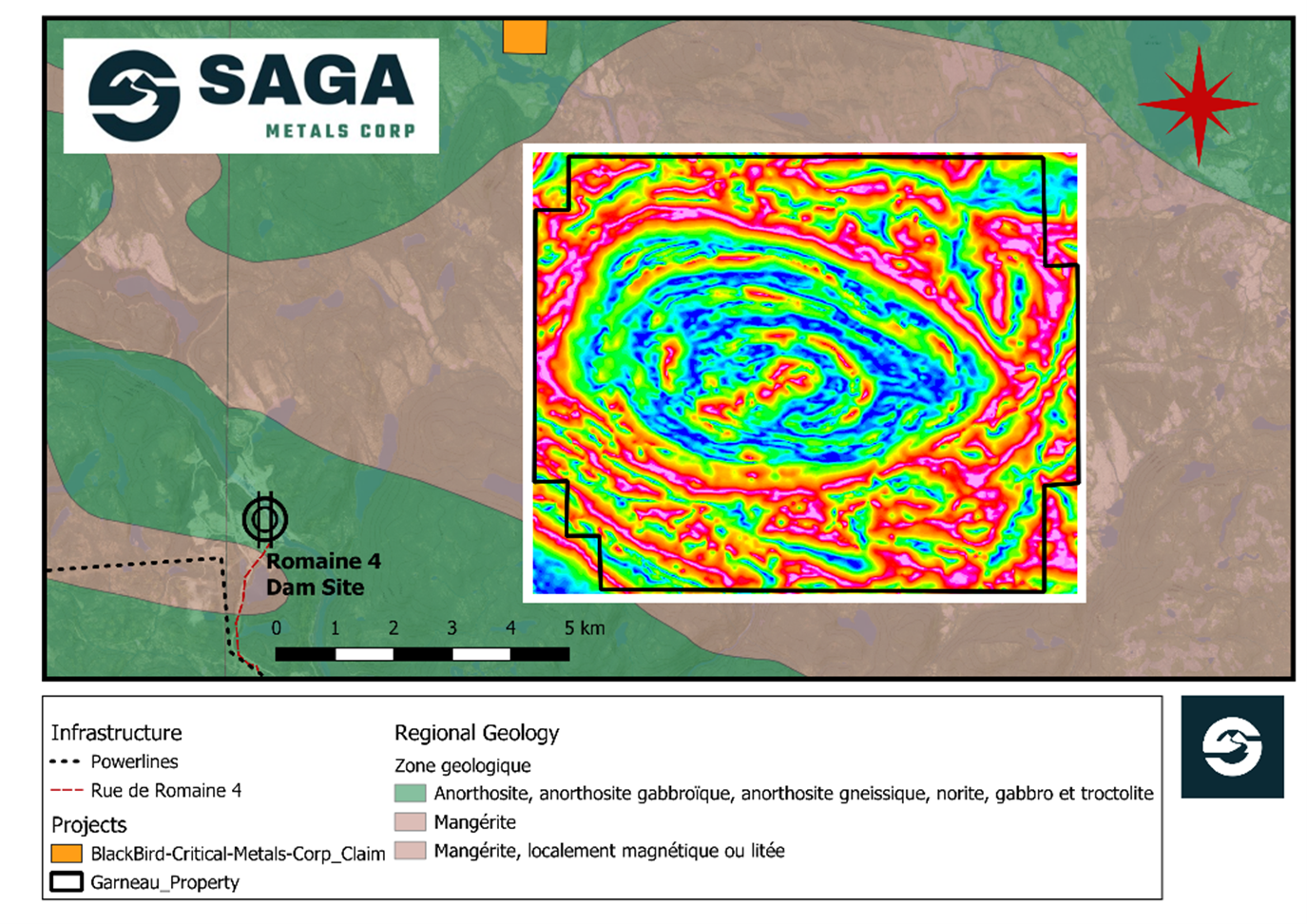
Figure 3: Derivative geophysics of the Garneau Titanium Project Anomaly. (2022 Rio Tinto)
Drill Testing Recommended by Rio Tinto’s Garneau Report
Drilling is required to determine the source, continuity, and economic potential of the magnetic low and to confirm whether the high-grade boulder reflects a larger mineralized body at depth. The working interpretation is that Garneau may represent the same kind of remanence-dominated Fe–Ti oxide target. Garneau’s magnetic low should not be read as a lack of magnetism; in this district, it can be exactly the sort of signature associated with major hemo-ilmenite bodies such as Lac Tio.
Confirmation of titanium potential of the intense magnetic response came during the initial follow-up mapping and sampling work that discovered a boulder of massive h emo-ilmenite, grading 65.1% Fe₂O₃, 32.4% TiO₂, and 2,260 ppm vanadium.
The Rio Tinto Garneau report notes that surface work is limited by the glacial cover. The report recommends that the next phase of work should focus on drill testing. Specifically, it states that drilling should be carried out in several areas of the large magnetic feature to obtain better geological and structural information and to seek the source of the ilmenite boulder found on the property.
Rio Tinto’s History at the Garneau Project
The Garneau Project was assembled by Rio Tinto as part of a broader exploration strategy targeting iron–titanium (Fe–Ti) mineralization within the Havre-Saint-Pierre anorthosite suite, a globally significant district that hosts deposits such as Lac Tio.
In 2022, Rio Tinto completed a first-pass exploration program consisting of airborne magnetic and Versati le Time Domain Electromagnetic (VTEM) Survey, 747 line-km with additional field work, mapping and sampling. This work defined a large, coherent circular magnetic low measuring approximately 4.5 km by 7.5 km, interpreted as a significant geological feature within the anorthosite complex.
After the geophysical work, fieldwork located a large, massive ilmenite boulder, confirming the presence of Fe–Ti mineralization within the system. The top grab sample (40483102) was a massive ilmenite-rich boulder, of solid oxide. The boulder returned assays of 65.1% Fe2O3, 32.4% TiO2, and 2260 ppm vanadium [3].
At the conclusion of Rio Tinto’s work, the Garneau Project remained at an early exploration stage, with no drilling completed and limited bedrock exposure across the property. While the source of the magnetic anomaly was not identified, the scale, geometry, and geological context of the feature led to its classification as a high-priority d rill target. Rio Tinto’s program effectively advanced the property from regional targeting to a defined, drill-ready opportunity, leaving the key test of subsurface mineralization to future exploration.
The Havre-Saint-Pierre Titanium District and Rio Tinto’s Lac Tio Mining Operation
The Havre-Saint-Pierre district on Québec’s North Shore is one of North America’s most significant titanium mining regions, anchored by Rio Tinto’s Lac Tio mine, located approximately 43 kilometres northeast of the town. Lac Tio is widely recognized as the largest hard-rock ilmenite deposit in the world and serves as the upstream cornerstone of Rio Tinto’s Québec iron and titanium operations [2].
The mine benefits from an established logistics chain in which ore is processed on site, transported by rail to Havre-Saint-Pierre, and then shipped into Rio Tinto’s broader Québec processing network, cre ating a rare combination of scale, operational continuity, and integrated industrial infrastructure.
The significance of Lac Tio is reinforced by both its scale and its longevity. Exploration in the Allard Lake–Havre-Saint-Pierre area accelerated during the 1940s, the Lac Tio orebody was identified in 1946, and production began in 1951 following construction of rail infrastructure linking the mine to the coast [5]. More than seventy years of continuous operation have established Lac Tio as one of the world’s defining hard-rock titanium mines and a clear demonstration of the district’s capacity to support long-life, large-scale extraction and transport of ilmenite ore. Today, the operation remains an important part of Rio Tinto’s global titanium feedstock supply chain and continues to underpin the district’s industrial relevance.
Beyond the producing mine, the broader Havre-Saint-Pierre area remains highly prospective because Lac Tio sits within a larger anorthosite-hosted mineralized system rather than an isolated occurrence. The district has long been recognized for iron-titanium oxide mineralization, which continues to attract exploration and claim staking by companies including Eureka, Go Metals, Blackbird Critical Metals, and North Atlantic Titanium. These projects vary in stage and focus, ranging from district-scale titanium-vanadium targeting to historically explored hard-rock ilmenite ground near Lac Tio, but collectively they reflect continued confidence in the wider geological corridor surrounding the operation [6].
Well-Developed Regional Infrastructure
The Garneau Project is located near the Romaine hydroelectric complex (Complexe hydroélectrique de la Romaine), a major $7.4 billion (CAD) project developed by Hydro-Québec on the Romaine River in the Côte-Nord region of Quebec, Canada, north of Havre-Saint-Pierre. It consists of four generati ng stations (Romaine-1, -2, -3, and -4) with a total installed capacity of 1,550 MW and average annual output of 8.0 TWh. Construction began in 2009, marking one of Quebec’s largest hydro developments since James Bay. The full complex was officially inaugurated in October 2023 [4].
A defining strength of the district is its infrastructure base, which is considerably more advanced than that of many northern exploration camps. Havre-Saint-Pierre functions as the coastal logistics hub for the region, supported by established rail access from Lac Tio and marine access along the North Shore. Together, the existing mine-rail-port network, access to reliable low-carbon electricity, and the presence of a long-standing world-class operation give the Havre-Saint-Pierre district a strong foundation for continued mining activity and future development.
Terms of the Acquisition
Pursuant to a termination agreement dated Marc h 26, 2026 between SAGA and RTEC and a transfer agreement dated March 26, 2026 between SAGA and RTEC, RTEC assigned the Garneau Project to the Company in lieu of RTEC incurring certain exploration expenditures in the amount of $434,298 which RTEC was otherwise required to incur on SAGA’s Legacy Lithium Project in the James Bay Lithium District on or before February 28, 2026 pursuant to the option to joint venture agreement dated June 28, 2024 between SAGA and RTEC.
In addition to the Acquisition, pursuant to the terms of the Agreements:
Corporate Update
The Company has entered into an amending and termination agreement dated March 23, 2025 between SAGA and an arm’s length creditor. The Amending Agreement terminates the debt settlement agreement between the Company and such creditor, as announced in SAGA’s news release dated January 13, 2026, and provides that Saga will its settle outstanding indebtedness to the creditor in the amount of $178,750 by a cash payment of $140,946. The Debt accrued from the purchase of two vehicles used for exploration on the Company’s properties.
The Company has also terminated its engagement of Equity.Guru Media Inc. to provide digital media and inve stor engagement services, as announced in SAGA’s news release dated January 29, 2026.
Qualified Person
Paul J. McGuigan, P. Geo., an “independent qualified person” as defined under National Instrument 43-101 Standards of Disclosure for Mineral Projects has reviewed and approved the scientific and technical information disclosed in this news release.
About SAGA Metals Corp.
SAGA Metals Corp. is a North American mining company focused on the exploration and discovery of a diversified suite of critical minerals that support the North American transition to supply security. The Radar Ti-V-Fe Project comprises 24,175 hectares and entirely encloses the Dykes River intrusive complex, mapped at 160 km² on the surface near Cartwright, Labrador. Exploration to date, including 4,250 m of drilling, has confirmed a large, mineralized layered mafic intrusion hosting vanadiferous titan omagnetite (VTM) and ilmenite mineralization with strong grades of titanium and vanadium.
The Double Mer Uranium Project, also in Labrador, covers 25,600 hectares and features uranium radiometrics that highlight an 18km east-west trend, with a confirmed 14km section producing samples as high as 0.428% U3O8. Uranium uranophane was identified in several areas of highest radiometric response (2024 Double Mer Technical Report).
Additionally, SAGA owns the Legacy Lithium Property in Quebec’s Eeyou Istchee James Bay region. This project, developed in partnership with Rio Tinto, has been expanded through the acquisition of the Amirault Lithium Project. Together, these properties cover 65,849 hectares and share significant geological continuity with other major players in the area, including Rio Tinto, Winsome Resources, Azimut Exploration, and Loyal Metals.
With a portfolio spanning key commodities critical to the clea n energy future, SAGA is strategically positioned to play an essential role in critical mineral security.
Brutus Mining Inc. (CSE: BRU) (FSE: ZI3) is pleased to announce that it has closed its non-brokered ... READ MORE
Jaguar Uranium Corp. (NYSE American: JAGU) is pleased to announce an independent Mineral Resource E... READ MORE
Auro Metals Inc. (TSX-V: AURO) (OTCQB: AURFF), is pleased to announce the assay results of the fina... READ MORE
Endeavour Silver Corp. (NYSE: EXK) (TSX: EDR) is pleased to announce that repairs to the primary bal... READ MORE
Scorpio Gold Corp. (NASDAQ: SGLD) (TSX-V: SGLD) (OTCQB: SRCRF) (FSE: RY9) is pleased to announce re... READ MORE