







MAS Gold Corp. (TSX-V: MAS) is delighted to announce the results from the remaining thirty drill holes from its successful 2022 winter diamond drill program in the La Ronge Gold Belt, Saskatchewan.
These results include twenty-two holes from the North Lake Deposit (Figure 2), four holes from the Point Deposit (Figure 3), and four holes from the Preview SW Property (Figure 4).
Discussion and Highlights of these 30 Winter Hole Drill Results:
North Lake Deposit:
The results from these remaining twenty-two diamond drill holes at the North Lake deposit are highlighted by high-grade mineralization in the most southern hole of 8.79 grams per tonne (g/t) gold over three meters (m) in diamond drill hole (DDH) NL22-101 (Table 1).
Drill hole, NL22-101, confirms the extension of the North Lake Deposit and intersected some of the highest assay results recorded at the deposit of 8.79 g/t gold over 3m and 7.00 g/t gold over 1m. Further evaluation of NL22-101 is planned to assist in developing an exploration strategy to follow up the high-grade results.
The systematic infill drill program successfully intersected near-surface gold mineralization, less than 50 m below surface. Infill drilling returned a substantial number of drill core intervals with results above the cut-off grade of the current North Lake Resource Model. Data from these results will be used to upgrade the North Lake deposit resource model with a focus on near surface mineralization with open pit potential. An upgraded resource on the North Lake deposit brings it one step closer towards mine development.
Point Deposit:
Results from these remaining four holes show an extension of the Point Deposit by an estimated 295m to the south as well as down dip extension of the deposit.
Drill hole RM22-060 (Figure 3) intersected 3.00 g/t gold over 4.9 meters, including 6.65 g/t gold over 0.8 meters 295m along strike to the south of the historic drill hole RM85-019 in the Point Deposit. Drill hole RM22-060 is a notable discovery and confirms the potential to significantly expand the Point Deposit.
Drill hole RM22-057 successfully extended down dip mineralization at Point Deposit. Multiple mineralized zones were intersected highlighted by 8.60 g/t gold over 2m including 14.50 g/t gold over 1m.
Preview SW Deposit
The Preview SW Deposit is comprised of multiple sub-parallel high-grade lens hosted in a dioritic intrusion. The results are highlighted by drill hole PR22-188 (Figure 4) which was successful in intersecting multiple mineralized zones at depth highlighted by 13.40 g/t gold over 1.55m, 8.85 g/t gold over 0.7m and 9.47 g/t gold over 1.00m.
Adit (North) Zone:
The Adit Zone (also known as the North Zone) continues to intersect mineralization along strike. The Adit Zone intersects multiple mineralized intervals highlighted in drill hole PR22-190A (Figure 4), including 6.55 g/t gold over 1.1m and 1.44 g/t gold over 4.2m. Further drilling is warranted to determine the full extent of mineralization. Continuing exploration will determine the viability of encompassing Adit Zone into the Company’s hub and spoke model.
Management Comments:
“We are extremely excited by the positive results we have received from our winter drill program,” commented Darren Slugoski, MAS Gold’s Chief Geologist. He continued, “Drill hole NL22-101 intersected on our North Lake deposit confirms a southern extension of the deposit as well as an additional potential high-grade zone. The results from the Point deposit demonstrates a strong potential for a significant upside with 295m of untested ground between the southern edge of the Point deposit and drill hole RM22-060. The Preview SW Deposit continues to be an integral spoke demonstrated by the gold grades intersected in PR22-188.
Results from these thirty holes in the Winter Program at North Lake Deposit, Point Deposit and Preview SW Property have exceeded our team’s expectations as they help sling-shot MAS into further developing the Hub and Spoke Model.”
Jim Engdahl, MAS Gold’s Chief Executive Officer commented: “The winter drill results together with the acquisitions of the Preview SW Deposit and Contact Lake Mine allows MAS Gold to move towards restarting the PEA (Prefeasibility Economic Study) in 2023. Our North Lake Deposit continues to demonstrate feasibility of being the hub in MAS Gold’s Hub and Spoke model along with the Preview SW deposit and the Contact Lake Mine being the primary spokes. Management is extremely pleased with this latest round of thirty diamond drilling results.”
MAS Gold plans to provide a summary by late next week of the entire Winter Drill program as well as an overview of our plans moving forward to increase our resource and develop the Hub and Spoke Model to create value for MAS Gold and its shareholders.
Summer Exploration Update:
The Company recently concluded a channel sampling program at its North Lake Deposit, which was successful in identifying and sampling the felsite unit up to five hundred meters along strike to the northeast of the North Lake Deposit. The felsite is known to host the North Lake Deposit which includes an Inferred Mineral Resource of 18,100,000 t grading 0.85 g/t Au, representing 494,000 contained ounces of gold. Channel samples were taken across the width of the felsite where exposed. Visual inspections of the samples identified multiple intervals with increased sheeted quartz veins as well as albite alteration at North Lake. A number of gold deposits around the world are genetically related to albite-rich igneous rocks.
Sample Quality Assurance / Quality Control
Working with its principal geological exploration consultant, Axiom Exploration, MAS Gold designed and executed a vigorous quality control/quality assurance program for its 2022 winter drill program.
Sample intervals were laid out with the objective of capturing homogenous lithology and not cross any significant alterations with the sample guideline of a minimum samples size of 0.50 m and a maximum sample size of 2.0 m.
Samples were marked on core with assigned sample number from a pre-numbered sample tag. These markings and stapled sample tags were placed at the start of the intervals. Drill core was cut using a core saw with a diamond bit blade using fresh flowed water to ensure no contamination between samples. Care was taken to ensure that the same half of the core was sampled for the entire sample interval to maintain consistency and no biases in the assay results.
MAS Gold utilized Saskatchewan Research Council (SRC) Geoanalytical laboratories in Saskatoon. All rock sample preparation conducted by SRC at their preparation facility in Saskatoon, SK. Rock samples were dried, crushed to 70% passing 1.70 mm. A 250-gram sample is then riffle split and pulverized to 95% passing 106 microns. The pulveriser was cleaned using a silica sand wash after every samples as to avoid any potential contamination.
Core analyzed by SRC was handled at their facility in Saskatoon, SK. Core samples were analyzed for gold using FA/AA of 30g as well as multi-element ICP-MS with a four-acid digestion. Gold assays returning greater than 3 g/t (ppm) where analyzed using gold fire assay with gravimetric finish. Reject pulps are saved and stored for potential, future metallic screening, or other analyses.
An independent QAQC program was conducted by inserting pulp duplicates, certified reference materials, coarse and pulp blanks. This was used to test for natural variability, sampling bias & testing the lab for homogeneity during sample preparation processes within the lab as well as testing the precision and any possible contamination from the lab. Additionally, SRC labs also includes an internal QAQC duplicate on gold analyses.
Qualified Person
The scientific and technical information contained in this news release has been prepared, reviewed, and approved by Darren Slugoski, P.Geo. (Saskatchewan and Ontario), of Axiom Exploration Group Ltd., as well as being the Chief Geologist of MAS Gold, a Qualified Person within the context of Canadian Securities Administrators’ National Instrument 43-101; Standards of Disclosure for Mineral Projects (NI 43-101).
About MAS Gold Corp.
MAS Gold Corp. is a Canadian mineral exploration company focused on advancing its gold exploration projects in the prospective La Ronge Gold Belt of Saskatchewan. MAS Gold operates six properties in the belt, including the Preview-North, Greywacke Lake, Preview SW, Contact Lake, Elizabeth Lake, and Henry Lake Properties totalling 35,175.6 hectares (86,920.8 acres). These properties extend along the geologically prospective La Ronge, Kisseynew and Glennie Domains that make up the La Ronge Gold Belt in north-central Saskatchewan.
MAS Gold currently has five advanced deposits including the North Lake, Greywacke North, Preview SW, Bakos (Contact Lake) and Point gold deposits.
The North Lake deposit hosts an Inferred Mineral Resource of 18,100,000 t grading 0.85 g/t Au, hence 494,000 contained ounces of gold (Godden, S, Thomas, D. Tupper, D. Technical Report on the Mineral Resource Updates, North Lake and Greywacke North Gold Projects, La Ronge Gold Belt, Saskatchewan, Canada.; effective date December 1, 2021). The Technical Report about the updated Mineral Resource estimate was filed on SEDAR January 12, 2022.
The Greywacke North deposit has a combined open pit and underground Indicated Mineral Resource of 645,000 t averaging 4.90 g/t Au for 101,000 insitu ounces of gold (600,000 t at 4.89 g/t Au, and 45,000t at 5.03 g/t Au, respectively), plus a combined open pit and underground Inferred Mineral Resource of 410,000 t averaging 4.12 g/t Au for 55,000 insitu ounces of gold (35,000 t at 1.97 g/t Au, and 375,000 t at 4.33 g/t Au, respectively). The Indicated and Inferred Mineral Resources were estimated using open pit and underground cut-off grades of 0.65 g/t Au and 1.75 g/t Au, respectively (Godden, S, Thomas, D. Tupper, D. Technical Report on the Mineral Resource Updates, North Lake and Greywacke North Gold Projects, La Ronge Gold Belt, Saskatchewan, Canada.; effective date December 1, 2021). The Technical Report regarding the updated Mineral Resource estimate was filed on SEDAR January 12, 2022.
The Preview SW deposit hosts a historical Indicated Mineral Resource containing 158,300 ounces of gold (2.61 million tonnes grading 1.89 g/t Au) and a historical Inferred Mineral Resource containing 270,800 ounces of gold (5.70 million tonnes grading 1.48 g/t Au), both based on a 0.50 g/t Au cut-off grade (Simpson, R. Technical Report, Preview SW Gold Project, La Ronge, Saskatchewan; effective date September 27, 2016). The Technical Report on the Mineral Resource estimate was filed on SEDAR September 27, 2016, for Comstock Metals Ltd. (TSXV: CSL).
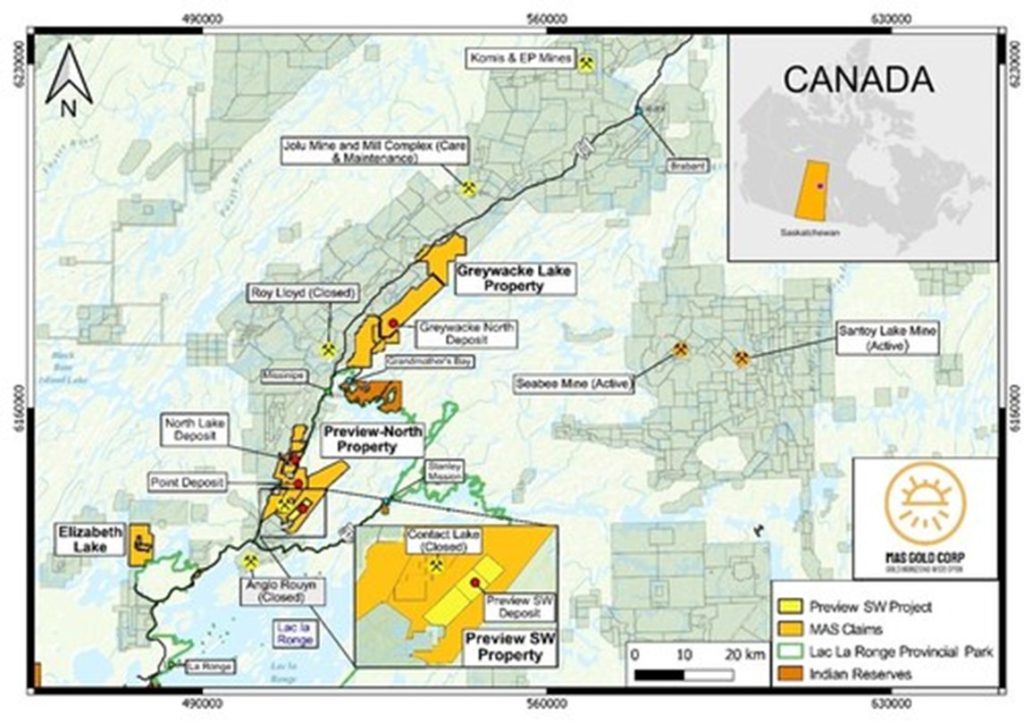
Figure 1: MAS Gold Corp. Holdings (CNW Group/MAS Gold Corp)
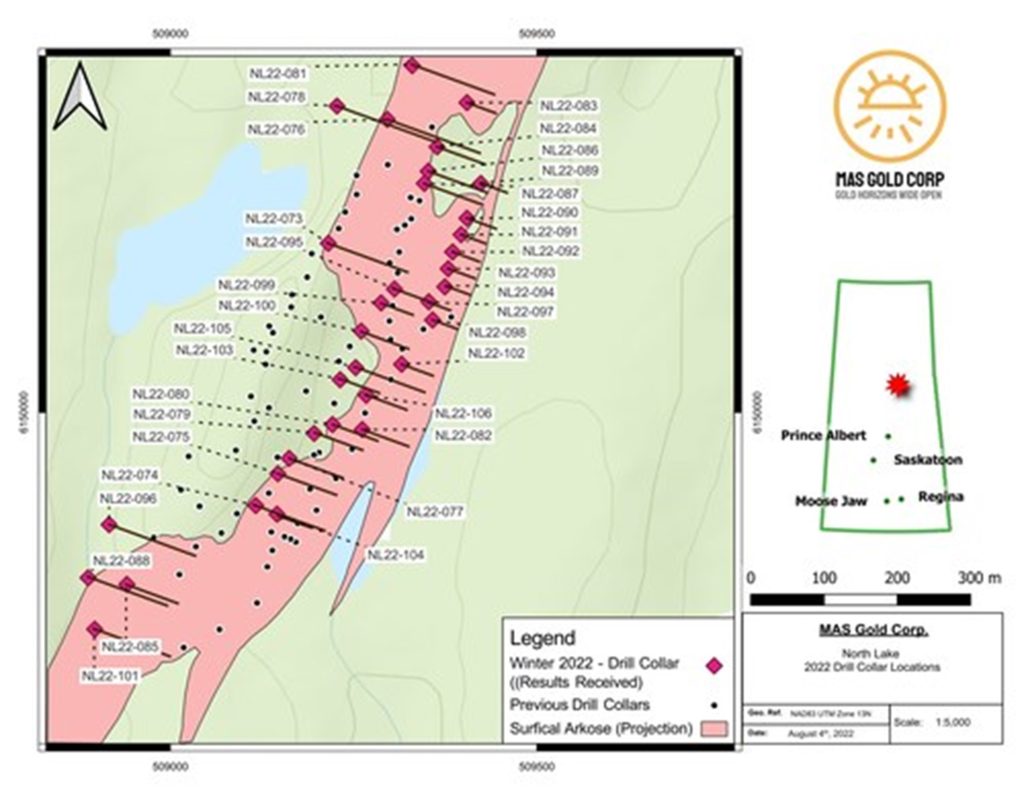
Figure 2 – North Lake Collar Locations (CNW Group/MAS Gold Corp)
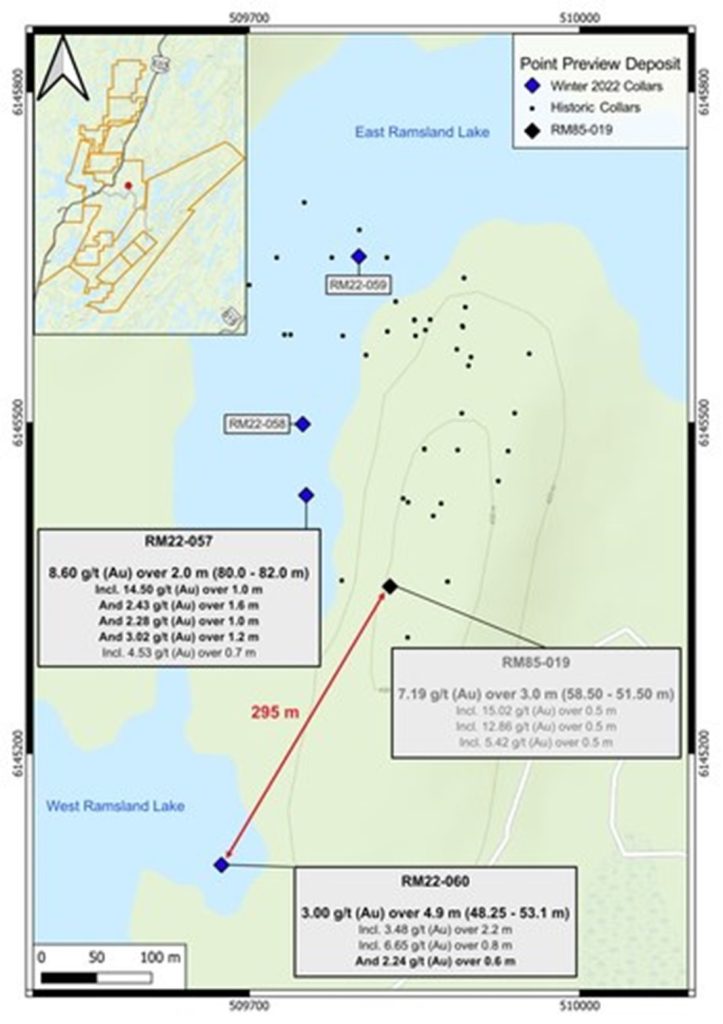
Figure 3 – The Point Deposit Drill Hole Locations (CNW Group/MAS Gold Corp)
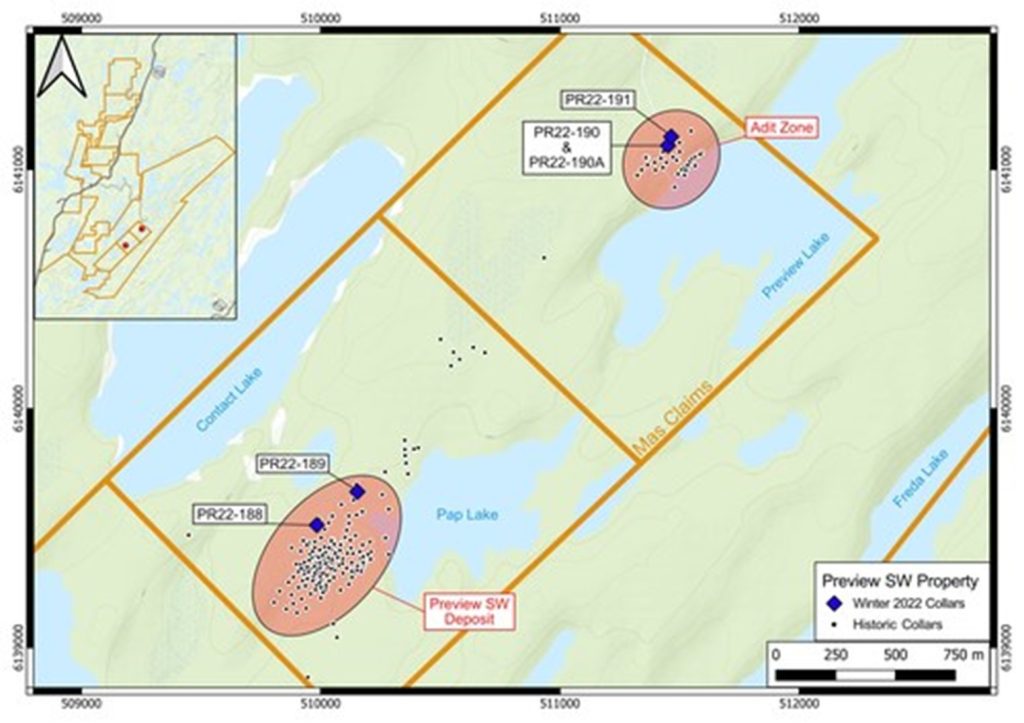
Figure 4 – The Preview SW and Adit Zone Drill Hole Locations (CNW Group/MAS Gold Corp)
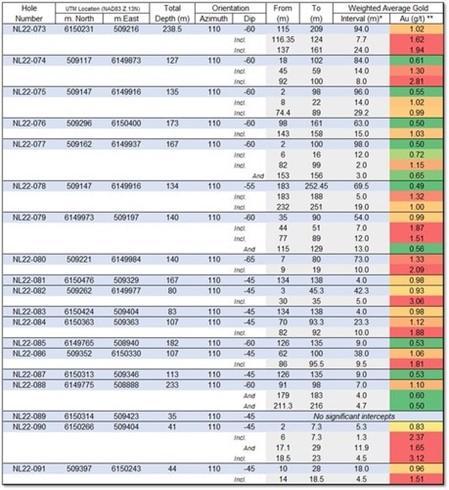
Table 1: North Lake Assay Final Results (CNW Group/MAS Gold Corp)
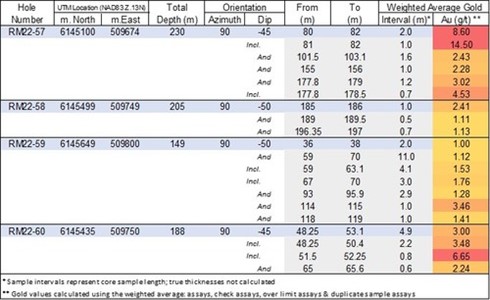
Table 2: Point Deposit Final Assay Results (CNW Group/MAS Gold Corp)
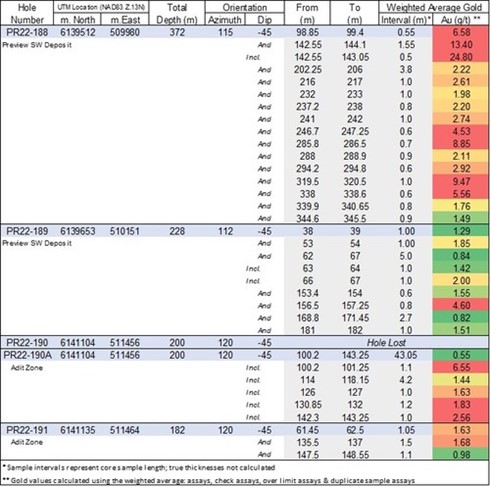
Table 3: Preview SW and Adit Zone Final Assay Results (CNW Group/MAS Gold Corp)
Broad Gold Mineralization Starts at Surface, Returning 1.86 g/t A... READ MORE
Lithium Africa Corp. (TSX-V: LAF) (FSE: 6MQ) (OTCQB: LTAFF) is pl... READ MORE
Drilling also returns 134.0 m of 0.65 g/t Au in the Lower Domain;... READ MORE
Copper Road Resources Inc. (TSX-V: CRD) is pleased to announce th... READ MORE
Brunswick Exploration Inc. (TSX-V: BRW) (OTCQB: BRWXF) (FRANKFUR... READ MORE