







135,000 MT ANNUAL CU PRODUCTION (1ST 10 YEARS)
17,000 OZ ANNUAL AU PRODUCTION (1ST 10 YEARS)
1.22 MILLION LB ANNUAL PAYABLE MO (1ST 10 YEARS)
$1.72/LB C1 COST AND $2.07/LB AISC (1ST 10 YEARS)
$14,985 MT CUEQ CAPITAL INTENSITY (1ST 10 YEARS)
$2.5 BILLION AFTER-TAX NPV8% AND 25% POST-TAX IRR
$2.06 BILLION BUILD CAPEX AND 24 YEAR MINE LIFE
M&I&I RESOURCES OF 4.35 MILLION MT CONTAINED CU
PROBABLE RESERVES OF 3 MILLION MT OF CONTAINED CU
PFS Highlights
Koryx Copper S.A. (TSX-V: KRY) (NSX: KYX) (OTCQX: KRYXF) is pleased to announce the results of the Pre-Feasibility Study for the wholly-owned Haib Copper Project in southern Namibia.
Haib is a massive, disseminated porphyry copper deposit with associated molybdenum and gold and is planned as a large-scale open pit mining and conventional sulphide milling and flotation, producing separate Cu and Mo concentrates.
Heye Daun, Koryx President & CEO commented: “We are very pleased with the excellent results of this PFS, which have far exceeded our initial expectations. With a total mineral resource of 4.35mt of contained copper (plus significant by-product credits) and an average annual gross CuEq production rate of 145ktpa (first 10 years), this PFS undoubtedly benchmarks Haib as a truly world-class copper development project in a premium jurisdiction, Namibia.
I am very proud of our dedicated and highly professional Koryx team, with assistance from various excellent Namibian and Southern African professional service providers, especially DRA Global Limited, Knight Piésold and Qubeka Mining Consultants, who together delivered the Haib Cu/Mo/Au project as a tier 1 copper development project of global stature.
Major project improvements comprise (i) the completion of a bigger and significantly higher-grade mineral resource and maiden ore reserve (ii) process simplification via the abandonment of the heap leach facility and associated production, (iii) the use of coarse particle flotation and Jameson Cell technology in flotation and (iv) extensive flow sheet optimization which has materially improved the Haib project across all metrics compared with the Preliminary Economic Assessment completed in September 2025.
The next twelve months will be focused on (i) the completion of the Definitive Feasibility Study, (ii) raising finance, (iii) finishing permitting in preparation for early works commencement late in 2027 and construction commencement in 1Q 2028.”
Property Description and Ownership
Haib is a porphyry copper exploration project located in the Karas Region of southern Namibia approximately six kilometres north of the border with South Africa and between 12km and 15km east of the tarred B1 highway that connects Namibia with South Africa. Koryx has a 100% interest in Deep South Mining Company (Pty) Ltd., a Namibian subsidiary which in turn has a 100% interest in Haib Minerals (Pty) Ltd. which holds the exploration rights to the Project. Exclusive Prospecting Licence 3140 allows for the exploration of base, rare and precious metals over an area of 36,589 hectares.
Results of PFS Financial Evaluation
Mining is expected to run for 15 years after a pre-strip period and feed the processing plant, which has been sized in the PFS base case for a capacity of 48 million tonnes per annum of run of mine material for 24 years including 9 years to process reclaimed low-grade stockpiles from Year 16 to Year 24.
A PFS financial model was developed from the updated studies with the following techno-economic results.
|
Table 1: PFS Financial Valuation Results |
|||||
| US$11,023/t | US$13,000/t | ||||
| Units | Pre-Tax | Post-Tax | Pre-Tax | Post-Tax | |
| NPV8% | US$m | 4,205 | 2,538 | 6,335 | 3,875 |
| IRR | % | 30.6% | 24.9% | 39.9% | 32.2% |
| Payback Period | Years | 3.9 | 3.9 | 3.3 | 3.5 |
| LOM Cashflow | US$m | 11,711 | 7,425 | 16,435 | 10,378 |
| Upfront Capex 1 | US$m | 2,059 | |||
| Sustaining Capex 2 | US$m | 639 | |||
| Years 1 – 10 | LOM | ||||
| Ave Annual Cu Production | 135 | 109 | |||
| C1 Cash Costs 3 | US$/lb | 1.72 | 2.19 | ||
| AISC Costs 4 | US$/lb | 2.07 | 2.52 | ||
| Capital Intensity payable CuEq | US$/tpa | 14,985 | 18,584 | ||
|
Table 2: Key Assumptions |
|||||
| Item | Units | Years 1 – 10 | Life-of-Mine | ||
| Life of Mine | Years | 24 | |||
| Copper Price (base case) | US$/t | 11,023 | |||
| Copper Recovery (Milling & flotation) | % | 89.5% | 87.3% | ||
| Government Royalty (tax-deductible) | % | 3.0% | |||
| Export Levy | % | 1.0% |
| Description | Units | PFS Base Case | ||
| RoM Throughput | Mtpa | 48 | ||
| Milling Circuit | Type | HPGR-Ball Mill | ||
| Primary Grind | Micron | 150 | ||
| 48Mtpa CPF | Duty | CGR | ||
| CGR Nominal Mass Reject | % RoM | 25 | ||
| Flotation Throughput | Mtpa | 36 | ||
| Flotation Circuit | Type | Jameson Cells / Tank Cells | ||
| Tailings | % Solids | 60% w/w |
|
Table 3: LOM Production Parameters |
|||
| Item | Unit | Years 1 – 10 | Life-of-Mine |
| Ore Tonnes Mined | Mt | 779 | 1,119 |
| Waste Tonnes Mined | Mt | 853 | 1,093 |
| Strip Ratio | x | 1.10 | 0.98 |
| ROM Ore Mining Head Grade | % Cu | 0.32% | 0.27% |
| Flotation Processing Feed Grade | % Cu | 0.42% | 0.35% |
| Ore Mo Grade Mined | % Mo | 0.005% | 0.006% |
| Ore Au Grade Mined | g/t Au | 0.019 | 0.021 |
| Contained Cu Metal | kt | 1,999 | 2,835 |
| Concentrate grade | % Cu | 21.8% | 21.8% |
| Cu in concentrate | kt | 1,349 | 2,607 |
| Annual Cu Production | kt | 135 | 109 |
| Annual Mo Production | Mlb | 2.449 | 2.269 |
| Annual Au Production | koz | 17 | 13 |
| Annual Cu Production (Payable) | ktpa | 130 | 105 |
| Annual Mo Production (Payable) | Mlbpa | 1.224 | 1.134 |
| Annual Au Production (Payable) | kozpa | 15 | 12 |
| Annual CuEq Production (Payable) | ktpa | 137 | 111 |
Capital and Operating Cost Estimates
The capital cost estimate for the project was compiled by DRA, with inputs from Koryx and supporting specialist consultants Knight Piésold and Qubeka.
The estimate for the main crushing, milling and flotation plant for higher grade mineralization was developed by DRA for a plant designed to process 48 Mtpa of ROM, with about 12 Mtpa of >150µm barren coarse particle flotation tailings being rejected ahead of conventional flotation of 36 Mtpa at a target grind of about 80% < 150µm.
|
Table 4: Capital Cost Estimates |
|||
| Capital Costs | Units | Years 1 – 10 | Life-of-Mine |
| Process Plant incl. Construction Camp and Ops | US$m | 1,319 | |
| Concentrate Load Out | US$m | 11 | |
| Bulk Power Reticulation | US$m | 61 | |
| MSA and Trolley assist | US$m | 85 | |
| Owner’s cost | US$m | 55 | |
| Tailings Storage Facility | US$m | 21 | |
| Surface Water Management | US$m | 0 | |
| Bulk Water Supply – Works | US$m | 80 | |
| Bulk Water Supply – Dam | US$m | 26 | |
| Construction Camp and Services | US$m | 8 | |
| Mine Housing | US$m | 27 | |
| Roads & Site Access | US$m | 2 | |
| Bulk Power Supply | US$m | 56 | |
| Site Infrastructure Indirect costs | US$m | 24 | |
| Subtotal Excluding Contingency | US$m | 1,774 | |
| Project Contingency | US$m | 133 | |
| Capitalised pre-strip | US$m | 152 | |
| Total Project Capital (incl. contingency) | US$m | 2,059 | |
| Sustaining Capital (LOM) 2 | US$m | 384 | 639 |
Knight Piésold developed the capital cost estimates for the Tailings Storage Facility (“TSF“), access roads, water and bulk power supply, stormwater management, housing and site accommodation. DRA and Qubeka prepared estimates for infrastructure directly associated respectively with the process plants and contract mining area.
Each consultant submitted estimates of engineering, project and construction management services costs associated with their scope of work. This was supplemented by a detailed estimate by Koryx of Owner’s costs during project implementation.
The cost estimate for pre-strip of waste rock before commencing production mining operations was an outcome of Qubeka’s detailed mining schedules.
Significant portions of the TSF construction and other infrastructure costs will only be incurred during the life of the operation, hence these were recorded as sustaining capital in the table below, estimated by DRA and Knight Piésold. The TSF operational cost is included in the sustaining capital cost.
|
Table 5: Unit Operating Costs |
||||
| Unit Costs per Tonne Mined/Processed | Units | Years 1 – 10 | Life-of-Mine | |
| Mining Cost (per tonne mined) | US$/t | 2.02 | 2.15 | |
| Variable Processing Cost (per t processed) | US$/t | 5.38 | 5.38 | |
| Fixed Processing Cost (G&A) | US$m | 24.23 | 24.23 | |
| Unit Costs per tonne Payable Cu Produced | Units | Years 1 – 10 | Life-of-Mine | |
| C1 Cash Costs 3, 7 | US$/t | 3,792 | 4,834 | |
| All-in Sustaining Costs 4, 7 | US$/t | 4,553 | 5,554 | |
| Unit Costs per lb Payable Cu Produced | Units | Years 1 – 10 | Life-of-Mine | |
| C1 Cash Costs 3, 7 | US$/lb | 1.72 | 2.19 | |
| All-in Sustaining Costs 4,7 | US$/lb | 2.07 | 2.52 | |
|
Notes for Tables 1 to 5: |
||||
|
||||
|
Table 6: Project Operating Costs (US$/t processed) |
|||
| Concentrator Operating Cost | % Fixed | US$/t RoM | US$m/annum |
| Labour | 100% | 0.29 | 13.77 |
| Power – Site Wide Fixed | 100% | 0.88 | 42.29 |
| Power – Concentrator Variable | 0% | 1.80 | 86.45 |
| Liners & Grinding Media | 0% | 1.13 | 54.03 |
| Reagents | 0% | 0.55 | 26.51 |
| Water | 0% | 0.00 | 0.00 |
| Maintenance | 30% | 0.54 | 25.75 |
| Laboratory Analysis | 0% | 0.04 | 1.77 |
| Materials Handling | 0% | 0.16 | 7.45 |
| Licensing & General | 100% | 0.004 | 0.20 |
| Concentrator Operating Cost | 5.38 | 258.22 | |
| Concentrator Direct Operating Cost – Fixed | 25% | 1.33 | 63.98 |
| Concentrator Direct Operating Cost – Variable | 75% | 4.05 | 194.23 |
| Infrastructure & TSF Operating Cost | 11.29 | ||
| Power – Site Wide Infrastructure (Excluding mining) | 0% | 0.19 | 9.29 |
| Bulk Water – Maintenance Provision | 30% | 0.04 | 2.00 |
| TSF OPEX | 100% | 0.00 | |
| Total Processing Infrastructure & TSF Operating Cost | 5.61 | 269.51 | |
| Total Processing Infrastructure & TSF Op. Cost – Fixed | 24% | 1.35 | 64.58 |
| Total Processing Infrastructure & TSF Op. Cost – Variable | 76% | 4.27 | 204.93 |
Table 7: LOM C1 Cash Cost and AISC Build-Up
| Component | US$/lb payable Cu |
| Mining | 0.86 |
| Processing | 1.08 |
| On-site G&A and General Site | 0.10 |
| Treatment, Refining, Freight and Marketing | 0.43 |
| By-Product Credits (Mo, Au) | (0.28) |
| C1 Cash Cost¹, 3 | 2.19 |
| Royalty and Export Levy | 0.21 |
| Sustaining Capital | 0.12 |
| AISC2, 3 | 2.52 |
Note:
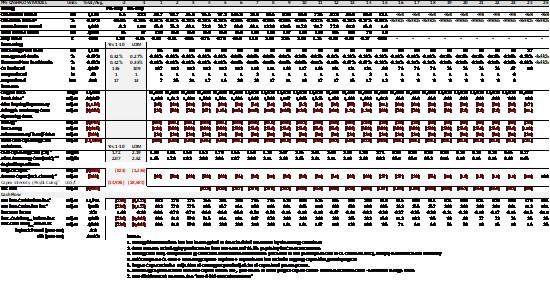
Table 8: Annual Cashflow Schedule
Key Economic Assumptions
The cash flow model is unlevered and on a 100% project basis, with flat prices and costs. It includes no streaming or offtake prepayment.
Table 9: Key Economic Assumptions
| Assumption | Value |
| Copper Price | US$5.00/lb (US$11,023/t), flat for LOM |
| Molybdenum Price | US$22.00/lb |
| Gold Price | US$3,500/oz |
| Silver | No silver revenue (not payable) |
| Payability | Cu 96.5%; Mo 50%; Au 90% |
| Treatment and Refining Charges | Year 1: -US$75/mt (dry) and -US$0.075/lb; Year 2: -US$50/mt and -US$0.05/lb; Year 3: -US$25/mt and -US$0.025/lb; Year 4: nil; Year 5 onwards: US$50/mt and US$0.05/lb |
| Trader’s Margin | 1% of revenue |
| Concentrate Freight (road, port, sea and last mile) | US$140/t concentrate (Years 1 – 2), US$125/t concentrate thereafter |
| Government Royalty | 3% of gross revenue (tax-deductible) |
| Export Levy | 1% of gross revenue |
| Corporate Income Tax | 37.5%; LOM effective rate of 32% of pre-tax profit |
| Capital Allowances | Capex redeemed against taxable income over 3 years; US$100m opening assessed loss. Sustaining Capex is immediately deductible and not depreciated |
| Exchange Rate | N$/ZAR18.00:US$1.00 |
| Discount Rate | 8% |
| Construction Period | 2 years (40% / 60% capex split), including pre-strip |
| Processing | 48Mtpa ROM, with 25% of mass rejected as coarse gangue ahead of flotation (DRA recovery model, October 2026) |
| Oxide Stockpile (final two years) | 60% copper recovery to concentrate |
Geology and Mineralization
Haib is a Paleoproterozoic approximately 1,880 Ma, porphyry copper-molybdenum-gold deposit hosted by volcanic rocks of the Orange River Group and granites and granodiorites of the Vioolsdrif Intrusive Suite, within the Richtersveld Subprovince of the Namaqua-Natal Province. Mineralization occurs in all host units, mainly in igneous-hydrothermal breccias, with narrow higher-grade zones in quartz-rich veins and shear zones and extends over approximately 2km of strike. Widespread potassic alteration and deeper sodic-calcic alteration indicate a deeply emplaced, multi-stage porphyry Cu-Mo system.
Chalcopyrite and pyrite are the principal sulphides, with minor molybdenite and occasional bornite, digenite, chalcocite and covellite. The best mineralization occurs as chalcopyrite aggregates and clots in igneous and hydrothermal breccias, while molybdenum occurs mainly in quartz-molybdenite veins. There is no well-developed supergene zone; near-surface oxide copper rarely extends below 30m.
Mineral Resource Estimate
MSA Group (Pty) Ltd has updated the previous Mineral Resource estimate for the Project, which had an effective date of 16 March 2026. Exploration continued through 2026 and new drilling has infilled the Mineral Resource and improved the geological understanding. The updated Mineral Resource Statement, effective 28 October 2026, is based on an updated model and a revised optimised pit shell.
The estimate uses diamond drillhole data from 1963 to 2026 and one 126 m channel-sampled adit. After extensive validation, data from Rio Tinto Zinc (120 drillholes, 1972-1975), Great Fitzroy Mines (12 drillholes, 1995-1999) and Teck (32 drillholes, 2010) were accepted. Twenty-nine drillholes from the King Resources and Falconbridge campaigns (1963-1969) were excluded from grade estimation because MSA could not validate them.
The database includes Koryx holes drilled from 2021 to September 2026: 231 NQ diamond drillholes (“DD“) for 77,796 m and 19 reverse circulation (“RC“) drillholes for 7,942 m. Exploration data available on 07 October 2026 were used to update the model.
Pre-Teck and pre-Koryx holes were mostly vertical on a grid of about 150 m. Teck and Koryx drilled angled holes, sometimes from the same location, to better intersect the dipping mineralization. Spacing averages about 75 m in the higher-confidence (Indicated) area, but the grid is irregular owing to targeted infill drilling and challenging topography (Figure 1).
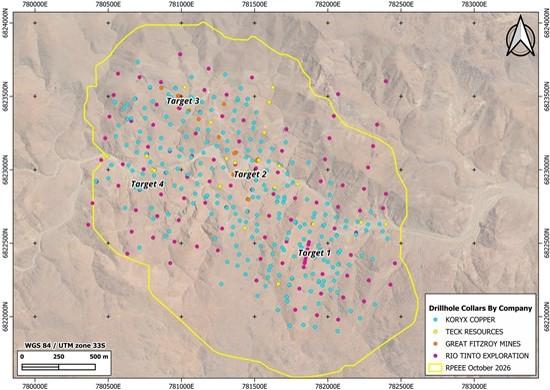
Figure 1: Plan view illustrating distribution of drilling by historical operators
A three-dimensional geological model of the copper mineralization was built from all drillhole sample data. Leapfrog Geo was used to create nested grade shells at copper thresholds of >0.25%, 0.20-0.25%, 0.15-0.20%, 0.10-0.15% and <0.10%, covering all mineralization currently defined.
The model incorporates interpreted structural trends and geological domains. Copper grade was estimated from the accepted historical and Koryx data by ordinary kriging of five metre composites in Leapfrog Edge. An average in-situ dry bulk density of 2.78 t/m3 was assigned to all blocks. Classification considered data confidence, drillhole spacing and continuity.
Haib Mineral Resource Statement
The Mineral Resource was estimated using the Canadian Institute of Mining, Metallurgy and Petroleum Best Practice Guidelines and is reported in accordance with the 2014 CIM Definition Standards, which have been incorporated by reference into National Instrument 43-101 – Standards of Disclosure for Mineral Projects.
The Mineral Resource was reported from within an optimised pit shell. The Project envisages an open-pit mining operation with flotation of sulphide mineralization, including initial coarse particle flotation. Oxide material will be stockpiled and processed at end of life-of-mine by milling and flotation.
The optimised pit shell was informed by mineralization within the modelled 0.20% Cu grade shell. Lower-grade material inside the pit shell but outside that grade shell must be removed to extract the higher-grade Mineral Resource. Blocks within the pit shell grading above 0.15% Cu meet marginal cut-off criteria and, with the pit shell, demonstrate reasonable prospects for eventual economic extraction (“RPEEE“). The assessment to satisfy the criteria of RPEEE is a high-level estimate and is not an attempt to estimate Mineral Reserves.
A summary of the Mineral Resource estimate is presented in Table 10 below.
Table 10: Mineral Resource Estimate for Haib as of 28 October 2026 at a 0.15% Cu cut-off
| Category | Type | Tonnes (Mt) |
Cu Grade (%) |
Mo Grade (ppm) |
Au Grade (g/t) |
CuEq Grade (%) |
Cu Content (Mlb) |
Mo Content (Mlb) |
Cu Content (kt) |
Mo Content (kt) |
Au Content (koz) |
| Indicated | Total High Grade (>0.25% Cu) |
577 | 0.36 | 72 | 0.02 | 0.39 | 4,563 | 92 | 2,070 | 42 | 427 |
| Total Low Grade (0.15-0.25% Cu) |
793 | 0.19 | 49 | 0.02 | 0.21 | 3,312 | 86 | 1,502 | 39 | 465 | |
| Total | 1,371 | 0.26 | 59 | 0.02 | 0.28 | 7,875 | 178 | 3,572 | 81 | 892 | |
| Inferred | Total High Grade (>0.25% Cu) |
107 | 0.34 | 48 | 0.02 | 0.36 | 811 | 11 | 368 | 5 | 63 |
| Total Low Grade (0.15-0.25% Cu) |
222 | 0.19 | 37 | 0.02 | 0.20 | 912 | 18 | 414 | 8 | 115 | |
| Total | 329 | 0.24 | 41 | 0.02 | 0.26 | 1,723 | 30 | 781 | 13 | 178 |
Notes:
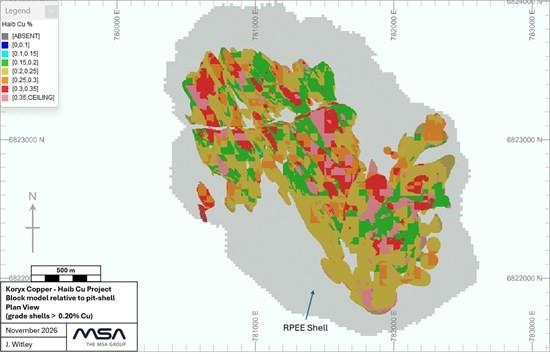
Figure 2: Haib resource pit shell and block model – plan view
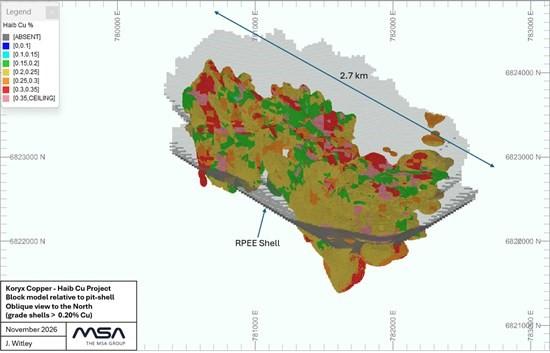
Figure 3: Haib resource pit shell and block model -oblique view to the north
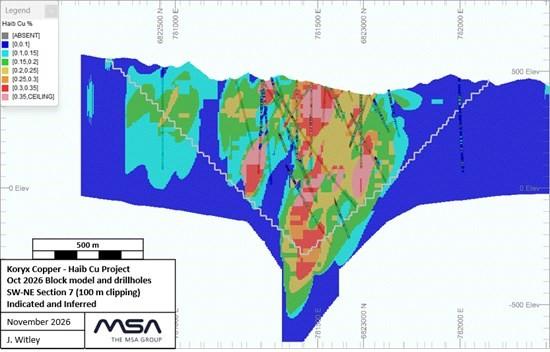
Figure 4: Haib resource block model section, drillholes and pit shell NW Zone, view to the northwest
Pit Optimization and Mine Design
The PFS mining component is based on MSA’s updated Mineral Resource estimate, effective 28 October 2026. The PFS supports disclosure under NI 43-101, using the CIM Definition Standards, under the responsibility of appropriately experienced qualified persons (as defined in NI 43-101).
The PFS evaluates development options for the Project’s technical and economic viability and establishes the preferred open pit configuration and processing route. It includes financial analysis and an assessment of the modifying factors needed for the qualified persons to determine whether Mineral Resources can be converted to Mineral Reserves at the reporting date. A PFS carries a lower level of confidence than a Feasibility Study and is the minimum study level required to declare Mineral Reserves.
The operation comprises drilling, blasting, loading and hauling, with bulk mining supplemented by selective excavation of mineralised material to manage ore loss and dilution. An experienced contractor will undertake the full mining scope, with only mine technical services performed by the owner’s team. The contractor will be responsible for drilling, blasting, loading and hauling of ore and waste, stockpile rehandling, haul road and waste dump maintenance, and associated support, and will supply the equipment, materials, facilities, supervision and labour required.
Drilling and blasting will be on 15 m benches, with waste excavated over the full bench height and mineralised material mined selectively in two 7.5 m flitches to limit ore loss and dilution. Electric rope shovels with 56 m³ buckets will handle both bulk waste and selective ore, loading 360 t diesel-electric rigid haul trucks with trolley assist on designated routes. Support equipment will include production drills, graders, dozers, front-end loaders, rock breakers and utility excavators, with ore hauled to the primary crusher or run-of-mine and low-grade stockpiles, and waste to waste rock dumps.
Pit designs use staged pushbacks to prioritise higher-grade plant feed early and defer waste stripping where practicable, subject to access, slope stability and production requirements. The production schedule integrates pit development, fleet capacity, stockpiles and plant feed over the life of the operation.
Sulphide material meeting the elevated processing cut-off grade of 0.15% Cu will be treated to produce copper concentrate, with molybdenum and gold recovered as byproducts. Transitional and oxide material meeting the 0.15% Cu cut-off grade will be stockpiled during mining and processed through the milling and flotation plant during the final years of the processing schedule. This material is expected to produce copper concentrate, with no molybdenum or gold recovery assumed.
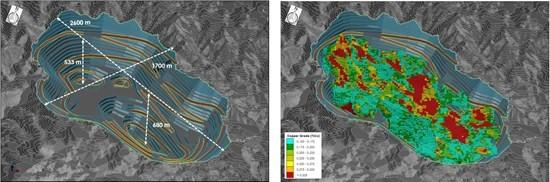
Figure 5: Ultimate pit design and layout
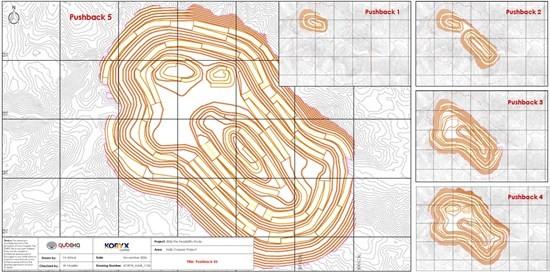
Figure 6: Final & interim pushback designs
Whittle pit optimisation was undertaken using a base copper price of US$ 4.75/lb, equivalent to approximately US$ 10,469/t, and a discount rate of 8%. The optimisation incorporated a 3% gross royalty and a 1% export levy payable to the Namibian Government.
The optimised pit shell was informed by mineralization contained within the modelled 0.20% Cu grade shell. Lower-grade material exists outside the 0.20% Cu grade shell within the pit design that must be removed to extract the higher-grade Mineral Resource. Blocks that occur within the pit design with estimated grade above 0.15% Cu satisfy marginal cut-off grade criteria for Mineral Reserve reporting.
A series of nested economic pit shells was generated during the optimisation process using the applicable technical and economic assumptions. The selected optimisation shells were subsequently used as the basis for the development of practical ultimate pit designs.
The pit design converted the selected optimised pit shell into a practical open-pit design incorporating haul ramps, benches and berms, in compliance with geotechnical and mine design criteria. Practical adjustments for minimum mining widths, ramp access, bench configurations and geotechnical constraints mean the final design may deviate locally from the optimised shell.
Ramp layouts and pit exits were selected considering their effect on waste stripping, haul distances, productivity and operating costs, and the planned material flow to the primary crusher, run-of-mine facilities and waste rock storage. The resulting pit and pushback designs, shown in Figure 5 and Figure 6, set the practical mining limits used for production scheduling, equipment requirements and the Mineral Reserve estimate.
LOM Production Schedule
The Haib Copper Project LOM production schedule, as depicted in Figure 7, comprises of a pre-stripping period followed by approximately 24 years of processing. Mining progresses through five staged pushbacks, with about 51.5 Mt removed during pre-stripping.
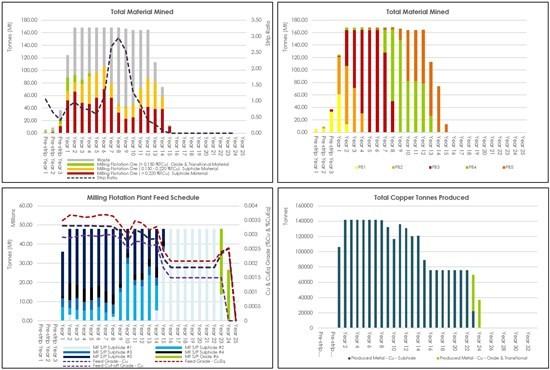
Figure 7: Key mining production schedule graphs
Total scheduled material movement is about 2,212 Mt (1,119 Mt of ore and 1,093 Mt of waste), at an overall strip ratio of 0.98:1.
Annual movement peaks at about 168 Mt before declining as the final pushbacks complete, with open pit mining ending in operating Year 15.
The concentrator is scheduled to process about 48 Mtpa after ramp-up. A variable cut-off grade strategy prioritises higher-grade sulphide material early, maintaining copper feed grades of about 0.33% initially. Lower-grade sulphide material is stockpiled and reclaimed to sustain plant throughput after open pit mining ends, with feed grades declining to about 0.19%. About 60.9 Mt of stockpiled transitional and oxide material is processed in the final two years.
Total scheduled copper production is approximately 2.61 Mt from sulphide and oxide/transitional material. Annual copper production reaches approximately 142 kt early and declines to about 76 ktpa during later sulphide stockpile treatment. Scheduled byproducts total about 24.7 kt of molybdenum and 310 koz of gold; no molybdenum or gold recovery is assumed for transitional and oxide feed.
The LOM production schedule uses a variable cut-off grade strategy based on Ken Lane’s economic principles. Rather than a single fixed cut-off, the scheduling cut-off grade varies through time to maximise project value. Material above the elevated scheduling cut-off is processed immediately, while lower-grade material above the marginal economic cut-off may be:
Mineral Reserves
The Mineral Reserve estimate for the Haib Copper Project is reported in accordance with NI 43-101 and the Canadian Institute of Mining, Metallurgy and Petroleum (CIM) definitions and guidelines. It incorporates the PFS-level modifying factors: mining, metallurgical, economic, infrastructure, legal, environmental, social and governmental.
The estimate is based on open-pit optimisation, practical mine designs and a LOM production schedule. Only Indicated Mineral Resources were eligible for conversion to Mineral Reserves after applying modifying factors. Inferred Mineral Resources were given no economic value in pit optimisation, excluded from the estimate and treated as waste in the LOM schedule.
Nested economic pit shells were generated using the PFS technical and economic assumptions. Selected shells guided ultimate pit designs incorporating geotechnical criteria, haul roads, ramps, berms, minimum mining widths and other operational requirements. The Mineral Reserve comprises material within these designs that meets the economic and processing criteria. The LOM schedule and financial evaluation demonstrate the economic viability of extracting and processing this material under the PFS assumptions.
As of 6 November 2026, the Haib Copper Project has Probable Mineral Reserves of approximately 1,119 Mt at 0.27% Cu, 58 ppm Mo and 0.02 g/t Au (0.29% CuEq), containing approximately 2,995 kt of copper, 65 kt of molybdenum and 689 koz of gold. These comprise approximately 1,058 Mt of sulphide ore and 61 Mt of oxide and transitional ore, to which no molybdenum or gold contribution is attributed.
The estimate was prepared under the supervision of a qualified person experienced in open-pit mine planning, Mineral Reserve estimation and the Haib Copper Project. The Mineral Reserves, effective 6 November 2026, are summarised in Table 11.
Table 11: Mineral Reserve Estimate as of 6 November 2026 at a 0.15% Cu cut-off
| Category | Type | Tonnes | Cu Grade | Mo Grade | Au Grade | CuEq Grade | Cu Cont. | Mo Cont. | Cu Cont. | Mo Cont. |
| (Mt) | (%) | (ppm) | (g/t) | (%) | (Mlb) | (Mlb) | (kt) | (kt) | ||
| Total Mineral Reserve | Total High Grade (>0.25% Cu) | 561 | 0.34% | 67 | 0.02 | 0.37% | 4177 | 83.1 | 1895 | 38 |
| Total Low Grade (0.15-0.25% Cu) | 557 | 0.20% | 48 | 0.02 | 0.22% | 2426 | 59.2 | 1101 | 27 | |
| Total Mineral Reserve | 1 119 | 0.27% | 58 | 0.02 | 0.29% | 6 603 | 142.3 | 2 995 | 65 |
Notes
Metallurgical Test Work
Mineralogical evaluation of the Haib deposit during the PFS determined that three types of copper mineral associations were present in the mineral resource. Chalcopyrite and pyrite were observed in veinlets, aggregates and disseminated form, associated with several different host rock mineral types. Generally, little or no variance was observed in respect of flotation recovery from samples containing these physical characteristics, but there was some variance in hardness and response to crushing and milling.
The samples tested for the PFS exhibited the following range of chemical analyses:
Comprehensive metallurgical tests have been undertaken since the mid 1990s. During the PFS, Koryx commissioned the following additional tests in support of the selected PFS process flowsheet:
Generally, the comminution and flotation results produced during the current test program were consistent with or exceeded the results of the historical programs completed by Mintek in 1996 and by Koryx and Maelgwyn during 2025, specifically:
Process Plant Design and Trade-off Studies
Based on the metallurgical test results as well as the conclusions of trade-off studies completed during the PFS, a single process route is now intended for all sulphide material containing at least 0.175% Cu. The flowsheet consists of three stages of crushing incorporating HPGRs in the tertiary crushing duty, wet grinding, coarse particle and conventional flotation and dewatering of tailings and concentrate products of the flotation circuit. The process plant has been sized to process 48 Mtpa of ROM material.
Process trade-off studies were prepared before Koryx finalised process configuration and plant capacity for the PFS. These included the following studies:
Process Flow Sheet
The MF plant process design includes the following steps:
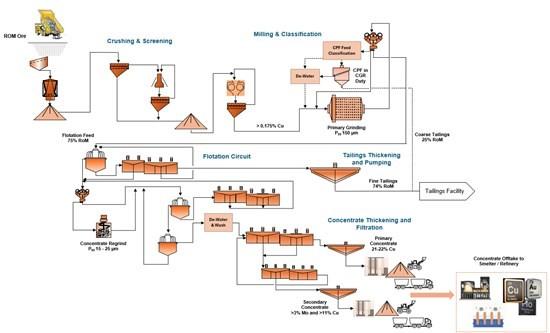
Figure 8: Simplified PFS base case 48 Mtpa MF flowsheet:
Tailings Storage Facility
A trade-off study was conducted at the start of the PFS to assess nine (9) alternative locations for the TSF generally placed within valleys in the Project area. The options were conceptually sized and compared through a Multi-Criteria Alternative Analysis with principal socio-environmental, technical and financial weighted criteria such as, but not limited to, social and environmental impacts, storage capacity, storage efficiency, height, geotechnical suitability, constructability and staged development, operability, dam safety risks, as well as provisional capital and sustaining capital cost estimates.
The MCAA showed TSF4 to be the preferred TSF solution offering the only position which can contain all the tailings through the life of mine, the most efficient storage, particularly in terms of pre-operation starter earthworks requirement, the least environmentally sensitive location, robust design against potential dam breach, and the closest location to the north of the process plant which minimises pumping costs.
Further optimisation of the TSF4 location was undertaken for a storage capacity of approximately 1.15 billion tonnes of tailings. A cross-valley starter embankment for the first year’s operation will be constructed using local borrow from the TSF basin and enlarged in the early life of mine through downstream rockfill raises to cater for approximately eight (8) years of operations. Thereafter centre line raises will be carried out to the full size of the facility. This includes an eastern containment wall to keep tailings away from the larger Haib River catchment area and associated stormwater runoff. Downstream and centerline construction were preferred to develop a robust design and to reduce the likelihood of dam failure.
During the next project phase, Koryx plans to optimise the embankment material zoning and use of construction materials recovered from the coarse fraction of the tailings, water recovery, and generally advance the design detail particularly around tailings deposition.
Mine Power Supply
The system is designed to meet the peak process plant and site infrastructure demand estimated at 261MVA and annual usage of approximately 1,650 GWh. The PFS power supply design combines a 220 kV connection to NamPower’s Harib Substation with an on-site embedded solar PV and battery energy storage system plant.
Dual overhead transmission lines will supply the plant from Harib Substation via a dedicated NamPower switching and metering station at the mine boundary, onwards to two main internal 220/33 kV mine substations. The bulk transmission infrastructure is designed to provide N-1 redundant supply to ensure continuous operations.
The selected renewable hybrid configuration comprises approximately 417 MWp of solar PV and 361 MWh of initial battery storage, with ongoing augmentation that matches the mine’s updated demand and plant lifespan. The plant is designed to supply approximately 45% of life-of-mine electrical energy, with storage shifting surplus solar production into peak tariff periods, to optimise the overall blended energy costs.
The adopted independent power producer structure places plant funding and lifecycle operation with the provider, with the mine purchasing delivered energy under a long-term power purchase arrangement. Grid supply remains essential, with off-grid back-up remaining a future possibility subject to further development and licensing.
The Namibian electricity regulatory framework, managed by the Electricity Control Board (ECB), currently allows for energy demand of up to 30% supplied from sources other than NamPower. The 30% limit may be increased by application for specific projects. Koryx has registered as a contestable customer under the Modified Single Buyer model and has applied for a contestable quantity up to 49.9% of the project’s electricity needs, which was granted by the ECB subject to Koryx entering into a Power Supply Agreement with NamPower.
Koryx has entered into a Memorandum of Agreement with NamPower and they are in the advanced stages of the final design of the grid connection infrastructure, the outcome of which will be a grid connection offer letter which will form the basis of the Power Supply Agreement.
The project is expected to provide significant upgrades to the existing NamPower infrastructure as well as providing new infrastructure to strengthen the national grid, all of which will be handed over to NamPower for operation, upon completion.
Mine Water Supply
The water supply assessment identified the Orange River as the preferred source for the Project’s water demand of approximately 20 million cubic metres per year.
The proposed water supply scheme is sized to abstract water from the Orange River only during periods of surplus flow, after allowing for downstream user demands, environmental requirements and system losses, and store it in an off-channel dam to maintain supply during droughts and low-flow periods. Hydrological and water balance studies informed the abstraction requirements, storage provision and supply assurance.
Two options for the bulk water system were sized and costed, one along the RTZ Gorge, and one along the Haib River route as is shown in Figure 9 below. Both systems are technically feasible, but with the relocation of the mineral processing plant to the west of the open pit, the RTZ Gorge option is expected to offer significant savings over the originally intended Haib River route.
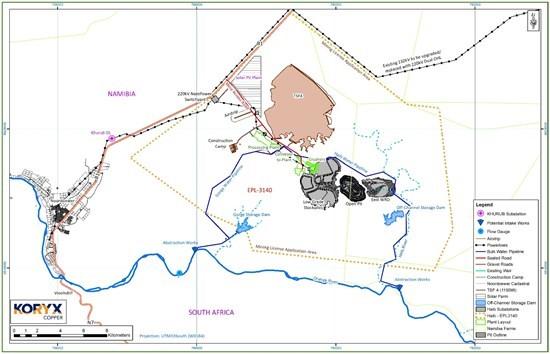
Figure 9: Plan view of PFS Haib mine site layout
The RTZ Gorge option allows for shorter pipelines, the elimination of two booster pump stations and a site suitable for a roller-compacted concrete dam that can be raised incrementally during the first four years of operations. Koryx plans to develop this design further in the next phase, which will require prioritisation of geotechnical and land access investigations to confirm more accurate route and foundation requirements for the water balancing dam and intake infrastructure.
Engagement with NamWater is ongoing, with a signed Memorandum of Understanding in place and an Infrastructure Development Agreement under review supporting the planned transfer of the intake-to-storage supply infrastructure to NamWater for ownership and operation under an agreed volumetric tariff, while the mine would retain responsibility for the storage dam and onward transfer infrastructure.
Mine Access Road
The Project is accessed from Windhoek or Noordoewer via the B1 National Highway and farm roads developed during exploration. The main access route has been relocated closer to the B1 intersection, giving a 10.5 km alignment to the plant and mining services area.
The alignment follows natural topography, to balance cut and fill requirements. The B1 access point will have a surfaced intersection upgrade with acceleration and deceleration lanes for heavy vehicle safety.
The main access road and B1 intersection will have a bituminous seal, chosen for life-cycle cost, dust control and durability. The road will be built as gravel for early construction and start-up, then sealed in the first year of operations, which also avoids dust contamination of the nearby solar PV plant. Internal roads will have a gravel wearing course with dust suppressants.
Mine Housing
The PFS proposes permanent mine housing in a planned Noordoewer township north of the existing developments, supporting the Project’s workforce and local economic activity. The township covers approximately 36.6 hectares with 370 erven (surveyed lots) for residential, business, mixed-use, institutional and recreational uses, and a planned capacity of approximately 2,000 residents.
Mine housing would comprise homes for management and flats for shift-workers, with bulk and internal services (sewer, water, electricity and roads). Koryx plans to provide 543 housing units and all infrastructure for the township; remaining residential erven would be available to contractors to house their own personnel.
Conventional and prefabricated construction have both been assessed. Final requirements, unit mix and construction approach remain subject to design development, service capacity confirmation and approvals.
Social & Environmental
A comprehensive environmental and social assessment and management process is advancing, including ongoing regulatory compliance, submission to the relevant Namibian authority of two Environmental and Social Impact Assessments with Environmental and Social Management Plans, development of two more, and ongoing monitoring.
The ESIA studies to date exceed Namibian legislative requirements and are guided by International Finance Corporation standards, with the aim of IFC compliance before activities commence.
Public consultation with interested and affected parties shaped the scope of specialist studies: biodiversity, aquatics, socio-economics, community health, hydrogeology, geochemistry, air, noise, viewsheds, water resource management, surface water hydrology, archaeology, blast and vibrations, traffic and mine closure. Routine surface water, groundwater and air monitoring has been ongoing since mid-2025.
Public and focus group meetings were held in Windhoek, Keetmanshoop, Karasburg and Noordoewer in August 2025 and April 2026. Stakeholder perception is generally positive, with interest in job creation and community development, and key concerns being water availability and population influx. The relevant authorities have been engaged throughout through formal regulatory engagement and ongoing feedback.
The predicted impacts are typical for a project of this magnitude, and mitigation and enhancement measures are proposed in the Project ESMPs. The ESMPs are a condition of clearance authorisation, linking mitigation and monitoring requirements and setting out roles, responsibilities, reporting and additional management plans, guided by international best practice.
Permitting
The Haib Project site currently operates in accordance with its current and approved Environmental Clearance Certificate issued in terms of the Environmental Management Act No. 7 of 2007 for exploration activities on EPL 3140.
The ongoing activities are supported by various obtained secondary permits, consents and licenses of which are independently audited biannually with results submitted to relevant authorities and used to inform continuous improvement of operations.
The permitting of Haib mining and related activities has advanced significantly with two of the four anticipated applications for ECC being submitted. The applications for ECC and their current status are as follows:
Additional applications submitted include:
Various additional secondary permits, licenses and certificates typical of the large-scale mining projects will be applied for after the issuance of the major permits. These include: Borehole license, electricity generation license, consumer installation certificate, explosives magazine license, blasting permit, NHC consent, land clearance permit, sand mining permit, riparian clearance permit, sealed sources license etc. (Pending decision on ECCs).
Responsible Mining and Social Investment
Koryx is committed to embedding responsible mining, guided by its purpose to “turn geological potential into lasting shared value.” Its strategy integrates environmental stewardship, community partnership, workforce safety, ethical governance, transparency and local value creation, anchored by a safety-first culture with ongoing training and skills development.
Through the Haib Foundation, Koryx delivers targeted corporate social investment (“CSI“). To date, the Foundation has reached many community members of all ages in Noordoewer and surrounding areas through early childhood development, school support, youth skills training and a multipurpose community education hub.
To manage the socio-economic dynamics of a large-scale project, Koryx is studying population influx, water security and local content prioritisation. By aligning early investment with long-term regional development, Koryx aims to build lasting opportunities and a strong social licence to operate in southern Namibia.
Risks and Opportunities
Risks:
Opportunities:
DFS Planning
With the PFS complete, Koryx plans to start a Definitive Feasibility Study on Haib, targeted for completion in 2027. The DFS is intended to advance the PFS to a level of definition that supports project financing and a construction decision. The priorities will be to:
Permitting is well advanced. Koryx applied for a Mining Licence in September 2025. The ESIA and ESMP, which form the application for the ECC (a condition of the Mining Licence), were submitted to the Ministry of Environment, Forestry and Tourism in August 2026. Koryx expects the permitting process, including the permits for water and power infrastructure, to be completed by around the middle of 2027, with the major permits in hand.
To lead this work, Koryx is expanding its Owner’s Team. The team is expected to direct the DFS consultants and set up the project controls, cost and schedule framework that will take Haib from study into execution.
Koryx also plans to begin operational readiness planning during the DFS, so that the operation is ready to run safely and efficiently from first production. This is expected to cover the operating model and organisation design, workforce planning with a focus on recruiting and training Namibian employees, and maintenance and asset-management strategy. It is also expected to cover procurement and logistics for concentrate export, and the business systems and procedures needed for commissioning and ramp-up.
Following the DFS, Koryx plans front-end engineering and early works construction and procurement programmes ahead of a construction decision.
Data Verification
The qualified persons responsible for the PFS technical report have verified the data for which they are accountable, including the sampling, analytical, and test data underlying the information disclosed in this news release. Geological, mine engineering and metallurgical reviews included, among other things, reviewing drill data and core logs, review of geotechnical and hydrological studies, environmental and community factors, the development of the life of mine plan, capital and operating costs, transportation, taxation and royalties, and review of existing metallurgical test work. In the opinion of the Qualified Persons, the data, assumptions, and parameters used in the sections of the PFS that they are responsible for preparing are sufficiently reliable for those purposes. The technical report in respect of the PFS, when filed, will contain more detailed information concerning individual qualified persons responsibilities, associated quality assurance and quality control, and other data verification matters, and the key assumptions, parameters and methods used by the Company.
Quality Assurance / Quality Control
All drill core is HQ sized at collar and reduced to NQ size in fresh rock. Core is logged, photographed and cut in half with a diamond saw. One half is bagged for analysis, and the other half is quartered, with one quarter archived and stored on site for verification and reference purposes and the other reserved for metallurgical test work. Reverse circulation chips are thoroughly logged and photographed, and a 2m composite sample is obtained from two consecutive 1m intervals using a riffle splitter. The homogenized material is poured evenly across the full width of the riffles, splitting it into two equal samples of ~5kg each, which are bagged and assigned the same ticket number. One stream is sent for analysis and the other is archived and stored on site for verification and reference purposes. Core samples are sent to ALS Laboratories Ltd. in Johannesburg, South Africa (SANAS Accredited Testing Laboratory, No. T0387) and ActLabs in Canada, and RC samples are sent to ALS only. Both laboratories are independent of Koryx. Thirty-four elements are analyzed by inductively coupled plasma (“ICP“) using a 4-acid digestion, and gold is assayed using a 30g fire assay method. Duplicate samples, blanks and certified standards are included with every batch and are actively used to ensure proper quality assurance and quality control, at a frequency of 1 in 20 for each of blanks, duplicates and standards.
Qualified Persons
Mr Robin Mark Welsh (B.Sc. Engineering (Electrical)) is an engineer and project manager with 30 years experience in minerals processing projects and studies. He is a Senior Project Manager for DRA Projects Pty Ltd and is registered with the Engineering Council of South Africa (ECSA) as a Professional Engineer (no. 990118) and is a Senior Member of the South African Institute of Electrical Engineers (SAIEE). Mr Welsh visited the project site from 30 October to 1 November 2023, from 10 to 12 November 2024, and again from 12 to 13 November 2025. Mr Robin Mark Welsh is a qualified person and is independent of the Company, each as defined by NI 43-101.
The Qualified Person for the Mineral Resource estimate is Mr. J.C. Witley (BSc Hons, MSc (Eng.)) who is a geologist with 38 years’ experience in base and precious metals exploration and mining as well as Mineral Resource evaluation and reporting. He is Head of Mineral Resources for The MSA Group (an independent consulting company), is registered with the South African Council for Natural Scientific Professions (SACNASP) and is a Fellow of the Geological Society of South Africa (GSSA). Mr. Witley has the appropriate relevant qualifications and experience to be considered a “qualified person” for the style and type of mineralization and activity being undertaken as defined in NI 43-101 and is independent of the Company, each as defined by NI 43-101.
Mr Werner Moeller is a Director and Principal Mining Engineering Consultant of Qubeka Mining Consultants CC, based in Windhoek, Namibia and has reviewed and approved the scientific and technical information in this news release. He holds a BEng degree in Mining Engineering and a BEng (Hons) degree in Industrial Engineering from the University of Pretoria (South Africa). He is a Fellow of the Australian Institute of Mining and Metallurgy (membership number 329888) and a Member of the South African Institute of Mining and Metallurgy (membership number 704793). Mr Werner Moeller has been practising his profession continuously since 2002 and has 24 years of mine planning and operations experience across a range of African projects. He visited the project site from 10 to 12 November 2024, and again from 12 to 13 November 2025. Mr Werner Moeller is a qualified person and is independent of the Company, each as defined by NI 43-101.
About Koryx Copper S.A.
Koryx Copper S.A. is a Luxembourg domiciled copper development company focused on advancing its 100% owned, PFS-stage Haib Copper Project in Namibia. Haib is a large copper porphyry deposit in southern Namibia with gold and molybdenum credits and a long history of exploration and project development by multiple operators.
More than 170,000m of drilling has been conducted at Haib since the 1960’s with significant exploration programs led by companies including Falconbridge (1964), Rio Tinto (1975), Teck (2014) and Koryx (2021-2026). Extensive metallurgical testing and various technical studies have also been completed at Haib. Additional studies are underway aiming to demonstrate Haib as a future long-life, low-cost, low-risk open pit, sulphide milling and flotation copper project with additional heap leach potential.
Mineralization at Haib is typical of a porphyry copper deposit and is dominantly chalcopyrite with minor bornite and chalcocite present and only minor secondary copper minerals at surface due to the arid environment. Haib is one of only a few examples of a Paleoproterozoic porphyry copper deposit in the world. Due to its age, the deposit has been subjected to multiple metamorphic and deformation events but still retains many of the classic mineralization and alteration features typical of these deposits.
Canuc Resources Corporation (TSX-V: CDA) (OTCQB: CNUCF) (WKN: A41... READ MORE
Results include 7.75 g/t Au over 6.4 m in hole 26-SPX-DD003 and 7... READ MORE
North Sky Metals Corp. (TSX-V:NSKY) is pleased to announce assay ... READ MORE
TDG Gold Corp. (TSX-V: TDG) (OTCǪX: TDGGF) is pleased to announ... READ MORE
OceanaGold Corporation (TSX: OGC) (NYSE: OGC) announces explorati... READ MORE