






By Jamie Hyland for MiningIR
The global commodities market may be on the cusp of a major revaluation—and silver and copper are emerging as two of the biggest potential beneficiaries. A convergence of geopolitical conflict, chemical supply disruption, and structural mining constraints is forming a near-perfect storm that could send prices sharply higher in the months ahead.
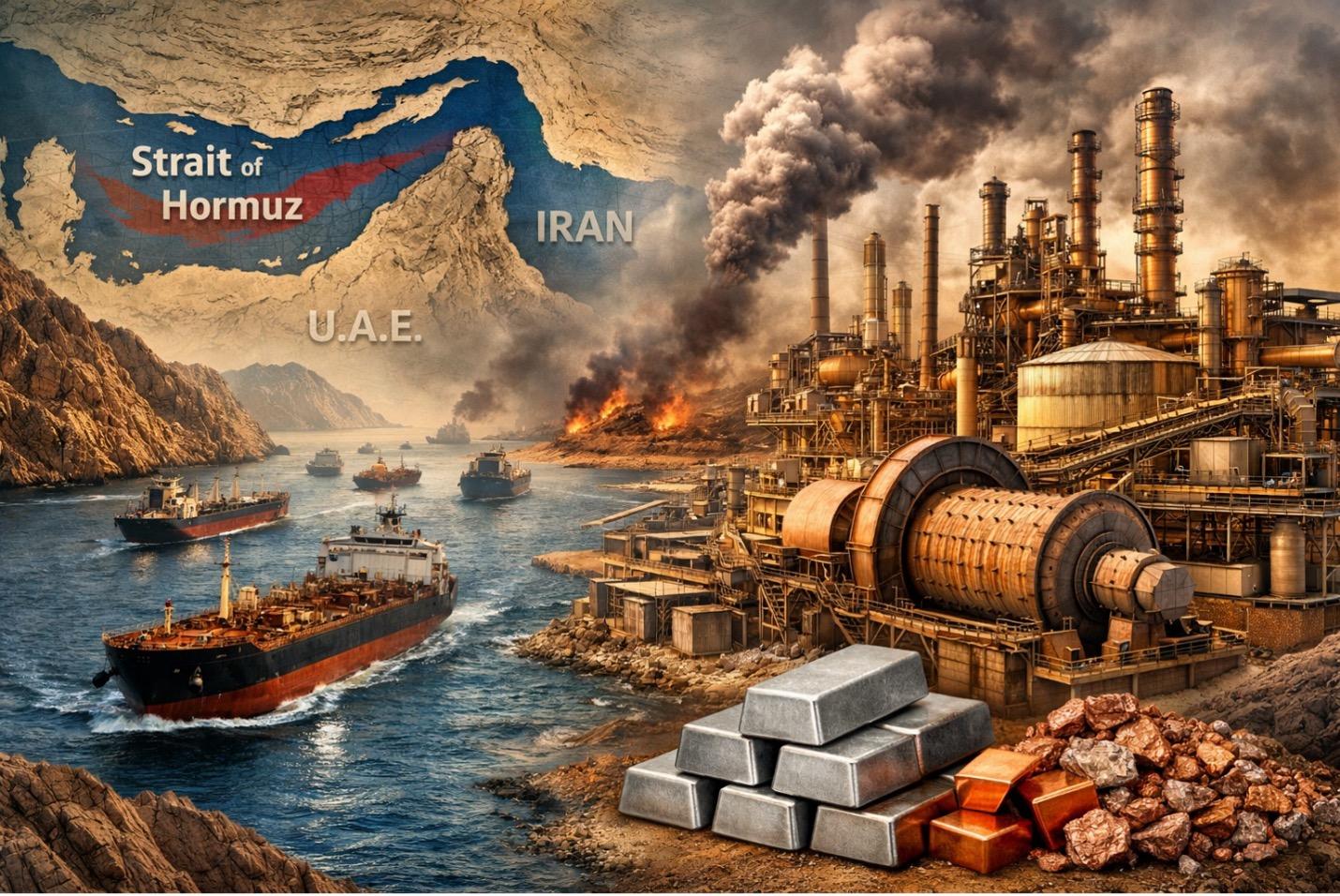
At the center of this shift is the escalating conflict in the Middle East, specifically the Iran war, which has already begun to choke off critical supply chains. One of the lesser-discussed but highly consequential impacts has been the disruption of sulfur exports from the region. The Middle East accounts for roughly one-third of global sulfur production, much of it derived from oil and gas refining. With shipping routes constrained, particularly through the Strait of Hormuz, sulfur availability has dropped significantly, pushing sulfuric acid prices sharply higher.
This matters enormously for mining. Sulfuric acid is not just an industrial chemical—it is a cornerstone input for copper extraction, particularly in heap leaching operations that account for a meaningful portion of global supply. It is also critical in agriculture, where it is used to produce phosphate fertilizers, creating direct competition between food production and metals processing for limited supply.
Now, the situation has intensified dramatically. China, the world’s largest producer of sulfuric acid as a by-product of copper and zinc smelting, has moved to halt exports starting in May. The policy is aimed at preserving domestic supply during peak agricultural demand, but its global implications are profound.
The result is a dual shock: upstream sulfur shortages combined with downstream export restrictions. For copper producers in regions such as Chile, the Democratic Republic of Congo, and Zambia, this creates an immediate bottleneck. Chile alone imports over one million tonnes of sulfuric acid annually from China, with approximately 20% of its copper output reliant on acid-intensive processing.
In practical terms, this means higher costs, constrained production, or both. And in commodity markets, when supply tightens while demand remains steady—or rises—the only adjustment mechanism is price.
Copper is particularly exposed. As a foundational metal in electrification, infrastructure, and the global energy transition, demand remains structurally strong. Yet supply growth is already struggling to keep pace. The sulfuric acid squeeze introduces a new and immediate constraint, effectively raising the marginal cost of production across multiple jurisdictions.
Silver, often viewed through the lens of precious metals, is also deeply tied to industrial demand—especially in solar energy and electronics. Like copper, silver production is frequently a by-product of base metal mining. If copper output slows due to processing constraints, silver supply is likely to follow.
This is where the leverage effect becomes critical. A disruption in a single input—sulfuric acid—can cascade across multiple metals, amplifying price movements. Analysts are increasingly pointing to this dynamic as a potential trigger for the next leg higher in silver markets, particularly as investors begin to recognize the structural nature of the supply shock.
Importantly, this is not a short-term anomaly. China’s export restrictions could remain in place through 2026, while geopolitical tensions in the Middle East show little sign of easing. Meanwhile, alternative sulfuric acid supply chains cannot be rapidly scaled due to infrastructure and feedstock limitations.
Taken together, these factors suggest that the market is underestimating the severity of the coming squeeze. Copper and silver are not just reacting to geopolitical headlines—they are being repriced based on a fundamental shift in the cost and availability of production inputs.
For investors and industry participants alike, the message is clear: the next move in metals may not be driven by demand alone, but by a sudden and structural contraction in supply. And when that happens, price acceleration can be swift—and significant.
Manitoba-focused company, backed by the Canada Growth Fund, Orion... READ MORE
Golconda Gold Ltd. (TSX-V: GG) (OTCQX: GGGOF) is pleased to annou... READ MORE
Talamore Mining Corp. (TSX: TALA) (OTCQB: TALMF) is pleased to an... READ MORE
Atico Mining Corporation (TSX-V: ATY) (OTC: ATCMF) reports that i... READ MORE
ATERRA Metals Inc. (CSE: ATC) (OTCQB: CSSCF) is pleased to announ... READ MORE