







Selkirk Copper Mines Inc.(TSX-V: SCMI) (FSE: IO20) (OTCQX: SKRKF) is pleased to announce positive economic results of a Preliminary Economic Assessment for its copper-gold-silver Minto Project located in Yukon, Canada. The PEA provides an in-depth technical and economic assessment of the restart of open pit and underground mining operations, crushing, grinding and flotation operations, and concentrate production activities and outlines a potential pathway to development of a longer-life operation with additional copper-gold-silver concentrate production dependant on further exploration success.
2026 Minto Project Preliminary Economic Assessment Highlights
We look forward to initiating Feasibility Study work and submission of our permit amendment application in late 2026 followed by another MRE Update expected in Q1 2027 which will include results from our Phase 2 50,000 m drill program which is nearing completion.
Our entire team recognizes the importance of timely completion of several scopes of work to achieve our restart plan however we are buoyed by the positive outcome of the Phase 1 and Phase 2 drill program, positive restart economics reflected in the PEA, and the opportunity to breathe new life into an asset that has much more to give.”
Preliminary Economic Assessment Overview
The Preliminary Economic Assessment was prepared by a team of independent industry experts, led by Hatch Ltd. and supported by SRK Consulting (Canada) Inc., Fuse Advisors (Part of SLR), Moose Mountain Technical Services, and Ensero Solutions.
Scott Fulton, P.Eng., VP Engineering for the Company and a non-independent Qualified Person as defined by National Instrument 43-101, has supervised the preparation of this news release and approved the scientific and technical information herein. References to dollars represent Canadian Dollars ($) unless otherwise specified. Abbreviations for thousands and millions are used for brevity. The Company intends to file the complete PEA Technical Report on its website (www.selkirkcopper.com) and SEDAR+ (www.sedarplus.ca) within 45 days of this press release.
Measured & Indicated Resources and Inferred Resources described in the 2026 Mineral Resource Estimate (effective date June 10, 2026) are 47.8 million tonnes at 0.89% copper, 0.34 g/t gold, and 3.2 g/t silver totaling 940 million pounds copper, 530,000 ounces gold, and 4.97 million ounces silver and 16.9 million tonnes at 0.76% copper, 0.26 g/t gold, and 2.7 g/t silver totalling 281 million pounds copper, 142,000 ounces gold, and 1.5 million ounces silver respectively. Applying the proposed development plan described in the PEA results in a mineable inventory of ~18.4 Mt being generated, from both open pit and underground sources, which results in a planned initial mine life of 13 years. The PEA is preliminary in nature and includes Inferred Mineral Resources that are considered too speculative geologically to have economic considerations applied that would enable these resources to be categorized as Mineral Reserves. There is no certainty that the projections in the PEA will be realized. Mineral Resources which are not Mineral Reserves do not have demonstrated economic viability.
The PEA has been designed to constrain surface and underground development work and above ground installations and infrastructure to that which can be located within the boundary of the existing Quartz Mining License over the entire planned initial 13 year mine life.
The Project is based on a 4,100 tpd mining and processing plant operating rate which includes extraction of mineralized material from two primary underground mining areas, two open pits, feeding blended mine material into a new crushing circuit, which then feeds into an existing semi-autogenous and ball mill grinding circuit. Copper-gold-silver bearing minerals are recovered through a new gravity circuit and an existing flotation circuit designed to produce a single copper-gold-silver concentrate product.
The PEA considers production of conventional slurry tailings initially placed into previously mined-out pits with a newly designed and engineered retaining dam to be constructed along a portion of the pit edge, then transitioning to a new dry-stack tailings process part way through the mine life. The new PEA dry-stack tailings storage is located at the western margin of the QML. The planned transition to dry-stack tailings is being pursued to reduce impact to the environment.
The initial capital costs of the Project, including working capital requirements, owner’s costs, and contingency commensurate for the level of study, is estimated to be C$186 million. Sustaining capital costs over the life of mine is estimated to be C$409 million, including a scoping-level estimate of closure and rehabilitation.
Operating costs over the life of mine are estimated at C$1,764 million, encompassing mining, processing, tailings, water treatment, site general and administrative costs, and logistics required to support planned production throughout the operation’s life. Operating costs are estimated to average C$95.77 per tonne milled over the life of mine, with underground mining representing the largest component of unit costs.
Sustaining capital costs over the life of mine are estimated at C$409 million, encompassing underground mine development, mobile equipment replacement, infrastructure renewal, and other capital investments required to maintain the planned production profile and operational performance designed for in the PEA. Sustaining costs are inclusive of the scoping-level estimate of closure and rehabilitation costs expected to be incurred after production operations have ceased.
Scoping-level closure and rehabilitation plans, which follow the completion of mining and processing operations, include recontouring, covering, and revegetating necessary areas, deconstruction of structures, rehabilitation of disturbed surface areas, environmental closure, long-term stabilization activities, water and condition monitoring, and necessary logistics to execute these activities.
Net Smelter Return estimates were developed and used for open pit optimizations, underground stope development, and classification of mineralized material to be fed to the process plant. NSR estimates used the same assumed metal prices as those used to calculate the 2026 MRE, which are US$4.60/lb copper, US$3,300/oz gold, and US$40/oz silver. The NSR values represent the estimated recovered and payable metal value after deductions for treatment and refining charges, transportation and royalties. Prices, recoveries, payabilities and cost deductions were applied consistently across all material types included in the development of open pit and underground mine plans and mineral processing plans. Payabilities, charges, and deduction schedules follow industry-typical concentrate contract structures for copper-gold-silver concentrates. A 1.5% NSR royalty payable to the Selkirk First Nation was applied to all payable metals.
The PEA considers submission and elaboration of a permit amendment application to the Yukon Environmental Socio-economic Assessment Board as well as various other permit applications and amendments in support of exploration, development, and site-specific activities necessary to support planned construction activities and restart of mining, milling and concentrate producing operations.
The product of mining and mineral processing activities is a high-grade copper-gold-silver concentrate with a target average grade of 38.0% copper, 12-18 g/t gold, and 100-150 g/t silver with negligible deleterious elements, representing a premium-quality concentrate that compares favourably to the highest-quality copper concentrates produced in the world today. Peak copper-equivalent1 contained in concentrate over the planned initial life of mine is 27,200 tonnes per annum, resulting in 48,700 tpa of high-grade (38% Cu) copper concentrate. Metal contained in mill feed material over the planned initial life of mine is approximately 434 Mlbs of copper, 271 koz of gold, and 2.36 Moz of silver or 653 Mlbs copper-equivalent1. Payable metal contained in concentrate over the planned initial life of mine is approximately 377 Mlbs of copper, 225 koz of gold, and 1.39 Moz of silver, or 552 Mlbs copper-equivalent1.
The Project study work, underpinned by a successful 52,288 metre Phase 1 exploration, resource expansion, and resource definition drill program and updated MRE, has resulted in a 13 year mine life. The results from an ongoing Phase 2 50,000 m program, that is nearing completion, have not been incorporated into the PEA but will be incorporated into a Feasibility Study expected to start in Q4 2026.
Economic analysis for the PEA was completed using Planning Prices of US$5.00/lb copper, US$3,600/oz gold, and US$50/oz silver, whereas Design Prices which informed the MRE and mineable inventory estimates were US$4.60/lb copper, US$3,300/oz gold, and US$40/oz silver.
Economics for the Minto Project, applying Planning Prices and a 7% discount rate result in an after-tax NPV7% of C$494M and after-tax internal rate of return of 47.8%. Due to the relatively low initial capital cost of C$186M estimated to re-establish production, the after-tax payback period from first production is approximately 1.9 years.
At Spot Prices of US$6.50/lb copper, US$4,300/oz gold and US$65/oz silver, which represent a rounded average of the quarter-to-date daily cash metal prices quoted on the London Metal Exchange, the after-tax NPV7% increases to C$1,023M, the internal rate of return increases to 78.2%, and the after-tax payback period from first production reduces to 1.3 years.
At Upside Prices, which are reflective of potential future commodity prices as a results of a number of fundamental supply-demand factors in copper and increasing interest by global financial institutions and governments in gold and silver as financial instruments, of US$7.50/lb copper, US$5,400/oz gold and US$75/oz silver, the after-tax NPV7% further increases to C$1,385M, the internal rate of return increases to 96.3%, and the after-tax payback period from first production decreases to 1.0 years.
In descending order, the Minto Project restart economics are most sensitive to: i) copper price; ii) CAD:USD foreign exchange rate; iii) copper recovery; iv) gold price; and v) operating costs. In addition, project returns are sensitive to mine construction execution timelines and overall investment returns are sensitive to permitting timelines.
Reflective of the style and character of the mineralization and the mineralized lenses that comprise the Minto Project, economics of the restart are highly leveraged to copper and gold prices.
Table 1: Minto Project PEA Summary at Planning Prices
| PEA Summary Financial Inputs | Units | Values |
| Planning Price Assumptions | ||
| Copper Price | US$/lb | 5.00 |
| Gold Price | US$/oz | 3,600 |
| Silver Price | US$/oz | 50.00 |
| Exchange Rate | CAD:USD | 0.72 |
| Discount Rate | % | 7 |
| Key Metrics – Life of Mine (LOM) | ||
| Mine Life | Years | 13.0 |
| Tonnes Milled | Mt | 18.4 |
| Open Pit Strip Ratio | W:O | 7.9 |
| Daily Mill Throughput | tpd | 4,100 |
| Annual Mill Throughput | Mtpa | 1.5 |
| Contained Metal in Mill Feed | ||
| Copper | Mlbs | 434 |
| Gold | koz | 271 |
| Silver | Moz | 2.4 |
| Copper-equivalent1 | Mlbs | 653 |
| Processed Feed Grades | ||
| Copper | % | 1.07 |
| Gold | g/t | 0.46 |
| Silver | g/t | 4.00 |
| Oxide Ratio | % | 7.5 |
| Copper-equivalent1 | % | 1.61 |
| Estimated Metal Recoveries: | ||
| Copper | % | 88.7 |
| Gold | % | 84.6 |
| Silver | % | 77.3 |
| Operating Costs (LOM Average) | ||
| Underground Mining | C$/t milled | 34.47 |
| Open Pit Mining | C$/t milled | 12.20 |
| Processing | C$/t milled | 15.89 |
| G&A | C$/t milled | 24.47 |
| Tailings, Environment, and Water | C$/t milled | 8.74 |
| Total On-Site Operating Costs | C$/t milled | 95.77 |
| Concentrate Shipping | C$/t wet concentrate | 342 |
| Copper C1 Net of By-Product Credits2 | US$/lb | 1.53 |
| Copper-equivalent1 Cash Operating Costs2 | US$/lb CuEq1 | 2.63 |
| Capital Costs | ||
| Initial Capital Cost (incl. Contingency) | C$M | 185.9 |
| Sustaining Capital Cost (incl. Closure) | C$M | 409.3 |
| Project Economics | ||
| Pre-Tax NPV @ 7% | C$M | 742.6 |
| After-Tax NPV @ 7% | C$M | 493.9 |
| Pre-Tax IRR | % | 54.8 |
| After-Tax IRR | % | 47.8 |
| After-Tax Payback from First Production | Years | 1.9 |
| Capital Efficiency Ratio | – | 2.7 |
Table 2: Minto Project PEA Economic Sensitivity
| Downside | Planning | Spot | Upside | |
| Copper Price (US$/lb) |
3.50 | 5.00 | 6.50 | 7.50 |
| Gold Price (US$/oz) |
2,500 | 3,600 | 4,300 | 5,400 |
| Silver Price (US$/oz) |
35.00 | 50.00 | 65.00 | 75.00 |
| Copper TC | RCs (US$/t | US$/lb) |
35 | 0.035 | 35 | 0.035 | (186) | (0.186) | (186) | (0.186) |
| After Tax NPV7% (C$M) |
10 | 494 | 1,023 | 1,385 |
| After Tax IRR (%) |
9 | 48 | 78 | 96 |
| Payback from First Production (years) |
6.5 | 1.9 | 1.3 | 1.0 |
The PEA is preliminary in nature and includes Inferred Mineral Resources that are considered too speculative geologically to have economic considerations applied that would enable these resources to be categorized as Mineral Reserves. There is no certainty that the projections in the PEA will be realized. Mineral Resources which are not Mineral Reserves do not have demonstrated economic viability.
Infrastructure
One of the features of the Minto Project, as an integrated mining and milling operation that produced high grade copper concentrates as recently as May 2023, is the substantial surface infrastructure that is available and in place to enable a low-cost restart of operations. Selkirk Copper’s engineering and design team and site care and maintenance team, supported by a wide range of third-party experts including those from Hatch, SRK, Fuse, and others, have completed detailed assessments of the usability of site infrastructure and existing equipment. These assessments have determined that the majority of this infrastructure is in good working order requiring only minor attention and refurbishment. Work on repairs and refurbishments has been ongoing since Q3 2025 in an effort to allow activities during the Capex phase to be focused on the critical path items.
Listed below are those installations, equipment, and facilities that are not expected to require significant additional investment.
Existing Installation, Equipment and Facilities
Surface (General)
Process Plant
Water and Tailings Management
New or significantly rehabilitated or re-established infrastructure, equipment, or facilities necessary for the restart of mining, milling and concentrate production activities are listed below.
New Installations, Equipment and Facilities
Surface (General)
Surface Mining
Underground Mining
Crushing Circuit
Concentrate, Tailings and Water Management
The PEA modelled Capex period runs from July 1, 2027 until June 30, 2028. Items and costs expected to be incurred before the start of the Capex period have been excluded from the scope of the PEA and the resultant economic analysis and deemed to be sunk costs. Costs for significant items expected to be incurred in whole or in part during the Pre-Capex period include: dewatering, physical rehabilitation, and re-servicing of the existing underground; ongoing water treatment; deposits for fixed and mobile equipment; refurbishment of two existing backup diesel generators; and other regular site care & maintenance activities.
Mineral Resource Summary
The Mineral Resources at the Minto Project, described in the updated 2026 Mineral Resource Estimate, are comprised of open pit and underground Measured & Indicated Mineral Resources of 47.8 million tonnes at 0.89% copper, 0.34 g/t gold, and 3.2 g/t silver totaling 940 million pounds copper, 530,000 ounces gold, and 4.97 million ounces silver which represent a 182%, 184% and 188% increase respectively in contained metals above the previous 2025 MRE. The 2026 Measured & Indicated Resources include 26.0 million tonnes of underground resources at 1.14% copper, 0.49 g/t gold, and 4.4 g/t silver; and 21.8 million tonnes of open pit resources at 0.59% copper, 0.17 g/t gold, and 1.8 g/t silver.
In addition, the Minto Project has combined open pit and underground Inferred Mineral Resources of 16.9 million tonnes at 0.76% copper, 0.26 g/t gold, and 2.7 g/t silver containing 281 million pounds copper, 142,000 ounces gold, and 1.5 million ounces silver. Inferred Mineral Resources are considered too speculative geologically to have the economic considerations applied to them that would enable them to be categorized as Mineral Reserves.
Mineralization in several of the zones and lenses across the central mine area remain open laterally and at depth and there are several high potential drill targets for follow-up in future exploration, definition and delineation work.
The ongoing 50,000 metre Phase 2 drill program is 98% complete, the results of which have not been included in the PEA. Initial assay results and visual drill logs continue to show expansion potential across each of the mineralized zones in the central mine area. The results of the Phase 2 drill program will be incorporated into an updated MRE scheduled for completion in Q1 2027, which will form the basis of an updated set of integrated mines plans in a Feasibility Study scheduled to commence in Q4 2026.
Table 3: Current Mineral Resource Estimate
494
| Type | Cutoff | Class | ROM | In situ Grades | Metal | |||||||
| (CDN$) | Tonnage (000) | NSR (CDN$) | Cu (%) | Au (gpt) | Ag (gpt) | Ox Ratio | ASCu (%) | Cu (Mlbs) | Au (Koz) | Ag (Koz) | ||
| Open Pit | $30 | Indicated | 21,779 | $80.63 | 0.59 | 0.17 | 1.8 | 0.11 | 0.073 | 283 | 122 | 1,294 |
| Inferred | 7,052 | $74.61 | 0.55 | 0.13 | 1.6 | 0.08 | 0.048 | 85 | 30 | 354 | ||
| UG | $80 | Measured | 348 | $153.47 | 0.92 | 0.39 | 3.3 | 0.05 | 0.041 | 7 | 4 | 36 |
| Indicated | 25,679 | $189.20 | 1.15 | 0. | .4 | 0.06 | 0.067 | 650 | 404 | 3,638 | ||
| Meas + Ind | 26,027 | $188.72 | 1.15 | 0.49 | 4.4 | 0.06 | 0.070 | 657 | 408 | 3,674 | ||
| Inferred | 9,812 | $146.57 | 0.91 | 0.36 | 3.5 | 0.05 | 0.044 | 196 | 112 | 1,113 | ||
| Total | Varies as Above | Meas + Ind | 47,806 | $139.48 | 0.89 | 0.34 | 3.2 | 0.08 | 0.070 | 940 | 530 | 4,969 |
| Inferred | 16,865 | $116.48 | 0.76 | 0.26 | 2.7 | 0.06 | 0.046 | 281 | 142 | 1,467 | ||
Notes to Table 3:
Mining Overview
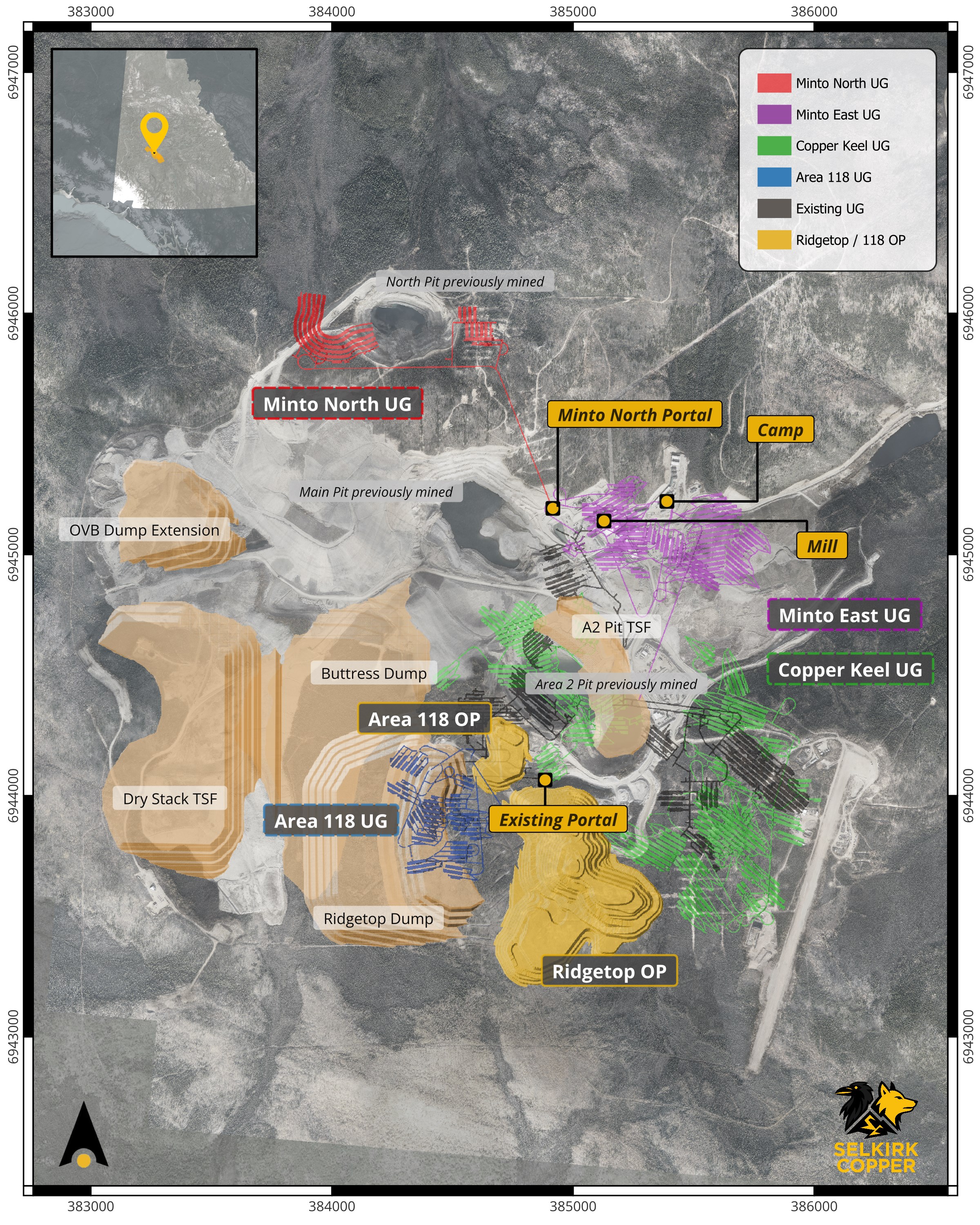
The PEA considers both open-pit and underground mining designed to extract the copper-gold-silver mineralization defined in the 2026 MRE. The resource comprises multiple shallow-dipping metamorphosed copper-gold-silver mineralized lenses distributed across the Ridgetop and Area 118 open pit domains, and the Minto East, Minto North, Copper Keel and Area 118 underground domains. Historically, underground mining has taken place in Copper Keel and Minto East domains accessed from one primary underground portal and decline located between the planned Ridgetop and Area 118 open pits.
Figure 1: Site Plan Including Existing and Planned New Mining and Development
To view an enhanced version of this graphic, please visit:
https://images.newsfilecorp.com/files/11605/315393_c39a3cd6f411fbfd_001full.jpg
The PEA adopts a mining approach that combines open pit and underground mining methods to best align with the geometry, metallurgical characteristics, and development sequence of the Minto deposits. Underground mining is planned to provide the entire mill feed in the initial years of operation, with open pit mining introduced later in the mine life as the Ridgetop and then Area 118 open pits are developed. Open pit mining will contribute mill feed from the open pit deposits using contractor-operated truck-shovel operations, deploying selective flitch mining to maintain grade control across thin, structurally complex near-surface lenses.
Underground mining will be carried out in the Minto North, Minto East, Copper Keel, and Area 118 deposits using longhole open stoping in an upper-cut retreat sequence with rib pillars. Following commencement of open pit mining, underground and open pit mining will operate in tandem, with material blended from the different deposits to support metallurgical performance and maintain process plant feed quality. Both the open pit and underground mining method closely align with historical practices at the Minto Project and reflect the integration of updated geotechnical parameters, stope dimensions and pillar criteria developed for the restart.
Table 4: PEA LOM Mineable Inventory Summary
| Mining Area | Tonnes | Copper (%) |
Gold (g/t) |
Silver (g/t) |
Oxide Ratio (%) |
| Open Pit Combined | 6,021,881 | 0.83% | 0.25 | 2.64 | 13% |
| Ridgetop | 5,627,794 | 0.82% | 0.26 | 2.69 | 13% |
| Area 118 Open Pit | 394,087 | 0.96% | 0.09 | 1.84 | 13% |
| Underground Combined | 12,352,286 | 1.19% | 0.56 | 4.67 | 5% |
| Copper Keel | 5,662,282 | 1.16% | 0.50 | 4.18 | 5% |
| Minto East | 2,818,372 | 1.24% | 0.62 | 5.15 | 5% |
| Minto North | 2,169,259 | 1.36% | 0.67 | 5.83 | 2% |
| Area 118 Underground | 1,702,374 | 0.98% | 0.52 | 4.03 | 7% |
| Total | 18,374,167 | 1.07% | 0.46 | 4.00 | 7% |
The continued use of longhole open stoping, incorporating rib pillars, was selected as the most practical approach for the PEA based on deposit geometry, geotechnical conditions, historical operating experience at Minto and overall project economics. The method provides an appropriate balance between production objectives, capital efficiency, operational simplicity and execution risk, while leveraging existing infrastructure and minimizing development requirements, power demand and startup capital. The approach is consistent with the study’s geotechnical criteria and supports a phased restart strategy with reduced schedule and operational complexity.
Future engineering studies may evaluate opportunities to optimize resource recovery; however, any alternative mining approaches would be assessed based on their impact on project economics, capital requirements, operating costs, power availability, execution complexity, and overall project value.
As part of the planned Minto Project restart, the existing underground workings will be dewatered, inspected and rehabilitated as required to support safe re-entry to and use of historical haulageways and access the new production areas envisioned for the PEA mine plan. Achieving the planned production profile described in the PEA is dependent on the successful and timely dewatering, inspection and targeted rehabilitation of existing underground workings, development of new underground access infrastructure, establishment of the planned underground mining areas and execution of the planned mine development schedule. The extent and nature of required rehabilitation activities in the existing underground development will be determined following underground inspections completed as dewatering progresses.
Due to its location and lack of practical connectivity opportunities to the existing underground workings, the Minto North deposit will be accessed via the development of a new dedicated portal located in close proximity to the existing processing infrastructure. Later in the mine life, a dedicated and additional Copper Keel portal will be established to reduce underground haulage distance from the deposit, enhancing haulage productivity and reducing reliance on the longer route through the existing portal.
The integrated open pit and underground mine plans have been designed to consider the oxidation characteristics of the mineralized zones in the Ridgetop and Area 118 open pits as defined in the 2026 MRE. Near-surface mineralization at Ridgetop in particular displays variable and often elevated oxidation ratios, with recent assessments indicating a mix of oxidation that is typically more pronounced in the shallow zones. Modelled oxidation at the Ridgetop deposit generally decreases with depth, with mineralization transitioning into less oxidized and more sulphide-dominant material.
This variability introduces additional considerations for blending and mill feed management, as elevated oxide ratios in the mill feed have the potential to reduce copper recovery and increase concentrate moisture, particularly at oxidation ratios exceeding 20% soluble copper to total copper. Maintaining the operational blend within acceptable limits is an important element of the mining and mineral processing strategy developed for the Minto Project.
Metallurgy & Processing Overview
Since the acquisition of the Project by Selkirk Copper, a thorough assessment of the process plant was conducted by the Company, consultants, and vendor representatives. Assessment in the PEA evaluated the potential for targeted circuit upgrades to enable the resumption of operations at a consistent average throughput of 4,100 tpd at 92% process plant availability. The process plant historically employed standard comminution, flotation and dewatering techniques and equipment in the production of a final copper-gold-silver concentrate and no substantive technology or process changes are considered in the restart plan. Planned upgrades include a new three-stage crushing circuit with screening, two new gravity concentrators to improve gold recovery, a screw dryer to handle concentrate material after filtration to enable the delivery of a consistent concentrate moisture content within control limits, and slurry tailings pumps and cyclones to segregate fine and coarse size fractions for in-pit deposition. The addition of tailings filtration is planned to enable the transition to dry-stack tailings management after Year 3.
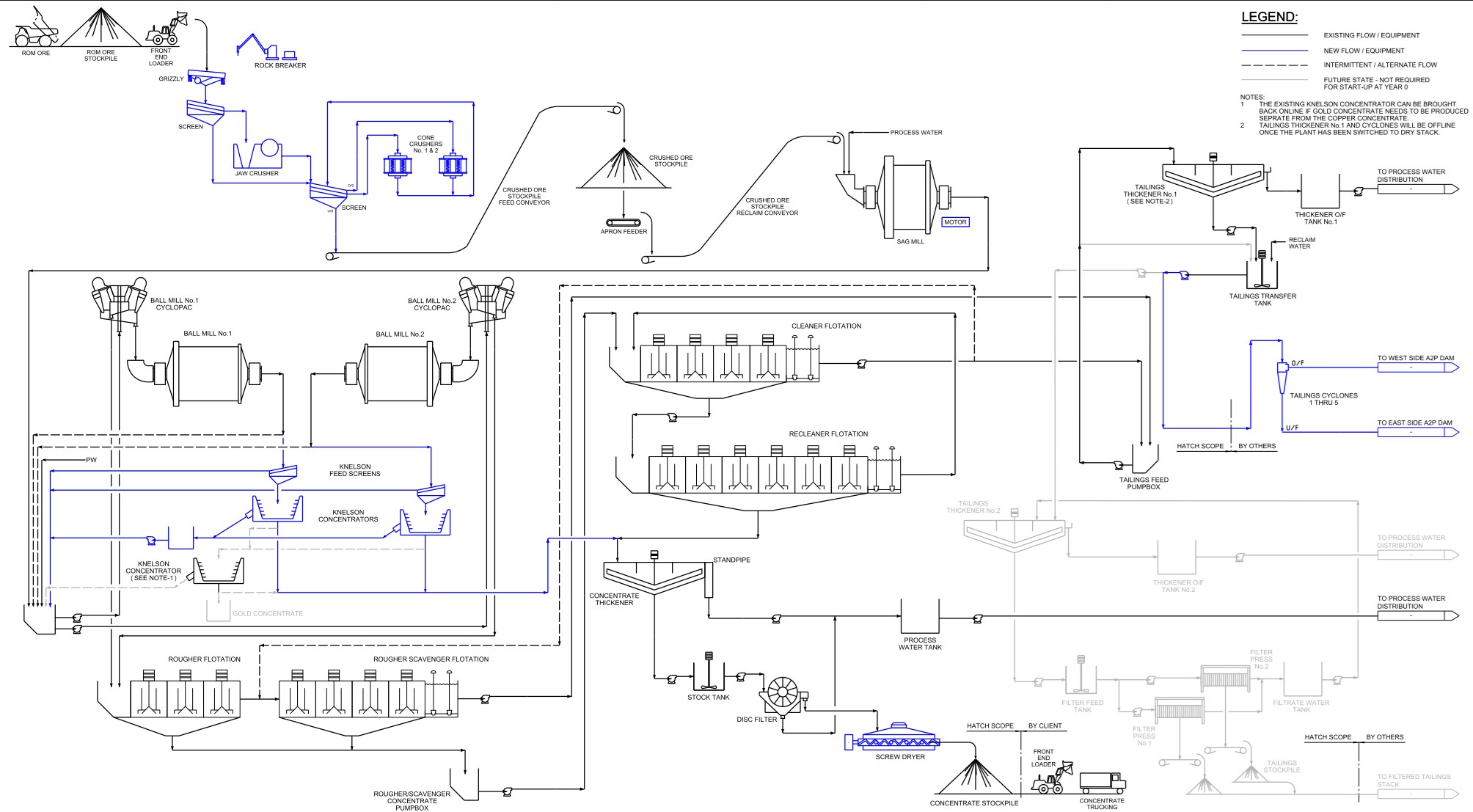
The designed process flowsheet includes run-of-mine mill feed stockpile, three-stage crushing and screening, crushed feedstock stockpile and drawdown, primary semi-autogenous and ball mill grinding mills, gravity concentration, flotation, concentrate thickening, drying and filtration, and tailings thickening and filtration. The overall process flow diagram depicted in Figure 2 identifies the currently existing process flowsheet in black with new, upgraded, or modified aspects of the flow sheet depicted in blue. Equipment planned to be added part-way through the mine life is shown in gray.
Figure 2: Process Flow Diagram
To view an enhanced version of this graphic, please visit:
https://images.newsfilecorp.com/files/11605/315393_c39a3cd6f411fbfd_002full.jpg
Run-of-mine material will be delivered to the crusher area by haulage trucks. This feed will be managed through dedicated ROM stockpiles at the crushing pad to allow blending of material from different mining areas prior to crushing. A new surface crushing and material handling system has been incorporated into the design to support the delivery of ROM material from both underground and open pit sources to the processing plant and provide the ability to control the blending of material of different compositions to control feed grade and oxide ratio.
Crushed material will be conveyed to a stockpile immediately above the hopper feeding the apron feeder with a nominal live capacity of approximately 9,800 tonnes. Crushed material will be reclaimed using an existing apron feeder and transferred by conveyor to the semi-autogenous grinding mill feed chute. Material in this stockpile which is not automatically fed by gravity will be managed with a front-end loader as needed.
The existing grinding circuit is comprised of a primary SAG mill equipped with a 900 horsepower drive motor, operating in open circuit, followed by two parallel secondary ball mills, each powered by a 900 HP drive motor and configured in parallel closed circuits. The PEA includes provision for upgrades and refurbishment of select grinding circuit components, including the SAG mill drive system. Each ball mill operates in closed circuit with its associated cyclone cluster and with the underflow from the cyclones returning to the corresponding ball mill for further size reduction. Discharge from each ball mill will be directed to the respective of two new Knelson gravity concentrators to improve recoveries of gold and silver prior to reporting to the flotation circuit.
The rougher-scavenger flotation circuit consists of three rougher tank cells followed by five scavenger tank cells arranged in series designed to produce copper-gold-silver mineral concentrates at a solids concentration of approximately 35% weight. The cleaner flotation circuit comprises four cleaner tank cells arranged in a single bank. The cleaner circuit is fed by rougher concentrate, rougher scavenger concentrate, and recleaner tailings. Cleaner concentrate is pumped to the recleaner flotation stage for further upgrading. The recleaner circuit consists of six flotation cells in a single bank. Final concentrate from the recleaner circuit is directed to the concentrate thickener for dewatering, while recleaner tailings are returned to the cleaner flotation circuit.
No material modifications to the existing flotation circuit are contemplated other than refurbishment and reconditioning of the existing flotation cells. On-stream analyzers will be retrofitted with new probes and non-radioactive sources to restore analytical functionality.
The primary equipment in the concentrate dewatering circuit is a 9.4-metre diameter high-rate thickener. The thickener is designed to produce a thickened underflow at approximately 70% weight solids, which is directed to the concentrate filtration stage. Thickened concentrate is dewatered using an existing ceramic disc filter. To reliably achieve target moisture limits of 8-10% in the concentrate, a new screw dryer, replacing the concentrate conveyor under the ceramic concentrate filter, will be installed.
Concentrate produced from this circuit is placed in an onsite storage shed with nominal storage capacity of approximately 18,000 tonnes of concentrate which is sufficient to manage the storage requirements for periods when concentrate cannot be shipped from the site due to the seasonal inability to cross the Yukon River. Concentrate produced at site is expected to be transported using 25 t or 50 t trucks along the 27 km site access road, across the Yukon River by barge or ice bridge, and 425 km along the Klondike Highway to the Port of Skagway, Alaska, USA where it will be shipped via tidewater to market for further processing.
Tailings management will be carried out in two phases:
The dry stack facility construction, purchase of associated equipment and pipelines, and all earthworks are part of sustaining capital investments in years 2-3.
Preliminary metallurgical test work carried out by Blue Coast Research in Q4 2025 and Q1 2026 suggests that copper recoveries in low, moderate, and highly oxidized material can be significantly improved by pursuing a targeted blending strategy of unoxidized or sulphide-dominant mineralized material mixed with variably oxidized material. Although there is evidence that improved recoveries can be achieved, historic recovery assumptions are being applied in the PEA. A comprehensive geo-metallurgical test program is planned for the Feasibility Study to further validate recovery assumptions across the range of mineralization types expected in the mine plan and to evaluate opportunities for recovery improvement identified in the preliminary test work.
Water Management and Permitting
The proposed mine plans for the Minto Project restart occur within the same catchments as the previously assessed waste rock impoundment, storage areas and deposits. At this stage the future waste rock generated is anticipated to have similar geochemical properties (such as metal-leaching and acid generation characteristics, trace element leaching, and neutralizing potential) as have existed previously and been managed on site. Characterization of mineralized waste rock has shown that a small proportion may be potentially acid generating. Continuation of the prior operational waste rock characterization and management programs will support the segregation of mineralized waste rock for disposal in long-term saturated storage (e.g., backfilled underground or submerged in mined-out pits).
The Minto Project restart is building on a comprehensive set of prior assessments and monitoring programs which include the following eight (8) principal programs: i) Surface Water Surveillance Program; ii) Metal Mine Effluent Regulations Monitoring Program (now Mining and Diamond Mining Effluent Regulations Program); iii) Groundwater Monitoring Program; iv) Seepage Monitoring Program; v) Geochemical Monitoring Program; vi) Meteorological Monitoring Program; vii) Physical Monitoring Program; and viii) Aquatic Environmental Monitoring Program.
Based on the proposed Site development layout and the locations of existing surface water monitoring stations, and the aforementioned monitoring programs, the current water monitoring network is considered sufficient to capture potential surface water effects associated with the proposed restart. This analysis is based on the spatial relationship between planned disturbance areas, site drainage patterns, and downstream monitoring locations.
The available dataset and the surface water quality characterization provide a good understanding of general water-quality patterns at the Minto Project, including seasonal influences, operational effects, and discharge-related responses. Regardless of past information and experience, the Minto Project restart plan includes an adaptive management plan which is designed to manage site wide water, including through freshet, as well as to protect the overall environment.
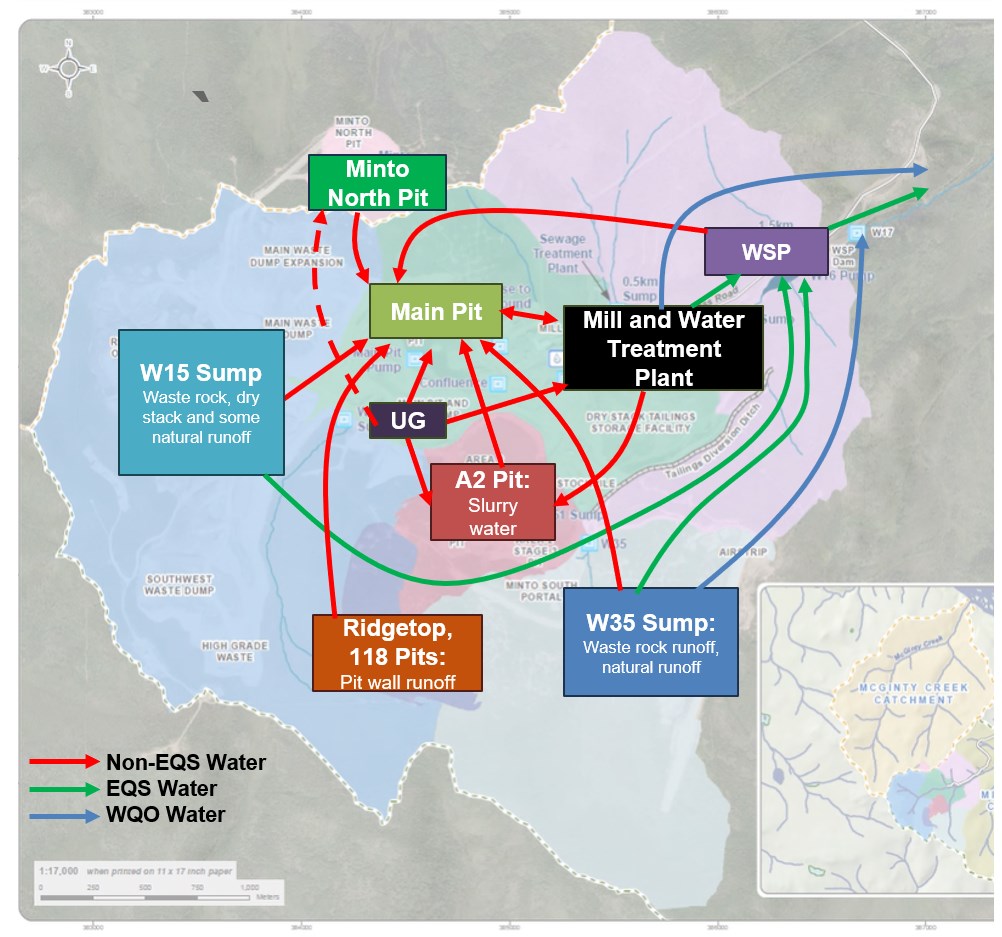
An updated Water Management Plan, based on segregation of clean runoff and mine-impacted water, has been developed for the site that is similar to previous water management plans. The restart plan described in the PEA adheres to prior water quality discharge criteria, specifically an Effluent Quality Standard and a Water Quality Objective, that have been used successfully in the past to protect water and environment adjacent to the Minto Project site. Figure 3 shows a simplified schematic overview of the water flow on site during the early years of the PEA plan.
Figure 3: Minto Site Water Block Flow Diagram
To view an enhanced version of this graphic, please visit:
https://images.newsfilecorp.com/files/11605/315393_c39a3cd6f411fbfd_003full.jpg
The Minto Project has a regulatory and permitting history extending back approximately three decades. The original mine development was reviewed in 1997 under the federal Environmental Assessment and Review Process, prior to the implementation of the Yukon Environmental and Socio-economic Assessment Act. Following implementation of YESAA, substantial changes to the Minto operation were assessed by the Yukon Environmental and Socio-economic Assessment Board, principally through the Mayo Designated Office, and it is on these past assessments that the planned amended permit applications have been developed. Three key authorizations are considered in the Minto Project restart plan, specifically for the Quartz Mining License (QML-001), the Type A Water License (QZ14-031), and the Class 4 Mining Land Use Approval (LQ00565d).
Past assessments concluded that potential adverse environmental effects of the proposed development could be mitigated and that the project could proceed subject to applicable mitigation and regulatory requirements. The Company is advancing its amended permit applications building on successful mitigation and monitoring plans that are well understood by the Yukon Regulator and the Selkirk First Nation.
Concentrate Marketing
The Project is expected to produce up to 49,000 tonnes of copper concentrate per year grading 38% copper that contains significant gold and silver by-products with negligible deleterious or penalty elements.
Calgacus AG, a specialist advisor on commercial and logistical matters related to critical mineral concentrate trading, has ascertained that mineral concentrate from the Project will be one of a few high-grade copper (>35%) concentrate products potentially available to the market before 2030 and, given its lack of associated penalty elements, high concentrate grade, and precious-metal credits, is expected to attract premium pricing and offtake terms.
The Project’s copper concentrate will be a highly desirable product for copper and gold smelter-refineries and concentrate blending facilities, where trading companies and/or smelting-refining companies are expected to mix the high-quality product with other lower-grade and/or more complex concentrates.
Copper smelters typically charge a Treatment Charge for smelting a concentrate and a Refining Charge to refine the copper and by-product metals, in this case gold and silver, into a finished product purity and form. TCs are typically quoted on a US$ per dry metric tonne of concentrate basis, and RCs are typically quoted on a US$ per mass unit of contained metal basis. From 2016 to 2023, benchmark TCs and RCs averaged US$78/dmt and 7.8 US¢/lb payable copper, respectively. During this period, although there was limited incentive to build new copper smelters globally, provincial governments in China were willing to finance the construction of smelters to boost local GDP and employment levels. More recently, with the construction of new smelters and refineries in the Democratic Republic of Congo, Indonesia and India, there has been a significant increase in global concentrate processing capacity, far outstripping copper mine output growth. This imbalance between supply and processing capacity of copper concentrates has led to acute tightening in the concentrate market and a corresponding sharp drop in TCs and RCs driven by increased competition for product, with the annual contract levels in 2024-2026 averaging US$33.8/dmt and 3.38 US¢/lb, respectively.
Calgacus estimates that, in view of the expected large copper concentrate deficits for the foreseeable future, the Company will easily be able to achieve a full sale of its future concentrate production and recommends using a long-term assumption for the annual benchmark TC of USD $35/dmt, a copper RC of 3.5 US¢/lb payable of copper, a gold RC of USD $5/oz, and a silver RC of USD $0.50/oz for the 13 year project life.
Demand for refined copper remains robust, driven by electrification, grid investment, electric vehicles and, increasingly, data-centre construction, which resulted in copper prices reaching record levels in 2026. In this environment, clean, high-grade concentrates such as the Project’s carry particular strategic value in the market: smelters and traders blend them with lower-grade or more complex concentrates to meet smelter feed specifications, which supports payability, treatment terms and offtake demand at or better than industry-standard levels.
In the Minto Project’s historical operations from 2007 to 2023 more than 640,000 tonnes of copper concentrate were produced, typically comprised of a mixture of chalcopyrite and bornite minerals with minimal other sulphides, resulting in high metallurgical recoveries and concentrate grades between 32% to 52% copper (averaging 39% copper), plus gold and silver. The Project expects to achieve an average copper grade of 38% in concentrate, with 12-18 g/t of contained gold, 100-150 g/t of silver and no deleterious elements which would incur penalty terms.
Other assumptions include:
In advance of a potential investment decision, Selkirk Copper intends to engage with potential concentrate offtakers from the smelting and trading community to introduce the Project’s expected concentrate specification, confirm market appetite, and solicit indicative treatment and refining terms.
A formal marketing process is planned to run in parallel with the next stage of technical studies and project financing option evaluation. The Company expects to shortlist a group of smelters and trading houses, distribute a concentrate marketing package (specification, production profile and logistics chain), and negotiate term sheets to evaluate offtake and associated financing’s potential to cover a portion of the upfront capital costs. Binding offtake agreements would be targeted for execution either in advance of, or concurrent with, an investment & restart decision and project financing.
As the historical concentrate offtake agreement and precious metals stream which previously encumbered the Project were removed through the bankruptcy process, Selkirk Copper’s offtake position is fully unencumbered. Offtake-linked prepayments or concentrate-backed facilities therefore represent a potential source of non-dilutive financing for the restart, and Selkirk Copper intends to test appetite for such structures as part of the marketing process.
Selkirk Copper has not entered into any contracts for concentrate sales at this time and has used conservative treatment and refining charge bases for its economic analysis.
Capital Costs Overview
The capital cost estimate was developed to target an Association for the Advancement of Cost Engineering Class 5 estimate accuracy range of -50% to +100%. Several aspects of this estimate have a level of maturity supported by multiple budget quotes and field-level examinations of equipment condition which have enabled the assessment of contingency on an individual entry basis increasing the overall level of accuracy.
All costs are provided in Q2 2026 Canadian dollars. No escalation has been applied.
The estimate includes direct and indirect costs, owner’s costs and contingency for the Project to support the goal of commencement of construction in mid-2027 and the recommencement of mining and processing operations in H2 2028.
These costs have been classified as follows:
The Capex includes mining, process plant, water treatment, tailings management, field-based assessment of additional infrastructure upgrades and repairs necessary prior to commencement of operations and recommended upgrades to support sustained production to meet Project objectives.
The Susex commences at the start of the post-construction period on 1 July 2028 and is expressed in Q2 2026 Canadian dollars, excluding taxes. These costs are presented on a nominal, un-escalated basis, with no contingency included for excavations, and have been calculated from first principles using the same basis as for the construction period. Equipment rebuilds, additional primary mobile equipment, and other underground equipment have been estimated in the applicable year of requirements and have had contingency applied.
The level of detail in the estimate has also enabled the application of contingency to be assessed for each entry reflecting the level of maturity and confidence in the total cost while considering the planned start date of the construction period. This has resulted in an aggregated overall contingency instead of applying one contingency to the whole estimate. A summary of Capex and Susex by area over the life of the mine is shown in Table 5 below (values may not sum due to rounding).
Table 5: Capex and Susex Summary
| Classification | Capex (C$M) | Susex (C$M) |
| Site General | 2.4 | – |
| Mining | 77.6 | 220.3 |
| Processing | 12.0 | – |
| Surface Facilities – Other | 5.0 | – |
| Surface Utilities | 5.1 | 6.1 |
| Transportation – On and Off Site | 0.2 | – |
| Tailings Ponds & Disposal | 6.6 | 68.4 |
| Surface Storage Stockpiles & Dumps | 43.6 | |
| Closure & Rehabilitation | 70.8 | |
| Indirects | 54.3 | |
| Contingency | 22.6 | |
| Total Capex | 185.9 | 409.3 |
Operating Costs Overview
The operating cost estimate for the Project has been developed using contractor-based inputs, internal benchmark costing, and first-principles methodologies appropriate for a PEA. All costs are presented in C$ in real Q2 2026 terms, unless otherwise stated.
Operating costs comprise the following major components:
The overall cost structure reflects the production plan, mine design criteria, and the operating assumptions defined for the PEA. See Table 6 and Table 7 for a summary of operating costs.
Table 6: Life of Mine Opex Summary by Area
| Unit Opex | Units | LOM Average |
| Underground Mining | C$/t mill feed | 51.28 |
| Open Pit Mining | C$/t mined | 4.39 |
| Processing | C$/t milled | 15.89 |
| Tailings | C$/t tailings | 4.89 |
| Water Treatment | C$/t milled | 4.03 |
| G&A | C$/t milled | 24.47 |
| Total On-Site Opex Cost | C$/t milled | 95.77 |
Table 7: Life of Mine Opex Summary Normalized
| Unit Opex | Units | LOM Average |
| Underground Mining | C$/t milled | 34.47 |
| Open Pit Mining | C$/t milled | 12.20 |
| Processing | C$/t milled | 15.89 |
| Tailings | C$/t milled | 4.71 |
| Water Treatment | C$/t milled | 4.03 |
| G&A | C$/t milled | 24.47 |
| Total On-Site Opex Cost | C$/t milled | 95.77 |
Processing operating costs are developed from defined concentrator operating assumptions, reflecting expected plant throughput and availability. The design basis assumes an annual throughput of 1,496,500 tonnes per year, achieved through a nominal processing rate of 186 tonnes per hour over 8,059 operating hours per year, equivalent to a daily throughput of 4,100 tpd.
Overall plant availability is estimated at 92%, supporting continuous, stable mill operations and forming the foundation for the processing Opex estimates.
G&A costs represent all other costs not included directly in the construction or operating of the site facilities and which are required to sustain operations.
These costs include:
These costs were developed by:
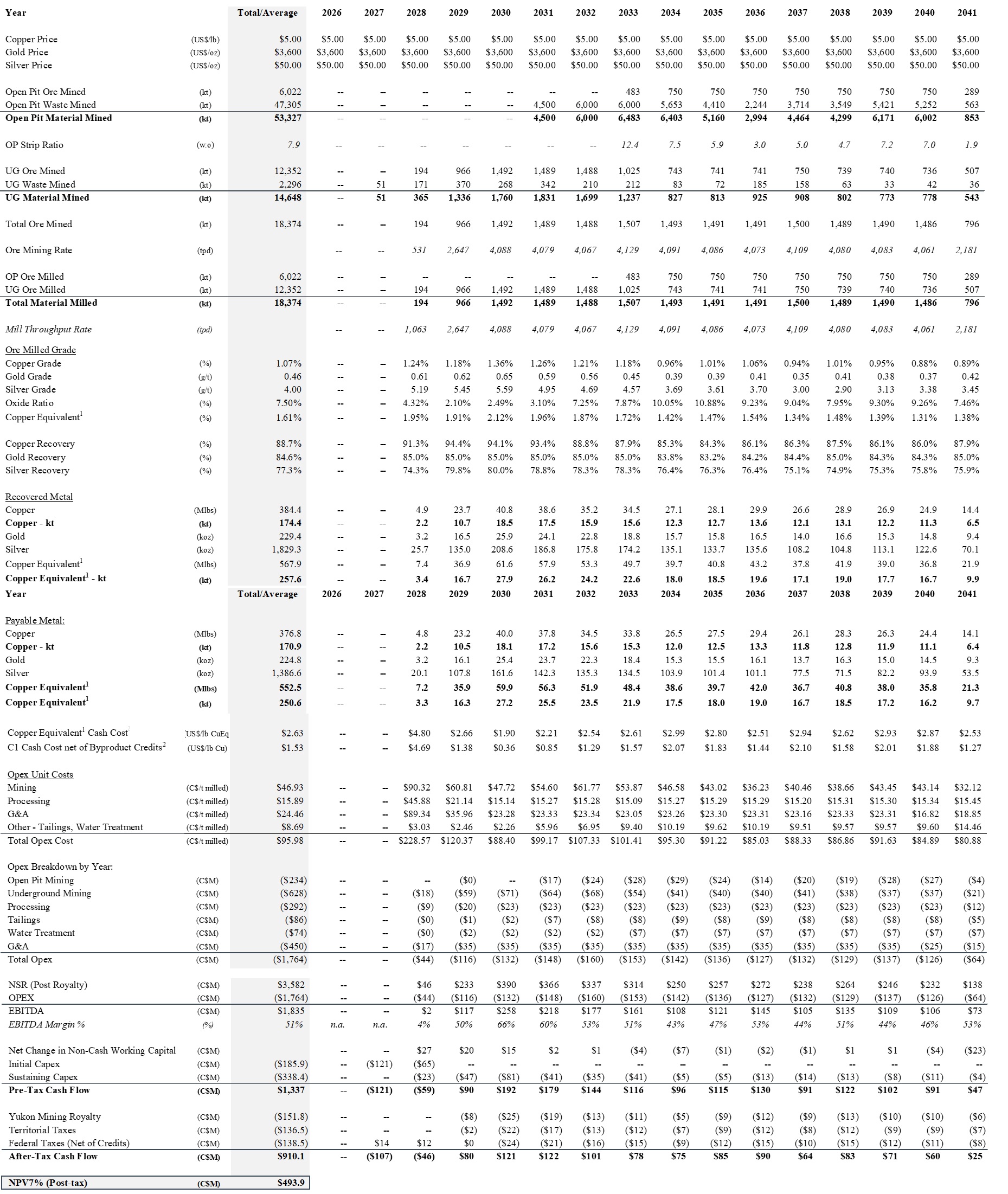
Project Life of Mine Summary – Planning Prices
To view an enhanced version of this graphic, please visit:
https://images.newsfilecorp.com/files/11605/315393_selkprojtbl.jpg
Qualified Persons
Scott Fulton, P.Eng, VP Engineering for the Company and a non-independent Qualified Person as defined by National Instrument 43-101, has prepared, validated, and approved the scientific and technical information in this news release.
The PEA was prepared by a team of independent industry experts, led by Hatch and supported by SRK, Fuse, MMTS, and Ensero.
The affiliations and areas of responsibility of individuals who assisted in preparation of portions of the PEA are provided below.
About Selkirk First Nation
Selkirk First Nation is centered in Pelly Crossing, a community in central Yukon, 280 km north of Whitehorse. They are a self-governing First Nation, having signed its Final and Self-Government Agreements in 1997. Selkirk First Nation owns 4,740 square kilometers of Settlement Land, including 2,408 square kilometers where they own both the surface and subsurface. Selkirk First Nation is one of three self-governing Northern Tutchone First Nations in the Yukon. The Selkirk First Nation, indirectly, holds a controlling equity stake in Selkirk Copper.
About Selkirk Copper
Selkirk Copper is a well-financed, newly formed company with a controlling interest held by the Selkirk First Nation through its wholly owned subsidiary, that, in partnership with the Selkirk First Nation, is completing a thorough exploration drilling campaign and a restart and redevelopment plan for the former Minto copper-gold-silver mine based on best-in-class environmentally sustainable mining, development and reclamation practice. Selkirk Copper controls 26,850 hectares of prospective mineral claims located in the Minto-Carmacks copper belt as well as significant open-pit and underground infrastructure, a 4,100 tonne per day processing plant, 400-person full-rotation camp, water treatment facilities, numerous ancillary buildings, and mobile equipment centered on the former Minto copper-gold-silver mine. Selkirk Copper’s mineral tenure, operation infrastructure, access roads and powerline, is located on or adjacent to Lands of the Selkirk First Nation much of which is surrounded by prospective Selkirk First Nation Category A Lands.
Selkirk Copper Mines Inc. is listed on the TSX Venture Exchange under the symbol TSXV: SCMI, has a secondary listing on the Frankfurt Exchange under the symbol FSE: IO20, and its common shares trade under the symbol OTCQX: SKRKF on the OTCQX® Best Market, a U.S. marketplace operated by OTC Markets Group Inc.
On behalf of the Board of Directors of Selkirk Copper Mines Inc.
For more information, please contact:
Justin Stevens, Vice-President Corporate Development
justin.stevens@selkirkcopper.com
(604) 240-2959
Neither the TSX Venture Exchange nor its Regulation Services Provider (as that term is defined in the policies of the TSX Venture Exchange) accepts responsibility for the adequacy or accuracy of this release.
Brutus Mining Inc. (CSE: BRU) (FSE: ZI3) is pleased to announce that it has closed its non-brokered ... READ MORE
Jaguar Uranium Corp. (NYSE American: JAGU) is pleased to announce an independent Mineral Resource E... READ MORE
Auro Metals Inc. (TSX-V: AURO) (OTCQB: AURFF), is pleased to announce the assay results of the fina... READ MORE
Endeavour Silver Corp. (NYSE: EXK) (TSX: EDR) is pleased to announce that repairs to the primary bal... READ MORE
Scorpio Gold Corp. (NASDAQ: SGLD) (TSX-V: SGLD) (OTCQB: SRCRF) (FSE: RY9) is pleased to announce re... READ MORE