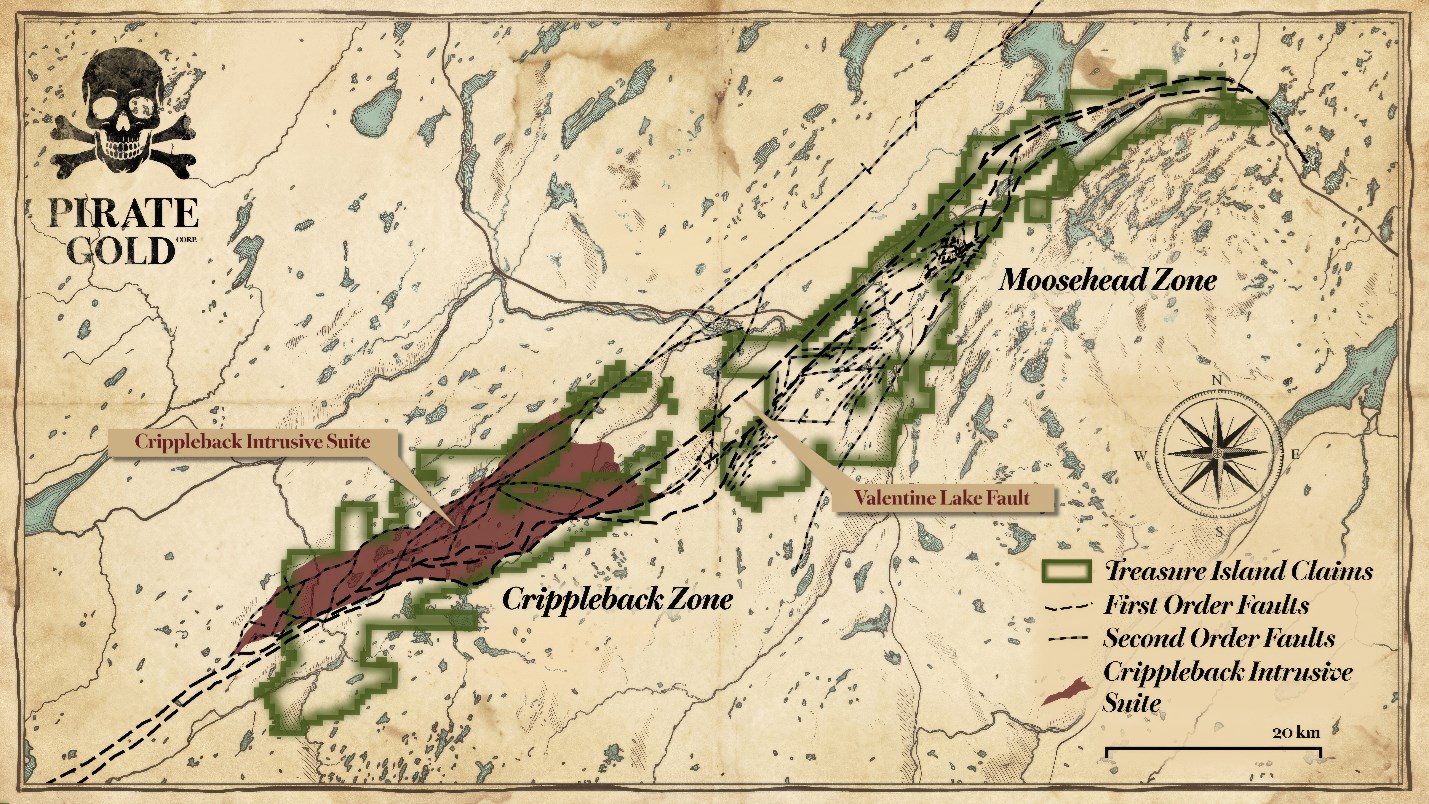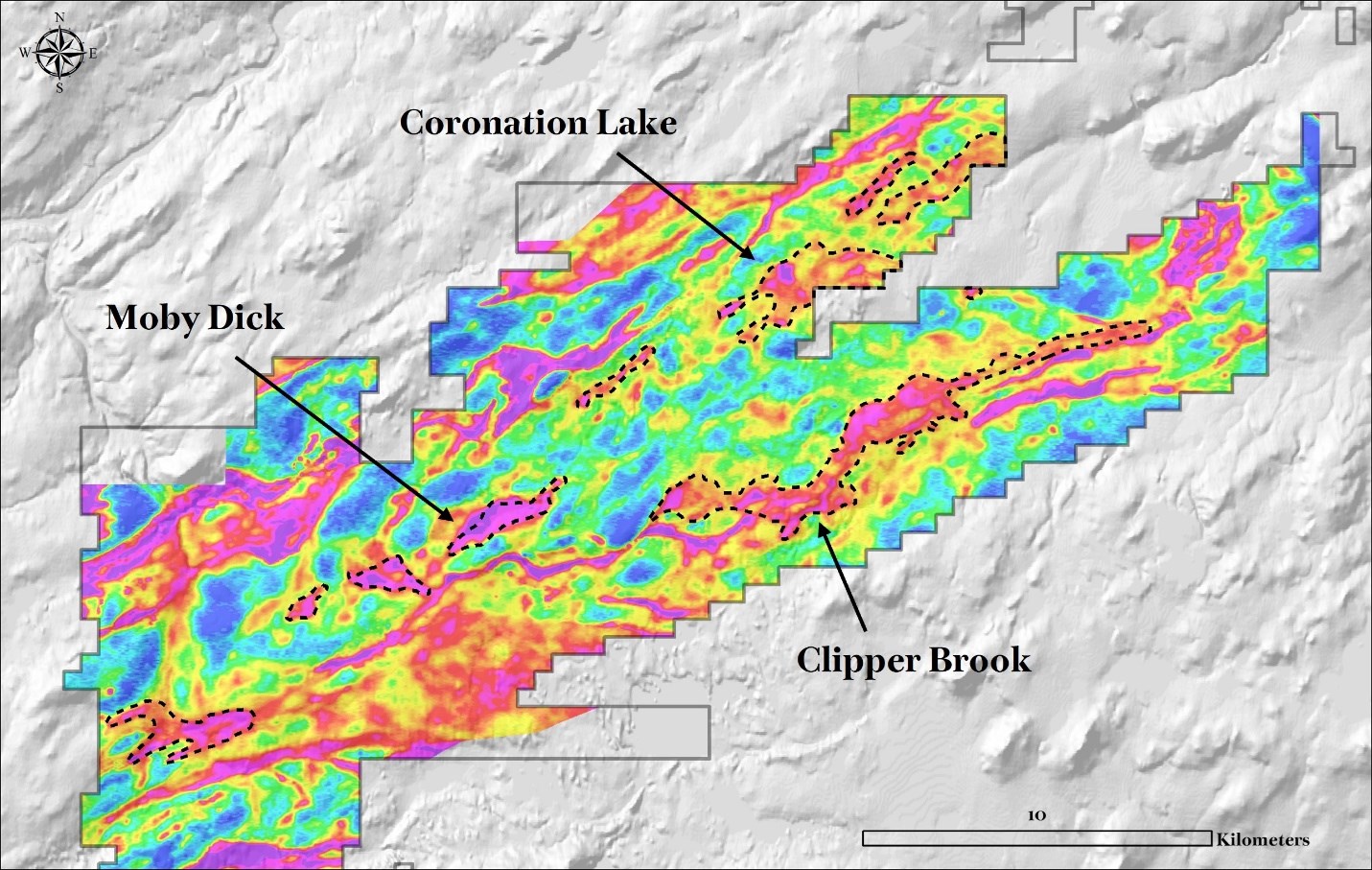








Pirate Gold Corp. (TSX-V: YARR) (OTCQB: YARRF) is pleased to report assay results from drilling at the Moby Dick copper-gold discovery within the Crippleback Intrusive Suite at its 100%-owned Treasure Island Project in Central Newfoundland. The Treasure Island Project covers over 90 km of strike along the Valentine Lake Fault Zone in Canada’s newest gold district.
Highlights
Moby Dick Drilling
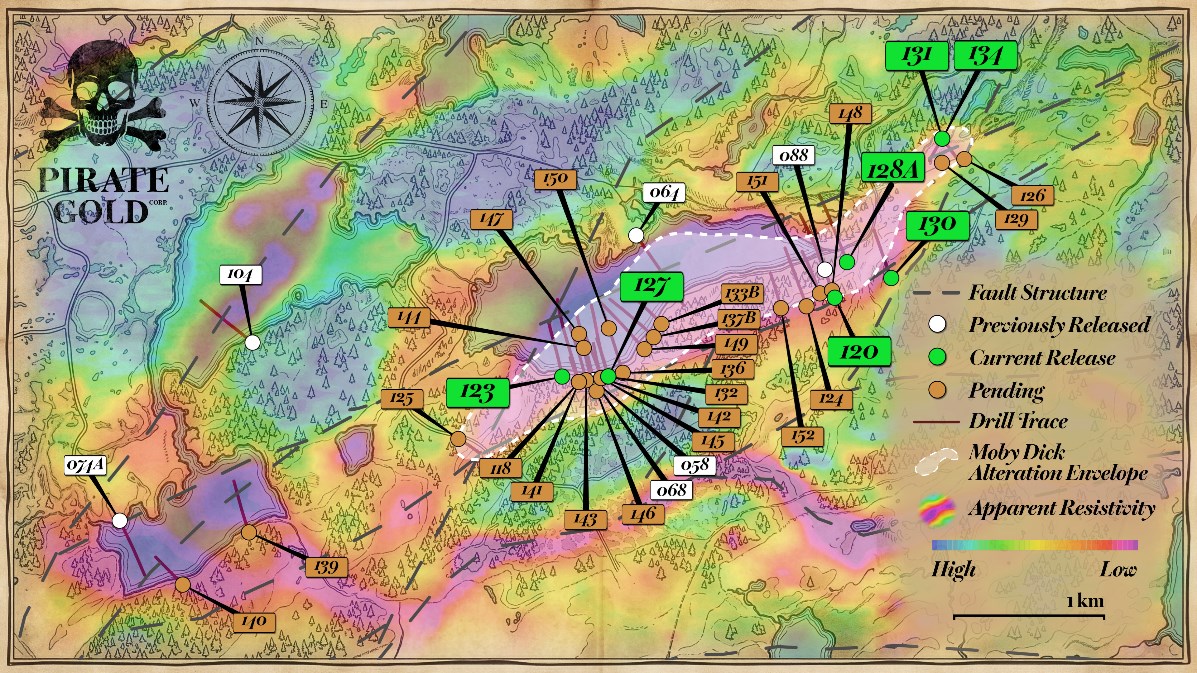
PGC-26-123 was collared approximately 100m west of PGC-26-118 and intersected 0.23% Cu Eq (0.11% Cu; 0.10 g/t Au; 1.07 g/t Ag; 7.8 g/t Mo) over 261.0m. This interval includes 0.51% Cu Eq (0.18% Cu; 0.28 g/t Au; 2.11 g/t Ag; 6.5 g/t Mo) over 20.0m. Beyond this interval multiple additional zones of >0.1% Cu Eq including 0.40% Cu Eq (0.12% Cu; 0.24 g/t Au; 1.66 g/t Ag; 1.26g/t Mo) over 17.0m. This drill hole exhibits very similar grade distribution to PGC-26-118 which intersected 0.24% Cu Eq (0.13% Cu; 0.087 g/t Au; 1.72 g/t Ag) over 299.4m; includes 0.43% Cu Eq (0.21% Cu; 0.184 g/t Au; 2.00 g/t Ag) over 56.5m, including 0.52% Cu Eq (0.24% Cu; 0.238 g/t Au; 2.06 g/t Ag) over 35.6m. With additional deeper intervals of 0.43% Cu Eq (0.26% Cu; 0.112 g/t Au; 4.12 g/t Ag) over 19.8m and 0.23% Cu Eq (0.12% Cu; 0.084 g/t Au; 1.65 g/t Ag) over 72.7m, including 0.33% Cu Eq (0.17% Cu; 0.121 g/t Au; 2.32 g/t Ag) over 37.0m.
PGC-26-127 was drilled approximately 300m east of PGC-26-123 and intersected multiple broad zones of >0.1% Cu Eq starting at the bedrock surface to downhole depths of 645.0m. Highlighted intervals from this hole are 0.15% Cu Eq (0.02% Cu; 0.10 g/t Au; 0.92 g/t Ag, 9.4 g/t Mo) over 286.0m including 0.40% Cu Eq (0.05% Cu; 0.28 g/t Au; 3.18 g/t Ag; 10.8g/t Mo) over 19.3m and a deeper interval of 0.15% Cu Eq (0.09% Cu; 0.04g/t Au; 1.26 g/t Ag; 4.1g/t Mo) over 162.1m.
Moby’s Porphyry
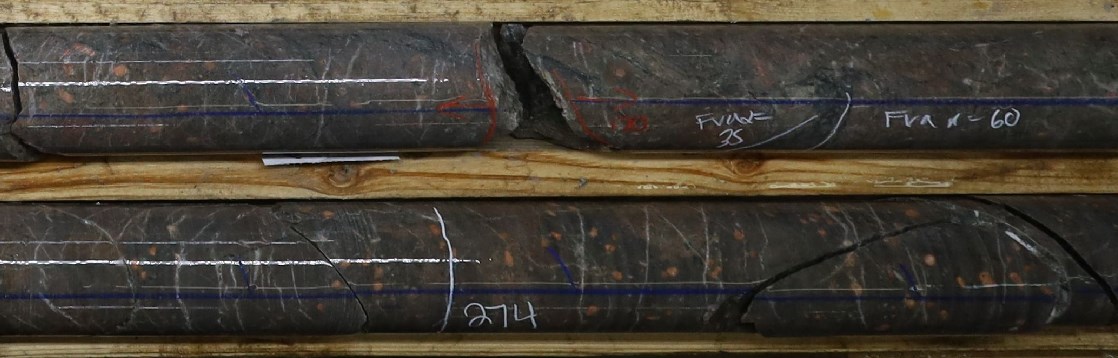
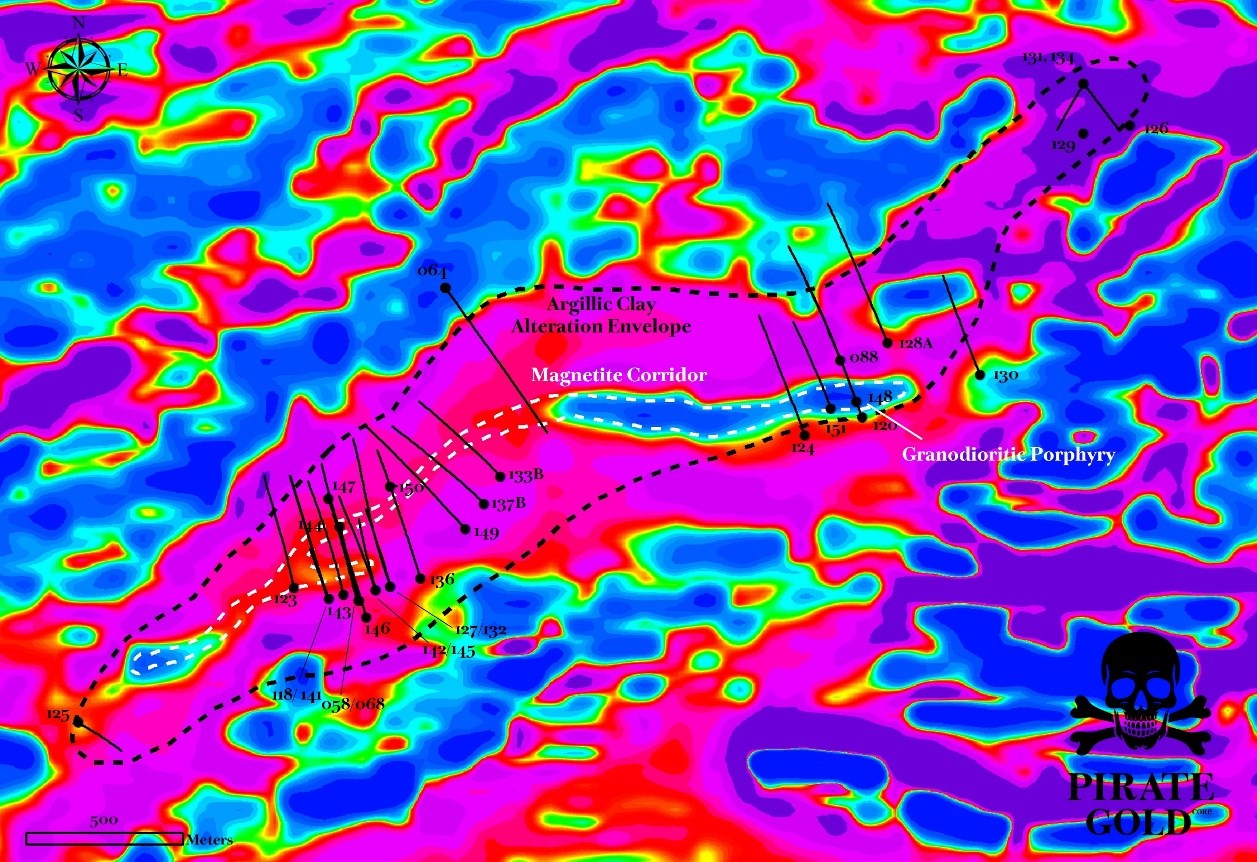
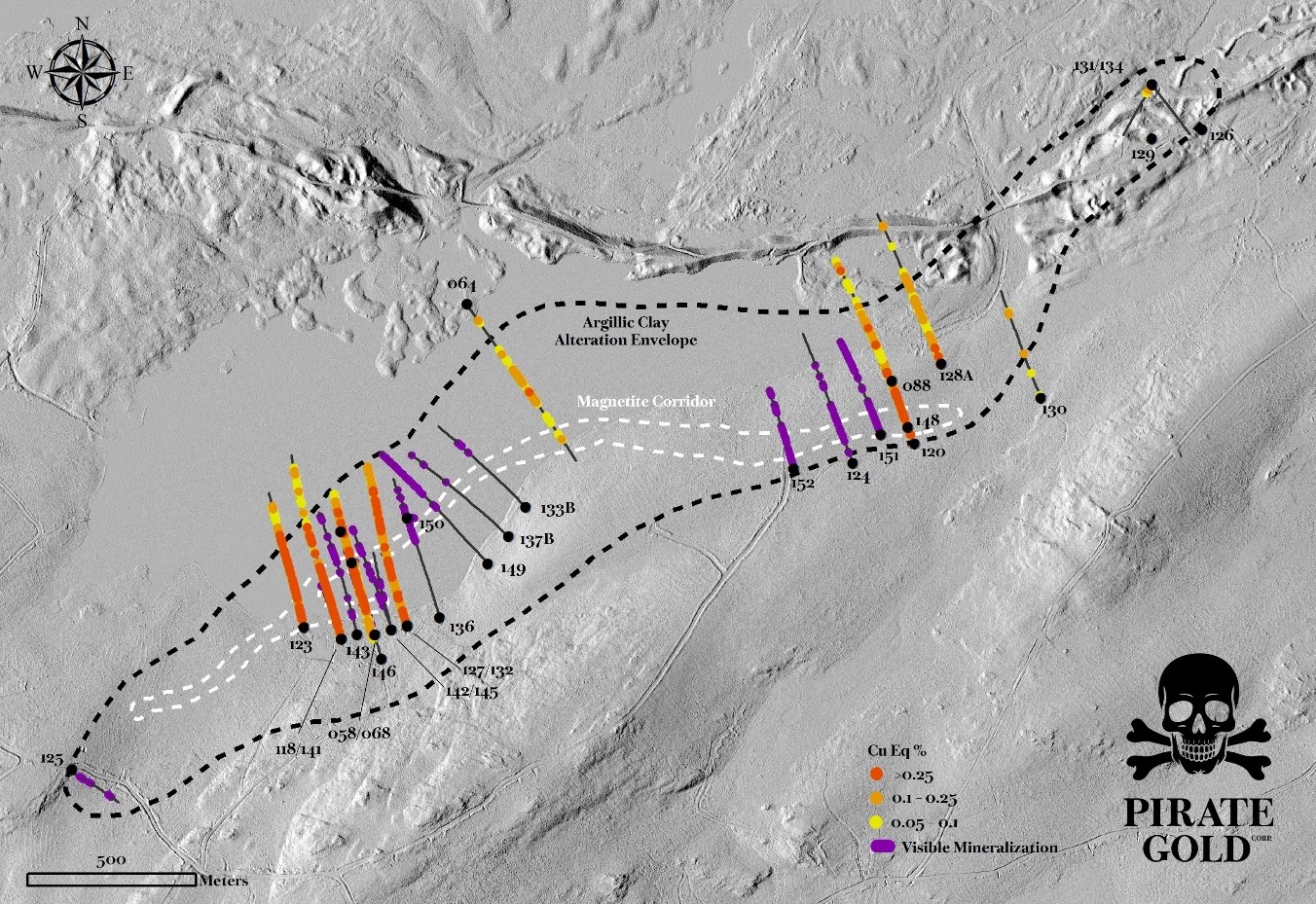
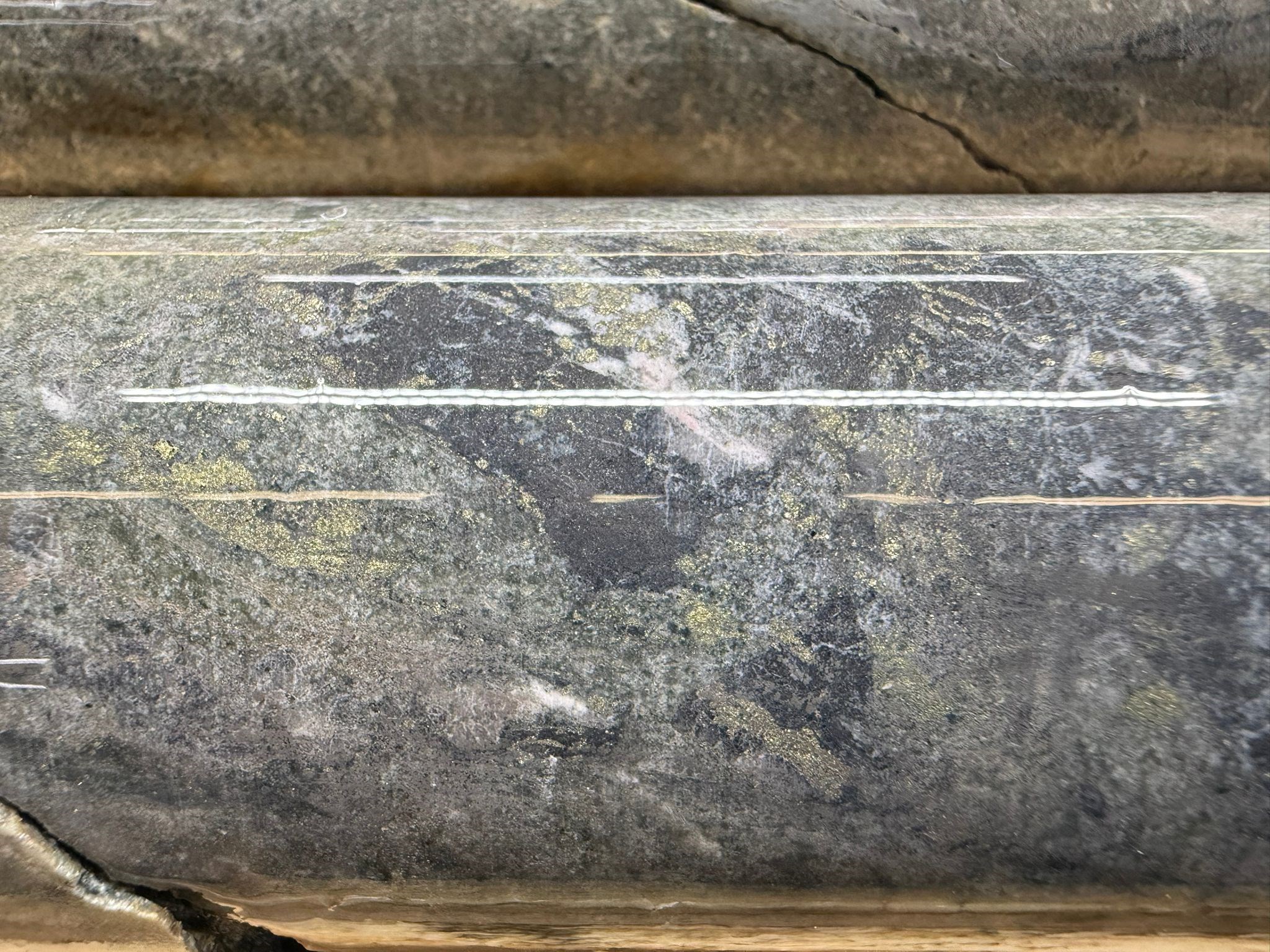
PGC-26-120 was drilled 1,900m east of PGC-26-123 within the Moby Dick EM anomaly. This hole intersected an approximately 75m (from 235.7m to 310.2m) wide porphyritic granodiorite dyke intrusion (Figure 1) that exhibits a strong magnetic signature (Figure 3). The surrounding rock volume exhibited several distinctive features including strong potassic alteration up to 150m external to the dyke and copper-gold mineralization across broad intervals reporting 0.19% Cu Eq (0.10% Cu; 0.07 g/t Au; 0.80 g/t Ag; 16 g/t Mo) over 137.0m with higher grade intervals including 0.36% Cu Eq (0.19% Cu; 0.13 g/t Au; 1.60 g/t Ag; 1.26 g/t Mo) over 20.0m nearest to the margins of the intrusion; external to above interval broad zones of copper-gold mineralization showed elevated molybdenum results including 0.12% Cu Eq (0.04% Cu, 0.03 g/t Au, 2.16 g/t Ag, 49.2g/t Mo) over 10.0m.
The zone of magnetite enrichment and porphyritic intrusions is interpreted to extend throughout the Moby Dick EM anomaly along roughly 2700m (Figure 3). Currently this is being examined as one causal source of the broad advanced argillic alteration envelop developed at Moby Dick as well as the broad zones of copper-gold mineralization found within it.
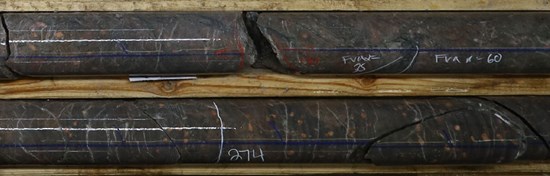
Figure 1. Granodiorite Porphyry in PGC-26-120 at approximately 274.0m
To view an enhanced version of this graphic, please visit:
https://images.newsfilecorp.com/files/6079/323872_5ea83e54246f29aa_001full.jpg
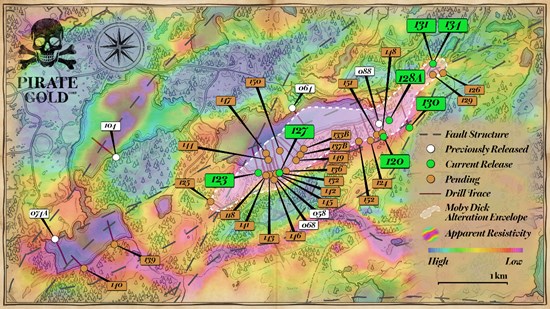
Figure 2. Recent Drilling at Moby Dick Alteration Zone
To view an enhanced version of this graphic, please visit:
https://images.newsfilecorp.com/files/6079/323872_5ea83e54246f29aa_002full.jpg
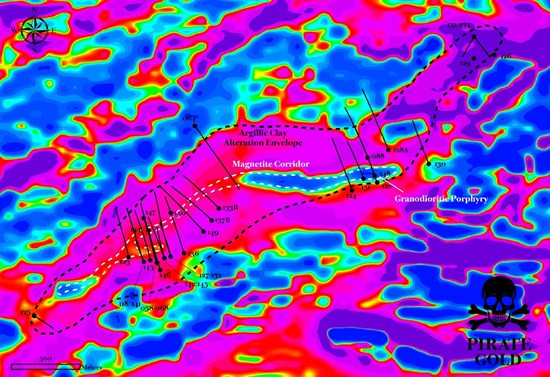
Figure 3. First Vertical Derivative Magnetics showing Moby’s Porphyry and Magnetite Corridor
To view an enhanced version of this graphic, please visit:
https://images.newsfilecorp.com/files/6079/323872_5ea83e54246f29aa_003full.jpg
“Our initial stage of drilling at the Moby Dick anomaly has shown that the scale of the mineral system is truly astonishing. In less than 6 months we’ve identified broad zones of copper-gold mineralization along a length of over 5 kilometres; depths of over 450m and with many holes stopping in mineralization. The scale of this mineral system already exceeds many of the copper-gold porphyry mines both in Canada and globally presenting us with a unique opportunity to bring the project forward. Furthermore, we’re starting to understand one of the controls of this mineralization centered around a multi-kilometer long magnetite rich zone containing granodioritic porphyritic intrusions. The recognition of magnetite rich magmatic fluids surrounding the porphyritic intrusion has a strong correlation with higher grades in the very broad envelopes of mineralization. Phase two of exploration has already begun to focus on this magnetic core and 19 drill holes showing visible mineralization are pending analysis at the lab,” said Greg Matheson, VP Exploration.
“We see a major opportunity at Moby Dick, and this latest financing gives us the firepower to go after it,” said Denis Laviolette, Executive Chairman and CEO. “A copper-gold porphyry system of this size was not on anyone’s map, including ours, a year ago. Today we have drilled it across two kilometres of strike, intersected porphyry, and have a magnetite corridor to steer by. A discovery like this demands conviction and sustained exploration, and we are backing it with both. With barge drilling underway and a substantial pipeline of assays pending, we are entering the next phase with clearer targets and the capital to test them. Our focus is on expanding the discovery and pursuing the higher-grade zones that could make Moby Dick a defining asset for Pirate Gold.”
| Drill Hole | From (m) | To (m) | Length (m) | Cu (%) | Au (g/t) | Ag (g/t) | Cu Eq (%) | Mo (g/t) | Zn (%) |
| PGC-26-120 | 58.0 | 68.0 | 10.0 | 0.04 | 0.03 | 2.16 | 0.12 | 49.23 | |
| And | 111.0 | 248.0 | 137.0 | 0.10 | 0.07 | 0.80 | 0.19 | 16.34 | |
| Incl. | 111.0 | 148.0 | 37.0 | 0.10 | 0.07 | 0.76 | 0.20 | 40.97 | |
| Incl. | 173.0 | 234.6 | 61.6 | 0.12 | 0.09 | 1.04 | 0.23 | 4.73 | |
| Incl. | 211.7 | 231.6 | 20.0 | 0.19 | 0.13 | 1.60 | 0.36 | 1.26 | |
| And | 358.6 | 373.5 | 14.9 | 0.05 | 0.15 | 1.07 | 0.22 | 4.26 | |
| And | 387.3 | 399.3 | 12.0 | 0.06 | 0.02 | 1.08 | 0.11 | 23.76 | |
| And | 419.8 | 455.3 | 35.6 | 0.04 | 0.02 | 1.56 | 0.09 | 17.71 | |
| And | 557.5 | 563.2 | 5.7 | 0.01 | 0.11 | 0.55 | 0.14 | 1.92 | |
| PGC-26-123 | 32.0 | 293.0 | 261.0 | 0.11 | 0.10 | 1.07 | 0.23 | 7.83 | |
| Incl. | 32.0 | 89.0 | 57.0 | 0.13 | 0.17 | 1.48 | 0.34 | 4.31 | |
| Incl. | 58.0 | 78.0 | 20.0 | 0.18 | 0.28 | 2.11 | 0.51 | 6.53 | |
| Incl. | 160.0 | 173.6 | 13.6 | 0.18 | 0.17 | 1.27 | 0.38 | 5.07 | |
| And | 303.0 | 312.0 | 9.0 | 0.13 | 0.07 | 1.47 | 0.23 | 0.63 | |
| And | 318.0 | 330.0 | 12.0 | 0.12 | 0.06 | 1.40 | 0.20 | 0.50 | |
| And | 356.0 | 373.0 | 17.0 | 0.12 | 0.24 | 1.66 | 0.40 | 1.26 | |
| And | 384.9 | 390.5 | 5.6 | 0.22 | 0.03 | 3.05 | 0.29 | 1.06 | |
| And | 414.5 | 419.5 | 5.0 | 0.08 | 0.06 | 1.66 | 0.16 | 0.58 | |
| PGC-26-127 | 20.0 | 306.0 | 286.0 | 0.02 | 0.10 | 0.92 | 0.15 | 9.40 | |
| Incl. | 122.8 | 142.0 | 19.3 | 0.05 | 0.28 | 3.18 | 0.40 | 10.78 | |
| Incl. | 282.4 | 301.0 | 18.6 | 0.02 | 0.26 | 0.74 | 0.32 | 1.34 | |
| And | 358.6 | 366.0 | 7.4 | 0.02 | 0.34 | 1.86 | 0.42 | 16.53 | |
| And | 414.9 | 577.0 | 162.1 | 0.09 | 0.04 | 1.26 | 0.15 | 4.06 | |
| Incl. | 518.0 | 525.0 | 7.0 | 0.23 | 0.03 | 3.30 | 0.31 | 1.12 | |
| And | 605.4 | 623.0 | 17.7 | 0.09 | 0.13 | 2.05 | 0.26 | 0.68 | |
| And | 635.0 | 645.0 | 10.0 | 0.06 | 0.02 | 1.19 | 0.11 | 20.45 | |
| PGC-26-128A | 27.0 | 35.0 | 8.0 | 0.01 | 0.20 | 1.12 | 0.25 | 28.84 | |
| And | 68.0 | 90.9 | 22.9 | 0.02 | 0.03 | 0.30 | 0.11 | 94.31 | |
| And | 99.9 | 127.5 | 27.7 | 0.03 | 0.06 | 0.41 | 0.11 | 12.75 | |
| And | 204.0 | 216.0 | 12.0 | 0.07 | 0.05 | 0.62 | 0.14 | 17.48 | |
| And | 239.0 | 260.0 | 21.0 | 0.05 | 0.01 | 0.50 | 0.08 | 9.96 | |
| And | 270.9 | 295.0 | 24.2 | 0.06 | 0.02 | 0.82 | 0.10 | 17.19 | |
| And | 372.0 | 407.0 | 35.0 | 0.05 | 0.04 | 1.59 | 0.12 | 8.16 | 0.27 |
| And | 627.0 | 632.0 | 5.0 | 0.06 | 0.07 | 0.37 | 0.15 | 17.83 | |
| PGC-26-130 | NSR | NSR | NSR | NSR | NSR | NSR | NSR | NSR | |
| PGC-26-131 | NSR | NSR | NSR | NSR | NSR | NSR | NSR | NSR | |
| PGC-26-134 | NSR | NSR | NSR | NSR | NSR | NSR | NSR | NSR |
Table 1. Significant assay results.
1 True widths are unknown; all intervals are reported as downhole lengths.
2 See the QA/QC section for metal-equivalent assumptions and calculation methodology.
3 Intervals not listed are considered to have returned no significant assay results.
4 PGC-26-126 and PGC-26-129 were terminated prior to reaching bedrock
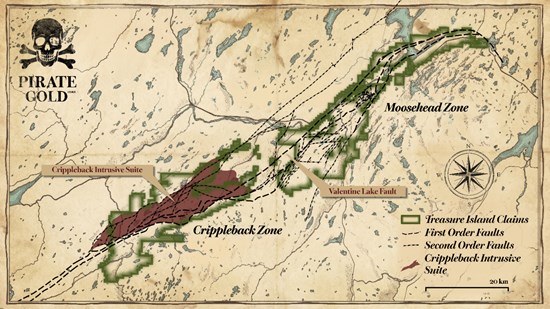
Figure 4. Location of Crippleback within the Treasure Island Project
To view an enhanced version of this graphic, please visit:
https://images.newsfilecorp.com/files/6079/323872_5ea83e54246f29aa_004full.jpg
Airborne Mobile MT Survey and Barge Drilling Updates
The Company contracted Expert Geophysics of Newmarket, Ontario, to conduct an airborne Mobile MT geophysical survey over the southern portion of the Treasure Island Project. The survey follows the airborne EM program completed in April, 2026, which defined a resistivity anomaly closely correlated with the Moby Dick alteration zone as well as several similar geophysical features throughout the Crippleback intrusive suite (Figure 6). Mobile MT is a passive EM system used to map subsurface resistivity and identify potential deeper targets associated with copper-gold porphyry and epithermal mineralization. The survey was completed on Sept 26, 2026 is anticipated to be able to image subsurface resistivity to an approximate depth of 1 to 2 kilometres. Final survey deliverables are expected in mid-November 2026 and Company anticipates drill testing deep targets in late 2026 into early 2027.
The Company launched its barge-based drilling program on the waters of Crippleback Lake in mid-September, 2026 to allow access to the broad regions of the Moby Dick EM anomaly not accessible from land. To date four holes have been completed.
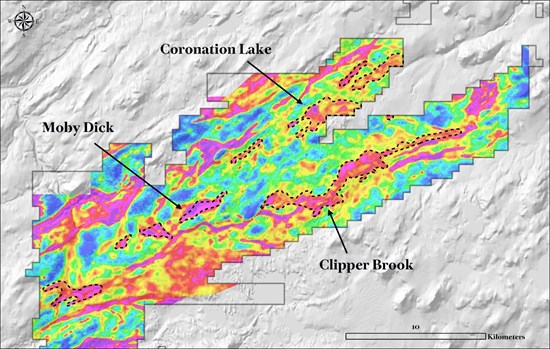
Figure 5. Airborne EM Conductivity Model with Target Zones
To view an enhanced version of this graphic, please visit:
https://images.newsfilecorp.com/files/6079/323872_5ea83e54246f29aa_005full.jpg
Visual Observations from Follow-up Drilling at Moby Dick
Twenty additional holes have targeted the Moby Dick alteration zone with assay results pending. The intervals of logged visible copper mineralization are summarized below (see figure 6).
| Hole ID | From (m) | To (m) | Description |
| PGC-26-124 | 50.5 | 54.8 | Medium grained chalcopyrite stringer in host rock |
| PGC-26-124 | 101.0 | 102.0 | Fine grained chalcopyrite stringer in host rock |
| PGC-26-124 | 114.0 | 115.0 | Fine grained chalcopyrite disseminated in host rock |
| PGC-26-124 | 124.3 | 125.3 | Fine grained chalcopyrite disseminated in host rock |
| PGC-26-124 | 141.0 | 142.0 | Fine grained chalcopyrite disseminated in host rock |
| PGC-26-124 | 158.8 | 159.7 | Fine grained chalcopyrite stringer in vein and host rock |
| PGC-26-124 | 237.0 | 263.2 | Fine grained chalcopyrite blebs in host rock |
| PGC-26-124 | 340.0 | 353.8 | Fine grained chalcopyrite blebs in vein |
| PGC-26-124 | 433.0 | 436.0 | Medium grained chalcopyrite blebs in host rock |
| PGC-26-125 | 60.0 | 61.0 | Fine grained chalcopyrite disseminated in host rock |
| PGC-26-125 | 65.0 | 67.0 | Fine grained chalcopyrite disseminated in host rock |
| PGC-26-125 | 70.0 | 71.0 | Fine grained chalcopyrite disseminated in vein and host rock |
| PGC-26-125 | 84.0 | 85.0 | Fine grained chalcopyrite in vein |
| PGC-26-125 | 88.0 | 89.0 | Fine grained chalcopyrite in vein |
| PGC-26-125 | 130.0 | 131.0 | Fine grained chalcopyrite disseminated in host rock |
| PGC-26-125 | 146.0 | 147.0 | Fine grained chalcopyrite disseminated in host rock |
| PGC-26-125 | 272.0 | 273.0 | Fine grained chalcopyrite blebs in veins |
| PGC-26-125 | 292.0 | 293.0 | Fine grained chalcopyrite blebs in veins |
| PGC-26-132 | 17.0 | 18.5 | Fine grained chalcopyrite disseminated in host rock |
| PGC-26-132 | 241.0 | 242.0 | Fine grained chalcopyrite disseminated in host rock |
| PGC-26-132 | 249.0 | 250.0 | Semi massive chalcopyrite in host rock |
| PGC-26-132 | 317.0 | 330.0 | Fine grained chalcopyrite blebs in host rock |
| PGC-26-132 | 560.0 | 561.0 | Fine grained chalcopyrite disseminated in host rock |
| PGC-26-133B | 379.5 | 381.1 | Fine grained chalcopyrite disseminated in host rock |
| PGC-26-133B | 423.7 | 427.0 | Fine grained chalcopyrite disseminated in host rock |
| PGC-26-133B | 437.0 | 438.0 | Fine grained chalcopyrite disseminated in host rock |
| PGC-26-133B | 442.0 | 447.0 | Fine grained chalcopyrite disseminated in host rock |
| PGC-26-136 | 376.0 | 408.0 | Medium grained molybdenite and chalcopyrite blebs in veins and host rock |
| PGC-26-136 | 426.0 | 435.0 | Medium grained chalcopyrite blebs in veins and host rock |
| PGC-26-136 | 457.0 | 460.5 | Medium grained chalcopyrite blebs in host rock |
| PGC-26-136 | 480.0 | 481.0 | Semi massive chalcopyrite in host rock |
| PGC-26-136 | 499.5 | 523.5 | Medium grained chalcopyrite blebs in host rock |
| PGC-26-136 | 542.3 | 555.0 | Fine grained chalcopyrite disseminated in host rock |
| PGC-26-136 | 597.8 | 602.5 | Fine grained chalcopyrite disseminated in host rock |
| PGC-26-136 | 640.0 | 640.5 | Molybdenite along fractures |
| PGC-26-137B | 359.0 | 360.5 | Fine grained chalcopyrite disseminated in host rock |
| PGC-26-137B | 478.5 | 483.2 | Fine grained chalcopyrite disseminated in veins |
| PGC-26-137B | 543.7 | 544.0 | Fine grained chalcopyrite disseminated in veins |
| PGC-26-139 | 42.8 | 43.2 | Fine grained chalcopyrite disseminated in veins |
| PGC-26-139 | 72.4 | 72.8 | Fine grained chalcopyrite disseminated in veins |
| PGC-26-139 | 277.0 | 277.3 | Medium grained chalcopyrite blebs in veins |
| PGC-26-139 | 425.8 | 426.0 | Medium grained chalcopyrite blebs in veins |
| PGC-26-140 | No Visible Mineralization | ||
| PGC-26-141 | 355.0 | 360.7 | Fine grained chalcopyrite disseminated in host rock |
| PGC-26-142 | 104.6 | 105.0 | Fine grained chalcopyrite disseminated in veins and host rock |
| PGC-26-142 | 123.2 | 136.0 | Fine grained chalcopyrite disseminated in veins and host rock |
| PGC-26-142 | 144.5 | 155.0 | Fine grained chalcopyrite disseminated in host rock |
| PGC-26-142 | 228.2 | 229.0 | Fine grained chalcopyrite disseminated in veins and host rock |
| PGC-26-142 | 256.0 | 256.6 | Medium grained chalcopyrite blebs in host rock |
| PGC-26-142 | 265.0 | 270.0 | Fine grained chalcopyrite disseminated in veins and host rock |
| PGC-26-142 | 296.0 | 297.2 | Medium grained chalcopyrite blebs in veins |
| PGC-26-142 | 352.1 | 390.4 | Fine and medium grained chalcopyrite blebs and disseminated in veins and host rock |
| PGC-26-142 | 455.0 | 465.0 | Fine grained chalcopyrite disseminated in veins and host rock |
| PGC-26-143 | 80.3 | 80.7 | Fine grained chalcopyrite disseminated in host rock |
| PGC-26-143 | 100.4 | 100.8 | Fine grained chalcopyrite disseminated in host rock |
| PGC-26-143 | 161.9 | 163.0 | Medium grained molybdenite blebs in veins |
| PGC-26-143 | 274.5 | 282.0 | Medium grained chalcopyrite blebs in veins |
| PGC-26-143 | 325.0 | 326.0 | Medium grained chalcopyrite blebs in veins |
| PGC-26-143 | 342.5 | 342.5 | Fine grained chalcopyrite disseminated in host rock |
| PGC-26-143 | 345.0 | 399.7 | Fine and medium grained chalcopyrite blebs and disseminated in veins and host rock |
| PGC-26-143 | 446.9 | 448.5 | Fine and medium grained chalcopyrite blebs and disseminated in veins and host rock |
| PGC-26-143 | 525.8 | 545.3 | Medium grained chalcopyrite blebs in veins |
| PGC-26-144 | 58.0 | 80.0 | Fine grained chalcopyrite disseminated in veins and host rock |
| PGC-26-144 | 101.0 | 107.0 | Fine grained chalcopyrite disseminated in veins and host rock |
| PGC-26-144 | 143.0 | 144.0 | Fine grained chalcopyrite disseminated in host rock |
| PGC-26-144 | 152.0 | 162.0 | Fine grained chalcopyrite disseminated in veins and host rock |
| PGC-26-144 | 181.0 | 208.0 | Fine grained chalcopyrite disseminated in veins and host rock |
| PGC-26-144 | 253.5 | 257.0 | Fine grained chalcopyrite disseminated in veins and host rock |
| PGC-26-144 | 270.0 | 279.0 | Medium grained chalcopyrite blebs in veins |
| PGC-26-144 | 304.3 | 315.0 | Fine and medium grained chalcopyrite blebs and disseminated in veins and host rock |
| PGC-26-144 | 325.7 | 387.0 | Fine grained chalcopyrite disseminated in veins and host rock |
| PGC-26-144 | 393.0 | 397.0 | Fine grained chalcopyrite disseminated in host rock |
| PGC-26-144 | 408.7 | 410.0 | Fine grained chalcopyrite disseminated in host rock |
| PGC-26-145 | 239.3 | 242.0 | Fine grained chalcopyrite disseminated in veins |
| PGC-26-145 | 247.8 | 253.3 | Fine grained chalcopyrite disseminated in veins and host rock |
| PGC-26-145 | 253.5 | 266.3 | Medium grained chalcopyrite blebs in veins and host rock |
| PGC-26-145 | 332.7 | 363.7 | Fine grained chalcopyrite disseminated in veins |
| PGC-26-146 | 152.0 | 155.7 | Fine grained chalcopyrite disseminated in veins and host rock |
| PGC-26-146 | 189.0 | 189.8 | Fine grained chalcopyrite disseminated in veins |
| PGC-26-146 | 358.3 | 359.3 | Medium grained chalcopyrite blebs in veins |
| PGC-26-146 | 452.4 | 452.5 | Medium grained chalcopyrite blebs in host rock |
| PGC-26-146 | 457.2 | 462.0 | Medium grained chalcopyrite blebs in veins and host rock |
| PGC-26-146 | 468.5 | 468.9 | Fine grained chalcopyrite disseminated in host rock |
| PGC-26-146 | 507.0 | 510.7 | Medium grained chalcopyrite blebs in host rock |
| PGC-26-146 | 544.2 | 544.4 | Medium grained chalcopyrite blebs in host rock |
| PGC-26-147 | 89.0 | 106.0 | Medium grained chalcopyrite blebs in veins and host rock |
| PGC-26-147 | 135.1 | 135.5 | Molybdenite along fractures |
| PGC-26-147 | 152.0 | 152.8 | Medium grained molybdenite and chalcopyrite blebs in veins and host rock |
| PGC-26-147 | 163.2 | 163.3 | Fine grained chalcopyrite disseminated in veins |
| PGC-26-147 | 188.0 | 207.0 | Fine grained chalcopyrite disseminated in veins and host rock |
| PGC-26-147 | 218.3 | 245.0 | Fine and medium grained chalcopyrite blebs and disseminated in veins and host rock |
| PGC-26-147 | 337.2 | 342.0 | Medium grained molybdenite and chalcopyrite blebs in veins and host rock |
| PGC-26-147 | 385.6 | 385.6 | Fine grained chalcopyrite disseminated in veins |
| PGC-26-148 | 113.5 | 114.0 | Fine grained chalcopyrite disseminated in host rock |
| PGC-26-148 | 154.0 | 155.7 | Molybdenite along fractures |
| PGC-26-148 | 189.0 | 189.3 | Fine grained chalcopyrite disseminated in veins and host rock |
| PGC-26-148 | 253.8 | 267.0 | Medium grained molybdenite and chalcopyrite blebs in veins and host rock |
| PGC-26-148 | 285.5 | 285.6 | Medium grained chalcopyrite blebs in veins |
| PGC-26-149 | 347.0 | 371.1 | Fine grained chalcopyrite disseminated in veins and host rock |
| PGC-26-149 | 438.6 | 442.4 | Medium grained chalcopyrite blebs in veins and host rock |
| PGC-26-149 | 459.8 | 494.6 | Fine grained chalcopyrite disseminated in veins and host rock |
| PGC-26-149 | 506.0 | 509.4 | Fine grained chalcopyrite disseminated in host rock |
| PGC-26-149 | 529.4 | 549.3 | Fine grained chalcopyrite disseminated in veins |
| PGC-26-149 | 566.3 | 579.1 | Fine grained chalcopyrite disseminated in veins |
| PGC-26-149 | 593.0 | 625.0 | Fine grained molybdenite and chalcopyrite blebs in veins and host rock |
| PGC-26-149 | 644.0 | 646.5 | Fine grained chalcopyrite disseminated in host rock |
| PGC-26-149 | 666.0 | 667.0 | Molybdenite along fractures |
| PGC-26-149 | 682.2 | 684.0 | Medium grained chalcopyrite blebs in veins |
| PGC-26-150 | 203.0 | 208.0 | Fine grained chalcopyrite disseminated in host rock |
| PGC-26-150 | 288.0 | 289.5 | Fine grained chalcopyrite disseminated in host rock |
| PGC-26-150 | 305.0 | 357.0 | Fine grained molybdenite and chalcopyrite blebs in veins and host rock |
| PGC-26-150 | 376.0 | 378.0 | Fine grained chalcopyrite disseminated in host rock |
| PGC-26-150 | 389.3 | 425.0 | Fine grained chalcopyrite disseminated in veins and host rock |
| PGC-26-150 | 450.0 | 451.0 | Fine grained chalcopyrite disseminated in host rock |
| PGC-26-150 | 575.0 | 576.0 | Fine grained chalcopyrite disseminated in host rock |
| PGC-26-151 | 11.0 | 36.0 | Molybdenite along fractures |
| PGC-26-151 | 49.5 | 57.2 | Molybdenite along fractures |
| PGC-26-151 | 59.0 | 68.0 | Molybdenite along fractures |
| PGC-26-151 | 70.5 | 94.1 | Fine grained molybdenite and chalcopyrite blebs in veins and host rock |
| PGC-26-151 | 100.0 | 136.0 | Molybdenite along fractures |
| PGC-26-151 | 140.0 | 188.0 | Fine grained molybdenite and chalcopyrite blebs in veins and host rock |
| PGC-26-151 | 193.0 | 210.0 | Molybdenite along fractures |
| PGC-26-151 | 280.9 | 293.6 | Medium grained molybdenite blebs in host rock |
| PGC-26-151 | 349.6 | 359.5 | Molybdenite along fractures |
| PGC-26-151 | 392.5 | 413.0 | Fine and medium grained chalcopyrite blebs and disseminated in veins and host rock |
| PGC-26-151 | 426.2 | 463.0 | Fine and medium grained chalcopyrite blebs and disseminated in veins and host rock |
| PGC-26-151 | 470.0 | 516.0 | Fine grained chalcopyrite disseminated in veins and host rock |
| PGC-26-151 | 532.0 | 577.3 | Fine grained chalcopyrite disseminated in veins and host rock |
| PGC-26-152 | 23.3 | 58.0 | Molybdenite along fractures |
| PGC-26-152 | 58.0 | 60.0 | Fine grained molybdenite and chalcopyrite blebs in veins and host rock |
| PGC-26-152 | 60.0 | 90.0 | Molybdenite along fractures |
| PGC-26-152 | 110.0 | 185.0 | Fine grained molybdenite and chalcopyrite blebs in veins and host rock |
| PGC-26-152 | 237.2 | 270.4 | Fine grained chalcopyrite disseminated in veins and host rock |
| PGC-26-152 | 309.5 | 330.7 | Molybdenite along fractures |
Table 2. Visual mineralization observations from follow-up drilling at Moby Dick.
The company cautions that visual observations of mineralization are not indicative of high assay grades, and drill core samples will be submitted to a certified laboratory for analysis. Assay values for the intervals shown will be released when available. All intervals are down hole depths and true widths are unknown.
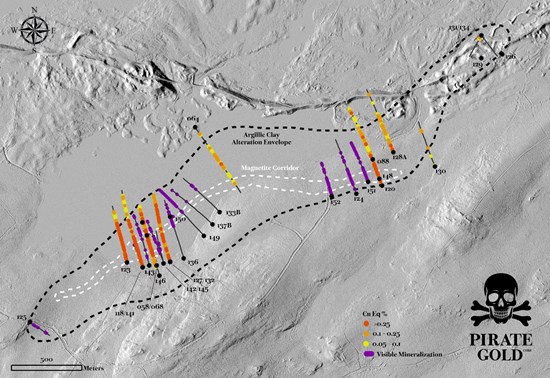
Figure 6. Plan Map of Current Drilling at Moby Dick Showing Visible Mineralized Intervals
To view an enhanced version of this graphic, please visit:
https://images.newsfilecorp.com/files/6079/323872_5ea83e54246f29aa_006full.jpg
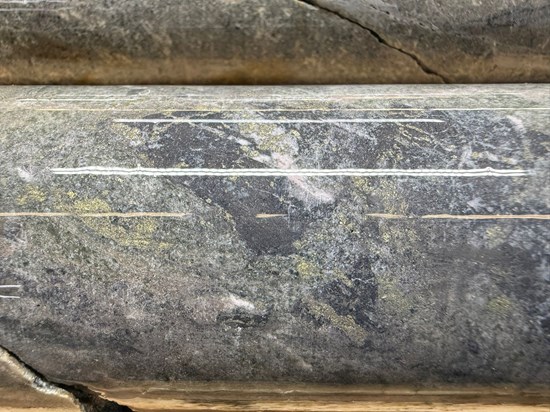
Figure 7. Chalcopyrite, Pyrite and Magnetite in PGC-26-136 ~ 513m
To view an enhanced version of this graphic, please visit:
https://images.newsfilecorp.com/files/6079/323872_5ea83e54246f29aa_007full.jpg
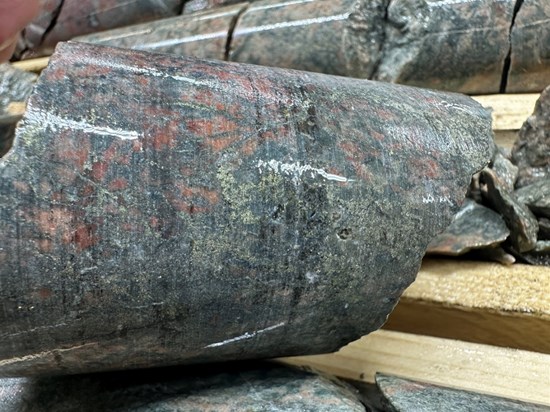
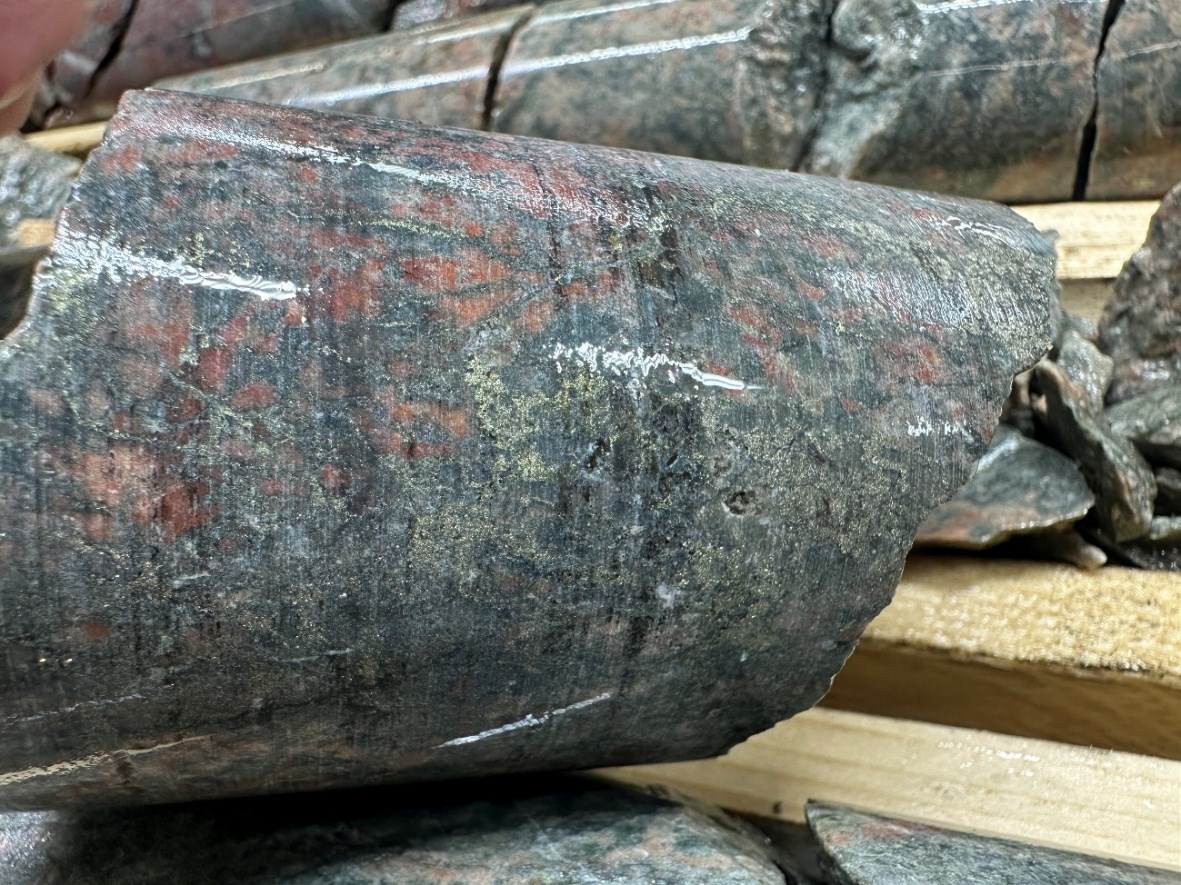
Figure 8. Chalcopyrite, Pyrite, Magnetite, Potassic Alteration in PGC-26-151 ~ 405m
To view an enhanced version of this graphic, please visit:
https://images.newsfilecorp.com/files/6079/323872_5ea83e54246f29aa_008full.jpg
*Core photographs in Figures 7 and 8 are selective and are not representative of the entire mineralized intervals reported for PGC-26-136 and PGC-26-151
| Drill Hole | Easting | Northing | Azimuth | Dip | Length (m) |
| PGC-26-058 | 562447 | 5398569 | 345 | -65 | 602 |
| PGC-26-064 | 562724 | 5399569 | 145 | -45 | 797 |
| PGC-26-068 | 562447 | 5398569 | 345 | -44 | 596 |
| PGC-26-074A | 559295 | 5397616 | 155 | -45 | 515 |
| PGC-26-088 | 563983 | 5399338 | 340 | -45 | 398 |
| PGC-26-104 | 560176 | 5398806 | 310 | -43 | 605 |
| PGC-26-118 | 562352 | 5398577 | 345 | -45 | 788 |
| PGC-26-120 | 564054 | 5399156 | 340 | -45 | 860 |
| PGC-26-123 | 562240 | 5398610 | 345 | -45 | 503 |
| PGC-26-124 | 563871 | 5399097 | 340 | -45 | 569 |
| PGC-26-125 | 561551 | 5398180 | 120 | -65 | 347 |
| PGC-26-126 | 564909 | 5400089 | 340 | -45 | 14.5 |
| PGC-26-127 | 562548 | 5398614 | 345 | -45 | 722 |
| PGC-26-128A | 564134 | 5399394 | 340 | -45 | 683 |
| PGC-26-129 | 564760 | 5400062 | 340 | -45 | 23 |
| PGC-26-130 | 564430 | 5399291 | 340 | -45 | 464 |
| PGC-26-131 | 564759 | 5400223 | 210 | -50 | 275 |
| PGC-26-132 | 562548 | 5398614 | 345 | -60 | 645 |
| PGC-26-133B | 562900 | 5398966 | 315 | -50 | 566 |
| PGC-26-134 | 564760 | 5400223 | 145 | -45 | 263 |
| PGC-26-135 | 554181 | 5393312 | 160 | -45 | 19.5 |
| PGC-26-136 | 562644 | 5398639 | 345 | -45 | 698 |
| PGC-26-137B | 562848 | 5398879 | 315 | -45 | 557 |
| PGC-26-138 | 555595 | 5394438 | 145 | -45 | 287 |
| PGC-26-139 | 560161 | 5397546 | 340 | -45 | 458 |
| PGC-26-140 | 559722 | 5397194 | 315 | -45 | 341 |
| PGC-26-141 | 562352 | 5398576 | 340 | -65 | 362 |
| PGC-26-142 | 562501 | 5398603 | 345 | -45 | 467 |
| PGC-26-143 | 562399 | 5398587 | 345 | -45 | 563 |
| PGC-26-144 | 562386 | 5398805 | 0 | -90 | 422 |
| PGC-26-145 | 562501 | 5398602 | 345 | -65 | 566 |
| PGC-26-146 | 562470 | 5398515 | 345 | -45 | 575 |
| PGC-26-147 | 562350 | 5398895 | 162 | -50 | 488 |
| PGC-26-148 | 564036 | 5399205 | 340 | -58 | 416 |
| PGC-26-149 | 562788 | 5398799 | 315 | -45 | 695 |
| PGC-26-150 | 562548 | 5398934 | 0 | -90 | 581 |
| PGC-26-151 | 563955 | 5399183 | 340 | -60 | 584 |
| PGC-26-152 | 563696 | 5399081 | 345 | -45 | 332 |
Table 3. Drill-hole information referenced in this release.
Pirate Gold Treasure Hunters Season 1 Episode 21 – Following the Magnetic Trail
Episode 21 takes viewers inside the expanding Moby Dick discovery as Pirate Gold connects its latest copper-gold results with the geological clues guiding exploration. Through a detailed 3D walkthrough, the team explains how new drilling is expanding the mineralized footprint and why porphyry intrusions, magnetite and associated alteration are sharpening the search for stronger mineralization. The episode features:
Cannot view this video? Visit:
https://www.youtube.com/watch?v=kzFka4kZMVg
Subscribe to Pirate Gold’s YouTube channel for weekly episodes of Treasure Hunters and follow the drill in real time: https://www.youtube.com/@PirateGoldCorp
Qualified Person
Greg Matheson, P.Geo., VP Exploration for Pirate Gold, a “Qualified Person” under National Instrument 43-101, has reviewed and approved the scientific and technical information in this press release.
About Pirate Gold Corp.
Pirate Gold Corp. is a Newfoundland-focused exploration company advancing its 100%-owned Treasure Island Project, a district-scale property covering more than 90 km of strike along the Valentine Lake Fault Zone. Exploration is focused on the high-grade Moosehead gold system, the Moby Dick copper-gold porphyry/epithermal discovery and multiple regional targets across the Crippleback Intrusive Suite. The Company also holds a portfolio of Newfoundland gold projects, including the district-scale Fleur de Lys Project.
For more information, please contact:
Denis Laviolette, Executive Chairman, CEO & Director
E: denis@pirategold.ca
Joshua Duggan, Investor Relations
T: 647-526-1881
E: josh@pirategold.ca
Website: www.pirategold.ca
Twitter: @PirateGoldCorp
Facebook: @PirateGoldCorp
LinkedIn: @PirateGoldCorp
QA/QC Statement
Diamond drill holes are HQ size and are processed at the Company’s secure core logging facility in Grand Falls-Windsor, NL by qualified geologists and technicians. Drill core samples are sawn in half and submitted to ALS Canada Ltd., in Vancouver, BC for gold determination by fire assay method and for multi-element analysis.
Drill core samples analyzed at ALS are submitted under prep code PREP-31. ALS performs Au-ICP21 and ME-MS61m analysis on all samples. Any samples suspected of containing visible gold are sent for metallic screen analysis.
The Company inserts quality control samples at regular intervals, including blanks, reference materials and field duplicates to monitor the performance of the laboratory. Additionally, Pirate Gold Corp conducts check assays at a third-party facility which is independent of ALS Canada Ltd.
Metal-equivalent grades for the new assay results reported in this release express the combined contributions of copper, gold, silver and molybdenum as a copper-equivalent grade for illustrative purposes only.
Metal-equivalent grades are calculated using US$4.00/lb copper, US$3,000/oz gold, US$30.00/oz silver, US$21.00/lb molybdenum. Metallurgical recoveries are assumed to be 80% for copper, 80% for gold and 80% for silver, 80% for molybdenum. For simplicity the following equation is used to calculate Cu Eq = copper (%) + (gold (g/t) x 1.094) + (silver (g/t) x 0.011) + (molybdenum (g/t) x 0.000525) . Differences may occur due to rounding. Zinc values reported are not included in Metal-equivalent grades.
Acknowledgment
Pirate Gold acknowledges the financial support of the Junior Exploration Assistance Program, Department of Natural Resources, Government of Newfoundland and Labrador.
Neither the TSX Venture Exchange nor its Regulation Services Provider (as that term is defined in the policies of the TSX Venture Exchange) accepts responsibility for the adequacy or accuracy of this release.
Americas Gold and Silver Corporation (TSX: USA) (NYSE American: USAS) a North American produc... READ MORE
Heliostar Metals Ltd. (TSX: HSTR) (OTCQX: HSTXF) (FSE: RGG1) reported unaudited financial results fo... READ MORE
Argentina Metals Corp. (TSX-V: VLLC) (OTCQB: VLLCF) (FSE: VA5) is pleased to announce that, further ... READ MORE
G Mining Ventures Corp. (TSX: GMIN) (OTCQX: GMINF) today reported financial and operating results fo... READ MORE