








| HIGHLIGHTS |
The 2026 Inferred Mineral Resource Estimate with an effective date of 9 June 2026 for the Belltopper Gold Project Leven Star Reef is provided in Table 1.
Table 1. Inferred Mineral Resources for the Belltopper Gold Project Leven Star Reef.
| Classification | Cut-off grade (g/t Au) |
Tonnes (t) |
Grade (g/t Au) |
Troy ounces (Au) |
| Inferred Mineral Resource | 1.9 | 760,000 | 3.6 | 87,000 |
The optimized MSO stope shapes were estimated with the following indicative parameters:
Underground resource reported diluted within Mineable Shape Optimisations generated above a gold cut-off grade of 1.9 g/t Au.
Novo Resources Corp. (ASX: NVO) (TSX: NVO) (OTCQB: NSRPF) is pleased to report a Mineral Resource classified as an Inferred Mineral Resource in accordance with the JORC Code (2012) for the Leven Star Reef at its 100% owned Belltopper Gold Project in Victoria. The Leven Star Reef represents one of eight reefs that comprise the Exploration Target at Belltopper reported on 11 February 2026.
Belltopper is located 120 km northwest of Melbourne and approximately 60 km south of Agnico Eagle’s (TSX: AEM) Fosterville Gold Mine (Figure 1) in the Bendigo Zone, an area with historical gold production of more than 60 million ounces2.
Kaiser Reef Limited’s (ASX: KAU) Maldon processing plant is located some 40 km to the northwest of the project area and Alkane Resources Limited’s (ASX: ALK) Costerfield’s operation is located some 50 km to the northeast of Belltopper.
Mineral Resource classification was generally allocated according to estimation pass, and considered data type, quality and distribution, and bulk density measurement availability. Reasonable Prospects for Eventual Economic Extraction have been determined by evaluation within Datamine MSO shapes. Estimates have been verified by visual review, examination of swath plots, volume-to-tonnage comparisons, and sensitivity analysis.
The terms ‘Mineral Resource’, ‘Inferred Mineral Resource’, ‘Indicated Mineral Resource’, ‘Ore Reserves’ and ‘Feasibility Study’ have the meanings as given in the JORC Code (2012). Mineral Resources are not Ore Reserves and do not have demonstrated economic viability; it is uncertain if applying economic modifying factors will convert Measured and Indicated Mineral Resources to Ore Reserves. The estimate of Mineral Resources may be materially affected by environmental, permitting, legal, title, taxation, socio-political, marketing, or other relevant issues; however, no issues are known at this time. The quantity and grade of reported Inferred Mineral Resources in this estimation are uncertain in nature and there has been insufficient exploration to define these Inferred Mineral Resources as an Indicated or Measured Mineral Resource; furthermore, it is uncertain if further exploration will result in upgrading Inferred Mineral Resources to an Indicated or Measured Mineral Resource category.
Commenting on the Belltopper Mineral Resource, Mike Spreadborough, Executive Co-Chairman and Acting Chief Executive Officer, said:
“The delivery of this maiden Inferred Mineral Resource at Novo’s Belltopper Gold Project marks an important milestone for The Belltopper Gold Project and for Novo generally. An initial 87,000 ounce Inferred Mineral Resource Estimate provides a solid foundation for what we see as a highly prospective asset, with encouraging potential for further resource definition given the previously released Exploration Target — all underpinned by the current gold price environment, which is as favourable as we have seen in a generation.
“The investment case for Victorian gold is compelling with multiple new projects approved and funded within Victoria We see potential for further value to emerge as Belltopper is advanced, and it remains a valuable and strategically important part of Novo’s portfolio.”
MINERAL RESOURCE ESTIMATE MODELLING PARAMETERS
INTRODUCTION
A summary of material information pursuant to ASX Listing Rules 5.8 is provided below for the 2026 Leven Star Reef Mineral Resource Estimate. MRE26 has been prepared in accordance with the principles of and using the guidelines and terminology of the JORC Code (2012 edition).
The Leven Star Reef is relatively shallowly drilled (44 holes in total – refer to Appendix 1 and 2 for details) and mineralisation remains open in multiple directions; providing a number of opportunities for resource growth.
GEOLOGY AND GEOLOGICAL INTERPRETATION
Geology and Mineralisation
The Leven Star Reef is part of Novo’s Belltopper Gold Project, a distinctive gold occurrence in the Malmsbury goldfield of central Victoria, located in the eastern area of the Bendigo Zone of the western Lachlan orogen (Figure 1).
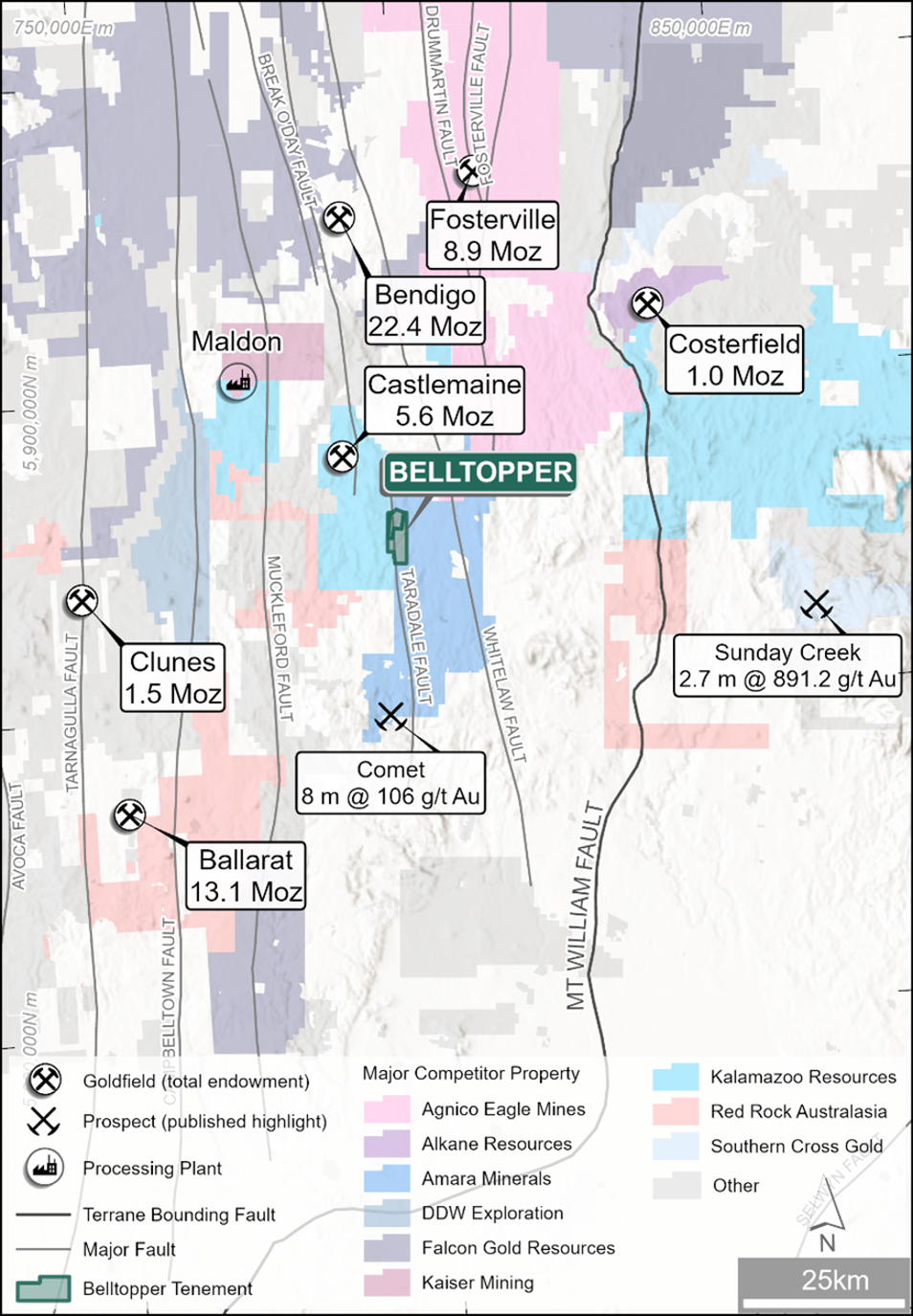
Figure 1. Belltopper Gold Project location map with regional gold occurrences and major structure.2
The deposit lies in Lower Ordovician turbiditic sedimentary rocks near two major Devonian granites, the Harcourt and Cobaw batholiths, and this spatial association is a central feature of its interpretation. Historically, the Malmsbury field produced gold from northwest to north-northwest–striking quartz lodes and from alluvial workings, though the Leven Star Reef differs from these more typical auriferous structures. The Leven Star Reef trends northeast, an unusual orientation for the Bendigo Zone, and drilling showed mineralisation to be continuous for approximately 800 m along strike (Figure 2).
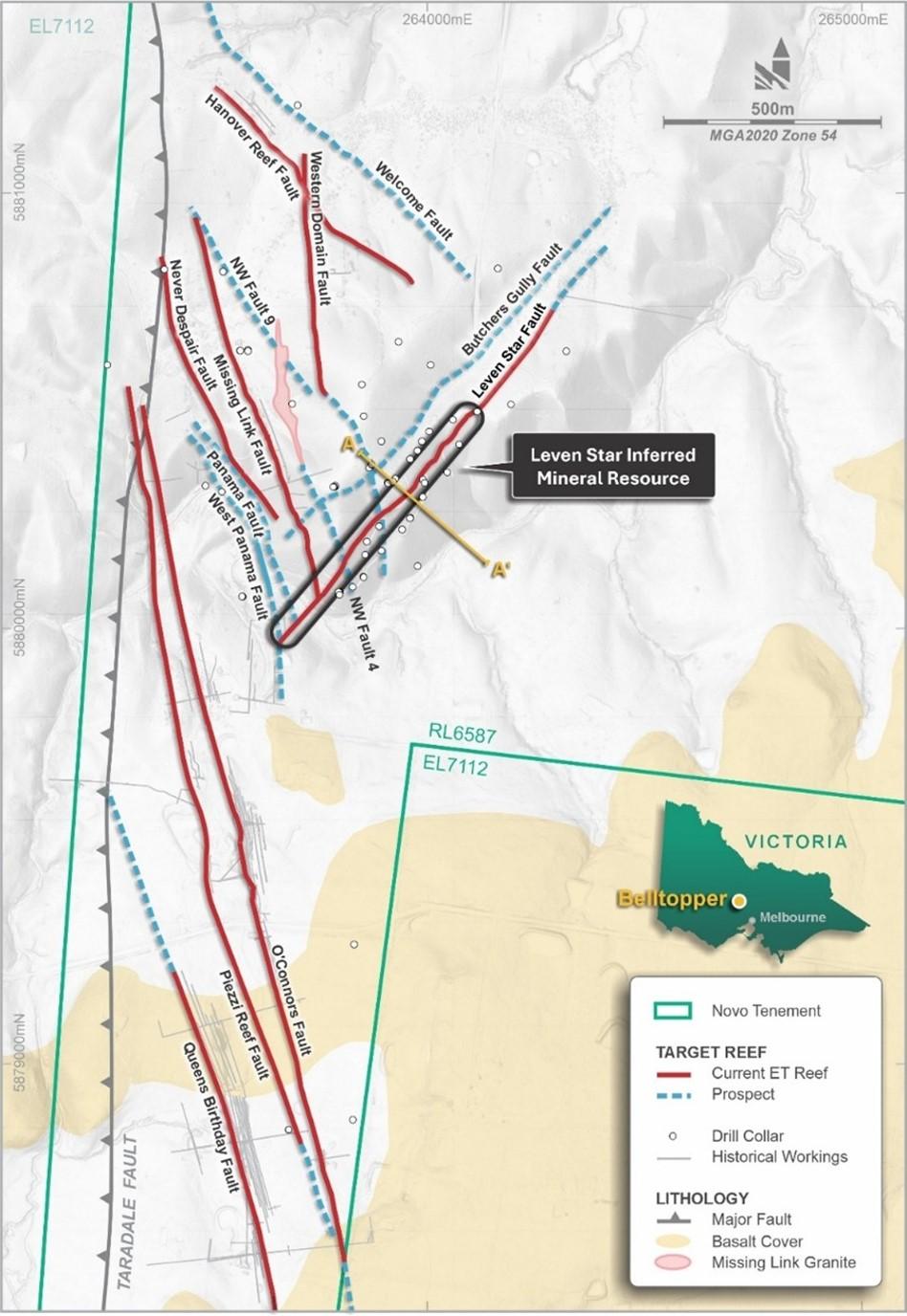
Figure 2. Map of Belltopper area showing the Leven Star Reef Inferred Mineral Resource extent and Exploration Target. Diagram also depicts other current Exploration Target Reefs: Missing Link; Never Despair; O’Connors; Queens/Egyptian; Hanover Fault; Piezzi/Stackyards and Western Domain Fault; in addition to other prospective key target faults.
Geologically, Leven Star Reef is not a simple quartz-reef deposit. The mineralisation is hosted by a linear quartz-veined stockwork-breccia zone up to 10 m wide, rather than by the reverse fault-hosted laminated to massive quartz veins typical of many Victorian orogenic gold deposits. The Leven Star Reef cuts stratigraphy and post-dates both the dominant upright folding event and earlier reverse fault-hosted quartz veins; establishing it as a younger and geologically distinct event. Host rocks in the Belltopper Hill area show evidence of low-grade contact metamorphism superimposed on earlier regional sub-greenschist metamorphism.
The stockwork-breccia zone is surrounded by an alteration halo up to 12 m wide, dominated by carbonatization, sericitization, sulfidation, and locally silicification. Pyrite is widespread and commonly linked to microfractures and veinlets, whereas arsenopyrite and stibnite are concentrated near stockwork veins and larger quartz structures.
Mineralogically, Leven Star Reef is notable for its complex polymetallic assemblage, which differs from the simpler pyrite-arsenopyrite ± gold association of typical central Victorian orogenic systems.
In addition to native gold, the deposit contains Te-Ni-As-Bi-Sb-Cu-Zn sulphides and Cr-W-F-Sn oxide minerals. Gold occurs both as rare visible grains and as elevated concentrations within arsenopyrite and bismuth minerals, with analyses indicating lattice-bound gold in arsenopyrite.
Geological Interpretation and Wireframes
The Leven Star Reef reaches up to 8 m in width, follows a narrow, brittle fault zone with associated intense fracturing and quartz vein development in the country rock. Deformity and reef width are locally controlled by lithology with some of the best development occurring in coarser-grained sandstone units and/or rheological domain boundaries (e.g. siltstone /coarser-graoined sandstone interfaces).
Three alternative geological/wireframe models for the Leven Star Reef were produced (Models A, B and C – LSA, LSB and LSC). The LSC model was considered the most realistic interpretation of the Leven Star Reef. The LSC model integrates additional downhole data obtained from the recently drilled (2023) diamond hole BTD001. Hole BTD001 successfully extended the Leven Star Reef mineralisation up to 120 m down-dip from the previous MD16 intersections and confirmed the position of the Far East Hanover Fault.
The criteria for wireframe construction were:
Figure 3 provides an overview of the LSC wireframe and associated faults.
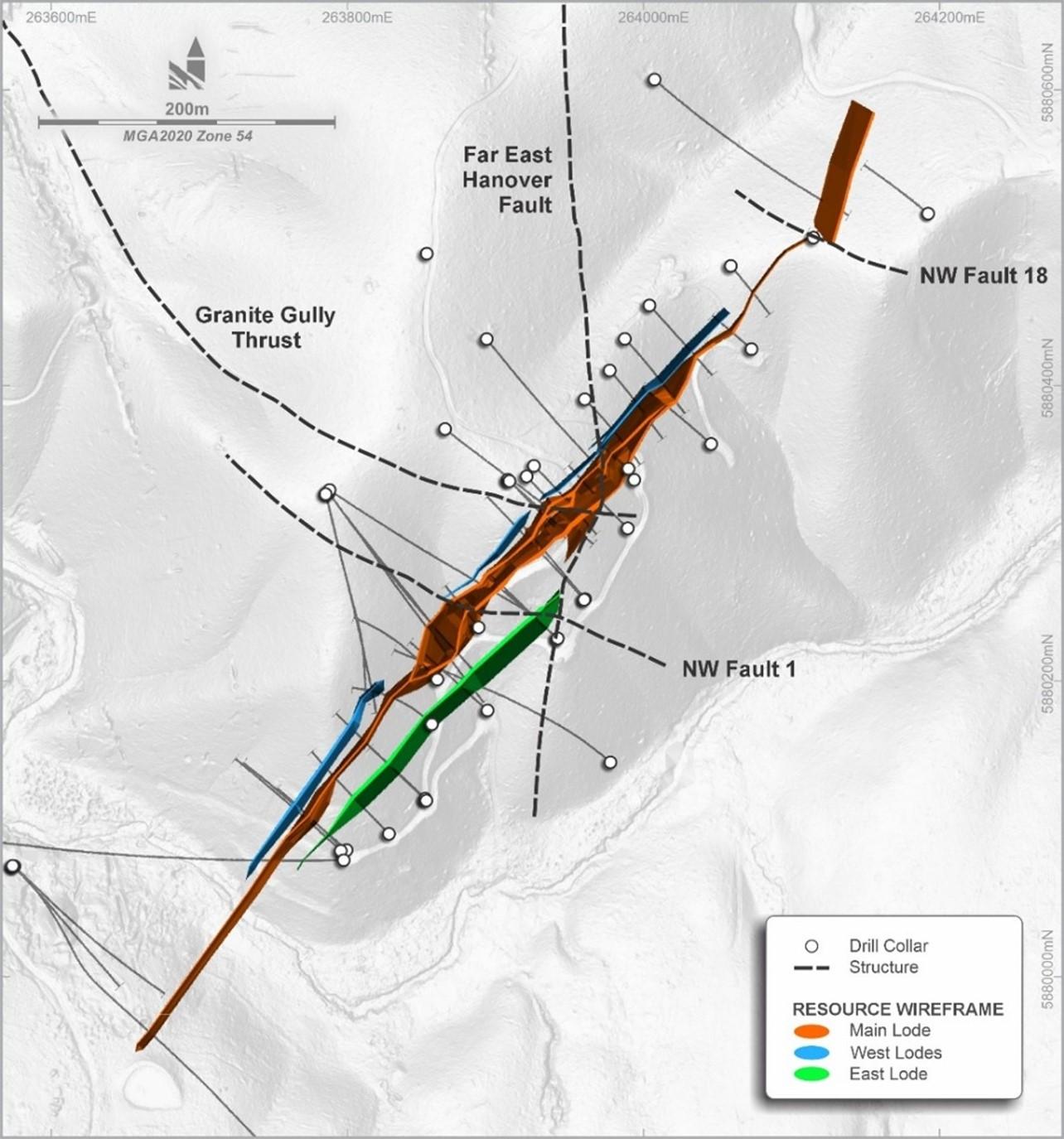
Figure 3. Overview of the LSC model.
The BTD001 intersections significantly influence the overall width of LSC at depth. Previous modelling had postulated that the widths identified in MD16 continued at depth, converging at an RL proximal to the intersections now assessed by BTD001 (Figure 4).
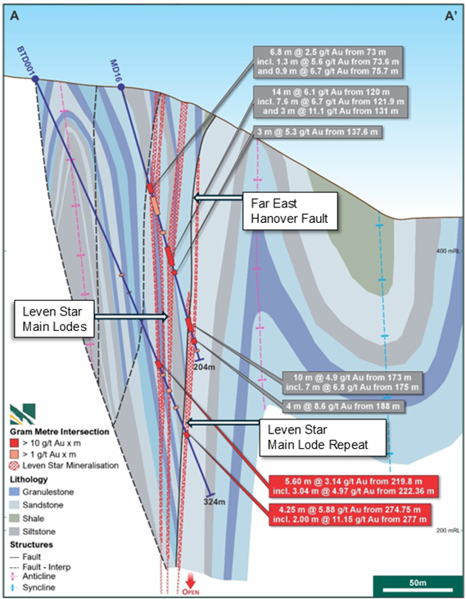
Figure 4. Section of MD16 and BTD001 Novo Drillholes demonstrating the Leven Star Reef and repeat reef to the southeast of the Far East Hanover fault.1, 3 and 4 Section line shown on Figure 2.
The true width of mineralisation in hole BTD001 appears to be narrower than previously interpreted. Additionally, the multiple reefs originally interpreted to intersect around the depth of BTD001 are likely to converge at greater depth. This concept is further supported by multiple interpreted Leven Star Reef intersections identified at depth in both MD03 and LSDDH7.
DRILLING, SAMPLING, SAMPLE PREPARATION AND ASSAYING
Leven Star Reef has been drilled intermittently since the 1980s, with the current database reflecting work by several operators over multiple campaigns. This includes Paringa’s early diamond drilling, Pittson’s 1990–1992 diamond drilling, Eureka’s 1994 RC and diamond-tail programme, GBM Resources Ltd’s 2007–2008 diamond drilling, GBM–Novo JV drilling in 2021–2022, and Novo’s 2023 BTD hole. Across the deposit, gross drill spacing is about 50 m along strike by 20 m down dip, although spacing is locally variable.
The Leven Star Reef model is based on 44 drillholes; comprising 15 RC and 29 DD drillholes (Table 2). The collar locations are displayed in Figure 5. The DD holes were also used for density analysis and metallurgical testwork.
Table 2. Summary of drillholes used in MRE26.
| Hole type | #holes | #samples | Meters of drilling |
| RC | 15 | 162 | 1,497 |
| DD | 29 | 430 | 5,959 |
| Total | 44 | 592 | 7,456 |
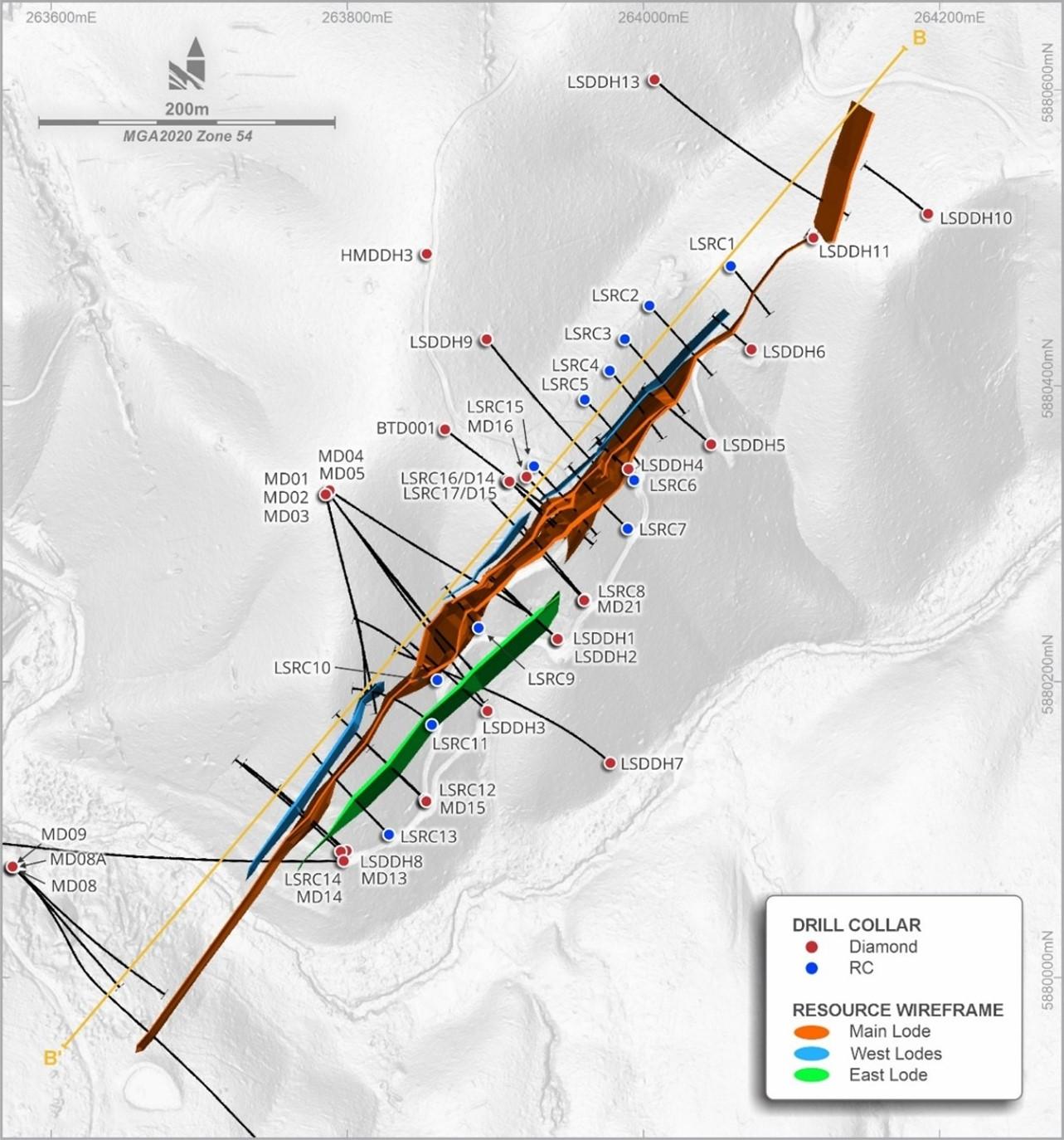
Figure 5. Leven Star Reef collar plan – input drillhole data.
Survey control is mixed, reflecting the age of the drilling. Most Pittson and Eureka collars were originally surveyed by a registered surveyor using a theodolite in AMG84 Zone 55, while some older DDHMA collars are less reliable because they were digitized from historic plans. Novo later validated most collars in the field, and a high-resolution LiDAR survey flown in December 2022 helped confirm collar locations across Belltopper and convert them into MGA94 Zone 55. Downhole survey methods also evolved through time: earlier diamond holes used magnetic single-shot surveys at collar, nominal 50 m intervals, and end of hole, while recent Novo drilling used modern tools such as the REFLEX EZ-TRAC and Boart Longyear TruShot, typically surveyed from 6 m depth and then every 25 m.
Diamond core drilling is regarded as the most appropriate drilling method at Leven Star Reef because it provides geological, density, and metallurgical information. Historical and recent diamond drilling programmes used standard HQ and NQ wireline methods. Core was logged and photographed, then split longitudinally, with half core submitted for assay and the remaining half retained. Sampling was to geological boundaries, over 0.3–2.0 m historically and 0.3–1.3 m in the recent Novo programme, with 1 m the preferred sample length. RC drilling was all pre-2008, to a maximum depth of 118 m, and samples were split with a Jones riffle splitter to about 3–5 kg. However, historical RC methods, sample security, and recovery documentation are sparse.
Core recovery was generally good (>90 %), though early (pre-2007) core recovery was not well-recorded. Some core loss is noted, particularly in highly fragmented zones where fines loss was high. Core loss zones were treated as zero grade in any significant intersection calculation.
Sample preparation and assaying are considered broadly acceptable, but with an important caveat. Pre-2008 documentation is incomplete. Fire assay with AAS finish is preferred and was used for most later work, including Novo’s recent ALS Adelaide programme, which used a 50 g fire assay charge after pulverizing to P85 75 µm. Some early Eureka samples were assayed by aqua regia digest, which is suboptimal for Leven Star Reef given the method is a partial extraction and understates refractory gold. Statistical comparisons in the report indicate that fire assay grades tend to be higher than aqua regia grades.
QAQC is weakest in the early drilling and much better from 2008 onward. Pre-GBM data include only a small number of blanks and poorly documented standards. By contrast, GBM and Novo inserted Certified Reference Materials and blanks regularly. Most CRM results were acceptable, although GBM’s OREAS232 and Novo’s OREAS264 were considered marginal because of bias or outlier behaviour. Blank performance was good, with only two low-level breaches in 297 analyses. Duplicate data suggests little coarse gold, as RC and half-core duplicates showed low variability. Check assays were more variable, showing a positive bias of about 8–13%. This will reflect some “between” laboratory variation.
The CPs conclude that drilling, sampling, and QC are adequate for use in the MRE, but historical data gaps, recovery issues, and some QC weaknesses mean confidence remains low to moderate. This has been considered by the CPs during classification.
ESTIMATION APPROACH
The Leven Star Reef estimate was built from a staged workflow: data validation, data preparation, exploratory data analysis, geological interpretation and modelling, compositing, assessment of extreme values, variography, block model optimisation, block modelling/grade estimation, model validation, depletion assessment, classification and reporting. Datamine RM Pro software was used for estimation and Supervisor for statistical analysis. The input database includes historical and recent drilling from several campaigns. The Leven Star Reef block model is based on RC and DD, with DD holes also used to support density analysis and metallurgical work. Topography, oxidation and fresh-rock surfaces, and several fault wireframes were incorporated into the geological model. Only gold grade is reported.
Geological interpretation is based on the LSC model, integrates the 2023 BTD001 diamond hole, which extended the interpreted mineralisation down dip and improved understanding of the Far East Hanover Fault (Figure 3 and Figure 4). The LSC model includes the main Leven Star Reef structure and several minor parallel hanging-wall and footwall reefs.
For estimation, drillhole data were coded by mineralized domain, fault area and weathering state. Contact analysis found no strong grade break between oxide, transitional and fresh material sufficient to justify separate estimation domains at this stage, so weathering states were combined within each mineralized domain. Samples were composited to 1 m within domain boundaries. Gold top-cuts were applied only where required, notably in the 100 domain.
Given the current understanding of the geology (faulting occurring post-mineralisation) and the initial analysis, it was decided to combine the mineralized reefs across the faults, and to combine the oxide, transitional and fresh material by domain. The final estimation domain coding (Domain) is summarized in Table 3 and shown in Figure 6.
Table 3. Domain coding for gold mineralisation.
| Domain | Description |
| 100 | LSC Main, oxide, transitional and fresh material |
| 200 | LSC NW, oxide, transitional and fresh material |
| 300 | LSC NW South, oxide, transitional and fresh material |
| 400 | LSC SE, oxide, transitional and fresh material |
| 500 | LSC Far N, oxide, transitional and fresh material |
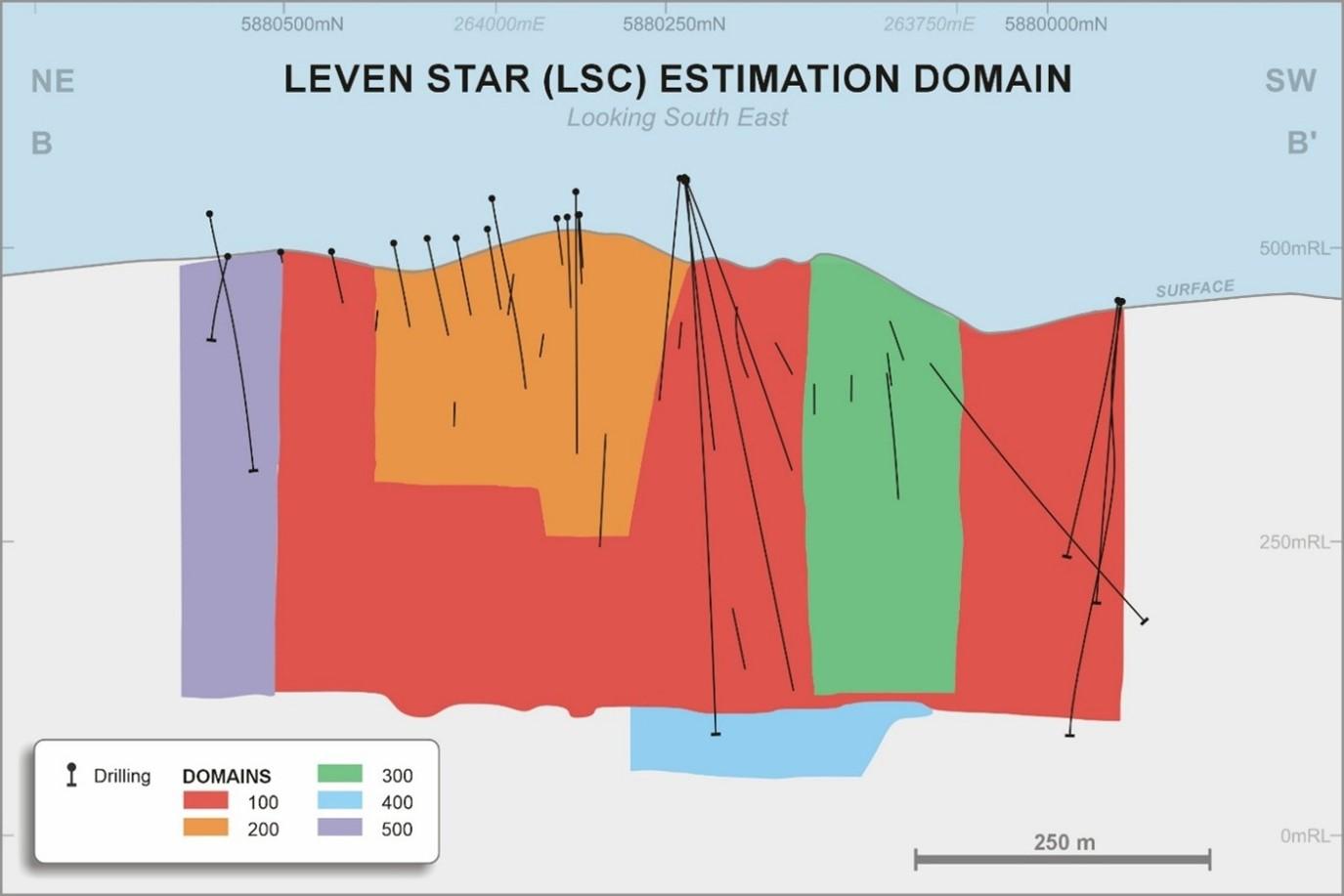
Figure 6. Long section showing estimation domains in LSC.
Grade estimation used Ordinary Kriging into a rotated block model aligned with the approximate strike of mineralisation. The block model used parent blocks of 2 m (E) by 40 m (N) by 30 m (RL), sub-celled to 0.5 m (E) by 2 m (N) by 2 m (RL) determined by Quantitative Kriging Neighbourhood Analysis (QKNA).
An initial search ellipse of 110 m by 30 m by 15 m was defined based on the results of the variography and assessment of the data coverage. A minimum of eight and maximum of 25 samples was used for the initial search pass. Second pass (P2) was two times the initial search ellipse with a minimum of eight and maximum of 25 samples. Third pass (P3) was three times the initial search with a minimum of four and maximum of 15 samples. The fourth pass (P4) was eight times the initial search pass with a minimum of two and maximum of 15 – run to populate all blocks. All passes had a maximum of three samples per drillhole applied for the gold estimate.
Figure 7 shows a long-section of the Leven Star Reef displaying block grades for Domain 100 (Main Lode) and overall extent of the classified MRE.
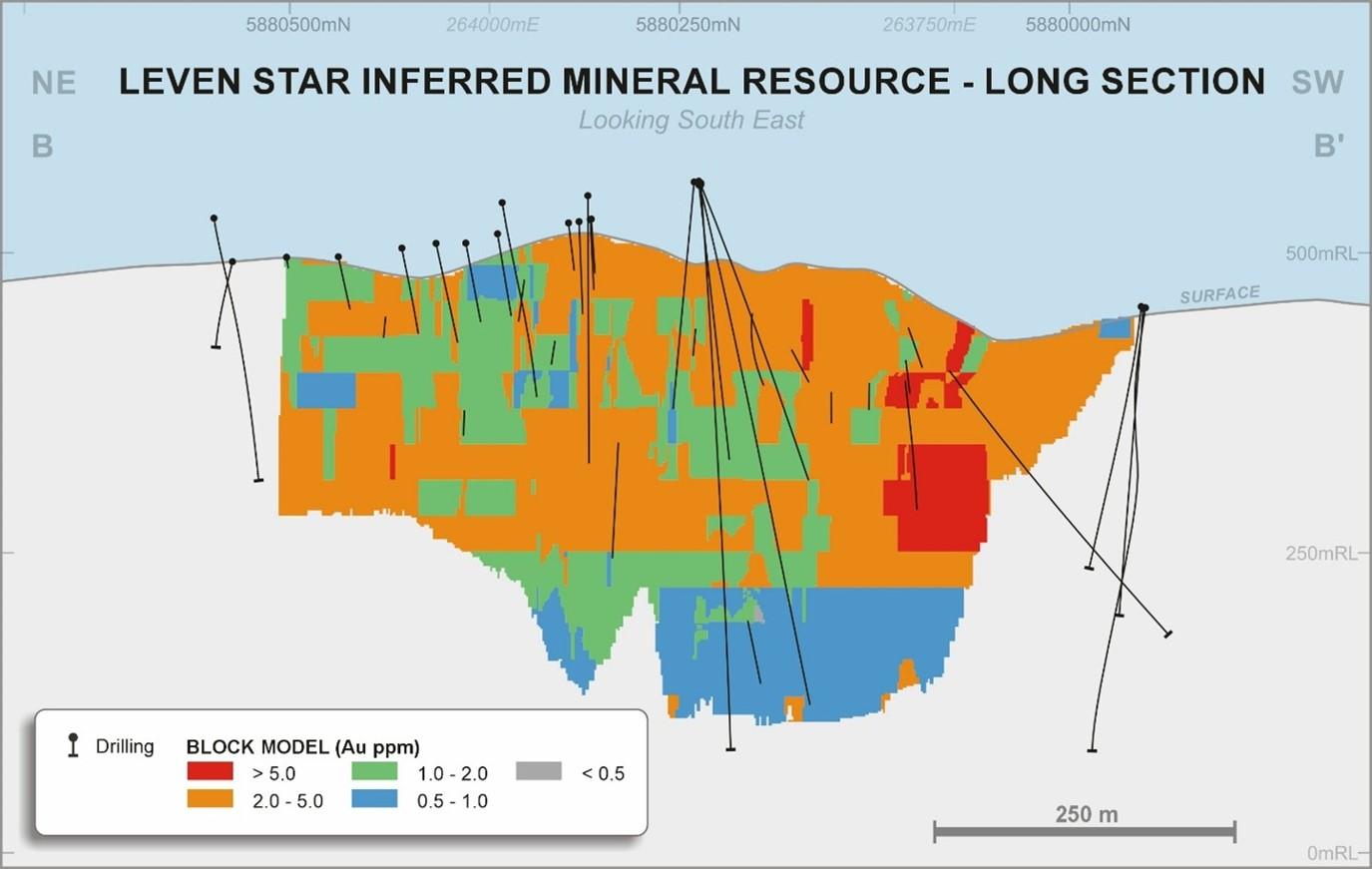
Figure 7. Long-section showing block grades and overall extent of the classified MRE.
Validation included global comparisons of composites and block estimates, visual inspection in long section, and swath plots. The gold estimate for the main (100) domain validated well against declustered composites (<1% difference).
Extrapolation occurs along strike and down dip, with the maximum extrapolated distance from a drill hole being 180 m down-dip. Passes 1 (0.5x the variogram range) and 2 (1x the variogram range) of the search area are defined as interpolation. Pass 3 (1.5x the variogram range) is defined as extrapolation. Approximately 21% of the reported gold ounces are based on extrapolation, equivalent to 20% of the reported tonnes.
The MRE is global in nature. No depletion has been applied to the model. It is understood that minimal mining has taken place on the Leven Star Reef.
Bulk density measurements were determined by Novo personnel using the weight-in-water/weight-in-air method. A total of 52 measurements fall within the mineralisation. The following bulk density values were applied: oxide mineralisation 2.50 t/m3 (waste 2.35 t/m3); transition mineralisation 2.60 t/m3 (waste 2.45 t/m3); and fresh mineralisation 2.65 t/m3 (waste 2.70 t/m3). Tonnages are reported on a dry basis.
MINING AND METALLURGICAL ASSUMPTIONS INCLUDING REASONABLE PROSPECTS FOR EVENTUAL ECONOMIC EXTRACTION (RPEEE)
Reasonable Prospects for Eventual Economic Extraction (RPEEE)
MRE26 has been reported as an underground operation, within Datamine MSO optimized stope shapes to support the assessment of RPEEE.
The optimized MSO stope shapes were estimated with the following indicative parameters:
Mining costs were defined on a “comparison” basis at a rate of 250,000 tonnes per annum.
The Leven Star Reef MRE was reported for an underground operation. A cut-off grade of 1.9 g/t Au was applied. This was calculated from the inputs provided to the MSO optimisation process (see above). The MRE is reported diluted within the MSO optimised shapes.
A time period of between 5 to 10 years is considered appropriate for “eventual economic extraction” for Leven Star Reef, noting that gold price- operating expenditure, and regulatory conditions may change during the period.
Metallurgical Assumptions
The Leven Star Reef has undergone minimal historical metallurgical testing, with the most recent programme conducted in 2023 on a 28 kg composite sample derived from fresh sulphide-bearing drill core. The material averaged 4.5 g/t gold, with notable arsenic and minor antimony content. Testing followed a staged approach, including gravity recovery, flotation, cyanide leaching, and diagnostic leaching, but excluded comminution studies.
Results indicate that gravity recovery is limited, achieving only 12% gold recovery due to the predominance of fine (<75 µm), refractory gold. In contrast, flotation proved highly effective, particularly at a grind size of P80 90 µm, yielding a concentrate with strong gold grades and achieving approximately 92% recovery from flotation feed, corresponding to about 93% overall recovery when combined with gravity.
Cyanide leaching performed poorly, with recoveries near 11% across varying grind sizes, demonstrating that conventional gravity/CIL processing would be ineffective. Diagnostic leaching on gravity tails revealed that most unrecovered gold is locked within sulphides, especially arsenopyrite, explaining the low leachability. Overall, the results highlight flotation as the most viable processing route for this mineralisation.
The testwork conclusion was that Leven Star sulphide mineralisation is strongly refractory. The preferred process route is therefore flotation to a sulphide concentrate. It is assumed that mineralisation would be fed to a process plant with a flotation circuit within reasonable haulage distance. Subject to further testwork, it is assumed that a flotation concentrate would be produced for direct sale.
Context of the Leven Star Reef at Belltopper
As a stand-alone MRE, Leven Star Reef is small. However, it is part of an Exploration Target covering a large part of the Novo Belltopper project area (Table 4)1.
Table 4. Exploration Target for the Belltopper Project. This Exploration Target includes the Leven Star Reef
| Metric | Low case (approximation) | High case (approximation) |
| Tonnage range | 2.1 Mt | 3.1 Mt |
| Grade range | 6.7 g/t Au | 8.9 g/t Au |
Figures may not compute due to rounding.
Clarification statement: An Exploration Target as defined in the JORC Code (2012) is a statement or estimate of the exploration potential of a mineral deposit in a defined geological setting where the statement or estimate, quoted as a range of tonnes and a range of grade (or quality), relates to mineralisation for which there has been insufficient exploration to estimate a Mineral Resource. Accordingly, these figures are not Mineral Resource or Ore Reserve estimates as defined in the JORC Code (2012). The potential quantities and grades referred to above are conceptual in nature and there has been insufficient exploration to estimate a Mineral Resource, and it is uncertain if further exploration will result in the estimation of a Mineral Resource. These figures are based on the interpreted continuity of mineralisation and projection into unexplored ground often around historical workings. The Exploration Target has been reported in accordance with the JORC Code (2012) as detailed in the Company’s ASX announcement released on 11 February 2026 (available to view at www.asx.com.au). The Tonnage range for the exploration target is 2.1 Mt to 3.1 Mt, and the Grade range is 6.7 g/t Au to 8.9 g/t Au. Dr Christopher Doyle (MAIG) and Dr Simon Dominy (FAusIMM CPGeo; FAIG RPGeo; FGS CGeol), are the qualified persons, as defined under National Instrument 43-101 Standards of Disclosure for Mineral Projects, responsible for, and having reviewed and approved, the technical information relating to the Exploration Target. Dr Doyle is Novo’s Exploration Manager – Victoria and Dr Dominy is a Technical Advisor to Novo.
The Leven Star Reef represents one out of eight individual reefs that comprise the Exploration Target. The Leven Star Reef Mineral Resource forms part of the broader Belltopper mineralised system. Novo has previously reported an Exploration Target for Belltopper, of which Leven Star Reef is one component. The Exploration Target is conceptual in nature and is not a Mineral Resource. There has been insufficient exploration to estimate Mineral Resources for all components of the Exploration Target, and it is uncertain whether further exploration will result in additional Mineral Resources being estimated. Further drilling will be required to assess the potential extensions and additional reefs.
Forward Work Plan – Drilling
Near-term scoping level drilling (ca. 100 m x 100 m) of the remaining seven reefs is planned to gain confidence across all Exploration Target reefs and/or to assess additional known historic reefs that currently sit outside of the Exploration Target. Longer term resource-level drilling of the seven alternate (or additional known) reefs will be contingent on initial scoping-level drilling results.
The goal is to grow the resource base at Belltopper via incremental growth at Leven Star in parallel with the seven additional Exploration Target Reefs and/or any other known historic reefs that may ultimately be included.
SUSTAINABILITY AND ENVIRONMENT
To undertake mining in Victoria, applicants must follow the structured process outlined by the Mineral Resources (Sustainability) Act 1990 (Vic) and the Mineral Resource (Sustainable Development) (Mineral Industries) Regulations 2019 (Vic). This process includes obtaining necessary tenure, planning permits and other approvals under the associated legislation. Environmental approval for the construction and commencement of mining is obtained under the Environmental Effects Act 1978 (Vic). The assessment is undertaken by the Department of Transport and Planning. The Environmental Effects Act 1978 (Vic) provides that where proposed works may have a significant effect on the environment, either a proponent or a decision-maker may refer these works (or project) to the Minister for Planning for advice as to whether an Environment Effects Statement (EES) is required. Additional approvals under other legislation are required, including (for example) the requirement for a Cultural Heritage Management Plan under the Aboriginal Heritage Act 2006 (Vic) .
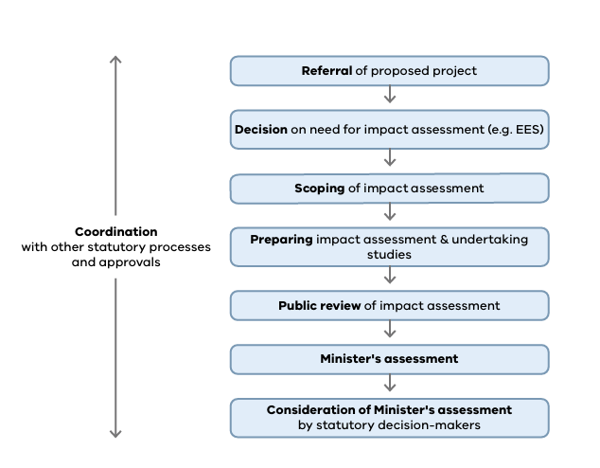
Figure 8. Overview of process under the Environmental Effects Act,1978
The approval pathway will be determined by the level of disturbance the proposed project will have on the surface ecology. Novo has commenced planning and scheduling the necessary surveys and studies required to understand the possible impact on the environment and surrounds. Studies required prior to lodging an environmental approval application include flora, fauna, surface water and hydrology, air pollution and possible impacts to the community. It can take a minimum of three years to collect and assess the environmental data and to obtain the Primary and Secondary approvals (pending outcomes of all relevant studies) required to commence construction and mining.
MINERAL RESOURCE CLASSIFICATION
The Mineral Resources are classified in accordance with the JORC Code (2012) for reporting of Exploration Results, Mineral Resources, and Ore Reserves.
The model has been classified on a domain-by-domain basis; in practical terms a wireframe was constructed to encapsulate material meeting the criteria for each classification category and used to delineate and code the model. Inferred Mineral Resources have been defined at Leven Star Reef. No areas of the resource have been classified as Measured or Indicated Mineral Resources.
Areas classified as Inferred Mineral Resources are informed by drilling spaced from 20 m up to >50 m, and have been estimated within the first, second, or the third estimation pass with a slope of regression greater than zero. Individual domains have been reviewed and classified accordingly. Areas that have not been estimated in the third pass have been categorized as ‘unclassified’ and have not been reported.
TECHNICAL REPORT
Novo will file a technical report (as defined in National Instrument 43-101 Standards of Disclosure for Mineral Projects) within 45 days of the date of this news release.
QP STATEMENT
Ms Janice Graham (MAusIMM CPGeo; MAIG) and Dr Simon Dominy (FAusIMM CPGeo; FAIG RPGeo; FGS CGeol) are the qualified persons, as defined under National Instrument 43-101 Standards of Disclosure for Mineral Projects, responsible for, and having reviewed and approved, the technical information contained in this news release relating to the Leven Star Mineral Resource Estimate (MRE). Ms Graham is a Principal Consultant and full-time employee of Snowden Optiro and Dr Dominy is a Technical Advisor to Novo.
Dr Christopher Doyle (MAIG) and Dr Simon Dominy (FAusIMM CPGeo; FAIG RPGeo; FGS CGeol), are the qualified persons, as defined under National Instrument 43-101 Standards of Disclosure for Mineral Projects, responsible for, and having reviewed and approved, the technical information contained in this news release relating to the Belltopper Exploration Target. Dr Doyle is Novo’s Exploration Manager – Victoria and Dr Dominy is a Technical Advisor to Novo.
ABOUT NOVO
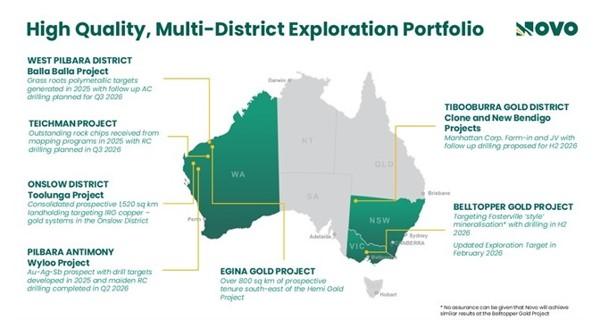
Novo is an Australian based gold explorer listed on the ASX and the TSX focussed on discovering standalone gold and copper projects with > 1 Moz development potential. Novo is an innovative explorer with a significant land package covering approximately 4,160 square kilometres in the Pilbara region of Western Australia, which includes the Toolunga Project in the Onslow District, along with the 22 square kilometre Belltopper project in the Bendigo Tectonic Zone of Victoria. In addition to the above, Novo is part of a prospective farm in agreement in New South Wales.
Novo has a significant investment portfolio and a disciplined program in place to identify value accretive opportunities that will build further value for shareholders.
Please refer to Novo’s website for further information including the latest corporate presentation.
Brutus Mining Inc. (CSE: BRU) (FSE: ZI3) is pleased to announce that it has closed its non-brokered ... READ MORE
Jaguar Uranium Corp. (NYSE American: JAGU) is pleased to announce an independent Mineral Resource E... READ MORE
Auro Metals Inc. (TSX-V: AURO) (OTCQB: AURFF), is pleased to announce the assay results of the fina... READ MORE
Endeavour Silver Corp. (NYSE: EXK) (TSX: EDR) is pleased to announce that repairs to the primary bal... READ MORE
Scorpio Gold Corp. (NASDAQ: SGLD) (TSX-V: SGLD) (OTCQB: SRCRF) (FSE: RY9) is pleased to announce re... READ MORE