







Kobo Resources Inc. (TSX-V: KRI) is excited to announce additional high-grade gold results from the ongoing 10,000 metre diamond drill program at its 100%-owned Kossou Gold Project in Côte d’Ivoire, with notable intercepts of 11.0 m at 6.77 g/t Au at the Road Cut Zone and 4.0 m at 6.38 g/t Au at the Kadie Zone.
The Company also reports encouraging early results from the first diamond drill holes on the highly prospective Contact Zone target, with results yielding 6.0 m at 1.94 g/t Au, confirming the potential for new gold targets at this zone. With drilling now complete at the Kadie Zone, both drill rigs are focused on advancing exploration at the Road Cut and Contact Zones to unlock additional gold mineralisation.
Diamond Drill Results – Highlights:
Road Cut Zone:
Kadie Zone:
Edward Gosselin, CEO and Director of Kobo commented: “These results highlight the success of our ongoing diamond drill program in uncovering the significant gold potential across multiple zones at the Kossou Gold Project. The strong intercepts at the Road Cut and Kadie Zones, including 11.0 m at 6.77 g/t Au and 4.0 m at 6.38 g/t Au, reinforce the scale and quality of the Company’s gold targets at Kossou. Additionally, the early positive results from the Contact Zone validate our strategic focus on this first-order structure, which we believe has the potential to become a cornerstone of our exploration efforts moving forward. With two diamond drill rigs operating, we are expediting progress on key targets and remain on track to complete our 10,000 m program by the end of January 2025. We are encouraged by the expanding opportunities at Kossou and look forward to building on this momentum in the future.”
Road Cut Zone
Results from the first two holes of the ongoing drill program at the RCZ have been received. A plan map showing collar locations is provided in Figure 1, and a full summary of all drill intercepts can be found in Table 1 below.
Diamond drill hole KDD0049 was drilled on section RCZ600 to test the down-dip extension of gold mineralisation identified in KDD0014, which previously returned 9.0 m at 4.27 g/t Au from 117.0 m (see press release dated July 11, 2024). The hole successfully intersected several shear zones that correlate with the interpreted structures in KDD0014. Key intervals include 9.0 m at 3.35 g/t Au from 147.0 m, corresponding to the 5.0 m interval grading 0.50 g/t Au from 85.0 m in KDD0014, and 4.0 m at 2.04 g/t Au from 192.0 m, correlating with the 9.0 m at 4.27 g/t Au from 117.0 m observed in KDD0014. Full results are provided in Table 1.
Diamond drill hole KDD0052 was drilled on section RCZ550, targeting the strong mineralisation observed in surface trench KTR048, which returned 9.0 m at 1.76 g/t Au (see press release dated November 1, 2023). The hole intersected strong gold mineralisation, including 11.0 m at 6.77 g/t Au from 45.0 m, associated with shearing and veining. These mineralised zones correlate well with those observed in trench exposures. At the base of KDD0052, several shears were intersected, likely linked to the Contact Zone, which is discussed later in this press release.
Contact Zone
As previously reported, hole KDD0052 intersected the Contact Zone, returning 6.0 m at 1.94 g/t Au from 264.0 m, including 1.0 m at 9.63 g/t Au. This mineralisation appears to be directly associated with the sheared contact with the volcano-sedimentary units. Further drilling is planned to explore along strike of this promising target. The Contact Zone has been interpreted as a significant first-order structure, potentially acting as a conduit for gold-bearing fluids throughout the Kossou system.
Holes KDD0045 and KDD0047 were drilled along the eastern margin of the volcanic belt to refine the location of the Contact Zone fault. This fault’s position has been inferred from limited surface exposure, geophysical data, and small-scale artisanal workings observed along the shoreline of Lake Kossou, where the structure is believed to reach the surface. Hole KDD0045, collared east of the contact, drilled through the volcano-sedimentary sequence and intersected strongly sheared units with quartz veining, returning 2.0 m at 1.47 g/t Au. Drill hole KDD0047 successfully crossed the Contact Zone fault, yielding 3.0 m at 1.54 g/t Au associated with shearing and quartz veining. These results are highly encouraging for this prospective target. See Figure 1 for drill hole locations.
Kadie Zone
Results from six drill holes completed at the Kadie Zone have been received. The program targeted the Kadie 2 and Kadie 3 structures, with all holes intersecting significant gold mineralisation over widths of 2.0+ m. Drill hole locations are shown in Figure 2, and full results are provided in Table 1.
Highlights include KDD0046, which returned 4.0 m at 6.38 g/t Au from 14.0 m, and KDD0044, which reported 6.0 m at 2.39 g/t Au from 61.0 m. Drill hole KDD0050 intersected a highly altered quartz-feldspar porphyry within a well-defined shear zone at 102.0 m depth. The upper and lower contacts of the porphyry and the adjacent sheared volcanics hosted well-developed quartz-carbonate veins with visible gold, yielding 1.0 m at 20.20 g/t Au from 102.0 m and 1.0 m at 32.60 g/t Au from 117.0 m. While the strongly altered quartz-feldspar porphyry contained anomalous gold values of less than 0.30 g/t Au across an overall width of 14.0 m, the total interval of 16.0 m assayed at 3.36 g/t Au, including significant intervals of lower-grade material.
Table 1: Summary of Significant Diamond Drill Hole Results
| BHID | East | North | Elev. | Az. | Dip | Depth | From (m) | To (m) | Int. (m) | Au g/t | Target | |
| KDD0043 | 228571 | 775478 | 305 | 70 | -50 | 161.5 | 21.0 | 23.0 | 2.0 | 0.91 | Kadie 2 | |
| 146.0 | 148.0 | 2.0 | 0.89 | Kadie 2 | ||||||||
| KDD0044 | 228571 | 775478 | 305 | 70 | -50 | 161.5 | 5.0 | 10.0 | 5.0 | 1.16 | Kadie 2 | |
| 16.0 | 20.0 | 4.0 | 1.16 | Kadie 2 | ||||||||
| 61.0 | 67.0 | 6.0 | 2.39 | Kadie 2 | ||||||||
| KDD0045 | 228556 | 776564 | 196 | 70 | -50 | 105.5 | 38.0 | 40.0 | 2.0 | 1.47 | Contact Zone | |
| KDD0046 | 228732 | 775404 | 326 | 70 | -50 | 140.5 | 14.0 | 18.0 | 4.0 | 6.38 | Kadie 2 | |
| 45.0 | 48.0 | 3.0 | 0.95 | Kadie 2 | ||||||||
| KDD0047 | 228622 | 776321 | 198 | 70 | -50 | 105.5 | 31.0 | 34.0 | 3.0 | 1.54 | Contact Zone | |
| KDD0048 | 228756 | 775360 | 343 | 70 | -50 | 140.5 | 18.0 | 19.0 | 1.0 | 9.09 | Kadie 2 | |
| 38.0 | 42.0 | 4.0 | 0.50 | Kadie 2 | ||||||||
| 101.0 | 102.0 | 1.0 | 1.19 | Kadie 2 | ||||||||
| KDD0049 | 228394 | 776132 | 293 | 70 | -50 | 311.4 | 45.0 | 50.0 | 5.0 | 1.08 | RCZ | |
| 74.0 | 79.0 | 5.0 | 0.65 | RCZ | ||||||||
| 120.0 | 124.0 | 4.0 | 1.41 | RCZ | ||||||||
| 129.0 | 130.0 | 1.0 | 2.46 | RCZ | ||||||||
| 147.0 | 166.0 | 9.0 | 3.35 | RCZ | ||||||||
| incl. | 161.0 | 162.0 | 1.0 | 12.50 | RCZ | |||||||
| 192.0 | 196.0 | 4.0 | 2.04 | RCZ | ||||||||
| 208.0 | 209.0 | 1.0 | 1.83 | RCZ | ||||||||
| KDD0050 | 228774 | 775339 | 345 | 70 | -50 | 146.5 | 0.0 | 2.0 | 2.0 | 1.63 | Kadie 2 | |
| 5.0 | 7.0 | 2.0 | 1.77 | Kadie 2 | ||||||||
| 43.0 | 46.0 | 4.0 | 0.37 | Kadie 2 | ||||||||
| 102.0 | 118.0 | 16.0 | 3.36* | Kadie 2 | ||||||||
| incl. | 102.0 | 103.0 | 1.0 | 20.20 | Kadie 2 | |||||||
| incl. | 117.0 | 118.0 | 1.0 | 32.60 | Kadie 2 | |||||||
| KDD0051 | 228419 | 775503 | 330 | 70 | -50 | 140.5 | 138.0 | 139.0 | 1.0 | 3.00 | Kadie 3 | |
| KDD0052 | 228448 | 776205 | 264 | 70 | -50 | 281.4 | 3.0 | 6.0 | 3.0 | 3.62 | RCZ | |
| 45.0 | 56.0 | 11.0 | 6.77 | RCZ | ||||||||
| incl. | 46.0 | 52.0 | 6.0 | 11.62 | RCZ | |||||||
| incl. | 49.0 | 52.0 | 3.0 | 20.20 | RCZ | |||||||
| 228.0 | 235.0 | 5.0 | 1.01 | RCZ | ||||||||
| 238.0 | 250.0 | 12.0 | 0.85 | RCZ | ||||||||
| incl. | 244.0 | 250.0 | 6.0 | 1.26 | RCZ | |||||||
| 256.0 | 259.0 | 3.0 | 0.83 | RCZ | ||||||||
| 264.0 | 270.0 | 6.0 | 1.94 | RCZ | ||||||||
| incl. | 269.0 | 270.0 | 1.0 | 9.63 | RCZ | |||||||
| KDD0053 | 228503 | 775400 | 321 | 70 | -50 | 212.5 | 90.0 | 93.0 | 3.0 | 1.21 | Kadie 3 | |
| 148.0 | 151.0 | 3.0 | 0.77 | Kadie 3 | ||||||||
| 163.0 | 164.0 | 1.0 | 4.20 | Kadie 3 | ||||||||
Notes:
|
||||||||||||
An accurate dip and strike and controls of mineralisation are unconfirmed at this time and the true width of mineralisation are unconfirmed at this time. Drill holes are planned to intersect mineralised zones perpendicular to interpreted targets. All intercepts reported are downhole distances.
Sampling, QA/QC, and Analytical Procedures
Drill core was logged and sampled by Kobo personnel at site. Drill cores were sawn in half, with one half remaining in the core box and the other half secured into new plastic sample bags with sample number tickets. Samples are transported to the SGS Côte d’Ivoire facility in Yamoussoukro by Kobo personnel where the entire sample was prepared for analysis (prep code PRP86/PRP94). Sample splits of 50 grams were then analysed for gold using 50g Fire Assay as per SGS Geochem Method FAA505. QA/QC procedures for the drill program include insertion of a certificated standards every 20 samples, a blank every 20 samples and a duplicate sample (split of the 1 m original sample) every 20 samples. All QAQC control samples returned values within acceptable limits.
Review of Technical Information
The scientific and technical information in this press release has been reviewed and approved by Paul Sarjeant, P.Geo., who is a Qualified Persons as defined in National Instrument 43-101. Mr. Sarjeant is the President and Chief Operating Officer and Director of Kobo.
About Kobo Resources Inc.
Kobo Resources is a growth-focused gold exploration company with a compelling new gold discovery in Côte d’Ivoire, one of West Africa’s most prolific and developing gold districts, hosting several multi-million-ounce gold mines. The Company’s 100%-owned Kossou Gold Project is located approximately 20 km northwest of the capital city of Yamoussoukro and is directly adjacent to one of the region’s largest gold mines with established processing facilities.
The Company is drilling to unlock the potential size and scale of Kossou within 9+ km strike length of highly prospective gold in soil geochemical anomalies with excellent rock and trench sampling, as well as drill results. Significant gold mineralisation has been identified at three main targets within a 300 m wide, 2+ km long, pervasively altered structural corridor defining a potentially large orogenic gold system. In 2023, the Company completed approximately 5,900 meters of reverse circulation (RC) drilling and 5,400 meters of trenching, alongside 4,368 meters of diamond drilling in 2024. Moving forward, the Company is completing the remainder of its 10,000 m of core diamond drilling program by the end of January 2025 at key targets at the Kossou Gold Project. The Company also plans on additional exploration on its Kotobi Permit and pending approval for over 600 km2 of prospective ground as part of its strategic efforts to expand its footprint in Côte d’Ivoire.
Kobo remains committed to identifying and developing new opportunities to enhance its land position and growth in the region. Kobo offers investors the exciting combination of high-quality gold prospects led by an experienced leadership team with in-country experience.
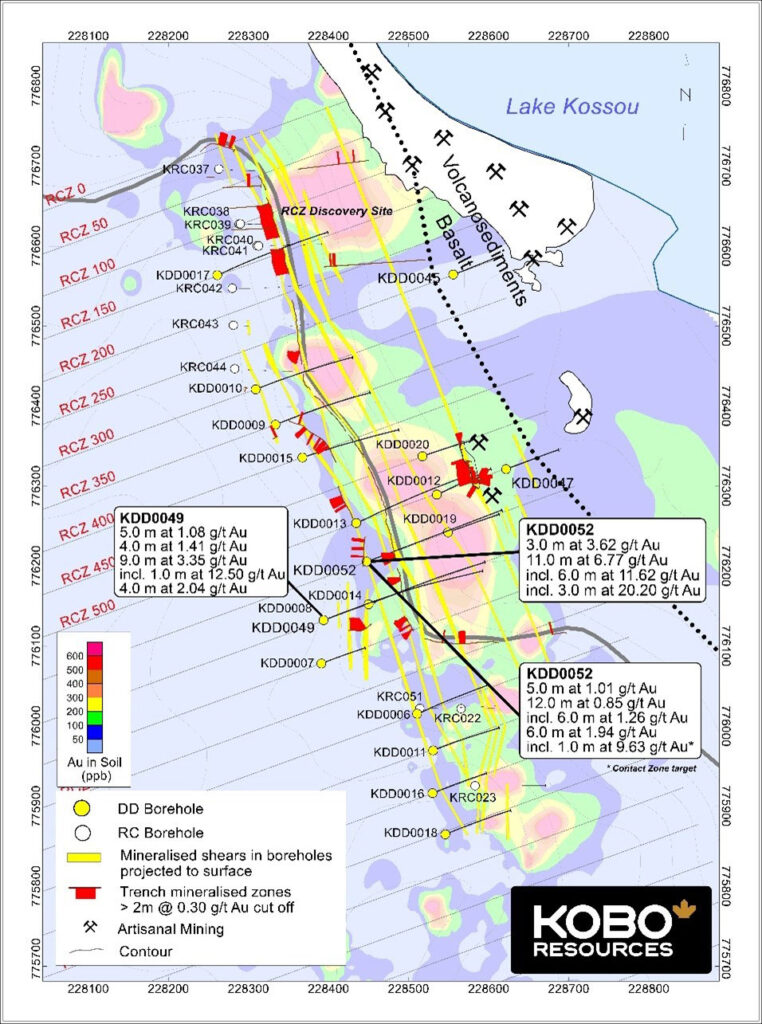
Figure 1: Road Cut Zone Diamond Drill Results and Collar Location Map (Graphic: Business Wire)
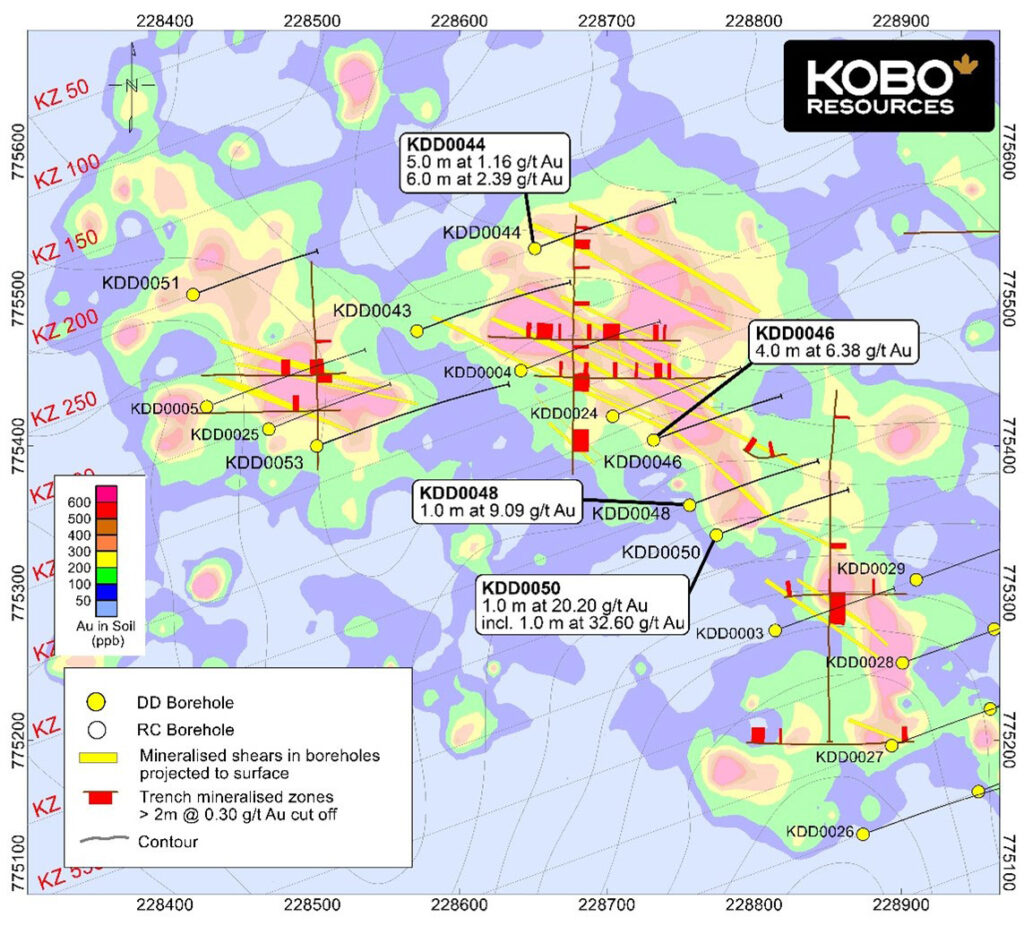
Figure 2: Kadie Zone Diamond Drill Results and Collar Location Map (Graphic: Business Wire)
Critical Metals Corp. (Nasdaq: CRML) a leading critical minerals ... READ MORE
Holes SH26-22 and SH26-23 return up to 930 g/t AgEq within broade... READ MORE
Pasinex Resources Limited (CSE: PSE) (FSE: PNX) a growing zinc-fo... READ MORE
Aya Gold & Silver Inc. (TSX: AYA; NASDAQ: AYA) is pleased to... READ MORE
New Break Resources Ltd. (CSE: NBRK) (OTCQB: NBRKF) (FSE: O91) ha... READ MORE