







|
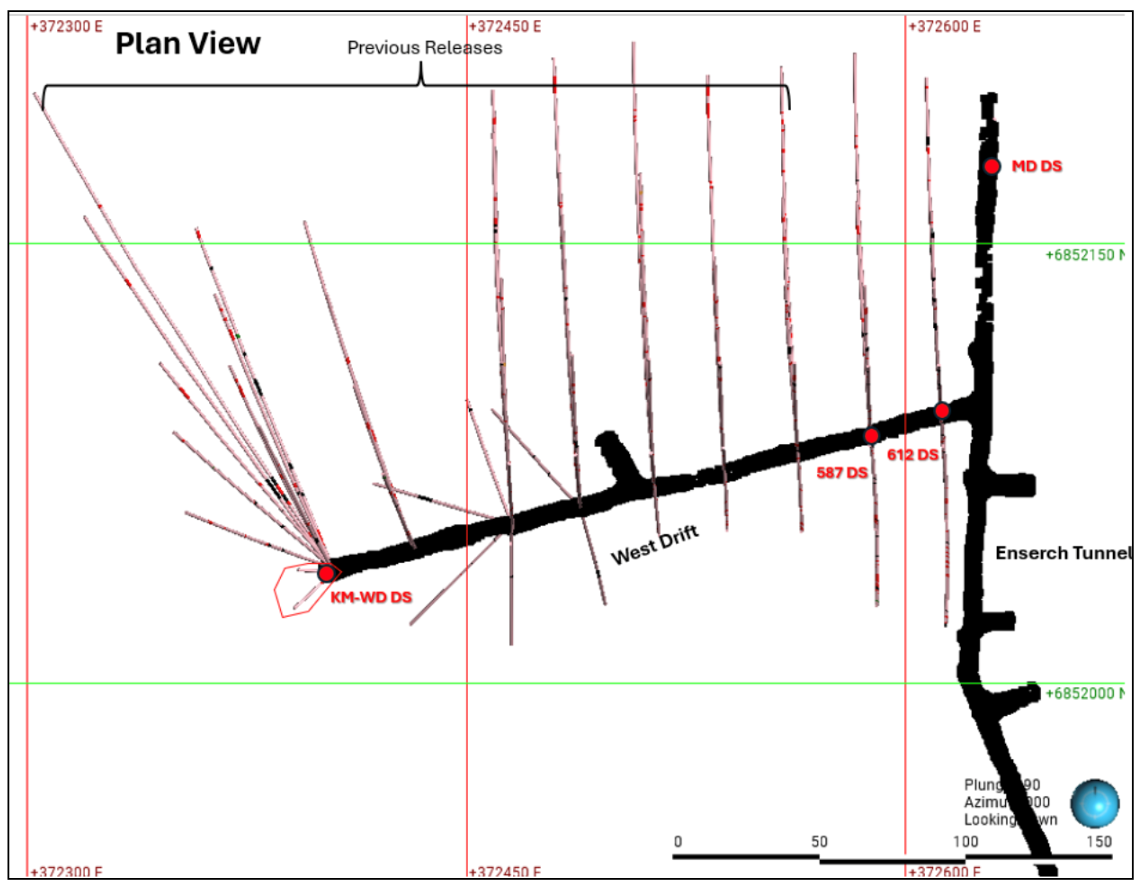
Figure 1. Plan view of the Lucky Shot underground exploration development with completed drill holes from the initial phase of Underground drilling. Highlighted in red are the drill station with results in this release.
|
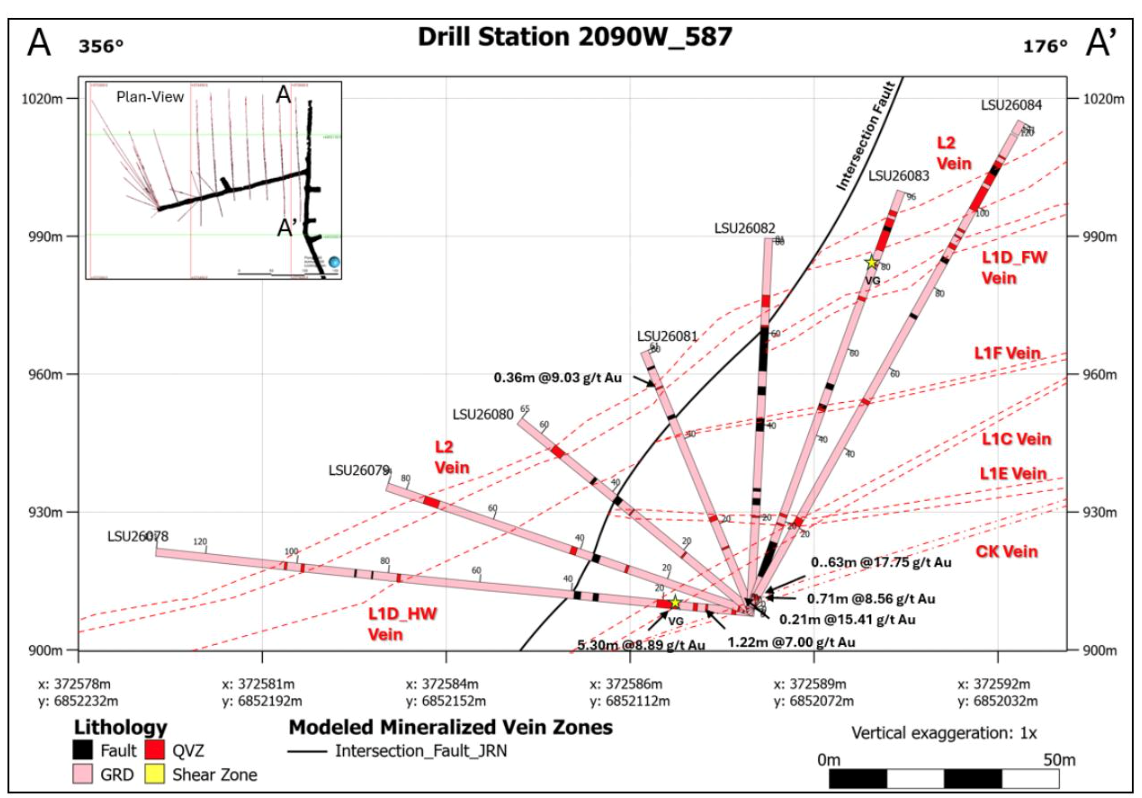
Figure 2. Cross-section through Drill Station 587 looking East, showing updated geologic interpretation and significant drill assay results.
This work has improved the interpreted continuity and geometry of the Lucky Shot L2 Vein and several underlying subparallel vein structures, including the L1c, L1d and CK veins. The updated cross-sectional interpretation also supports a more coherent kinematic model for the vein system, helping to explain the spatial relationship between the historically mined Lucky Shot Vein, newly modeled vein structures, and observed high-grade gold intercepts. Detailed geological logging continued to identify visible gold in multiple intercepts, while updated modeling has refined the Company’s understanding of vein architecture, structural controls on mineralization, and follow-up target areas for the next phase of underground drilling.
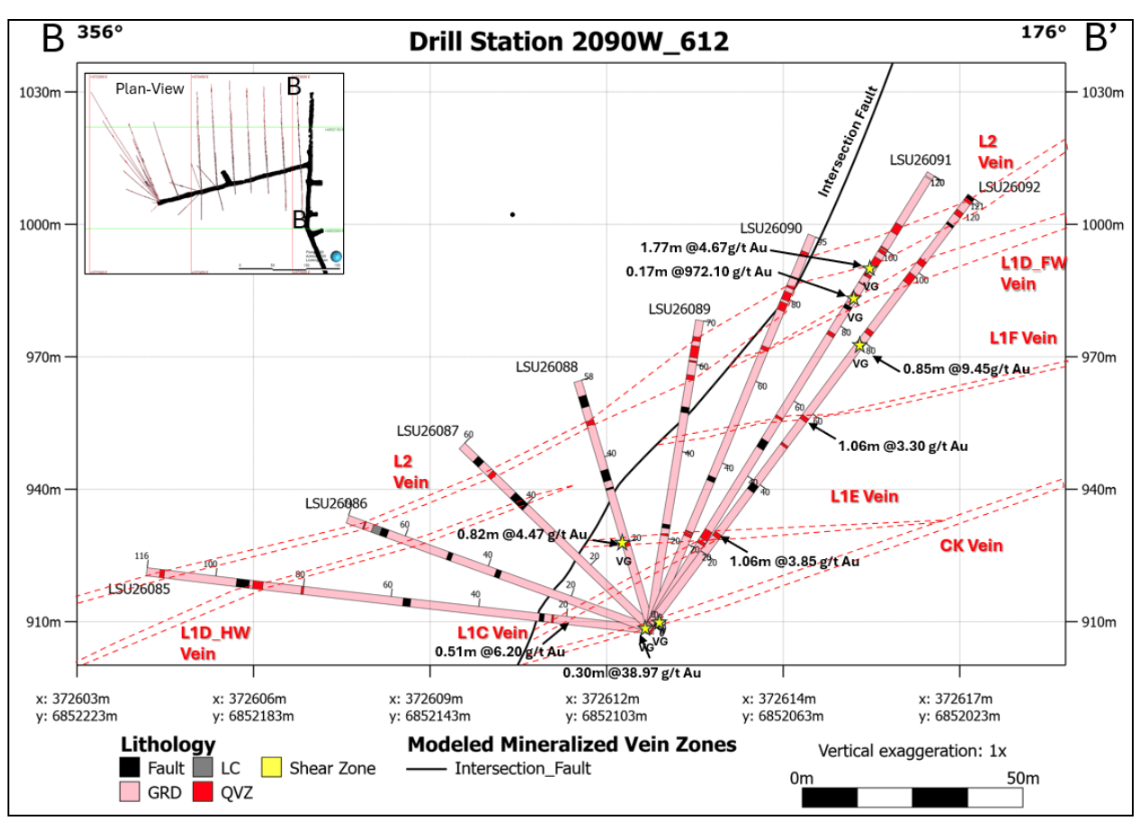
Figure 3. Cross-section through Drill Station 612 looking East, showing updated geologic interpretation and significant drill assay results.
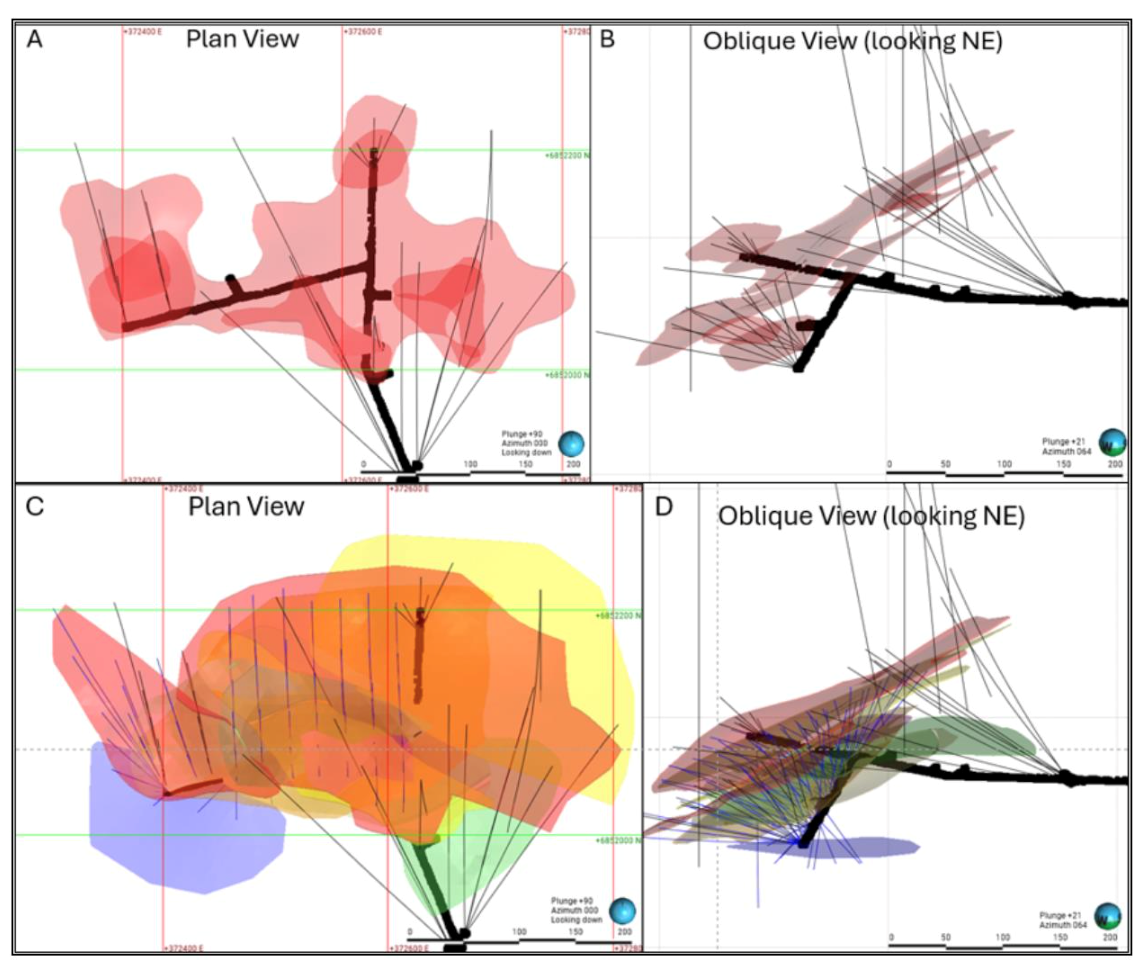
Figure 4. Geological model comparison before this phase of drilling and current geologic understanding after. Figure 4a and B show the initial understanding of the Lucky Shot vein system at the end of 2023. Figure 4C and D are updated geologic vein models based on this program drilling.
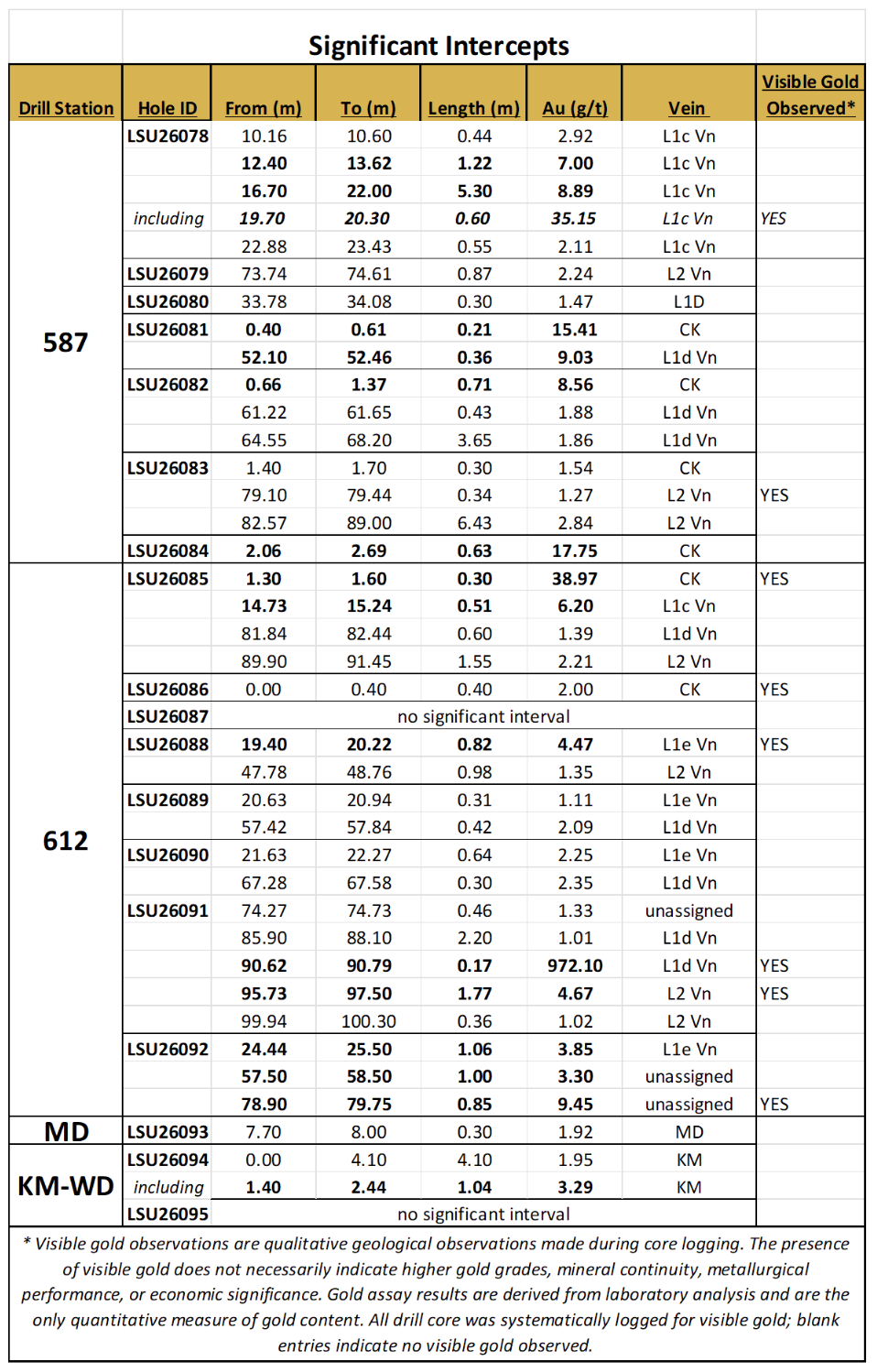
Figure 4 provides a comparison of the Company’s prior model to the updated geological interpretation of the Lucky Shot vein system. Figures 4A and 4B show the earlier interpretation of the Lucky Shot vein model, which was constrained by a more limited drilling dataset and relied on broader correlation of vein intercepts across areas with less underground drill density. The narrow black lines shown in Figures 4A and 4B represent the previous interpreted vein surfaces supported by the drilling available at that time. Following completion of the initial phase of underground drilling, Figures 4C and 4D show the updated vein model, which incorporates the additional drill information collected from the West Drift program and reflects a more detailed interpretation of the structurally controlled mineralized system. The updated model better defines the geometry and relative position of the Lucky Shot L2 Vein and associated subparallel vein structures, while also highlighting the increased complexity of the vein architecture identified through this phase of drilling. This before-and-after comparison demonstrates how the additional drilling has improved the Company’s geological framework, increased confidence in the interpreted position of key vein structures, and provides a more robust basis for planning the next phase of underground drilling and exploration development.
The Company cautions that drill intercept lengths reported in this release are downhole core lengths. True widths are not yet known and may be materially different from reported interval lengths. Visible gold observations are qualitative geological observations made during core logging and do not necessarily correlate with higher gold grades, mineral continuity, metallurgical performance or economic significance. Gold assay results are derived from laboratory analysis and are the only quantitative measure of gold content.
Quality Assurance and Quality Control
Contango’s drilling and sampling programs are conducted in accordance with industry best practices and applicable SEC S-K 1300 requirements. All drill cores are systematically logged, photographed and sampled under the supervision of the Company’s Qualified Person.
Quality assurance and quality control procedures include the regular insertion of certified reference materials, blanks and duplicate samples into the analytical stream. Mineralized intervals are sampled as whole core, with shoulder samples extending beyond mineralized zones where appropriate. Samples are sealed and transported under documented chain-of-custody procedures to the laboratory.
Analytical testing was performed by Bureau Veritas North America, with sample preparation conducted in Fairbanks, Alaska. Gold analyses for mineralized intervals were completed using a two-cycle PhotonAssay™ method by Paragon Geochemical in Vancouver, British Columbia. The published lower limit of detection for the two-cycle PhotonAssay method is 0.015 g/t Au, and the upper detection limit is 355 g/t Au. Samples returning gold values above the upper detection limit are re-assayed using a 50-gram charge fire assay with gravimetric finish through Bureau Veritas. Samples also undergo multi-element ICP-MS analysis to quantify minor and trace element associations.
Commencement of Underground Exploration Development Work
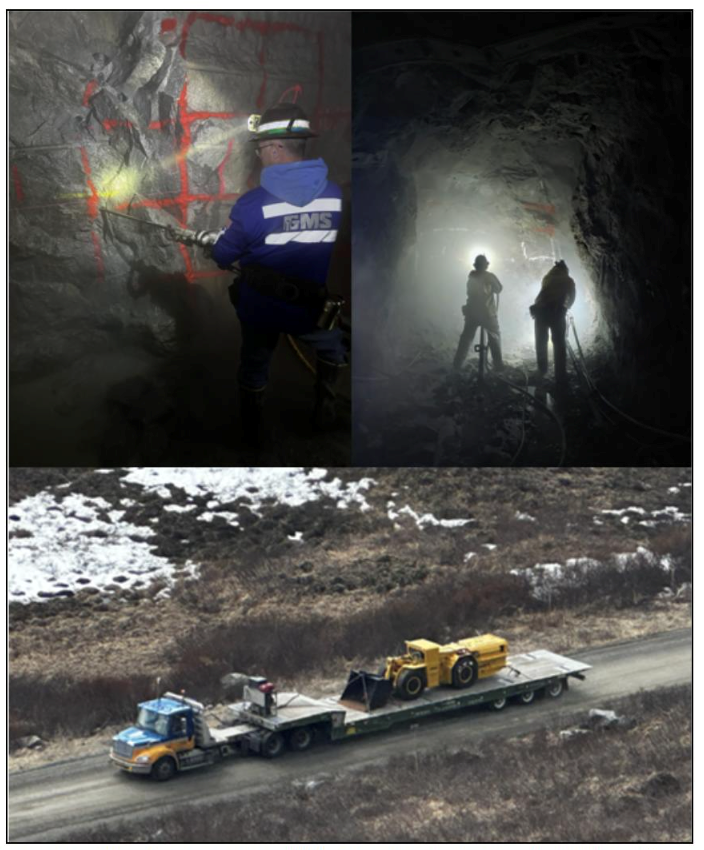
Contango has commenced the next phase of work at Lucky Shot: underground exploration development designed to establish access and drill platforms for continued exploration of the Lucky Shot vein system. GMS mobilized to site on May 27, 2026, and has completed 43m of lateral advancement.
Contango selected GMS Mine Repair & Maintenance, Inc. as the mining contractor for the underground exploration development program. GMS is a leading mining and tunneling contractor with more than 40 years of experience serving underground mining operations across North America.
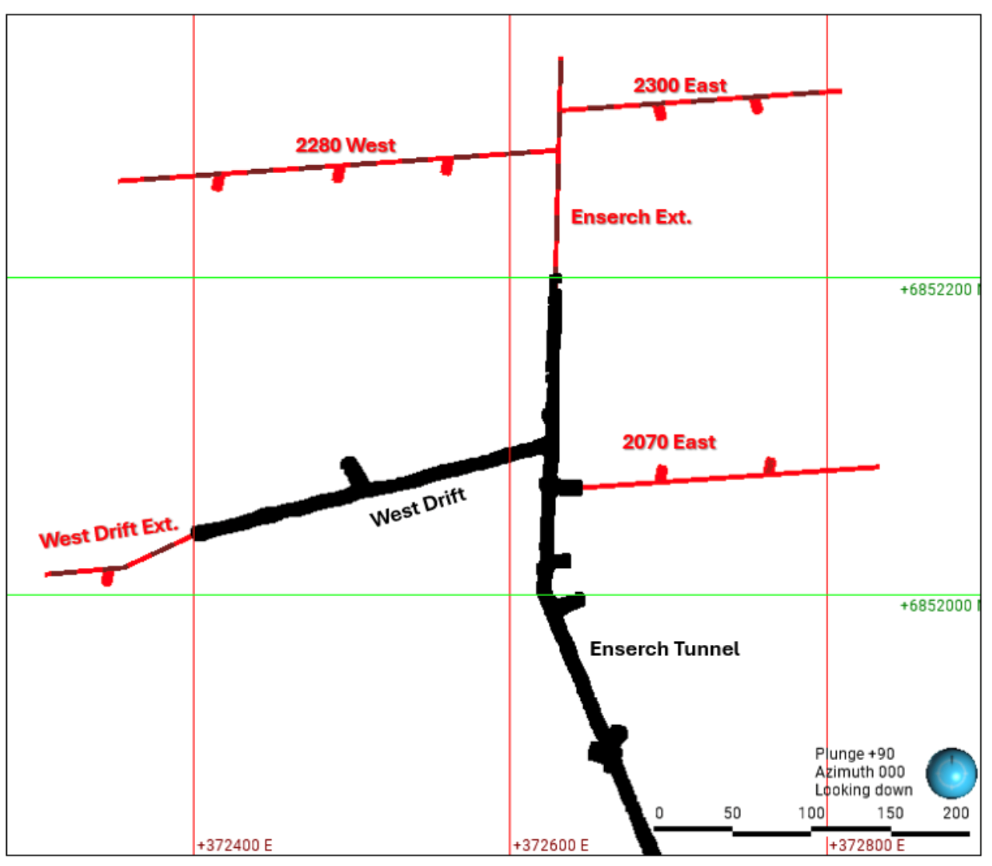
Figure 5 – Pictures of GMS mining crew mobilization to the Lucky Shot Mine site and underground exploration development activities underway in the West Drift Extension.
|
Figure 6. Plan view map of Lucky Shot Enserch level development. Current underground tunnels in black and planned Exploration Development in red.
Qualified Person
The scientific and technical information contained in this news release has been reviewed and approved by Dave Larimer, CPG, Vice President, Exploration for Contango, who is a Qualified Person as defined by SEC Regulation S-K 1300. Mr. Larimer is not independent of the Company.
ABOUT CONTANGO
Contango is a NYSE American and TSX listed company that engages in the exploration for and development and production of gold and associated minerals in Alaska and in the Golden Triangle in British Columbia. Contango holds a 30% interest in the Peak Gold JV, which leases approximately 675,000 acres of land for exploration and development on the Manh Choh project, with the remaining 70% owned by KG Mining (Alaska), Inc., an indirect subsidiary of Kinross Gold Corporation, operator of the Peak Gold JV. The Company and its subsidiaries also have (i) a lease on the Johnson Tract project, which consists of mineral rights to approximately 21,000 acres located near tidewater, 125 miles southwest of Anchorage, Alaska, from the underlying owner, CIRI, (ii) a lease on the Lucky Shot project, which consists of mineral rights to approximately 8,600 acres of State of Alaska and patented mining claims located in the Willow Mining District about 75 miles north of Anchorage, Alaska, from the underlying owner, Alaska Hardrock Inc., (iii) mineral rights to approximately 145,000 acres of State of Alaska mining claims, and (iv) mineral rights to approximately 11,700 acres of State of Alaska mining claims and upland mining leases, all of which give Contango the exclusive right to explore and develop minerals on these lands, and (v) mineral tenures of approximately 247,000 acres (100,000 ha) located in and around the Kitsault Valley in the Golden Triangle of northwest British Columbia.
Brutus Mining Inc. (CSE: BRU) (FSE: ZI3) is pleased to announce that it has closed its non-brokered ... READ MORE
Jaguar Uranium Corp. (NYSE American: JAGU) is pleased to announce an independent Mineral Resource E... READ MORE
Auro Metals Inc. (TSX-V: AURO) (OTCQB: AURFF), is pleased to announce the assay results of the fina... READ MORE
Endeavour Silver Corp. (NYSE: EXK) (TSX: EDR) is pleased to announce that repairs to the primary bal... READ MORE
Scorpio Gold Corp. (NASDAQ: SGLD) (TSX-V: SGLD) (OTCQB: SRCRF) (FSE: RY9) is pleased to announce re... READ MORE