








The Prospector News

Collective Mining Expands the Initial High-Grade Sub-Zone at Apollo by Intersecting 114.50 Metres at 5.00 g/t AuEq Within 263.85 Metres at 3.10 g/t AuEq

You have opened a direct link to the current edition PDF

Open PDF Close
Uncategorized

Share this news article

Collective Mining Expands the Initial High-Grade Sub-Zone at Apollo by Intersecting 114.50 Metres at 5.00 g/t AuEq Within 263.85 Metres at 3.10 g/t AuEq


  • Drill hole APC104-D6 extended the first high-grade sub-zone drill tested by the Company to date by up to 70 metres vertically by intersecting 114.50 metres @ 5.00 g/t gold equivalent within 263.85 metres at 3.10 g/t gold equivalent. Hole APC104-D6 was drilled below previously announced holes APC104-D2 and APC104-D5, which intercepted 181.35 metres @ 5.38 g/t AuEq** and 106.35 metres at 9.05 g/t AuEq**, respectively.
  • Drill hole APC104-D7A clipped the eastern edge of the same sub-zone, intercepting 30.25 metres @ 5.10 g/t gold equivalent within 137.70 metres @ 2.94 g/t gold equivalent. Results to date from the new orthogonal drilling program into the first high grade sub-zone have now outlined dimensions of 180 metres of strike, 70 metres in thickness and over 70 metres vertical and is still open in most directions for future expansion.
  • The Company has modeled eleven high-grade sub-zones target areas within the top 1,000 vertical metres of Apollo and plans to drill test each of them over the course of 2025. The high-grade sub-zones have the potential to boost the overall grade and mineral inventory of the Apollo system within the existing block model.
  • Mother hole APC-106D was drilled outside the Apollo system to the north and intersected multiple, shallow and high-grade gold-silver veins with results including 1.65 metres @ 20.81 g/t gold equivalent and 1.90 metres @ 16.29 g/t gold equivalent. Drilling of the Northern Gold-Silver Vein Zone to the north of Apollo has now outlined a 350-metre-long zone of high-grade porphyry related veins (“CBM veins”).


Collective Mining Ltd. (NYSE: CNL) (TSX: CNL) is pleased to announce assay results for three holes drilled into the Apollo system. Two of the holes were designed to test the potential extension of the recently discovered first high-grade sub-zone, while the third hole was drilled into the early-stage Northern Gold-Silver Vein Zone located above and to the north of the brecciated Apollo system. Apollo is the most advanced discovery made to date within the Company’s multi-target Guayabales Project in Caldas, Colombia.


The Company currently has eight drill rigs operating as part of its fully funded 70,000-metre drill program for 2025 with five rigs drilling at Apollo, one at the Tower target and two rigs at the San Antonio Project.


The 2025 objectives for the portion of the drilling program targeting the Apollo system are:

  • Drill test newly modeled high-grade sub-zone targets scattered throughout the top 1,000 vertical metres from surface to improve the grade profile (and size) of the system.
  • Grow the overall dimensions of the system by expanding vertically and laterally the recently discovered high-grade Ramp Zone.
  • Test the northern extension potential of Apollo at shallower elevations.
  • Expand and define the area of outcropping/shallow mineralization and test many drilling gaps within the internal block model from surface to a depth of 150 metres.


Approximately 115,000 metres of diamond drilling has been completed to date at the Guayabales Project, including 78,000 metres at Apollo. There are currently thirteen drill holes awaiting assays with results for most of these holes expected prior to the end of Q2 2025.


Ari Sussman, Executive Chairman commented: “Drilling continues to successfully intercept high-grade gold in the first of eleven potential high-grade sub-zones modelled by our technical team within the top 1,000 vertical metres of the Apollo system.  The bonus of drilling the sub-zones is that if successful in finding more gold than previous modeled, then it should raise the overall grade of the system within the existing modelled envelope. If drilling continues to intersect high grades as new sub-zone targets are tested, the impact on the block model grade and inventory could be materially significant.  Additionally, drilling at the poorly drilled Northern Gold-Silver Vein Zone has expanded the system to 350 metres in an east-west direction and it remains open in all directions for growth.  Any metal defined in this zone is a bonus as it is additional to the main Apollo system.”


To watch a video of David Reading, Special Advisor to the Company and QP under NI43-101 explain today’s results please click on the link here.


Details (see Table 1 and Figures 1-5)

  • APC104-D6, collared from mother hole APC-104D, was drilled in a westerly direction below previously announced hole APC104-D2 and was designed to extend the first modelled, high-grade sub-zone by 70 metres vertically. The hole intercepted continuous mineralization over 263.85 metres which included the high-grade sub-zone and multiple zones of high-grade CBM veinlets with assay results as follows:
    • 263.85 metres @ 3.10 g/t gold equivalent from 71.65 metres including: 
      • 114.50 metres @ 5.00 g/t gold equivalent from 82.00 metres
      • 31.75 metres @ 3.10 g/t gold equivalent from 303.75 metres
    • 21.95 metres @ 3.08 g/t gold equivalent from 373.55 metres
    • 17.15 metres @ 2.60 g/t gold equivalent from 444.80 metres
  • APC104-D7A, which is the final hole collared from mother hole APC-104D, was also drilled in a southwest direction on the edge of the Apollo system and clipped the eastern margin of the high-grade sub-zone with assay results as follows:
    • 137.70 metres @ 2.94 g/t gold equivalent from 160.90 metres including: 
      • 30.25 metres @ 5.10 g/t gold equivalent from 172.15 metres


The pilot drilling program designed to test the first modelled sub-zone has now defined an area of 180 metres of strike, by 70 metres in thickness and by 70 metres vertical with continuous high-grade mineralization. This sub-zone is still open in almost all directions and will be expanded as part of the current ongoing drill program. The Company also plans to drill at least eleven additional potential sub-zone targets in 2025 identified throughout top 1,000 vertical metres of the Apollo system. As a reminder, at a depth below 1,000 metres from surface, Apollo transitions in the Ramp Zone, which is a different deposit and style of mineralization.

  • APC-106D was drilled to the south from newly constructed Pad19 located north and outside the Apollo system. At 350 metres downhole, the alteration began to markedly increase and then the hole cut a zone of east-west trending, high-grade CBM veins. These new intercepts are a material extension to the high-grade Northern Gold-Silver Vein Zone, which now measures approximately 350 metres in strike and remains open in all directions for expansion. Assay results for hole APC-106D are as follows:
    • 1.65 metres @ 20.81 g/t gold equivalent from 353.20 metres
    • 1.90 metres @ 16.29 g/t gold equivalent from 388.30 metres
    • 18.25 metres @ 2.10 g/t gold equivalent from 732.95 metres including:
      • 5.85 metres @ 4.88 g/t gold equivalent from 732.95 metres


As a reminder, high-grade gold-silver veins intercepted previously in 2022 in the Northern Gold-Silver Vein Zone assayed as follows:

    • 10.30 metres @ 10.83 g/t gold equivalent (OLCC-4)**
    • 1.30 metres @ 74.91 g/t gold equivalent (OLCC-3)**
    • 1.30 metres @ 42.31 g/t gold equivalent (OLCC-3)**


The intersection of shallow CBM veins in the northern portion of the Apollo system has positive implications for the presence of brecciated porphyry at depth as this zoning of mineralization is seen further south at Apollo. Following completion of the mother hole, directional drilling is currently in progress to test for a northern extension of the Apollo system at depth where the system remains open for expansion.


Table 1: Assays Results for Drill Holes APC104-D6, APC104-D7A and APC-106D


Hole # From
(m)
To
(m)
Length
(m)
Au
g/t
Ag
g/t
Cu
%
Zn
%
AuEq
g/t*
APC104-D6 71.65 335.50 263.85 2.52 37 0.09 0.15 3.10
Incl. 82.00 196.50 114.50 4.19 53 0.15 0.15 5.00
& Incl- 303.75 335.50 31.75 2.24 58 0.06 0.33 3.10
and 373.55 395.50 21.95 2.96 10 0.03 0.11 3.08
and 444.80 461.95 17.15 2.29 22 0.06 0.04 2.60
APC104-D7A 160.90 298.60 137.70 1.87 61 0.22 0.14 2.94
Incl. 172.15 202.40 30.25 4.28 50 0.14 0.32 5.10
APC-106D 353.20 354.85 1.65 19.78 122 0.03 0.06 20.81
and 388.30 390.20 1.90 8.66 600 0.05 0.44 16.29
and 732.95 751.20 18.25 1.92 12 0.03 0.13 2.10
Incl. 732.95 738.80 5.85 4.50 27 0.04 0.35 4.88
*AuEq (g/t) is calculated as follows: (Au (g/t) x 0.97) + (Ag (g/t) x 0.015 x 0.85) + (Cu (%) x 1.44 x 0.95) + (Zn (%) x 0.43 x 0.85) utilizing metal prices of Ag – US$30/oz, Zn – US$1.25/lb, Cu – US$4.2/lb and Au – US$2,000/oz and recovery rates of 97% for Au, 85% for Ag, 95% for Cu and 85% for Zn. Recovery rate assumptions for metals are based on metallurgical results announced on October 17, 2023, April 11, 2024, and October 3, 2024. The recovery rate assumption for zinc is speculative as limited metallurgical work has been completed to date. True widths are unknown, and grades are uncut.
** See press release dated January 15, 2025, February 24, 2025, March 15, 2022 and May 9, 2022 for AuEq calculations.


About Collective Mining Ltd.


To see our latest corporate presentation and related information, please visit www.collectivemining.com.


Founded by the team that developed and sold Continental Gold Inc. to Zijin Mining for approximately $2 billion in enterprise value, Collective is a gold, silver, copper and tungsten exploration company with projects in Caldas, Colombia. The Company has options to acquire 100% interests in two projects located directly within an established mining camp with ten fully permitted and operating mines.


The Company’s flagship project, Guayabales, is anchored by the Apollo system, which hosts the large-scale, bulk-tonnage and high-grade gold-silver-copper-tungsten Apollo system. The Company’s objectives are to improve the overall grade of the Apollo system by systematically drill testing newly modeled potentially high-grade sub-zones, expand the Apollo system by stepping out along strike to the north and expanding the newly discovered high-grade Ramp Zone along strike and to depth, expand the Trap system and drill a series of newly generated targets including Tower and X.


Management and insiders own approximately 33.4% of the outstanding shares of the Company and as a result, are fully aligned with shareholders.


Qualified Person (QP) and NI43-101 Disclosure


David J Reading is the designated Qualified Person for this news release within the meaning of National Instrument 43-101 and has reviewed and verified that the technical information contained herein is accurate and approves of the written disclosure of same. Mr. Reading has an MSc in Economic Geology and is a Fellow of the Institute of Materials, Minerals and Mining and of the Society of Economic Geology (SEG).
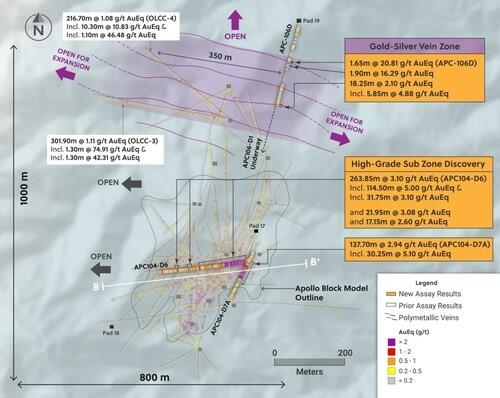


Figure 1: Plan View of the Apollo System Highlighting Drill Holes in this Release (CNW Group/Collective Mining Ltd.)
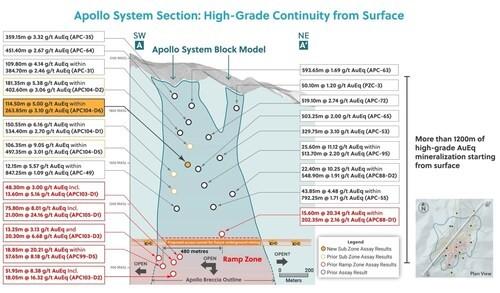


Figure 2: Apollo System: High-Grade Over 1,200 Metres from Surface (CNW Group/Collective Mining Ltd.)
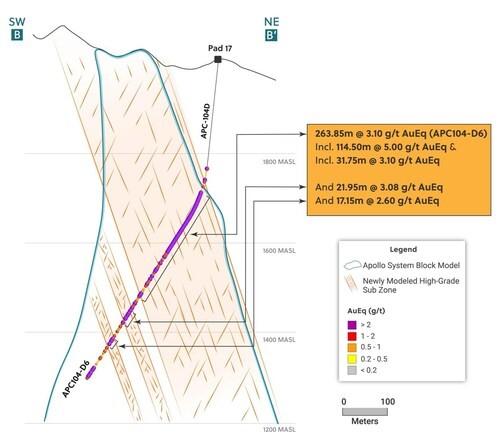


Figure 3: Section B – B’ Outlining the High-Grade Sub-Zone Intersected in Drill Hole APC104-D6 (CNW Group/Collective Mining Ltd.)
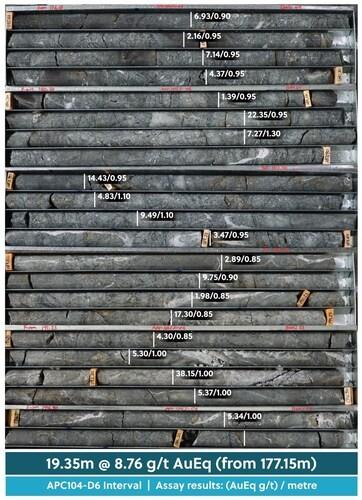


Figure 4: Drill Core Tray Photo Highlighting a Portion of APC104-D6 (CNW Group/Collective Mining Ltd.)
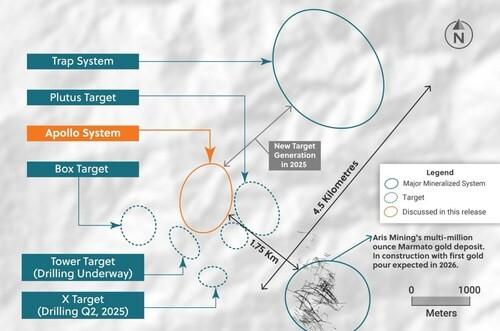


Figure 5: Plan View of the Guayabales Project Highlighting the Apollo Target Area (CNW Group/Collective Mining Ltd.)


Posted April 16, 2025

Share this news article

MORE or "UNCATEGORIZED"


Critical Metals Corp Achieves Breakthrough Tanbreez Heavy Rare Earth Results: >99% Dissolution of Eudialyte Concentrate Into 19 Ultra-High-Purity Rare Earth Products; Refinery Study Projects US$1.8–2.2b in Annual Refinery Revenue

Critical Metals Corp. (Nasdaq: CRML) a leading critical minerals ... READ MORE

September 16, 2026

Metalsource Mining Extends High Grade Mineralization at Depth as Silver Hill Exploration Enters Major Expansion Phase

Holes SH26-22 and SH26-23 return up to 930 g/t AgEq within broade... READ MORE

September 16, 2026

Pasinex Completes Sale of High-Grade Zinc Sulphide Material and Provides Pinargozu Operations Update

Pasinex Resources Limited (CSE: PSE) (FSE: PNX) a growing zinc-fo... READ MORE

September 16, 2026

Aya Gold & Silver Reports High-Grade Silver Exploration Results Near Pit and at Depth at Zgounder

Aya Gold & Silver Inc. (TSX: AYA; NASDAQ: AYA) is pleased to... READ MORE

September 16, 2026

New Break Resources Ltd. (CSE: NBRK) (OTCQB: NBRKF) (FSE: O91) has received results from the last four holes of a ten-hole, 1,996 metre summer drilling program in the Zavitz gold zone at the Company's 100% owned Moray gold project. In total, New Break has completed 5,372 metres of drilling in 32 drillholes in 2026. Moray is located 49 km southeast of Timmins, Ontario and 32 km northwest of the Young-Davidson gold mine operated by Alamos Gold Inc. Select results from the final four of ten holes drilled in the summer drilling program are presented below in Table 1, while drillhole collar locations are detailed in Table 2 in Appendix A. Table 1 – Moray Summer 2026 Final Drill Results Hole ID Length (m) From (m) To (m) Width (1) (m) Au Grade (2) (g/t) NBR-26-29 322.0 77.3 78.8 1.5 0.42 and 138.0 139.1 1.1 0.38 and 162.5 173.3 10.8 (3) 1.61 and 227.4 229.0 1.6 1.21 and 231.5 232.1 0.6 1.72 NBR-26-30 250.0 37.0 38.0 1.0 0.30 and 102.8 103.5 0.7 0.60 and 121.5 122.5 1.0 0.36 and 124.5 125.5 1.0 0.33 and 128.5 129.0 0.5 0.90 and 131.0 132.0 1.0 0.36 and 169.8 174.0 4.2 2.65 and 178.0 179.5 1.5 0.77 and 183.5 186.6 3.1 1.22 and 190.0 190.5 0.5 1.06 and 191.5 192.5 1.0 1.48 and 196.0 200.5 4.5 2.53 and 203.5 204.0 0.5 2.15 and 206.5 212.0 5.5 1.57 NBR-26-31 274.0 169.0 170.5 1.5 0.37 and 184.5 186.0 1.5 0.51 and 197.0 200.0 3.0 0.94 and 201.5 202.0 0.5 0.50 and 203.5 210.0 6.5 (3) 3.12 NBR-26-32 352.0 73.5 74.0 0.5 0.44 and 174.0 174.6 0.6 0.52 and 194.0 195.0 1.0 0.66 and 199.8 203.3 3.5 2.29 and 227.3 228.0 0.7 0.97 (1) Intervals are drill intersections and do not necessarily represent true widths. (2) All intervals are presented using a cut-off grade of 0.3 g/t Au and internal dilution of no more than 1.0 metres at grades less than 0.3 g/t Au and assays are not capped (see QA/QC Procedures). (3) Drill core photos shown in Appendix B. Figure 1 – Newly Reported Drillholes NBR-26-29, 30 Figure 2 – Newly Reported Drillholes NBR-26-30, 31, 32 Note: The bottom of NBR-26-30 deviated southeast and is represented in both sections. Figure 1: Section B-B1 incorporates drillholes NBR-26-06, 07, 08, 25, 26, 27, 28, 29 and part of 30. Gold mineralization extends southeast into the syenite as exhibited in NBR-26-29. NBR-26-30 is identified in both sections A-A1 and B-B1 as the drillhole was collared along section A-A1 but deviated southeast, intersecting gold mineralization in the mafic volcanics in section B-B1. Figure 2: A-A1 incorporates drillholes NBR-26-03, 04, 05, 23, 24, 30, 31 and 32. NBR-26-31 exhibits gold mineralization both within the syenite (at the contact) and within a "flow breccia" within the hematite altered mafic volcanic at the contact. NBR-26-32 is typified by blocky faulted ground with lamprophyre dykes and gold mineralization in the hematite altered mafic volcanics in a brecciated quartz vein with angular syenitic fragments. William Love, Chief Executive Officer of New Break commented, "Ongoing drilling this summer in the Zavitz gold zone continues to deliver significant gold values, with gold mineralization intercepted in every drillhole. As depicted in Figures 1 and 2, gold mineralization has been encountered predominantly within the mafic volcanics. Importantly, drillholes NR-26-29 and NR-26-32, the deepest drilled to date, demonstrate that gold mineralization extends into the syenite to the southeast at the contact with the mafic volcanics." He further noted, "The intrusive-mafic volcanic contact in the Zavitz gold zone has a distinctive magnetic high. This could be reflective of the higher proportion of iron in these mafic volcanics, which is associated with the higher gold values. This same magnetic and IP signature has been identified elsewhere in areas also believed to be along the intrusive-mafic volcanic contact. Drilling these never before tested targets with the goal of identifying gold mineralization similar to that encountered in the Zavitz zone represents the potential for significantly expanding the Moray gold discovery. There is also the belief that the Zavitz zone could represent the first of a series of stacked mineralized gold zones, which would point to the potential for a much larger gold system at depth. We plan to test this through deeper drilling directly into the Zavitz zone." About the Moray Gold Project The Moray property is located in the heart of the Ontario Abitibi greenstone belt, 49 km southeast of Timmins surrounded by a number of significant gold producing companies and existing mills (see Figure 3). The Young-Davidson gold mine operated by Alamos Gold Inc., with its 8,000 tonne per day mill is the closest and within a short trucking distance of approximately 45 km by road from Moray. The understanding of gold mineralization at Moray continues to evolve with each round of drilling. The occurrence of gold mineralization extending into the syenite to the southeast of the Zavitz zone and in the deepest drillholes is noteworthy given the presence of syenite-hosted mineralization at Young-Davidison. More recent examination of the drill core also suggests that the gold mineralization discovered to date may resemble an intrusion related style of deposit like Agnico Eagle's Upper Beaver gold deposit east of Kirkland Lake, as opposed to a structurally hosted gold system. Both Young-Davidson and Upper Beaver host multi-million ounce gold deposits. Figure 3 – Moray Location Map: Surrounding Gold Producers and Upper Beaver Gold Project Technical Content and Qualified Person The scientific and technical information contained in this news release has been reviewed and approved by Peter C. Hubacheck, P. Geo, consulting geologist to New Break, and an independent Qualified Person as defined by National Instrument 43-101. Mr. Hubacheck certifies that this news release fairly and accurately reflects the technical information and data presented. New Break conducts its exploration activities in accordance with CIM Best Practices Guidelines. QA/QC Procedures QA/QC procedures were executed to ensure all work is conducted in accordance with best practices. All drill core was sawn in half with one half of the core prepared for shipment and the other half retained for future verification. All core is under watch from the drill site to the core processing facility. Drill core is BQTK size and sample intervals range from 0.5 metres to 1.0 metres in length. Commercially prepared certified reference material ("CRM") standards and blanks were inserted with each shipment at a rate of 1 QAQC sample in every 12 core samples. Samples from New Break's 2026 Moray drilling program were analyzed at Activation Laboratories in Timmins, Ontario, which is ISO 17025 certified, by 30-gram fire assay with atomic absorption finish. Any sample assaying greater than 10.0 g/t Au was re-assayed with fire assay gravimetric analysis. Grade composite intervals over core lengths are calculated using a weighted average grade with a cut-off grade of 0.3 g/t Au. Up to 1.0 m of internal dilution (consecutive interval below cut-off grade) are included within specific geologic domains and alteration assemblages, except as otherwise noted. The composites are constrained geologically by metasomatic alteration processes sourcing from the Fiset syenite intrusion and contact mafic volcanic rocks. Elevated gold values are coincident with hematite, silica, sericite and pyrite mineralization within structurally prepared brecciated corridors flanking the intrusion. Intervals are not true widths and no top cutting has been applied to the higher gold values. About New Break Resources Ltd. New Break is a Canadian mineral exploration company focused on its Moray gold project located 49 km southeast of Timmins, Ontario, in a well-established mining camp within proximity to existing infrastructure, and 32 km northwest of the Young-Davidson gold mine, operated by Alamos Gold Inc. Shareholders are also leveraged to exploration success in Nunavut, Canada, through New Break's 20% carried interest in the Sundog gold project and ownership of 6.0 million shares of Guardian Exploration Inc. (TSXV: GX). The Company is supported by a highly experienced team of mining professionals. Appendix A – Drillhole Data and Locations Table 2 – Moray Summer 2026 Drillhole Collar Locations Hole ID Length (m) UTM Easting UTM Northing UTM Elevation Azimuth (degrees) Dip (degrees) NBR-26-29 322.0 492703 5320285 363 220 -70 NBR-26-30 250.0 492708 5320329 363 220 -47 NBR-26-31 274.0 492708 5320329 363 220 -60 NBR-26-32 352.0 492708 5320329 363 220 -70 Total 1,198.0 Coordinates are reported in UTM Zone 17 North, with units in metres. Figure 4 – Zavitz Gold Zone – Surface Traces of 2025 and 2026 Drillholes. All of the drilling at Moray has been completed by Enviro North Exploration Inc. out of Sturgeon Falls, Ontario. Drilling in the Zavitz gold zone is shown in figure 4, with the 1,996 metres in 10 holes drilled this summer depicted in red, the 2,807 metres in 20 holes drilled from January to April 2026 shown in blue and the 1,817 metres in 8 holes drilled in 2025 shown in black. In total, 6,620 metres in 38 drillholes have been completed in the Zavitz gold zone, while New Break has completed a total of 5,372 metres in 32 drillholes of our planned 2026, 10,000 metre drilling program. Appendix B – Drill Core Photos From NBR-26-29 and NBR-26-31

New Break Resources Ltd. (CSE: NBRK) (OTCQB: NBRKF) (FSE: O91) ha... READ MORE

September 16, 2026

Copyright 2026 The Prospector News