








The Prospector News

Centerra Gold Announces Updated Mineral Resources at Kemess; Advancing Studies on the Project

You have opened a direct link to the current edition PDF

Open PDF Close
Uncategorized

Share this news article

Centerra Gold Announces Updated Mineral Resources at Kemess; Advancing Studies on the Project


Centerra Gold Inc. (TSX: CG) (NYSE: CGAU) announces an updated mineral resource at Kemess, which includes results from the 2024 drilling campaign, and outlines a plan to advance studies on the project. In 2024, Centerra completed over 11,400 meters of core drilling for exploration, geotechnical, and metallurgical testing purposes. Those results have been included in the updated mineral resource as of April 15, 2025. Gold mineral resources at Kemess are estimated to contain 2.7 million ounces of indicated resources and 2.2 million ounces of inferred resources. Copper mineral resources are estimated to contain 971 million pounds of indicated resources and 821 million pounds of inferred resources (see the tables below for tonnage and grades).


President and CEO, Paul Tomory, commented, “We are pleased to be moving forward with studies on the Kemess project. The updated mineral resource published today demonstrates robust mineralization in the highly prospective Toodoggone district in the northern interior of British Columbia. In addition, we have doubled our 2025 exploration guidance at Kemess to between $10 and $12 million which is expected to focus on infill drilling for the open pit and underground targets and also to test high grade mineralization in the deeper Kemess Offset zone. We are moving forward with a Preliminary Economic Assessment on Kemess, using an open pit and longhole open stoping underground mining concept, which is expected to be completed by the end of 2025. The significant existing infrastructure already in place, is expected to lower the execution risk compared to typical greenfield projects of this scale.”


Paul Tomory concluded, “With the Kemess project, we are advancing the studies for a potential gold-copper mine with a possible 15-year operation in a top tier mining jurisdiction. We are targeting a project with a potential average annual production of approximately 250,000 gold equivalent ounces, which along with Mount Milligan, would give Centerra two long-life gold-copper assets in British Columbia. Recently, we supported Thesis Gold Inc. with a strategic equity investment. Given the proximity of Kemess to the Lawyers-Ranch Project, we see substantial opportunities for synergies, including the ability to leverage existing infrastructure to unlock regional potential.”


British Columbia’s Minister for Mining and Critical Minerals, The Honourable Jagrup Brar, commented, “Centerra’s latest results and expanded exploration at Kemess show what responsible development can achieve. Our government welcomes investments that help grow our economy, create well-paying jobs, and respect community and environmental values.”


Updated Kemess Gold and Copper Mineral Resources(1,2,3)


  Gold Copper
Property Tonnes
(kt)
Grade
(g/t)
Contained
Gold (koz)
Tonnes
(kt)
Grade
(% Copper)
Contained
Copper (Mlbs)
Indicated Mineral Resources
Kemess Open Pit 142,570 0.32 1,467 142,570 0.16 503
Kemess Underground 25,347 0.91 745 25,347 0.39 217
Kemess East 25,074 0.66 531 25,074 0.45 251
Total Indicated 192,990 0.44 2,742 192,990 0.23 971
Inferred Mineral Resources
Kemess Open Pit 124,428 0.31 1,232 124,428 0.14 395
Kemess Underground 10,821 0.96 335 10,821 0.40 95
Kemess East 34,010 0.60 661 34,010 0.44 331
Total Inferred 169,260 0.41 2,228 169,260 0.22 821


NOTE: Numbers may not add due to rounding. (1) As of April 15, 2025. Refer to Tables “Centerra Gold Updated Kemess Resources Summary”, including the respective footnotes and the “Additional Footnotes” section below. (2) Mineral resources do not have demonstrated economic viability. (3) The updated resource is generally consistent with the Company’s previous understanding of the resource estimate.


  • Kemess Concept: The Kemess updated mineral resources are based on a potential concept for the project which includes an open pit and underground operation using longhole open stoping and backfill.
  • Kemess Open Pit: The Kemess Open Pit incorporates mineralized material previously considered part of a block cave concept for Kemess Underground, which has increased the size and quality of the resources considered for open pit mining. The Kemess Open Pit is assumed to be a traditional truck and shovel operation.
  • Kemess Underground and Kemess East: The tonnages and mineral inventory in Kemess Underground have decreased due to Kemess Open Pit mining out a portion of the previous block cave, as well as the change of mining method to longhole open stoping. The tonnages in Kemess East also decreased, however the mineral inventory only declined slightly due to the higher grades and lower dilution of longhole open stoping compared with the previous block cave mining method. The grades of Kemess Underground and Kemess East have increased due to a change in the mining method, from block cave to longhole open stoping. The mining method considers paste backfill of the stopes for stability.
  • Kemess Drilling Programs: In 2024, Centerra completed over 11,400 meters of core drilling for exploration, geotechnical, and metallurgical testing purposes. The drill program targeted the area between the known mineralization at Nugget and the upper portion of the Kemess Underground zones. Geological modeling and the updated resource estimate show continuous mineralization along the five-kilometre trend from Nugget to Kemess East. Those results have been included in the updated mineral resource as of April 15, 2025. Centerra has increased its 2025 exploration guidance at Kemess to between $10 and $12 million, up from $4 to $6 million previously, with a total of 28,500 meters of drilling planned. The focus is expected to be on infill drilling for Kemess Open Pit and Kemess Underground resources and to test high grade mineralization in the deeper Kemess Offset zone, which is currently not included in the stated mineral resource.


Kemess Study Plan


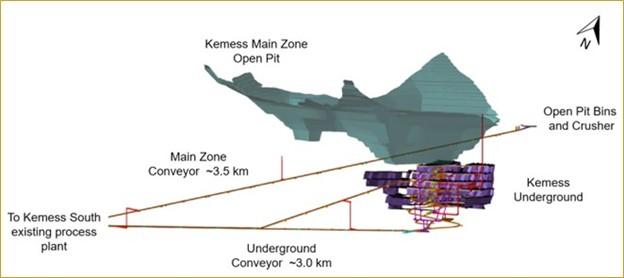
Centerra has initiated a Preliminary Economic Assessment on the Kemess project, which is expected to be completed by the end of 2025. The PEA will be based on a combined open pit and conventional underground mine concept, using a longhole open stoping underground mining method, rather than the previous block cave concept. This is expected to have improved economics as it is less capital intensive and reduces overall dilution of the higher underground grades.


The PEA is expected to focus on a subset of the mineral resources at Kemess Open Pit and Kemess Underground. Kemess East is expected to be evaluated as future upside potential.


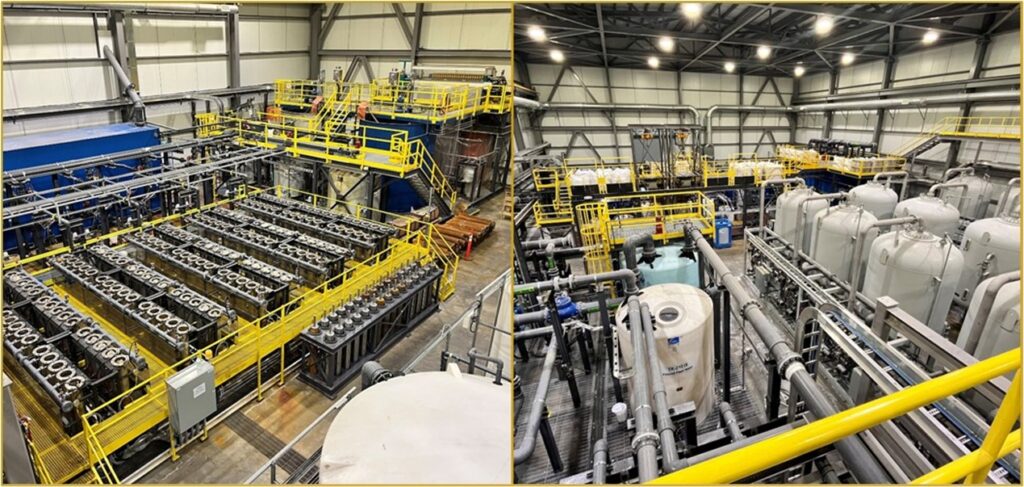
Kemess has significant infrastructure already in place, including: a 380 kilometer, 230 kilovolt power line; a 50,000 tonnes per day nameplate processing plant in need of some refurbishment and equipment replacements; “mothballed” site infrastructure including a water treatment plant, camp, administration facilities, air strip, truck shop and warehouse which will require some refurbishment; and tailings storage using the previously mined pit as well as an existing tailings facility, which is capable of expansion. To complement this existing infrastructure, it is anticipated that new crushing, conveying, and mine infrastructure will be required for the open pit and underground operations. The existing infrastructure is expected to lower the execution risk for the project when compared to typical greenfield projects of this scale.


With the Kemess project, Centerra is advancing the studies for a potential gold-copper mine with a possible 15-year operation in a top tier mining jurisdiction. The Company is targeting a project with a potential average annual production of approximately 250,000 gold equivalent ounces, which along with Mount Milligan, would give Centerra two long-life gold-copper assets in British Columbia.


Kemess Study Technical Concept


Figure 1: A long sectional view of the Kemess deposit. Centerra has increased 2025 exploration guidance at Kemess to between $10 and $12 million, with a total of 28,500 meters of drilling planned.
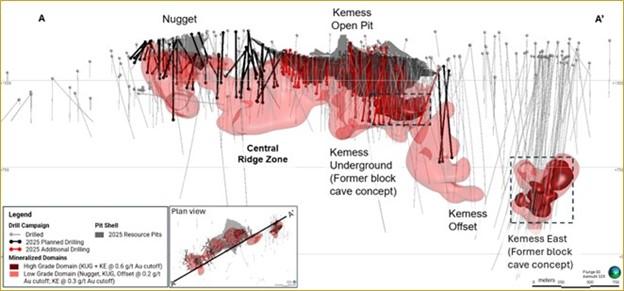
 

Figure 2: An isometric view of the open pit and conventional underground mine concept, using a longhole open stoping underground mining method.


Kemess Existing Infrastructure


Figure 3: Aerial photo of the existing infrastructure at Kemess, including a processing plant, truck shop and warehouse.
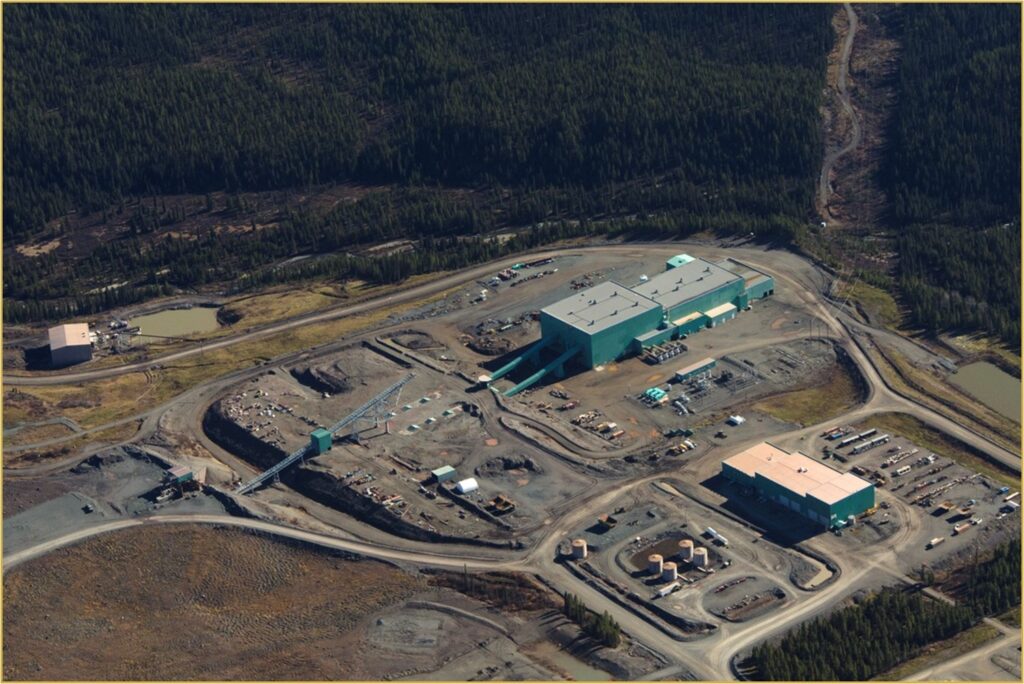


Figure 4: 50,000 tonnes per day nameplate processing plant in need of some refurbishment and equipment replacements.
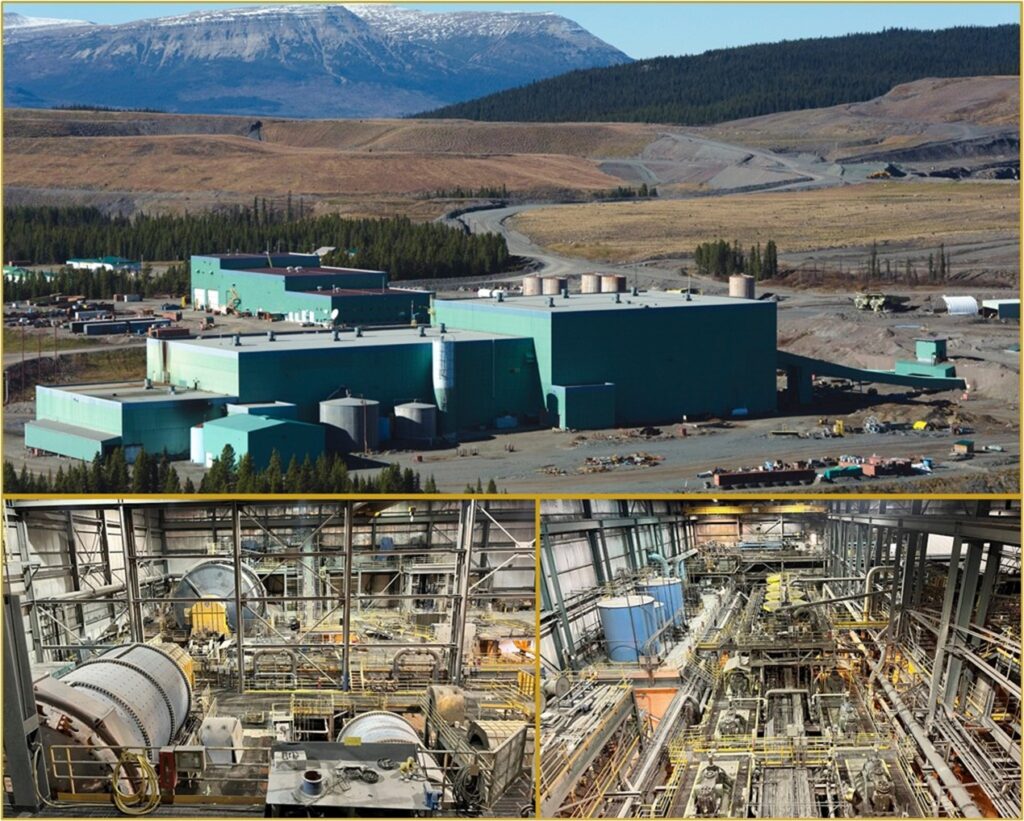


Figure 5: Kemess camp.
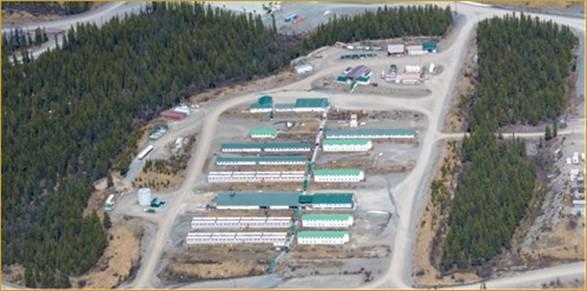


Figure 6: Kemess tailings storage using the previously mined pit as well as an existing tailings facility, which is capable of expansion.
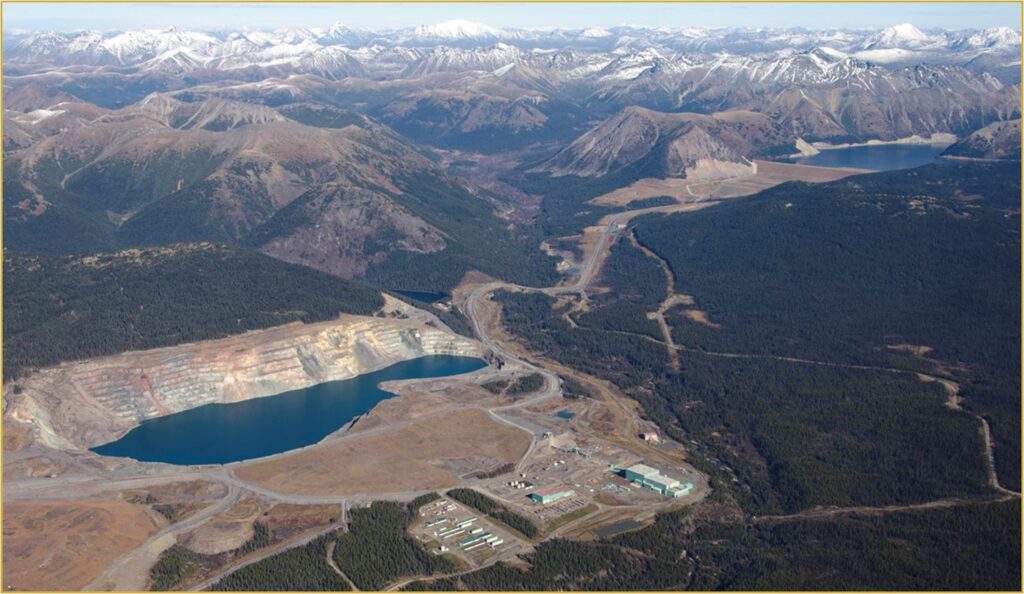


Figure 7: Kemess water treatment plant.


Centerra Gold Updated Kemess Resource Summary(1,4,5)
as of April 15, 2025 (see additional footnotes below)
 
Indicated Mineral Resources(2)
  Tonnes
(kt)
Gold Grade
(g/t)
Contained
Gold (koz)
Copper
Grade (%)
Contained
Copper
(Mlbs)
Silver Grade
(g/t)
Contained
Silver (koz)
Kemess Open Pit 142,570 0.32 1,467 0.16 503 1.16 5,308
Kemess Underground 25,347 0.91 745 0.39 217 2.60 2,122
Kemess East 25,074 0.66 531 0.45 251 1.94 1,564
Total Kemess Indicated 192,990 0.44 2,742 0.23 971 1.45 8,994
Inferred Mineral Resources(3)
  Tonnes
(kt)
Gold Grade
(g/t)
Contained
Gold (koz)
Copper
Grade (%)
Contained
Copper
(Mlbs)
Silver Grade
(g/t)
Contained
Silver (koz)
Kemess Open Pit 124,428 0.31 1,232 0.14 395 1.06 4,228
Kemess Underground 10,821 0.96 335 0.40 95 2.45 851
Kemess East 34,010 0.60 661 0.44 331 1.97 2,156
Total Kemess Inferred 169,260 0.41 2,228 0.22 821 1.33 7,235

(1) Mineral resources are stated in accordance with CIM (2014) Definitions as incorporated by reference into NI 43-101. Mineral Resources are estimated and have an effective date of April 15, 2025.
(2) Mineral resources do not have demonstrated economic viability.
(3) Inferred mineral resources have a lower level of confidence as to their existence and as to whether they can be mined economically. It cannot be assumed that all or part of the inferred mineral resources will ever be upgraded to a higher category.
(4) Centerra’s equity interests as of this news release are as follows: Kemess Open Pit, Kemess Underground and Kemess East 100%.
(5) Numbers may not add due to rounding.


Additional Footnotes


General

  • A conversion factor of 31.1035 grams per troy ounce of gold is used in the mineral resource estimates.
  • The mineral resources are reported based on a gold price of $2,000 per ounce, copper price of $4.00 per pound and an exchange rate of 1USD:1.33CAD.
  • Samples were prepared and analyzed by independent, ISO-accredited laboratories. Quality control programs include the insertion of blanks, certified reference materials, duplicate samples, internal and external reviews and checks by umpire laboratories.
  • Development of geological and mineralized domains, geostatistical analysis, block model construction and grade estimates were done using industry standard methods and commercially available software packages. Grade estimates used ordinary kriging with capped and composited assay grades.


Kemess Open Pit

  • The mineral resources are reported within a constraining pit shell and a NSR cut-off value of C$14.60 per tonne that takes into consideration metallurgical recoveries, concentrate grades, transportation costs, and smelter treatment charges.


Kemess Underground

  • Underground resources are reported with an NSR cut-off value of C$54.10 per tonne that takes into consideration metallurgical recoveries, concentrate grades, transportation costs, and smelter treatment charges.
  • The mineral resources are reported within a constraining volume of software-generated stope shapes including “must take”, subeconomic material. An orphan analysis was performed to remove isolated and discontinuous blocks from the resource.
  • Dilution factors applied to all stope shapes were 1.25 meters for in-situ side walls, 0.25 meters for filled floor/back and 1.0 meters for walls against fill. A mining recovery factor of 93% was assumed for all volumes.


Kemess East

  • The mineral resources are reported within a constraining volume of software-generated stope shapes. An orphan analysis was performed to remove isolated and discontinuous blocks from the resource.
  • Dilution factors applied to all stope shapes were 1.25 meters for in-situ side walls, 0.25 meters for filled floor/back and 1.0 meters for walls against fill. A mining recovery factor of 93% was assumed for all volumes.
  • Underground resources are reported with an NSR cut-off value of C$54.10 per tonne that takes into consideration metallurgical recoveries, concentrate grades, transportation costs, and smelter treatment charges.


Mineral reserve and mineral resource estimates are forward-looking information and are based on key assumptions and are subject to material risk factors. If any event arising from these risks occurs, the Company’s business, prospects, financial condition, results of operations or cash flows, and the market price of Centerra’s shares could be adversely affected. Additional risks and uncertainties not currently known to the Company, or that are currently deemed immaterial, may also materially and adversely affect the Company’s business operations, prospects, financial condition, results of operations or cash flows, and the market price of Centerra’s shares. See the section entitled “Risk That Can Affect Centerra’s Business” in the Company’s Management’s Discussion and Analysis (MD&A) for the three months ended March 31, 2025, available on SEDAR+ at www.sedarplus.ca and EDGAR at www.sec.gov/edgar and see also the discussion below under the heading “Cautionary Statement on Forward-Looking Information”.


About Centerra Gold

Centerra Gold Inc. is a Canadian-based gold mining company focused on operating, developing, exploring and acquiring gold and copper properties in North America, Türkiye, and other markets worldwide. Centerra operates two mines: the Mount Milligan Mine in British Columbia, Canada, and the Öksüt Mine in Türkiye. The Company also owns the Kemess Project in British Columbia, Canada, the Goldfield Project in Nevada, United States, and owns and operates the Molybdenum Business Unit in the United States and Canada.

Posted May 6, 2025

Share this news article

MORE or "UNCATEGORIZED"


Critical Metals Corp Achieves Breakthrough Tanbreez Heavy Rare Earth Results: >99% Dissolution of Eudialyte Concentrate Into 19 Ultra-High-Purity Rare Earth Products; Refinery Study Projects US$1.8–2.2b in Annual Refinery Revenue

Critical Metals Corp. (Nasdaq: CRML) a leading critical minerals ... READ MORE

September 16, 2026

Metalsource Mining Extends High Grade Mineralization at Depth as Silver Hill Exploration Enters Major Expansion Phase

Holes SH26-22 and SH26-23 return up to 930 g/t AgEq within broade... READ MORE

September 16, 2026

Pasinex Completes Sale of High-Grade Zinc Sulphide Material and Provides Pinargozu Operations Update

Pasinex Resources Limited (CSE: PSE) (FSE: PNX) a growing zinc-fo... READ MORE

September 16, 2026

Aya Gold & Silver Reports High-Grade Silver Exploration Results Near Pit and at Depth at Zgounder

Aya Gold & Silver Inc. (TSX: AYA; NASDAQ: AYA) is pleased to... READ MORE

September 16, 2026

New Break Resources Ltd. (CSE: NBRK) (OTCQB: NBRKF) (FSE: O91) has received results from the last four holes of a ten-hole, 1,996 metre summer drilling program in the Zavitz gold zone at the Company's 100% owned Moray gold project. In total, New Break has completed 5,372 metres of drilling in 32 drillholes in 2026. Moray is located 49 km southeast of Timmins, Ontario and 32 km northwest of the Young-Davidson gold mine operated by Alamos Gold Inc. Select results from the final four of ten holes drilled in the summer drilling program are presented below in Table 1, while drillhole collar locations are detailed in Table 2 in Appendix A. Table 1 – Moray Summer 2026 Final Drill Results Hole ID Length (m) From (m) To (m) Width (1) (m) Au Grade (2) (g/t) NBR-26-29 322.0 77.3 78.8 1.5 0.42 and 138.0 139.1 1.1 0.38 and 162.5 173.3 10.8 (3) 1.61 and 227.4 229.0 1.6 1.21 and 231.5 232.1 0.6 1.72 NBR-26-30 250.0 37.0 38.0 1.0 0.30 and 102.8 103.5 0.7 0.60 and 121.5 122.5 1.0 0.36 and 124.5 125.5 1.0 0.33 and 128.5 129.0 0.5 0.90 and 131.0 132.0 1.0 0.36 and 169.8 174.0 4.2 2.65 and 178.0 179.5 1.5 0.77 and 183.5 186.6 3.1 1.22 and 190.0 190.5 0.5 1.06 and 191.5 192.5 1.0 1.48 and 196.0 200.5 4.5 2.53 and 203.5 204.0 0.5 2.15 and 206.5 212.0 5.5 1.57 NBR-26-31 274.0 169.0 170.5 1.5 0.37 and 184.5 186.0 1.5 0.51 and 197.0 200.0 3.0 0.94 and 201.5 202.0 0.5 0.50 and 203.5 210.0 6.5 (3) 3.12 NBR-26-32 352.0 73.5 74.0 0.5 0.44 and 174.0 174.6 0.6 0.52 and 194.0 195.0 1.0 0.66 and 199.8 203.3 3.5 2.29 and 227.3 228.0 0.7 0.97 (1) Intervals are drill intersections and do not necessarily represent true widths. (2) All intervals are presented using a cut-off grade of 0.3 g/t Au and internal dilution of no more than 1.0 metres at grades less than 0.3 g/t Au and assays are not capped (see QA/QC Procedures). (3) Drill core photos shown in Appendix B. Figure 1 – Newly Reported Drillholes NBR-26-29, 30 Figure 2 – Newly Reported Drillholes NBR-26-30, 31, 32 Note: The bottom of NBR-26-30 deviated southeast and is represented in both sections. Figure 1: Section B-B1 incorporates drillholes NBR-26-06, 07, 08, 25, 26, 27, 28, 29 and part of 30. Gold mineralization extends southeast into the syenite as exhibited in NBR-26-29. NBR-26-30 is identified in both sections A-A1 and B-B1 as the drillhole was collared along section A-A1 but deviated southeast, intersecting gold mineralization in the mafic volcanics in section B-B1. Figure 2: A-A1 incorporates drillholes NBR-26-03, 04, 05, 23, 24, 30, 31 and 32. NBR-26-31 exhibits gold mineralization both within the syenite (at the contact) and within a "flow breccia" within the hematite altered mafic volcanic at the contact. NBR-26-32 is typified by blocky faulted ground with lamprophyre dykes and gold mineralization in the hematite altered mafic volcanics in a brecciated quartz vein with angular syenitic fragments. William Love, Chief Executive Officer of New Break commented, "Ongoing drilling this summer in the Zavitz gold zone continues to deliver significant gold values, with gold mineralization intercepted in every drillhole. As depicted in Figures 1 and 2, gold mineralization has been encountered predominantly within the mafic volcanics. Importantly, drillholes NR-26-29 and NR-26-32, the deepest drilled to date, demonstrate that gold mineralization extends into the syenite to the southeast at the contact with the mafic volcanics." He further noted, "The intrusive-mafic volcanic contact in the Zavitz gold zone has a distinctive magnetic high. This could be reflective of the higher proportion of iron in these mafic volcanics, which is associated with the higher gold values. This same magnetic and IP signature has been identified elsewhere in areas also believed to be along the intrusive-mafic volcanic contact. Drilling these never before tested targets with the goal of identifying gold mineralization similar to that encountered in the Zavitz zone represents the potential for significantly expanding the Moray gold discovery. There is also the belief that the Zavitz zone could represent the first of a series of stacked mineralized gold zones, which would point to the potential for a much larger gold system at depth. We plan to test this through deeper drilling directly into the Zavitz zone." About the Moray Gold Project The Moray property is located in the heart of the Ontario Abitibi greenstone belt, 49 km southeast of Timmins surrounded by a number of significant gold producing companies and existing mills (see Figure 3). The Young-Davidson gold mine operated by Alamos Gold Inc., with its 8,000 tonne per day mill is the closest and within a short trucking distance of approximately 45 km by road from Moray. The understanding of gold mineralization at Moray continues to evolve with each round of drilling. The occurrence of gold mineralization extending into the syenite to the southeast of the Zavitz zone and in the deepest drillholes is noteworthy given the presence of syenite-hosted mineralization at Young-Davidison. More recent examination of the drill core also suggests that the gold mineralization discovered to date may resemble an intrusion related style of deposit like Agnico Eagle's Upper Beaver gold deposit east of Kirkland Lake, as opposed to a structurally hosted gold system. Both Young-Davidson and Upper Beaver host multi-million ounce gold deposits. Figure 3 – Moray Location Map: Surrounding Gold Producers and Upper Beaver Gold Project Technical Content and Qualified Person The scientific and technical information contained in this news release has been reviewed and approved by Peter C. Hubacheck, P. Geo, consulting geologist to New Break, and an independent Qualified Person as defined by National Instrument 43-101. Mr. Hubacheck certifies that this news release fairly and accurately reflects the technical information and data presented. New Break conducts its exploration activities in accordance with CIM Best Practices Guidelines. QA/QC Procedures QA/QC procedures were executed to ensure all work is conducted in accordance with best practices. All drill core was sawn in half with one half of the core prepared for shipment and the other half retained for future verification. All core is under watch from the drill site to the core processing facility. Drill core is BQTK size and sample intervals range from 0.5 metres to 1.0 metres in length. Commercially prepared certified reference material ("CRM") standards and blanks were inserted with each shipment at a rate of 1 QAQC sample in every 12 core samples. Samples from New Break's 2026 Moray drilling program were analyzed at Activation Laboratories in Timmins, Ontario, which is ISO 17025 certified, by 30-gram fire assay with atomic absorption finish. Any sample assaying greater than 10.0 g/t Au was re-assayed with fire assay gravimetric analysis. Grade composite intervals over core lengths are calculated using a weighted average grade with a cut-off grade of 0.3 g/t Au. Up to 1.0 m of internal dilution (consecutive interval below cut-off grade) are included within specific geologic domains and alteration assemblages, except as otherwise noted. The composites are constrained geologically by metasomatic alteration processes sourcing from the Fiset syenite intrusion and contact mafic volcanic rocks. Elevated gold values are coincident with hematite, silica, sericite and pyrite mineralization within structurally prepared brecciated corridors flanking the intrusion. Intervals are not true widths and no top cutting has been applied to the higher gold values. About New Break Resources Ltd. New Break is a Canadian mineral exploration company focused on its Moray gold project located 49 km southeast of Timmins, Ontario, in a well-established mining camp within proximity to existing infrastructure, and 32 km northwest of the Young-Davidson gold mine, operated by Alamos Gold Inc. Shareholders are also leveraged to exploration success in Nunavut, Canada, through New Break's 20% carried interest in the Sundog gold project and ownership of 6.0 million shares of Guardian Exploration Inc. (TSXV: GX). The Company is supported by a highly experienced team of mining professionals. Appendix A – Drillhole Data and Locations Table 2 – Moray Summer 2026 Drillhole Collar Locations Hole ID Length (m) UTM Easting UTM Northing UTM Elevation Azimuth (degrees) Dip (degrees) NBR-26-29 322.0 492703 5320285 363 220 -70 NBR-26-30 250.0 492708 5320329 363 220 -47 NBR-26-31 274.0 492708 5320329 363 220 -60 NBR-26-32 352.0 492708 5320329 363 220 -70 Total 1,198.0 Coordinates are reported in UTM Zone 17 North, with units in metres. Figure 4 – Zavitz Gold Zone – Surface Traces of 2025 and 2026 Drillholes. All of the drilling at Moray has been completed by Enviro North Exploration Inc. out of Sturgeon Falls, Ontario. Drilling in the Zavitz gold zone is shown in figure 4, with the 1,996 metres in 10 holes drilled this summer depicted in red, the 2,807 metres in 20 holes drilled from January to April 2026 shown in blue and the 1,817 metres in 8 holes drilled in 2025 shown in black. In total, 6,620 metres in 38 drillholes have been completed in the Zavitz gold zone, while New Break has completed a total of 5,372 metres in 32 drillholes of our planned 2026, 10,000 metre drilling program. Appendix B – Drill Core Photos From NBR-26-29 and NBR-26-31

New Break Resources Ltd. (CSE: NBRK) (OTCQB: NBRKF) (FSE: O91) ha... READ MORE

September 16, 2026

Copyright 2026 The Prospector News