






by Richard Roberts, Editorial Director, Beacon Events
International Council on Mining and Metals CEO Rohitesh Dhawan thinks a “space race”, or dash for global mineral supremacy, could turbocharge government interest in and backing for mining in future. Others say the boost is already evident. IMARC 2026 should settle any debate.
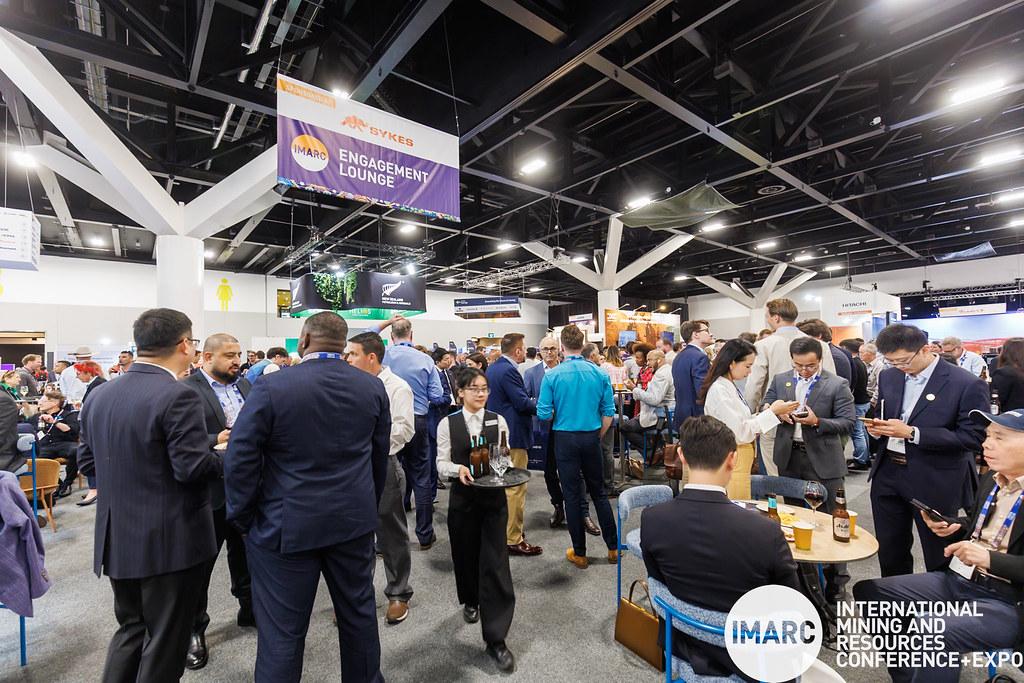
Dhawan will be part of a huge international presence among the record 12,000-plus attendees expected at IMARC in Sydney from October 27-29.
He will be joined by industry leaders from BHP, Agnico Eagle, Vale, Antamina, Glencore, Alcoa, Newmont, Codelco, Antofagasta, PT Freeport Indonesia and Franco Nevada, and groups such as the World Gold Council, Extractive Industries Transparency Initiative (EITI), American Exploration & Mining Association and US-based Center for Strategic and International Studies (CSIS).
“The geological distribution of minerals has meant that we are engaging with a set of countries we’ve never really engaged with commercially, particularly in Africa and Latin America,” CSIS Critical Minerals Security Program director, Dr Gracelin Baskaran said in a recent interview.
Dr Baskaran, who will also speak at IMARC 2026, says a race for minerals – as important as the world’s great oil rushes – “is far more complex”.
“It requires engagement with a far wider set of countries.”
More than 60 nations will be represented at government and ministerial level at IMARC, confirming the event’s status as a critical meeting point for policy makers and shapers and the international trade community. A long list of leading state and private financial institutions and investment banks, fund managers and advisory firms will also be present, including the Export-Import Bank of the United States (EXIM), European Investment Bank (EIB), Germany’s KfW IPEX-Bank, the Export-Import Bank of Korea (KEXIM), Japan Bank for International Cooperation (JBIC), Jefferies, Resource Capital Funds, EMR Capital, EY and Deloitte.
KfW IPEX-Bank CEO Belgin Rudack, attending IMARC for the first time, said recently in Frankfurt the group was seeing strong momentum in export and project finance, with €15.4 billion of new commitments in the first half of 2026 up by one-third on the same time last year. The total reflected “high-impact, long-term financings that support German and European companies on global markets and turn industrial strength into tangible projects worldwide”.
Rudack, EIB vice president Nicola Beer, US EXIM Bank senior vice president Alyssa Pettus, Export Development Canada vice president Canadian corporate business Sven List, and UK Export Finance (UKEF) deputy director international relations Caroline Healy will be among the leaders joining Finance Australia CEO John Hopkins at ICC Sydney.
“IMARC 2026 is set to welcome one of its strongest-ever gatherings of global export credit and development finance leaders, with senior executives attending alongside their respective teams and delegations,” said Sherene Asnasyous, IMARC event director – content & partnerships.
“The growing representation reflects the increasingly important role of government-backed and institutional finance in moving mining and critical minerals projects from development into delivery.”
Asnasyous said IMARC’s global opportunities content program and exhibition pavilions would feature the most diverse line-up of government ministers, officials and trade groups the event had seen.
Oman, Saudi Arabia, Morocco, Sudan, Ghana, Italy, France, Germany, Netherlands, UK, Estonia, Poland, Sweden, Finland, Denmark and Greenland senior government and trade officials will talk materials, investment, innovation and collaboration with their counterparts from Canada, the USA, Mexico, Peru, Chile and Argentina. Host Australia will welcome Asia Pacific delegations from Timor-Leste, Cambodia, Mongolia, South Korea and the Philippines.
“You have this growth in demand for critical minerals,” Benjamin Gallezot, interministerial delegate for strategic minerals and metals supply in the French prime minister’s office, said in Paris earlier this year.
“To produce these critical minerals you need public policy at the national level … But the geological and technical resources are not present in all countries. So you need international cooperation. You need bilateral cooperation and you need multilateral cooperation,” Gallezot, who is returning to IMARC in 2026, said on the sidelines of an International Energy Agency ministerial meeting.
“At the same time we see some restriction in trade of critical minerals. There is a risk when you combine these two factors.
“Clearly value chains are international, resources are international, so you need international cooperation.
“And international cooperation is much more efficient than international confrontation.”
Among many highlights of this year’s IMARC program, the Oklahoma Department of Commerce, new in 2026, and returning Italian Trade Agency delegations underline the rich mix of international participants and visitor objectives.
Australian companies Iondrive and Australian Strategic Materials (now part of US-based Energy Fuels) have been two foreign groups drawn to Oklahoma’s midstream and downstream value-chain focus, which has been backed by federal funding initiatives.
“Here in Oklahoma we’re not actually doing the mining of these minerals,” says Jay Shidler, director of business recruitment at the Oklahoma Department of Commerce. The state’s focus was instead on refining and manufacturing: “Being part of the supply chain that turns these materials into finished products. One of the things we’re really focused on is strengthening domestic supply chains and not being dependent on other countries for these materials.”
Earlier this month a joint communique signed by Italy’s export credit agency, Servizi Assicurativi del Commercio Estero (SACE), and the Western Australian government, put minerals at the centre of a plan to grow circa-$900 million of annual two-way trade between WA and Italy. The communique was described as the precursor to a memorandum of understanding to be signed in October.
“As global demand for critical minerals and clean energy continues to grow this commitment will help drive new investment, deepen collaboration and support secure, resilient supply chains for the future,” WA agent general Rebecca Tomkinson said after co-signing the collaboration letter.
“Italy and WA are at the beginning of a new journey,” SACE chair Guglielmo Picchi said after adding his signature.
Brutus Mining Inc. (CSE: BRU) (FSE: ZI3) is pleased to announce that it has closed its non-brokered ... READ MORE
Jaguar Uranium Corp. (NYSE American: JAGU) is pleased to announce an independent Mineral Resource E... READ MORE
Auro Metals Inc. (TSX-V: AURO) (OTCQB: AURFF), is pleased to announce the assay results of the fina... READ MORE
Endeavour Silver Corp. (NYSE: EXK) (TSX: EDR) is pleased to announce that repairs to the primary bal... READ MORE
Scorpio Gold Corp. (NASDAQ: SGLD) (TSX-V: SGLD) (OTCQB: SRCRF) (FSE: RY9) is pleased to announce re... READ MORE