








Phase I drilling confirms extensive unmined bonanza-grade silver mineralization
Hole SK-26-07 intersects potassic alteration with increasing copper values consistent with vectoring toward a potential porphyry copper source
Prismo Metals Inc. (CSE: PRIZ) (OTCQB: PMOMF) is pleased to provide the results of the Phase I drill program at its Silver King project, located in the Superior (Pioneer) Mining District near the town of Superior, Arizona which consisted of eight holes for a total of 1,272 meters.
Highlights of the Phase I drill program include multiple bonanza-grade silver intercepts, highlighted by hole SK-26-08, which returned 2.3 m (7.4 feet) grading 1,452 g/t Ag, 1.6 g/t Au and 1.9% Cu, including 0.4 m at 4,811 g/t Ag, 4.6 g/t Au, 5% Cu and 3% Pb. Several additional high-grade to bonanza-grade silver intervals (500 – 1,000+ g/t Ag) were intersected across the program, including 2.7 m (9.0 feet) @ 557 g/t Ag in SK-26-06 and 1.2 m (4 feet) @ 517 g/t Ag in SK-26-01. (1)
Alain Lambert, CEO of Prismo stated: “The two objectives of our first phase of drilling were squarely met, namely: 1- we confirmed that the upper portion of the pipelike mineralized body is largely unmined and retains additional exploration potential, and 2- hole SK-26-07 showed a transition to copper mineralization at depth similar to the nearby Silver Queen mine that later became the Magma mine.”
Dr. Craig Gibson, Chief Exploration Officer of the Company, stated, “The drilling in this initial program was relatively widely spaced considering the footprint of the pipelike mineralized body. Maps of historical underground workings were used for drill hole planning. Holes were drilled at varying orientations to better determine the boundaries of the mineralization. The historic maps appear to be reasonably accurate.” Dr. Gibson continued, “Several holes cut relatively wide intervals of greater than 10 meters with multi-ounce silver values. Higher gold values were reported from hole SK-08, the only shallow hole that was drilled westerly, providing a target for additional drilling in the western portion of the mineralized body.”
Dr. Linus Keating, Special Advisor commented: “I’m impressed that Silver King’s potential seems to improve as we collect and integrate each new data element, building towards a near-surface bonanza vein target perhaps rooted in a hidden porphyry. Hole SK-26-07 was planned as a deep test of the Silver King mineralized body and to test for a hypothesized transition to copper mineralization at depth similar to the nearby Silver Queen mine that later became the Magma mine. This hole was drilled to a depth of 1600 feet or about 488 meters and intersected a distinct intrusive phase at about 1200 feet (366m) with potassic alteration and abundant pyrite disseminated and in veinlets. Chalcopyrite is also locally present. Average copper assays increased dramatically downhole by about 70 times, averaging almost 0.05% for sampled material in the bottom 239 feet (73m), and locally reaching 0.11% Cu, compared to a background of 0.0013% for sampled material in the overlying 600 feet (183m). Concomitant declines of Pb, Zn, Sb, and Hg values coupled with rising Sr and Na, suggest a classic geochemical vector toward a possible porphyry source.”
Highlights of the drill program:
Eight holes were completed for a total of 4,173 feet or1,272 meters. All holes except hole 3 that was drilled outside of the deposit area intersected quartz and barite veins and breccia fill with variable quantities of sulfide minerals. Historic workings were intersected in several holes within the mineralized areas. Several holes also intersected apparent back-filled stopes with broken rock and some wood beams below the 250-foot (76m) level. In some cases sampling is not continuous along the drill hole and intervals of samples are separated by unsampled core. Some additional sampling may be completed.
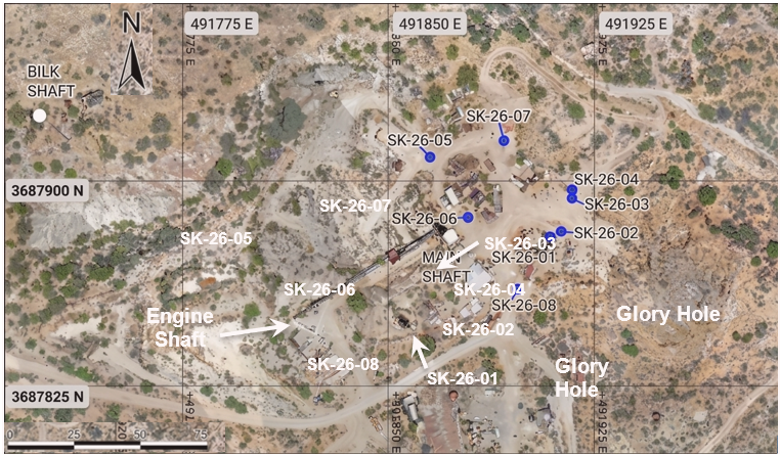
Figure 1. Drill hole map for the Silver King Phase I program.
The Glory Hole, Engine (Main) shaft and Bilk shaft are shown for reference.
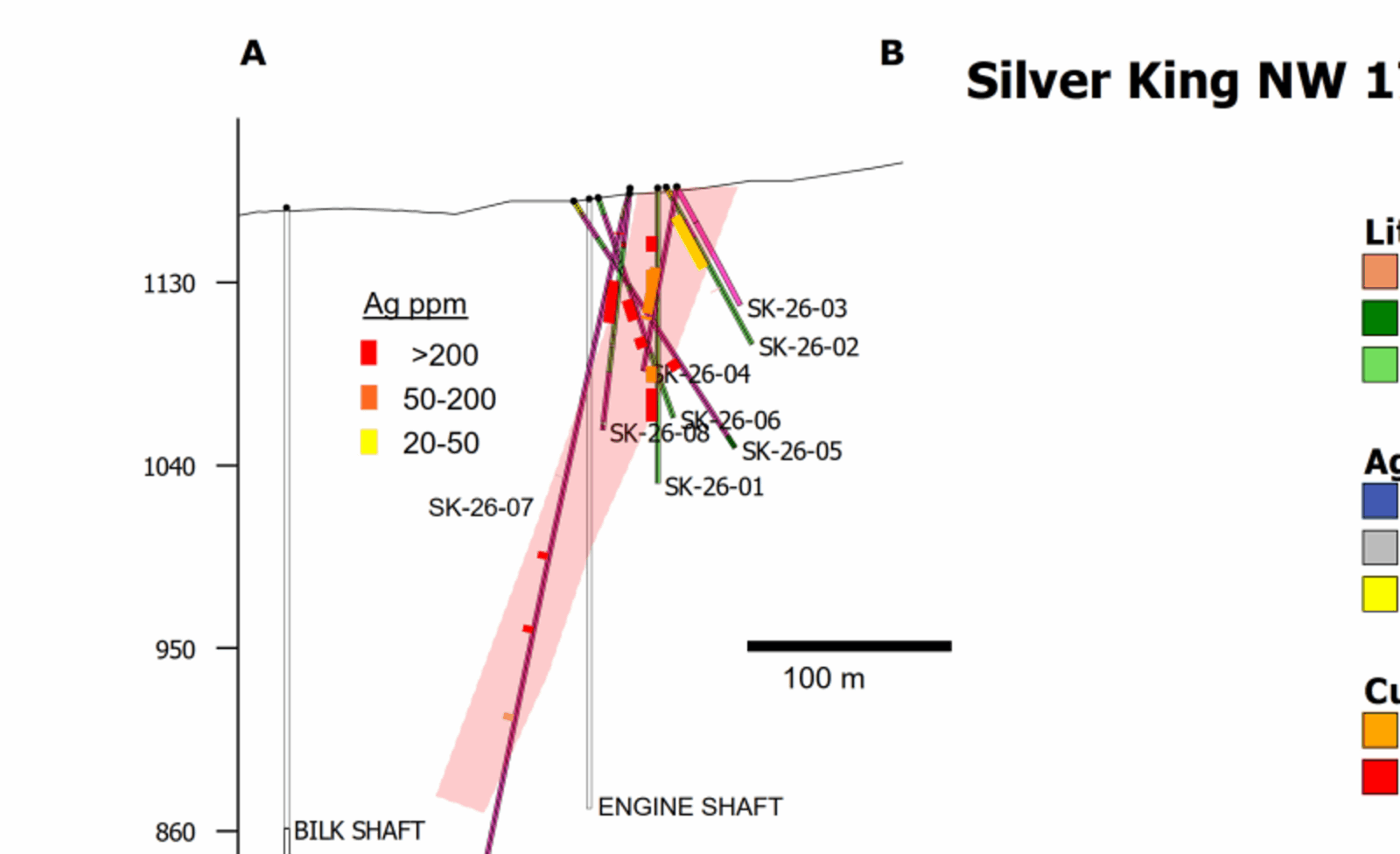
Figure 2. Cross section showing silver mineralization in the shallow drill holes
that cut the upper part of the Silver King mineralized body (pale red).
Table 1. Drill hole data for Phase I drill program, Silver King project
| Name | E WGS84 | N WGS84 | Azim | Incl | ft | Depth (m) | ||
| Silver King mine | ||||||||
| SK-26-01 | 491,909 | 3,687,879 | – | -90 | 477 | 145 | ||
| SK-26-02 | 491,913 | 3,687,881 | 110 | -60 | 295 | 90 | ||
| SK-26-03 | 491,917 | 3,687,893 | 110 | -60 | 218 | 66 | ||
| SK-26-04 | 491,917 | 3,687,896 | 210 | -70 | 316 | 96 | ||
| SK-26-05 | 491,865 | 3,687,908 | 120 | -55 | 493 | 150 | ||
| SK-26-06 | 491,879 | 3,687,886 | 105 | -70 | 378 | 115 | ||
| SK-26-07 | 491,892 | 3,687,914 | 265 | -78 | 1,600 | 488 | ||
| SK-26-08 | 491,897 | 3,687,860 | 330 | -75 | 396 | 121 | ||
| Total | 4,173 | 1,272 | ||||||
Table 2. Assay results for Phase I drill holes, Silver King project
| Hole | From | T0 | Interval1 | Interval1 | Au | Ag | Cu | Pb | Zn | ||||
| # | ft | ft | ft | m | g/t | g/t | % | % | % | ||||
| SK-26-01 | 77.5 | 103.0 | 25.5 | 7.8 | – | 61 | 0.02 | 0.00 | 0.06 | ||||
| Includes | 95.0 | 103.0 | 8.0 | 2.4 | – | 158 | 0.05 | 0.01 | 0.05 | ||||
| 131.8 | 165.0 | 34.7 | 10.6 | – | 31 | 0.05 | 0.08 | 0.03 | |||||
| 287.0 | 314.0 | 27.0 | 8.2 | – | 30 | 0.01 | 0.07 | 0.07 | |||||
| 323.0 | 377.0 | 54.0 | 16.5 | – | 79 | 0.01 | 0.02 | 0.05 | |||||
| Includes | 323.0 | 343.6 | 20.6 | 6.3 | – | 172 | 0.02 | 0.02 | 0.05 | ||||
| 334.0 | 338.0 | 4.0 | 1.2 | – | 517 | 0.01 | 0.02 | 0.07 | |||||
| SK-26-02 | 50.0 | 146.6 | 96.6 | 29.4 | – | 21 | 0.01 | 0.06 | 0.05 | ||||
| 187.0 | 189.3 | 2.3 | 0.7 | – | 263 | 0.09 | 0.01 | 0.09 | |||||
| 187.0 | 189.3 | 2.3 | 0.7 | – | 263 | 0.09 | 0.01 | 0.09 | |||||
| SK-26-04 | 140.2 | 218.5 | 76.3 | 23.3 | – | 32 | 0.02 | 0.04 | 0.03 | ||||
| includes | 140.2 | 146.0 | 5.8 | 1.8 | – | 154 | 0.02 | 0.04 | 0.03 | ||||
| 223.5 | 228.8 | 5.3 | 1.6 | – | 30 | 0.04 | 0.06 | 0.02 | |||||
| SK-26-05 | 313.0 | 331.0 | 18.0 | 5.5 | – | 87 | 0.04 | 1.73 | 0.03 | ||||
| includes | 324.3 | 331.0 | 6.7 | 2.0 | 0.2 | 186 | 0.06 | 4.59 | 0.01 | ||||
| SK-26-06 | 173 | 208 | 35 | 10.7 | 0.2 | 168 | 0.15 | 0.05 | 0.03 | ||||
| 186.5 | 195.5 | 9.0 | 2.7 | 0.5 | 557 | 0.51 | 0.07 | 0.07 | |||||
| 237 | 255 | 18 | 5.5 | 0.1 | 80 | 0.10 | 0.09 | 0.04 | |||||
| SK-26-07 | 469 | 470 | 1 | 0.3 | – | 485 | 0.11 | 0.59 | 0.12 | ||||
| 613 | 616 | 3 | 0.9 | – | 360 | – | – | – | |||||
| 731 | 741 | 10 | 3.0 | – | 93 | – | 0.09 | 0.09 | |||||
| 1361 | 1376 | 15 | 4.6 | – | 0.1 | 0.06 | – | – | |||||
| includes | 1370 | 1376 | 6 | 1.8 | – | 0.2 | 0.11 | – | – | ||||
| 1538.5 | 1600 | 61.5 | 18.7 | – | 0.1 | 0.04 | – | – | |||||
| includes | 1538.5 | 1549 | 10.5 | 3.2 | – | 0.1 | 0.07 | – | – | ||||
| SK-26-08 | 65.3 | 70.3 | 5 | 1.5 | – | – | – | – | 2.00 | ||||
| 75.5 | 77.6 | 2.1 | 0.6 | – | 96 | 0.04 | 0.18 | 0.06 | |||||
| 155.5 | 226 | 70.5 | 21.5 | 0.4 | 94 | 0.28 | 0.21 | 0.06 | |||||
| includes | 155.5 | 156.5 | 1 | 0.3 | 0.2 | 556 | 0.93 | 0.30 | 0.15 | ||||
| and | 173.5 | 182.3 | 8.8 | 2.7 | 0.9 | 98 | 0.25 | 0.34 | 0.04 | ||||
| includes | 180 | 181 | 1 | 0.3 | 5.6 | 256 | 1.47 | 1.94 | 0.17 | ||||
| and | 198.4 | 205.8 | 7.4 | 2.3 | 1.6 | 1452 | 1.91 | 0.83 | 0.25 | ||||
| 199.9 | 201.2 | 1.3 | 0.4 | 4.6 | 4811 | 5.02 | 3.06 | 0.62 | |||||
(1) Intervals shown are downhole intervals, true widths are not known at this time.
No samples were taken from hole SK-26-03.
Porphyry Potential
Hole SK-26-07 was drilled from a site to the north of the west dipping pipelike body at a steep angle to the southwest to test the portion of the body below the 800-900 foot (244-274m) level, the lowest known level of historic mining. The hole intersected silver mineralization at several points above the target zone indicating that high grade mineralization is locally present away from the main mineralized body. This hole also appeared to hit some stopes with mineralization in backfill at the 600-700’ (183-213m) level. The lower portion of the hole intersected a distinct intrusive with higher temperature alteration and abundant pyrite with local chalcopyrite and rare pyrrhotite.
The Silver King Mine occurs within an ‘embayment’ or erosional window that exposes multiple intrusive phases. Abundant historic workings scattered throughout the embayment further support an interpretation that Silver King may represent a telescoped system: possible high-temperature porphyry-style alteration at depth overprinted by later, shallower epithermal silver / base metal veins. The data suggest that a potential copper-rich hypogene core my lie at depth below or lateral to the Silver King pipelike body at the Silver King Mine. The presence of potassic alteration at relatively shallow depths is unusual for the district and also suggests the Silver King mineralized pipe may be a late-stage part of a larger hydrothermal system.
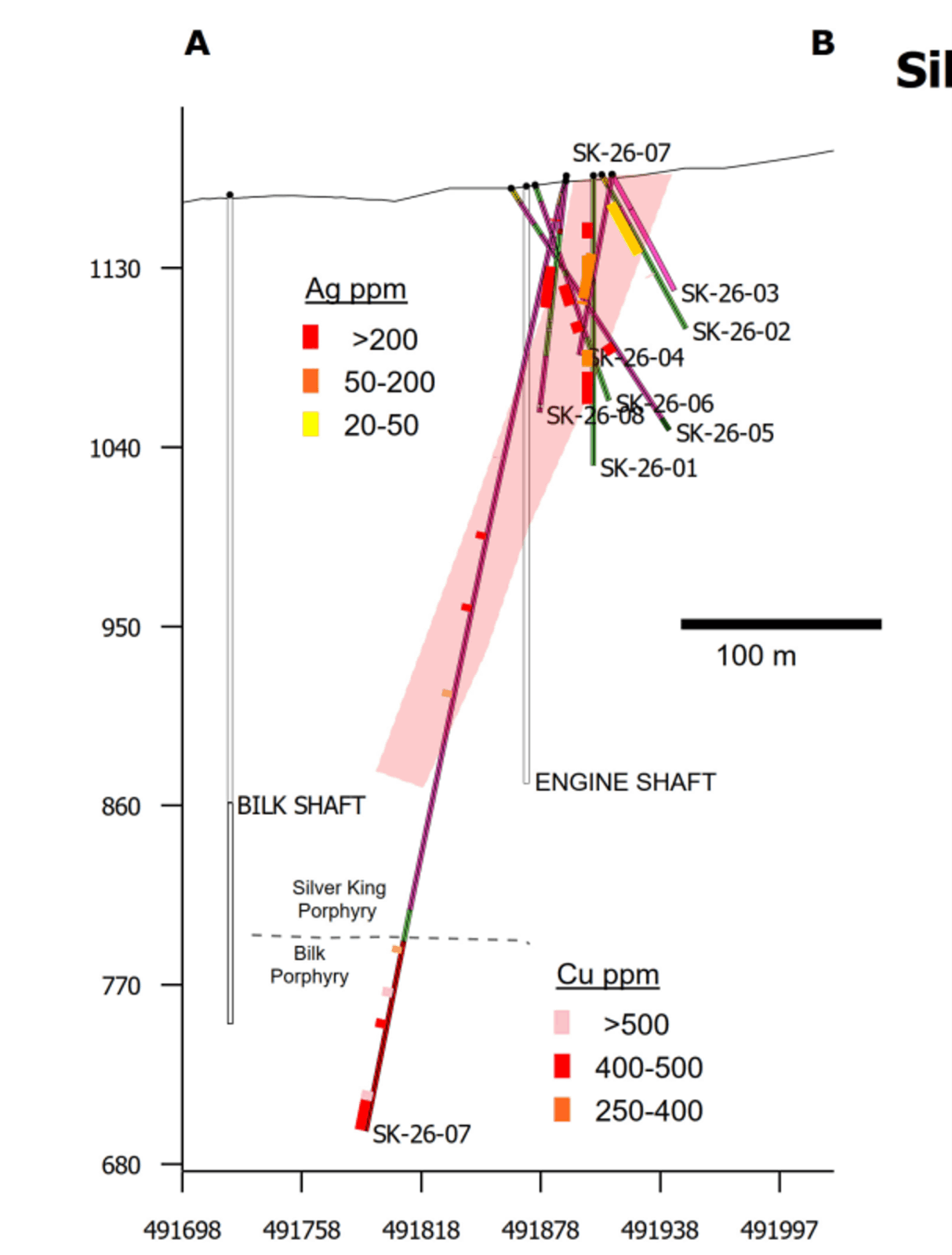
Figure 2. Cross section showing copper mineralization at depth in hole SK-26-07
under silver mineralization in the Silver King mineralized body (pale red).
Next Steps
Following the successful Phase I drill program and the positive reconnaissance mapping and observations to date, Prismo is advancing the following immediate next steps:
These steps will directly build on the potassic alteration and copper vector identified in SK-26-07 and the surface indicators to de-risk and prioritize deeper drilling.
Qualified Person
Assays were completed by SGS at their labs in Tempe, Arizona and Vancouver. Assays consist of 30 gram fire assay with an AA finish for gold and a multielement package analyzed by ICP ES and MS with a multi acid digestion. Mercury was analyzed separately by cold vapor AA. Controls samples consisting of Certified Reference Materials as pulps and coarse blanks were inserted into the sample stream at a rate of approximately 1 for every 20 core samples.
Dr. Craig Gibson, PhD., CPG., a Qualified Person as defined by NI-43-01 regulations and Chief Exploration Officer and a director of the Company, has reviewed and approved the technical disclosures in this news release.
The historic data presented in this press release was obtained from public sources, should be considered incomplete and is not qualified under NI 43-101, but is believed to be accurate. The Company has not verified the historical data presented and it cannot be relied upon, and it is being used solely to aid in exploration plans. References to mineralization at the Magma Mine and Resolution Copper deposit is not necessarily indicative to the mineralization on the Silver King property.
About the Silver King
Discovered in 1875, the Silver King mine was Arizona’s first and one of its most important historic silver producers, yielding nearly 6 million ounces of silver at grades of up to 61 oz/t (from historical records, non 43-101 compliant). The Silver King mine sits only 3.4 km from the main shaft of the Resolution Copper project — a joint venture between Rio Tinto and BHP and one of the world’s largest unmined copper deposits (2).
About Prismo Metals Inc.
Prismo is a mining exploration company focused on advancing its Silver King, Ripsey and Hot Breccia projects in Arizona and its Palos Verdes silver project in Mexico.
Brutus Mining Inc. (CSE: BRU) (FSE: ZI3) is pleased to announce that it has closed its non-brokered ... READ MORE
Jaguar Uranium Corp. (NYSE American: JAGU) is pleased to announce an independent Mineral Resource E... READ MORE
Auro Metals Inc. (TSX-V: AURO) (OTCQB: AURFF), is pleased to announce the assay results of the fina... READ MORE
Endeavour Silver Corp. (NYSE: EXK) (TSX: EDR) is pleased to announce that repairs to the primary bal... READ MORE
Scorpio Gold Corp. (NASDAQ: SGLD) (TSX-V: SGLD) (OTCQB: SRCRF) (FSE: RY9) is pleased to announce re... READ MORE