








Latest Drilling Intersects 46 Metres at 0.42% Copper including 19 Metres at 0.58% Copper Within Expanded 2.7 km-Wide Northern Block
Midnight Sun Mining Corp. (TSX-V: MMA / OTCQX: MDNGF) is pleased to announce assay results from an additional 10 drill holes at its wholly owned Dumbwa copper deposit, part of the Company’s Solwezi Project in Zambia.
The latest results from drilling carried out on Dumbwa’s substantially expanded Northern Block are highlighted by a drill intercept of 46 metres grading 0.42% copper starting at 45 metres below surface (see Table 1). In the Northern Block, drilling is continuing to define shallow, higher-grade copper mineralization which has now been intersected over an east-west extent of approximately 2.7 kilometres and a north-south extent of approximately 1 kilometre – making it the largest mineralized block discovered at Dumbwa to date.
With 387 diamond drill holes totalling 83,235 metres completed at Dumbwa, Midnight Sun has now demonstrated copper mineralization along 12.1 kilometres of strike. The higher-grade Northern Block, together with the expanding higher-grade Southern Block, will be a primary focus of the Company’s ongoing deposit delineation efforts in preparation for the Company’s planned initial Mineral Resource Estimate (“MRE”).
Key Highlights from the 10 newly reported drill holes include:
Midnight Sun’s President and CEO, Al Fabbro, states, “We’ve demonstrated more than 12 kilometres of copper mineralization at Dumbwa, establishing the extensive scale of the system, and we’re now focused on defining the higher-grade blocks within it. The dramatic expansion of the deposit’s footprint in the Northern Block, together with our still expanding Southern Block, are where we see significant potential to delineate substantial zones of shallow, higher-grade copper mineralization. With drilling ongoing and additional assays pending, we believe we’re approaching critical mass in outlining the higher-grade blocks that will be the focal point of our delineation efforts and ultimately form the foundation of an initial Mineral Resource Estimate at Dumbwa.”
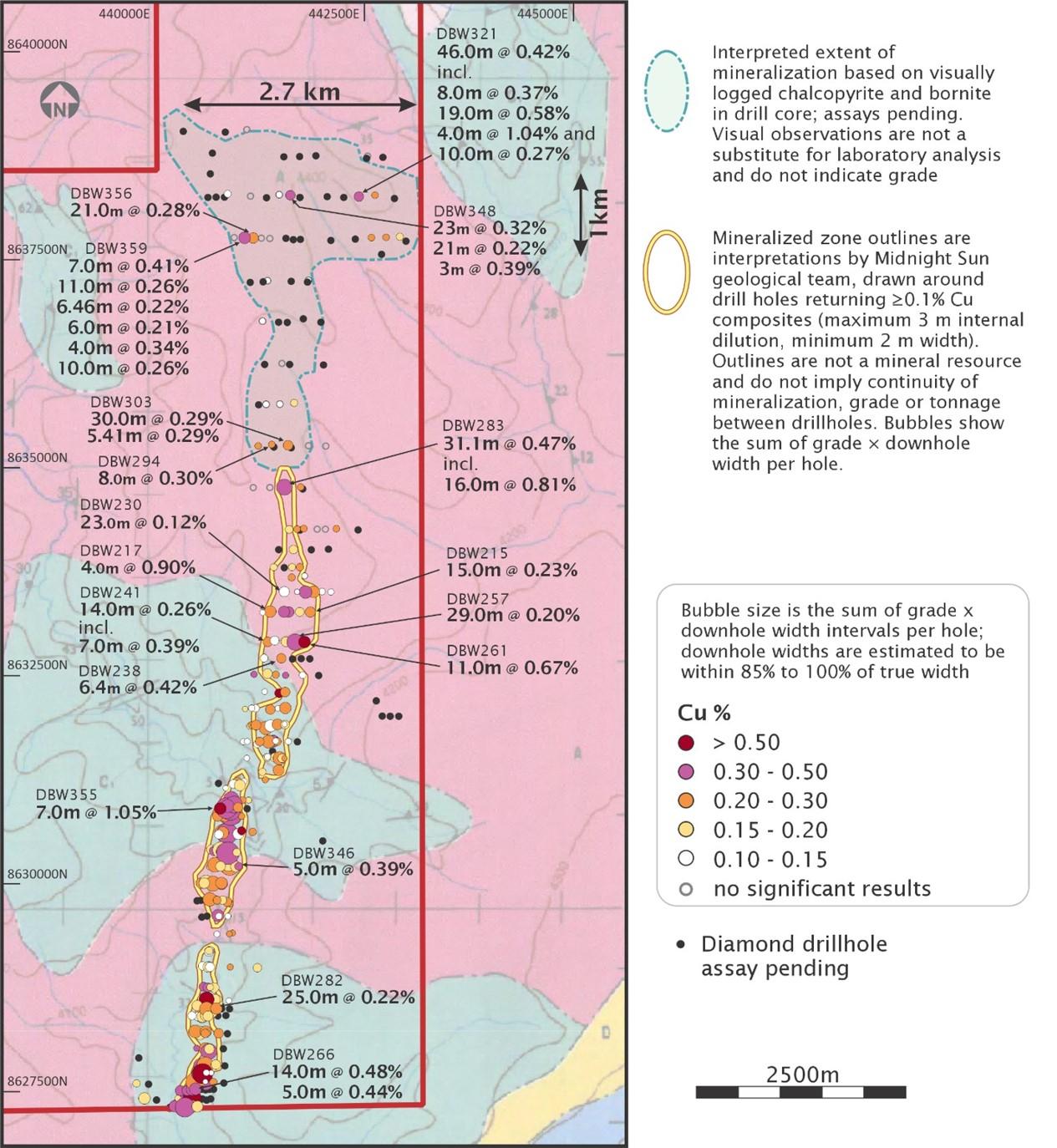
Figure 1. Assay Results and Interpreted Dumbwa Mineralized Corridor
Northern Block: Higher-Grade Mineralization and Deposit Delineation
The latest assays continue to identify shallow zones of strong copper mineralization within the expanded Northern Block, including 46 metres grading 0.42% copper in DBW-26-321.
The Company’s geological interpretation indicates that the Northern Block contains multiple zones of stronger copper mineralization separated by lower-grade material, believed to be influenced in part by later-stage brittle faulting. Several recent drill holes, for which assays are pending, have encountered substantial thicknesses of copper sulphide mineralization, including bornite, chalcopyrite, and chalcocite, further supporting the potential for larger, continuous higher-grade mineralized blocks.
As in other areas of Dumbwa, the higher-grade Principal Mineralized Corridor (“PMC”) within the Northern Block is surrounded by a halo of lower-grade copper mineralization, encountered as drilling tests the lateral extent of the system. These outer holes provide important geological information to guide future drilling and support resource modelling. The accompanying figures illustrate the relationship between the higher-grade PMC and surrounding lower-grade halo, with assay results from each domain presented separately in the tables below.
Table 1: Northern Block – Principal Mineralized Corridor Assay Results
| Hole ID | East (GPS) |
North (GPS) |
Elevation (m) |
Azimuth | Dip | EOH (m) | From (m) |
To (m) | Interval (m) |
Cu% | Comment |
| DBW-26-294 | 441414 | 8635271 | 1330 | 280 | -70 | 296.10 | 110.00 | 118.00 | 8.00 | 0.3 | Has widened the North Block high-grade core to 353 m wide |
| DBW-26-303 | 441622 | 8635266 | 1324 | 280 | -70 | 242.40 | 98.00 | 128.00 | 30.00 | 0.29 | Continuation and improvement of DBW-26-294 takes high grade core to 353 m wide |
| and | 133.59 | 139.00 | 5.41 | 0.29 | |||||||
| DBW-26-312 | 442796 | 8637762 | 1334 | 280 | -70 | 245.20 | 124.00 | 138.00 | 14.00 | 0.22 | Significant intercept in east blow out of the North Block |
| DBW-26-321 | 442456 | 8638268 | 1342 | 270 | -70 | 221.70 | 45.00 | 91.00 | 46.00 | 0.42 | Strongly mineralised hole in the east block out of the North Block |
| incl. | 54.00 | 62.00 | 8.00 | 0.37 | |||||||
| incl. | 64.00 | 83.00 | 19.00 | 0.58 | |||||||
| incl. | 87.00 | 91.00 | 4.00 | 1.04 | |||||||
| and | 106.00 | 116.00 | 10.00 | 0.27 | |||||||
| DBW-26-348 | 441617 | 8638270 | 1362 | 270 | -70 | 245.50 | 28.00 | 51.00 | 23.00 | 0.32 | Good intercept in a fault offset of North Block high grade corridor |
| and | 183.00 | 204.00 | 21.00 | 0.22 | |||||||
| and | 220.00 | 223.00 | 3.00 | 0.39 | |||||||
| DBW-26-359 | 441059 | 8637761 | 1343 | 280 | -70 | 197.10 | 9.00 | 16.00 | 7.00 | 0.41 | Multiple intercepts in central corridor of the North Block |
| and | 24.00 | 35.00 | 11.00 | 0.26 | |||||||
| and | 40.54 | 47.00 | 6.46 | 0.22 | |||||||
| and | 51.00 | 57.00 | 6.00 | 0.21 | |||||||
| and | 62.00 | 66.00 | 4.00 | 0.34 | |||||||
| and | 70.00 | 80.00 | 10.00 | 0.26 | |||||||
Table 2: Northern Block – Halo and Stratigraphic Drill Holes
| Hole ID | East (GPS) |
North (GPS) |
Elevation (m) |
Azimuth | Dip | EOH (m) | From (m) |
To (m) | Interval (m) |
Cu% | Comment |
| DBW-26-298 | 441223 | 8635264 | 1334 | 280 | -70 | 200.10 | 8.00 | 14.00 | 6.00 | 0.16 | Western margin closure hole |
| and | 69.00 | 71.00 | 2.00 | 0.37 | |||||||
| DBW-26-304 | 441733 | 8635765 | 1318 | 280 | -70 | 270.50 | 186.00 | 193.00 | 7.00 | 0.16 | |
| and | 237.00 | 248.00 | 11.00 | 0.20 | Adds low grade material in a structural gap in North Block | ||||||
| DBW-26-305 | 441534 | 8635762 | 1326 | 280 | -70 | 245.40 | 149.00 | 174.00 | 25.00 | 0.14 | Adds low grade material in a structural gap in North Block |
| DBW-26-309 | 441334 | 8635766 | 1331 | 280 | -70 | 242.40 | 69.00 | 77.00 | 8.00 | 0.15 | Western margin closure hole |
| and | 80.00 | 87.00 | 7.00 | 0.13 | |||||||
| and | 191.83 | 206.00 | 14.17 | 0.14 | |||||||
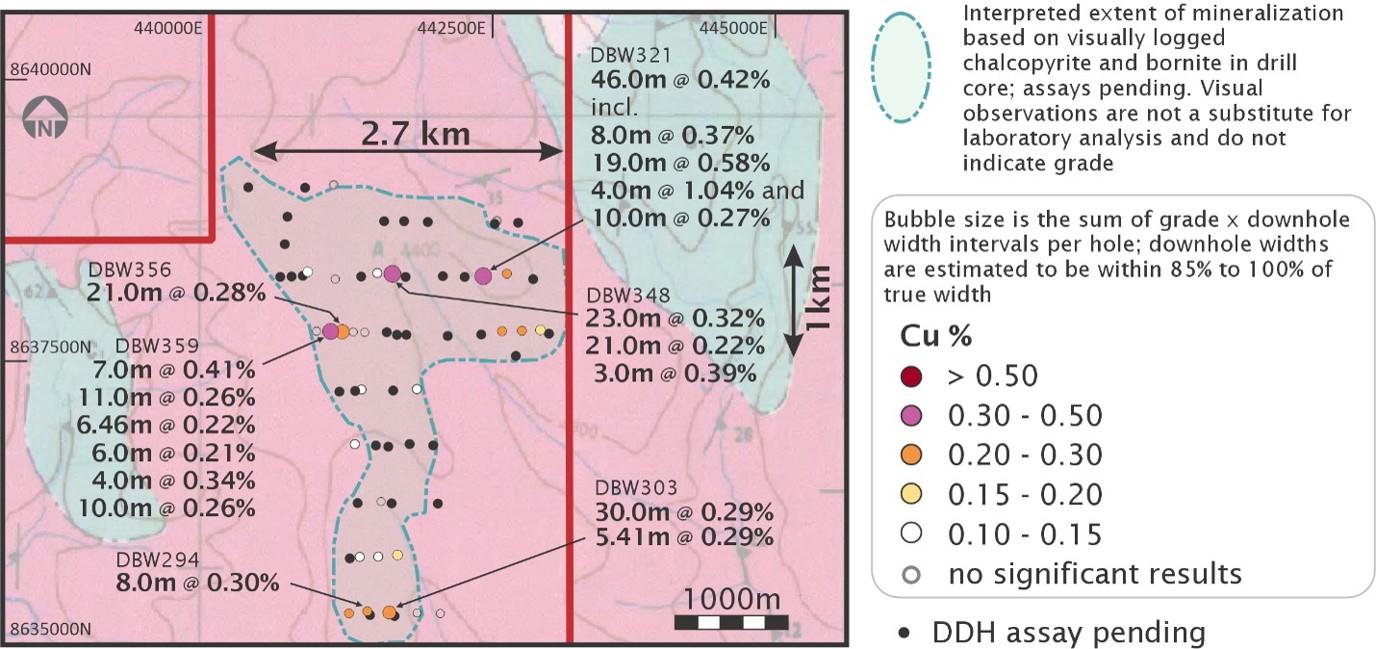
Figure 2. The Northern Block – Assay Results and Interpreted Dumbwa Mineralized Corridor
Defining Dumbwa’s Mineralized Architecture
Across Dumbwa’s currently demonstrated 12 plus kilometre strike length, copper mineralization is consistently associated with vertically stacked, flat lying to gently dipping schist units hosted within a banded grey gneiss sequence. Copper grades are closely related to sulphide intensity and zones of increased geological strain, providing an important framework for identifying areas of enhanced mineralization.
The strongest intercepts generally occur within the principal mineralized corridor, with grades typically decreasing toward the margins. In the Northern Block, structural faulting has introduced additional complexity, with multiple zones of stronger mineralization identified across a substantially wider area.
The Northern Block and the first higher-grade block delineated in the south, have emerged as the two areas hosting Dumbwa’s strongest concentrations of copper mineralization to date. The Southern Block continues to expand laterally, with drilling extending the mineralization across existing fence lines. Together, these areas will be the primary focus of the Company’s efforts to delineate larger, higher-grade mineralized blocks in preparation for an initial MRE.
Outstanding Assays and Ongoing Drilling
While drilling is ongoing, as of the date of this news release, assays remain outstanding from 68 drill holes across Dumbwa, including 44 holes in the Northern Block. These results will further refine the Company’s understanding of the dimensions, grade distribution and continuity of higher-grade mineralized zones as it advances geological modelling.
Total Completed Holes with Assays Pending by Location:
North Block – 44 holes
South Block – 15 holes
Central Block – 3 holes
Central North – 1 hole
Exploration – 5 holes
Quality Control/Quality Assurance
Drilling was conducted using a conventional diamond drilling rig and drill core was captured for the entirety of each hole and placed into plastic core trays. All drill holes were cored in PQ until stable ground was achieved and then reduced to HQ size for the remainder of each hole. Sampling was based on visible copper mineralisation, and sample intervals honoured any important lithological boundaries. Core was then cut in house using a diamond saw and the right half of core was placed into a 200-micron plastic bag, assigned a unique sample number, and recorded into the GeoSpark Core database system.
To maintain chain of custody, samples always remained under the supervision of Midnight Sun staff prior to delivery to an independent assay lab. Drill samples were delivered to, prepared, and analysed by either SGS Labs in Kitwe, Zambia or to Intertek where sample preparation takes place in their Kitwe facility prior to an analysis of pulps in their facility located in Perth, Western Australia. Both laboratories conducted analysis by four-acid digest with ICP-OES finish.
Midnight Sun follows an in-house QA/QC program that consists of a random insertion every 10th sample of either a coarse blank, fine blank, coarse duplicate, fine duplicate, or Certified Reference Material (standards). The Company has encountered multiple and repeated reporting failures of assay results provided by the independent laboratories and only reports results which have met its stringent internal QA/QC standards. Where samples fail QA/QC, the Company requests re-analysis of samples until the appropriate QA/QC checks are met and the causes of the failures understood.
Qualified Person: Darin Labrenz, P.Geo., a consulting geologist for the Company and Qualified Person under NI 43-101, has reviewed and approved the technical data and contents of this release.
About Midnight Sun
Midnight Sun is rapidly advancing the Solwezi Copper Project, with a focus on our flagship Dumbwa copper deposit. The Project is located near the town of Solwezi in the heart of the Zambia–Congo Copperbelt, the world’s second-largest copper-producing region. This prolific mining district is renowned for hosting multiple major copper deposits, and benefits from excellent infrastructure, an established mining workforce, and a long history of successful production.
The Solwezi Copper Project is surrounded by producing copper mines, including the geologically similar Lumwana mine to the west and First Quantum’s Kansanshi mine – Africa’s largest integrated metallurgical processing facility, approximately 6 kilometres east of the Company’s recently announced Kazhiba Oxide Resource. This highly favourable location highlights the district-scale potential of Midnight Sun’s land package.
The Dumbwa copper deposit underlays a robust 20-kilometre copper-in-soil anomaly, and ongoing drilling has demonstrated strong geological similarities to the nearby Lumwana mine, underscoring the potential scale of this newly identified copper system.
Led by an experienced geological team with a proven track record of major discoveries in the Zambia–Congo Copperbelt and globally, Midnight Sun’s goal is to delineate Zambia’s next generational copper deposit.
First Phosphate Corp. (NASDAQ: PHOS) (CSE: PHOS) (OTCQX: FRSPF) ... READ MORE
Gold Mineralization extended below resource pit shell at Golden L... READ MORE
Contango Silver and Gold Inc. (NYSE American: CTGO) (TSX: CTGO) a... READ MORE
Goldgroup Mining Inc. (NYSE American: GORO) (TSX-V: GORO) is plea... READ MORE