







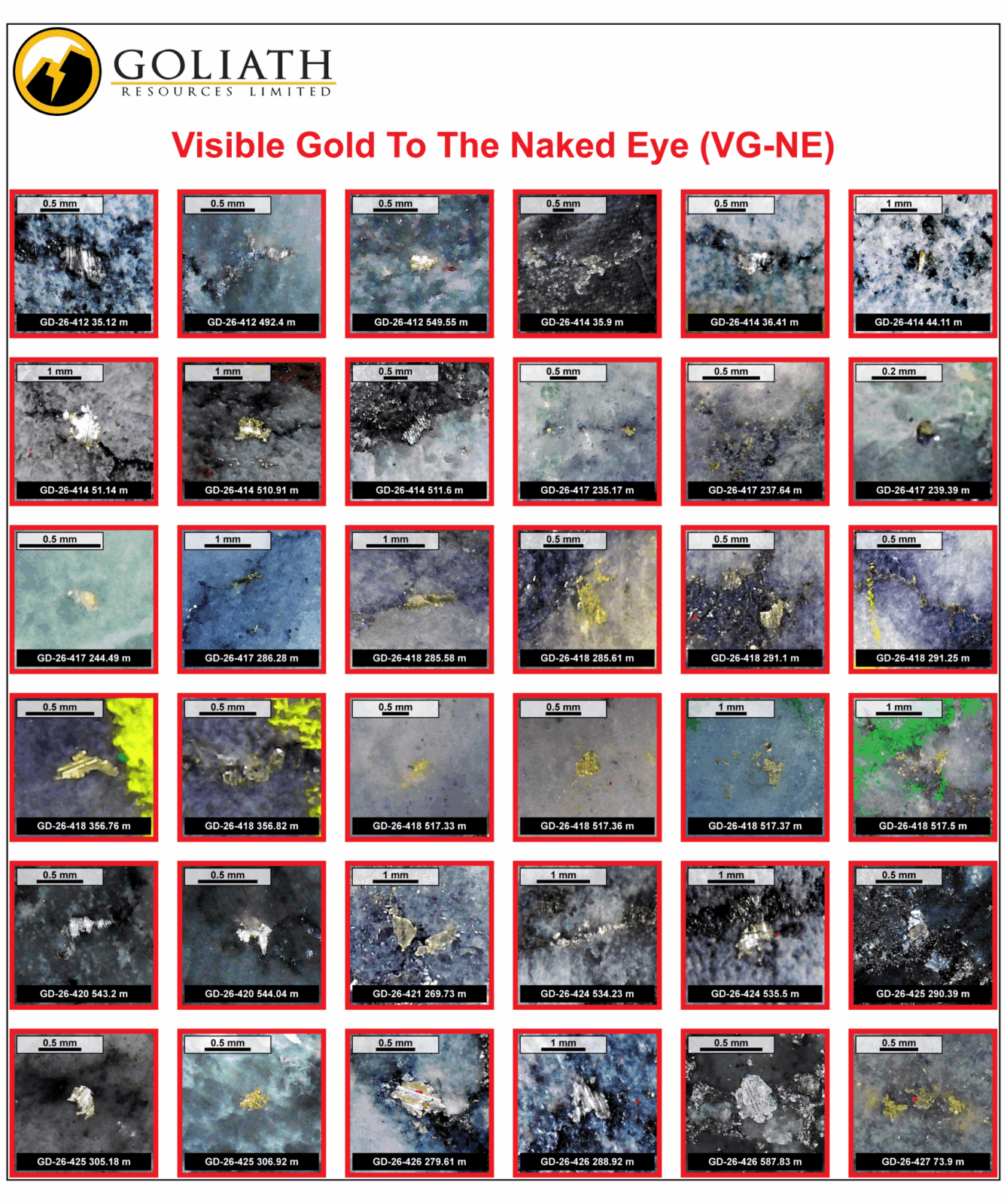
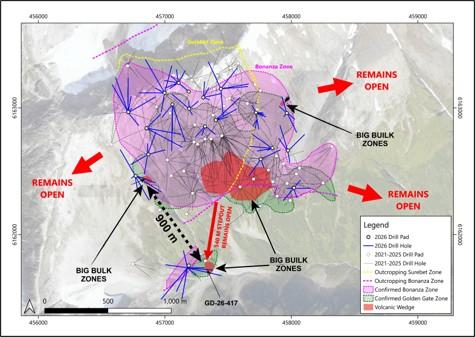
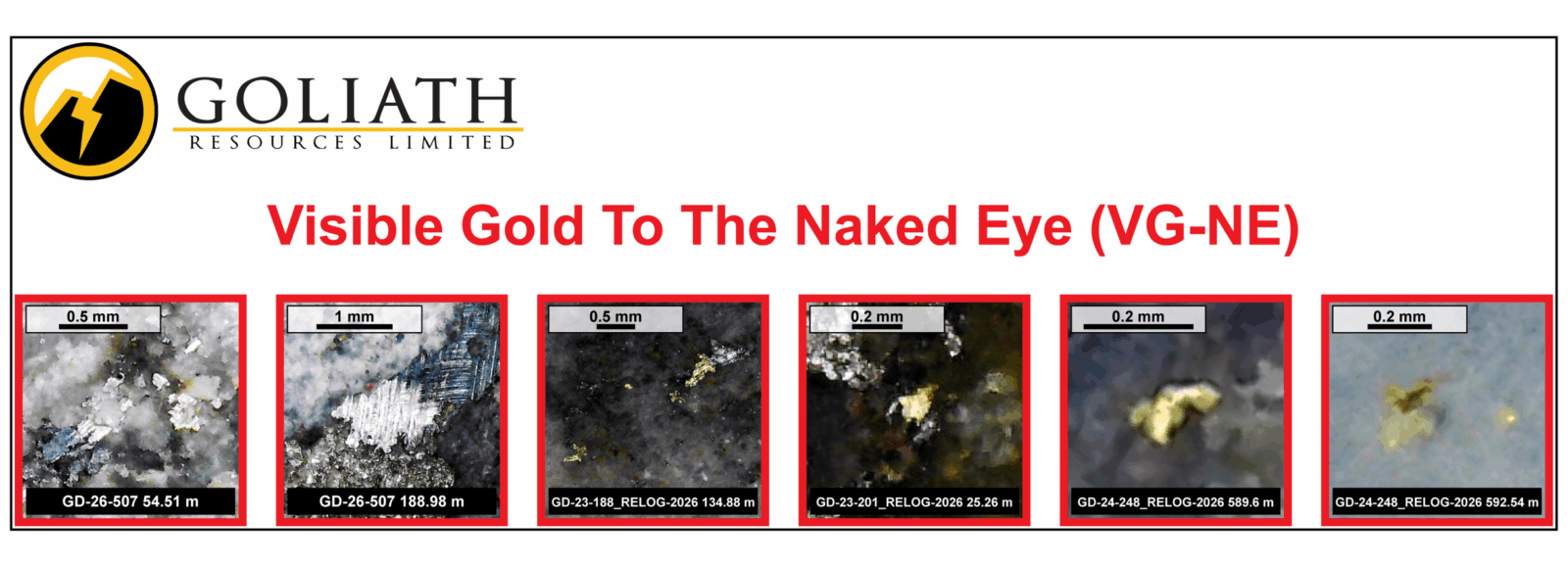
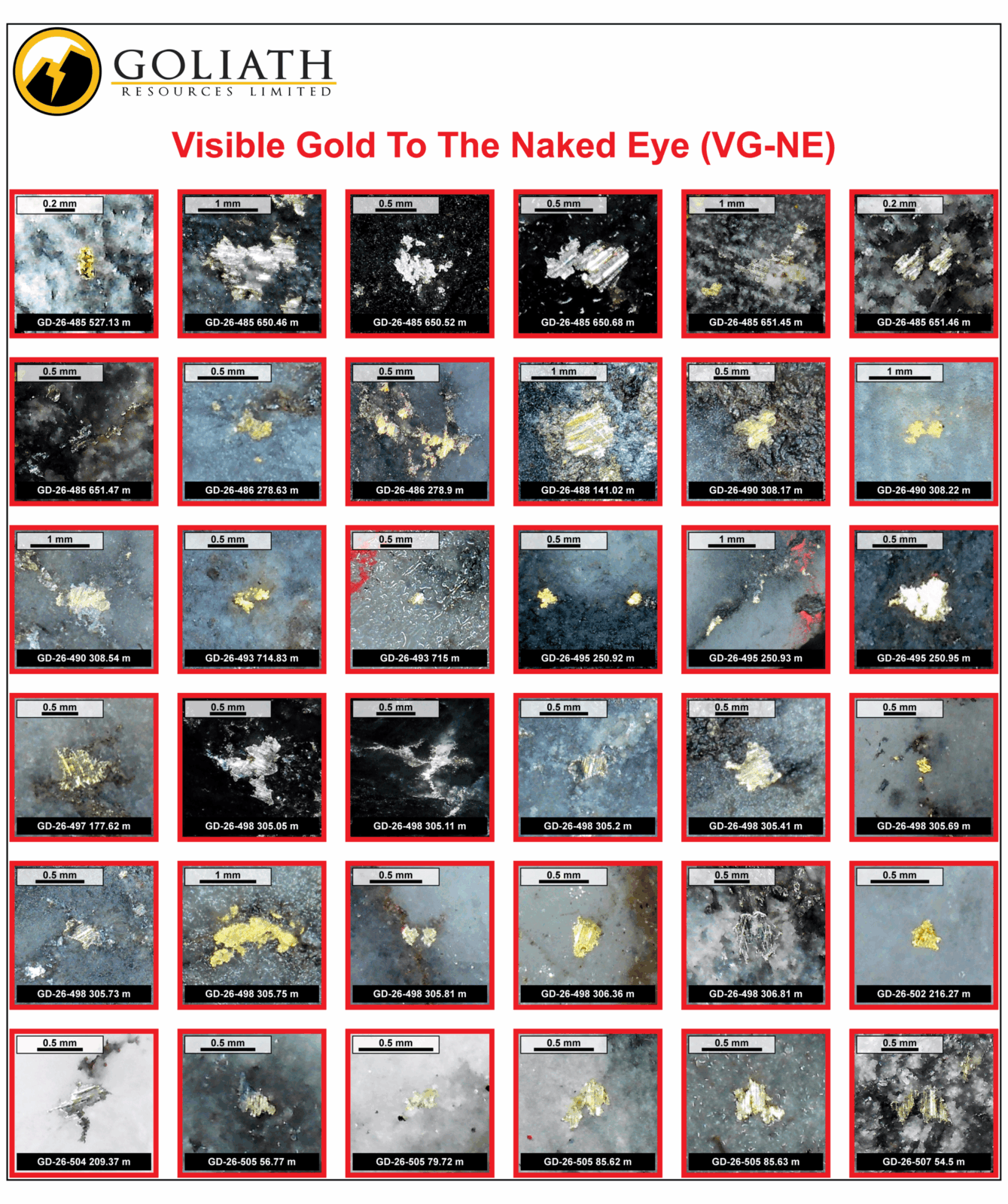
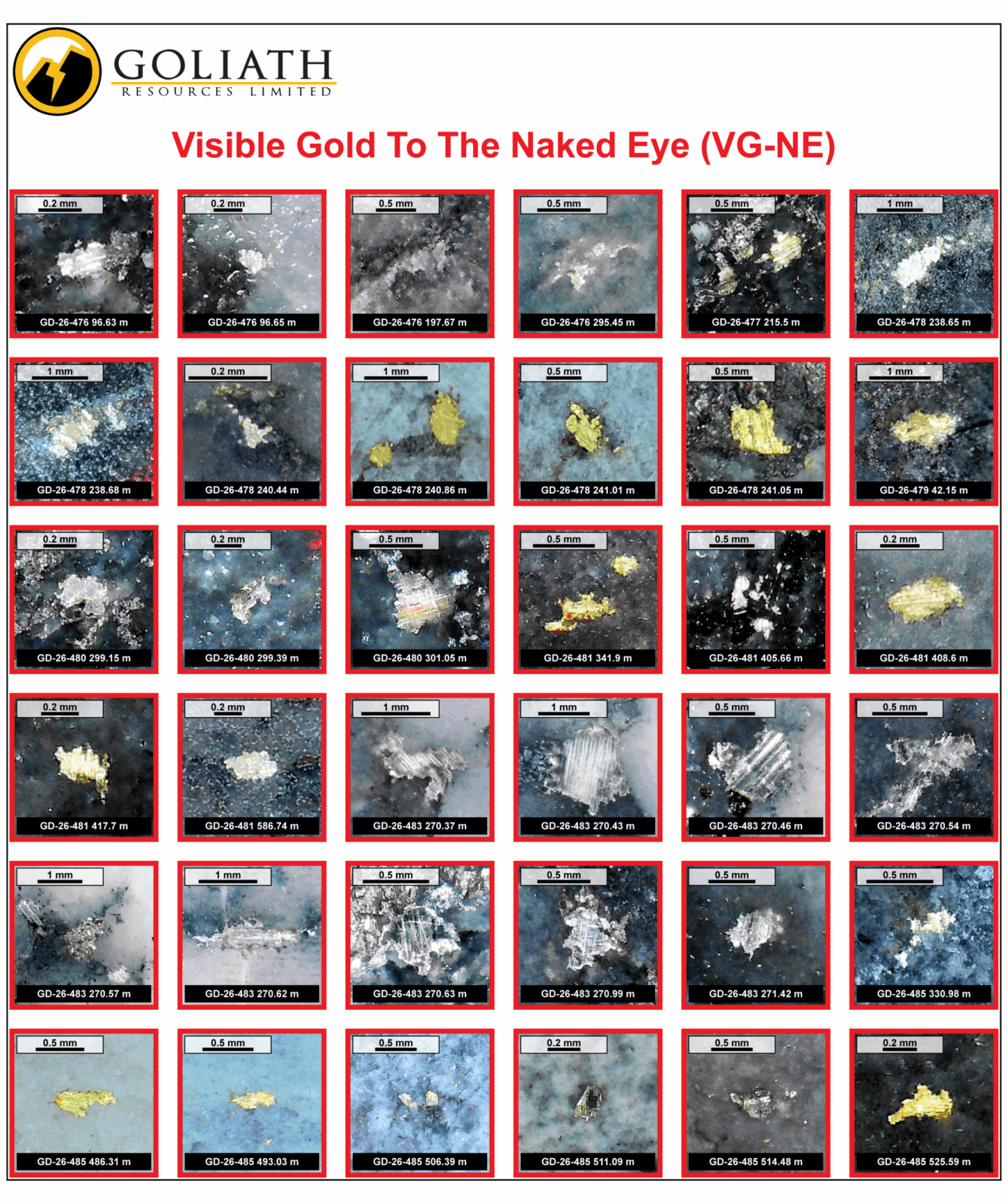
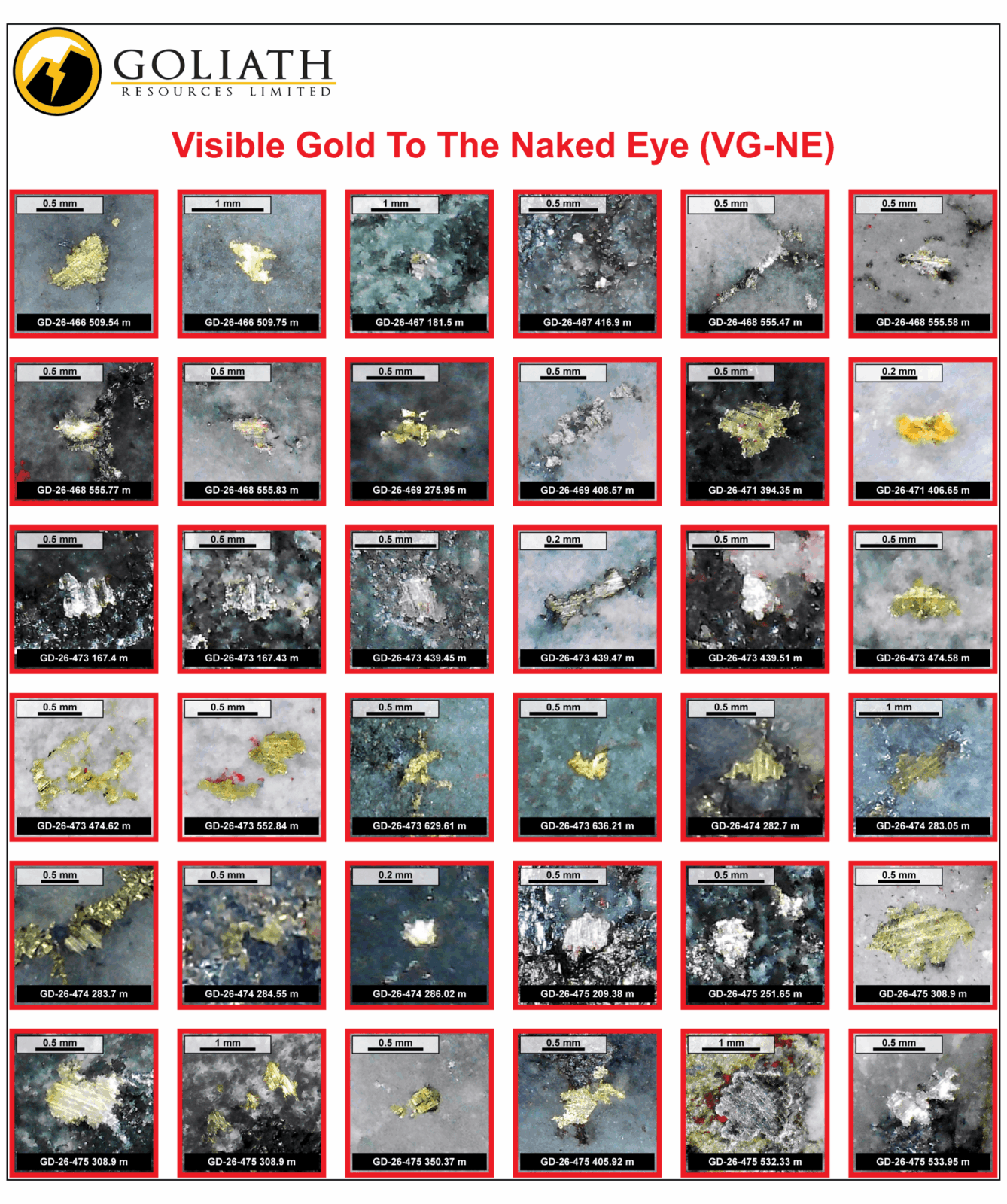
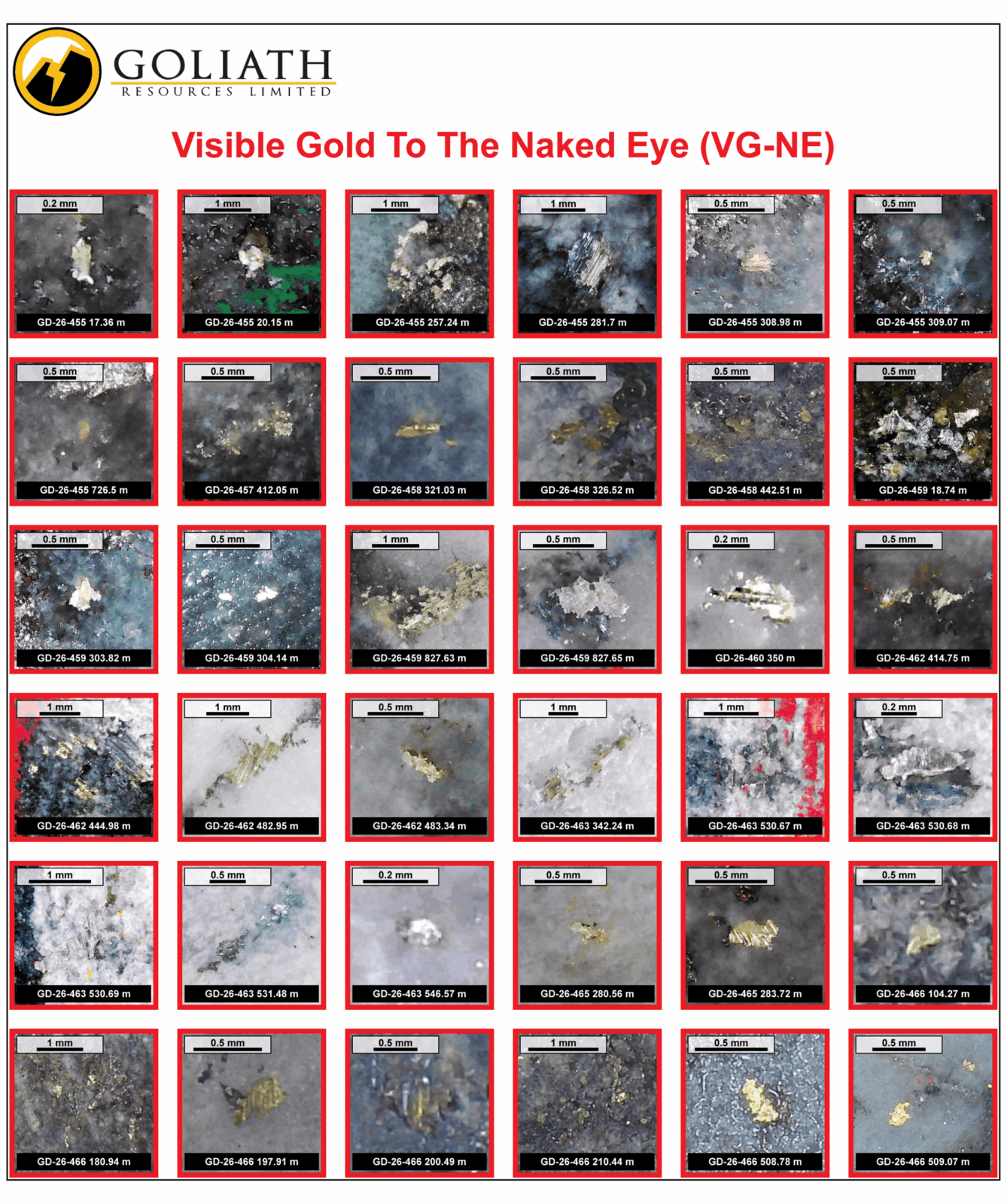
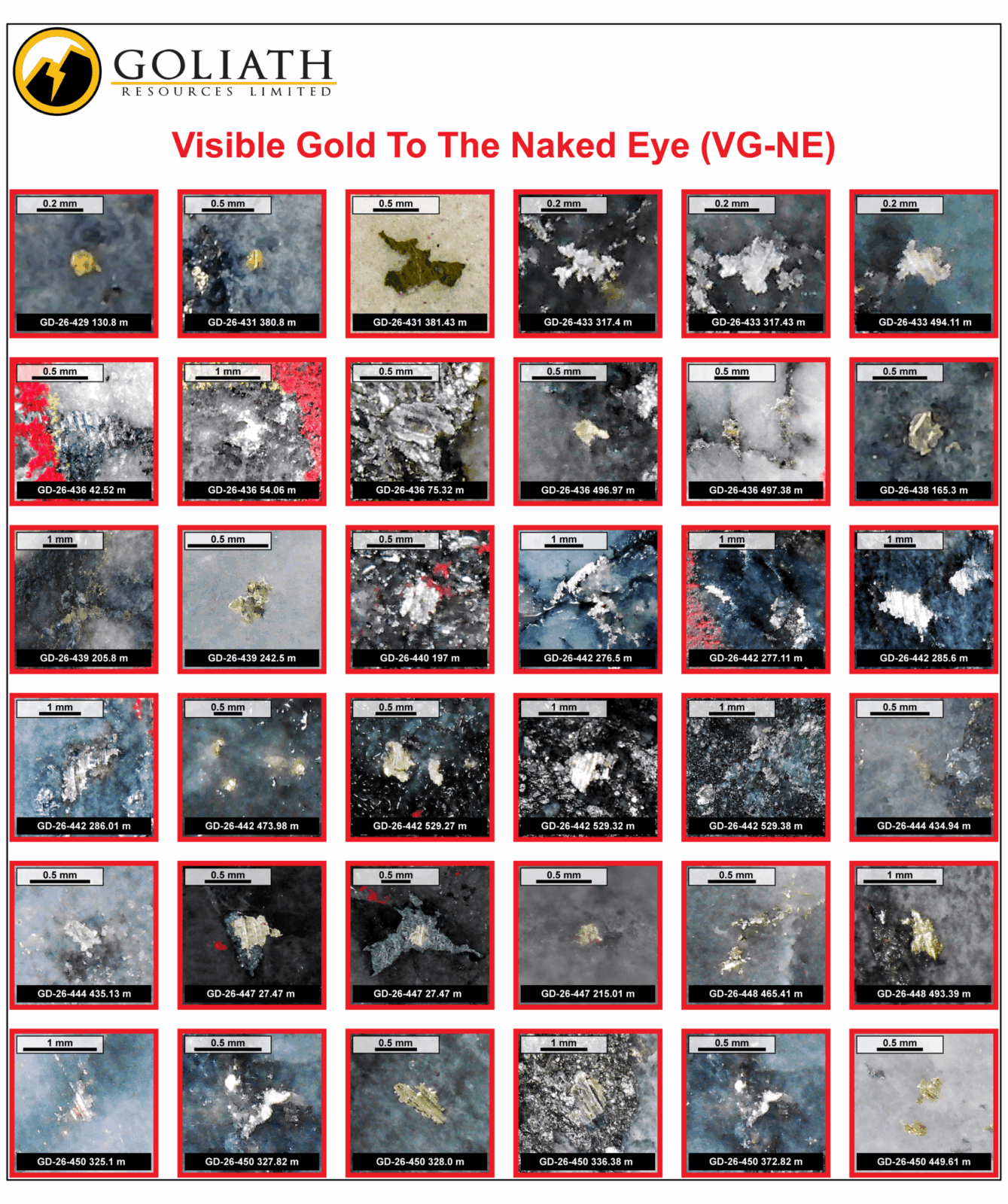
Goliath Resources Limited (TSX-V: GOT) (OTCQB: GOTRF) (FSE: B4IF) is pleased to announce that the 2026 drill program has concluded with over 48,000 meters drilled in 97 holes at the Surebet Discovery on its 100% owned Golddigger Property, Golden Triangle, British Columbia. The program confirmed the continuity of this large, high-grade, gold-rich system. 100% of the drill holes completed to date on Surebet have intersected quartz-sulphide mineralization, as well, 412 drill holes out of 483 or 85% contain VG-NE, clearly demonstrating the untapped discovery potential remaining on the property. Assays are still pending for 83 holes drilled in 2026.
The Company wishes to extend its sincere gratitude to Goliaths senior exploration consultant and project manager Mr. Bill Chornobay for his vision and his entire team for their tireless efforts since 2017. Bill is the founder, team builder, manager and financer of the syndicate responsible for generating, prospecting and staking the Golddigger property including the original Surebet discovery, which was subsequently optioned to Goliath Resources.
Mr. Roger Rosmus, Founder & CEO of Goliath states: “Goliath is extremely fortunate to have the guidance and tireless support provided by Mr. Bill Chornobay along with his talented team over many years. They once again successfully completed a significant undertaking in a very short window this year under many adverse conditions including weather and snowpack to mention a few. Under Bill’s guidance, Goliath was able to meet many of its exploration goals over the years including this year and we look forward to another successful year in 2027 under his leadership. The list of people that contributed to the success at Surebet is long, which we are grateful for their tireless efforts that continue to unlock the full potential of the Surebet Discovery. I believe we are nowhere near the limits of this high-grade gold system. As stated many times, the more we drill the bigger the system gets and believe Surebet will be the most significant high-grade gold discoveries in British Columbia’s Golden Triangle in many years. We look forward to releasing further assay results as they are received, interpreted and compiled.”
The 2026 drill program has concluded with over 48,000 meters drilled in 97 holes accomplished in a very short window despite the weather conditions, for a total of over 200,000 meters drilled since the maiden drill program in 2021. This was accomplished with 7 drill rigs in what we understand is one of North America’s largest helicopter-supported drill programs in challenging alpine terrain this year. It is remarkable that 100% of all holes drilled to date have intersected the targeted quartz-sulphide mineralization, 59% of the holes completed in 2026 contain VG-NE and 85% of all 483 holes drilled contain VG-NE. This underscores the excellent predictability and expansive nature of the Surebet discovery that remains open.
High-grade gold has been identified in three distinctive rock types, including: quartz-sulphide breccias and stockwork veins hosted in the sedimentary units; precious and base metals bearing veins hosted in the volcanic units; and intermediate to felsic Eocene-aged dykes. All mineralized rock types contain substantial amounts of VG-NE (from fine-grained to coarse-grained gold) and remain open for expansion. These findings suggest the presence of a large-scale, multi-phased high-grade gold mineralizing event driven by a Motherlode causative intrusion at depth responsible for the extensive 2.01 km2 high-grade gold system at Surebet that remains open.
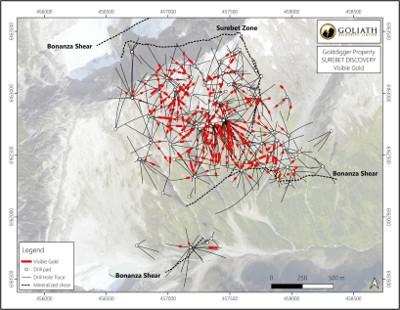
In just 21 months of on-the-ground work, the Surebet Discovery has advanced from a grassroots showing on virgin ground exposed by glacial and snowpack retreat, to an extensive high-grade gold mineralizing system with significant potential. The project now consists of 46 identified stacked gold-rich veins defined by over 200,000 meters of total drilling. The system’s scale continues to get larger with every drill program, with over 1,500 pierce points (2021 – 2025) distributed across an area of 2.01 km². The consistent high-grade gold results have drawn comparisons to some of the most significant discoveries in the Golden Triangle.
The Company is actively updating its high-grade gold wireframe models as assay results are received. Once all data from the 2026 program has been received, compiled, and modelled, a comprehensive drill plan for the 2027 season will be designed.
Surebet Discovery Highlights
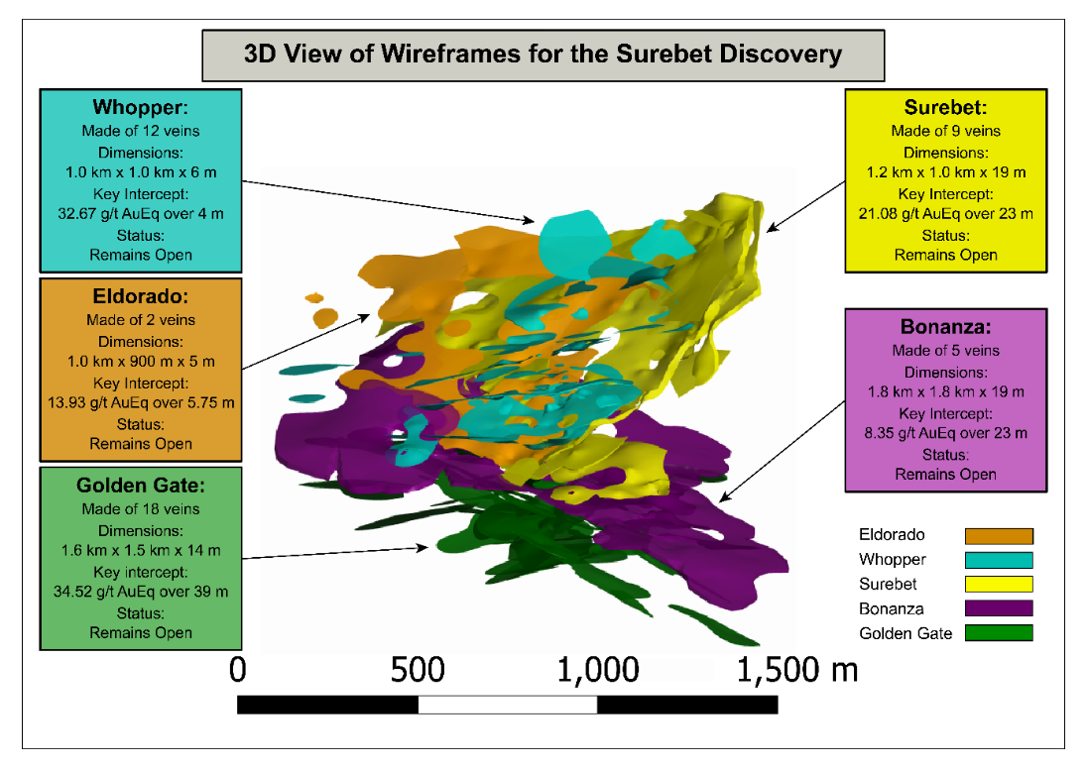
Table 3: Five main modelled gold rich zones and dykes, see isometric view in Figure 6 below.
| Zone | Number of lodes/veins |
Dimensions | Key Intercept | Status |
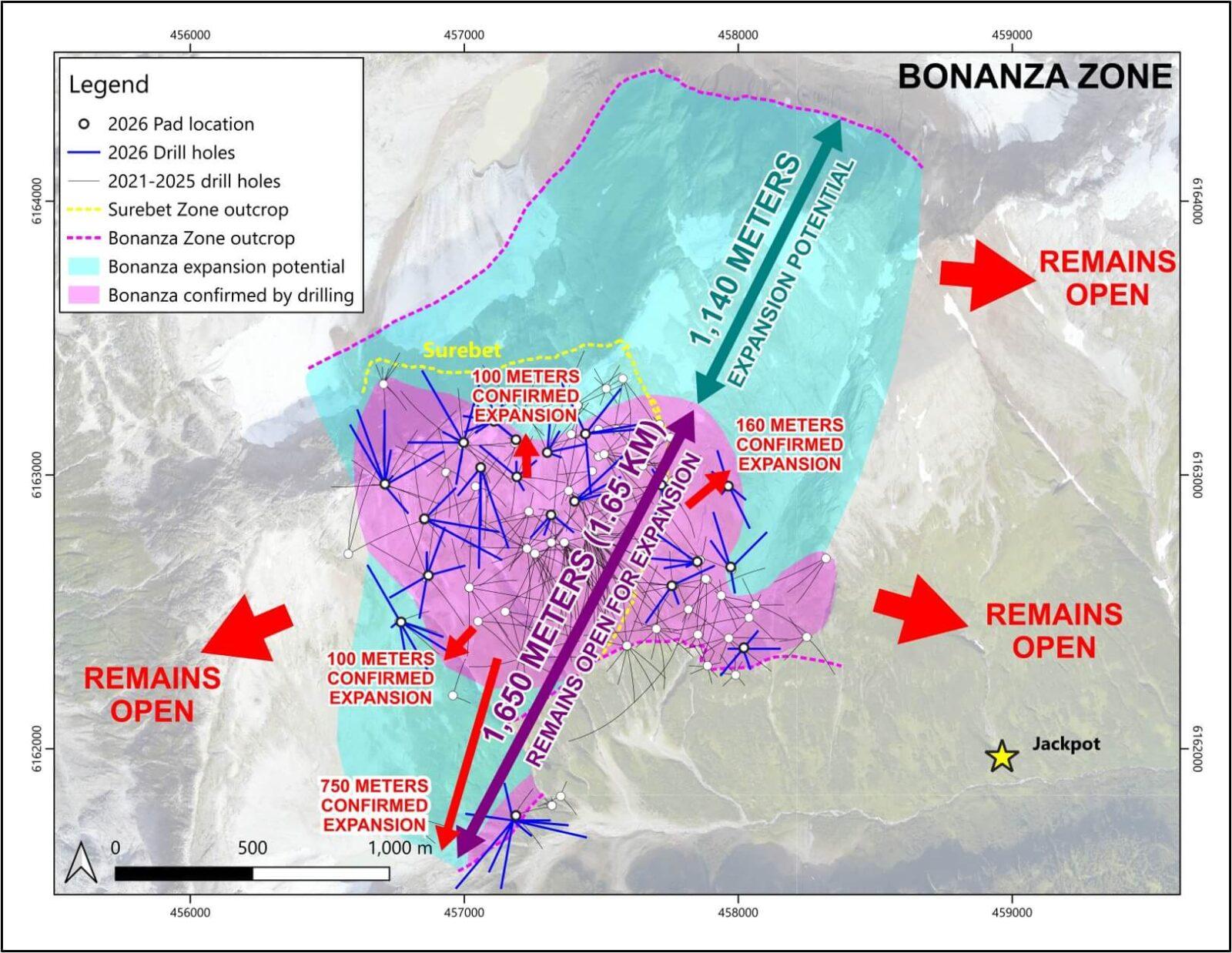
| Bonanza | 5 | 1.8 km x 1.8 km x 19 m | 8.35 g/t AuEq over 23 m | Remains Open |
| Surebet | 9 | 1.2 km x 1.0 km x 19 m | 21.08 g/t AuEq over 23 m | Remains Open |
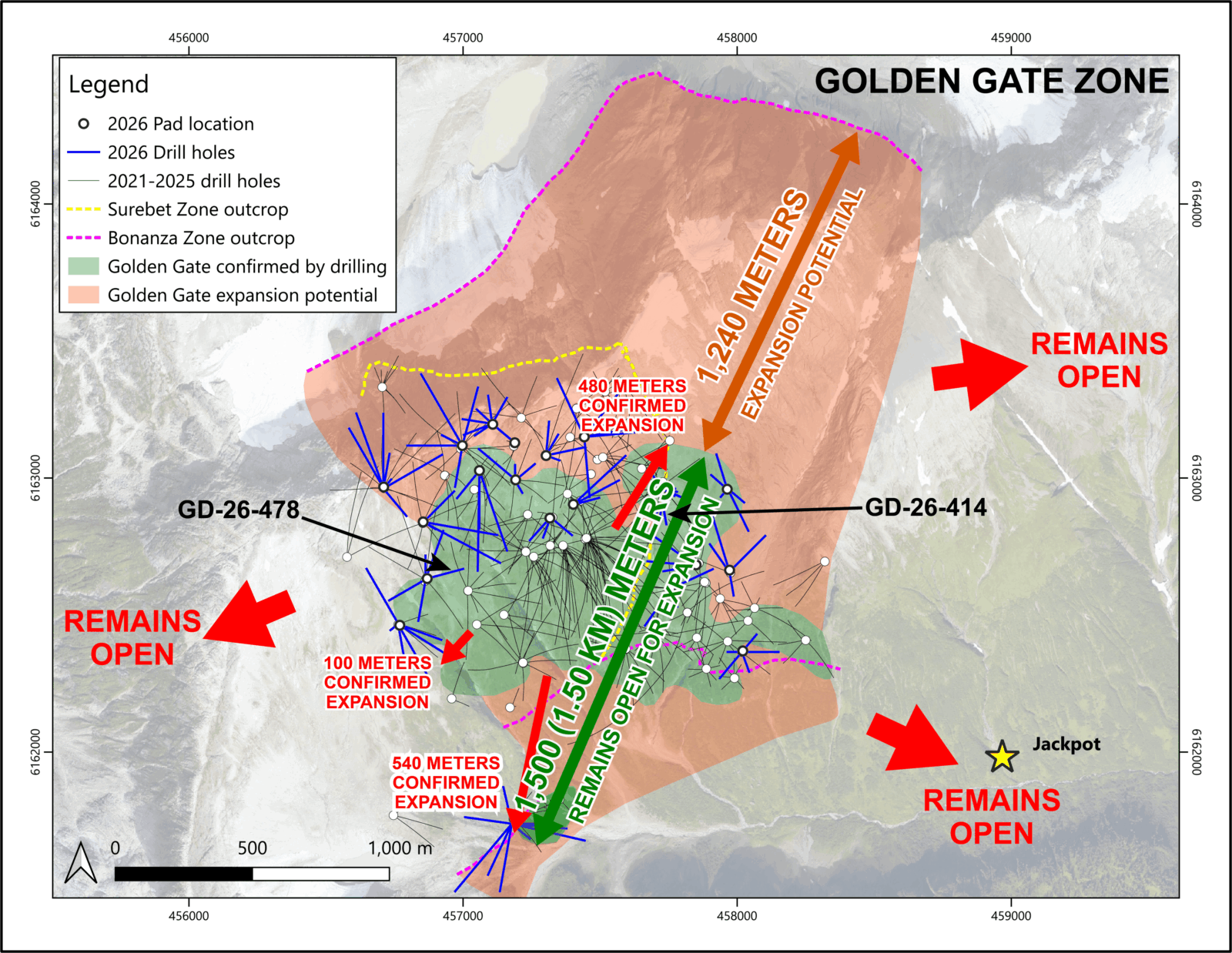
| Golden Gate | 18 | 1.6 km x 1.5 km x 14 m | 34.52 g/t AuEq over 39 m | Remains Open |
| Whopper | 12 | 1.0 km x 1.0 km x 6 m | 32.67 g/t AuEq over 4 m | Remains Open |
| Eldorado | 2 | 1.0 km x 900 m x 5 m | 13.93 g/t AuEq over 5.75 m | Remains Open |
| Gold-rich dykes | 1.4 km x 890 m x 25 m | 12.03 g/t AuEq over 10 m | Remains Open |
About Golddigger Property
The Golddigger Property is 100% owned and covers an area of 91,518 hectares in a highly prospective geological setting of the Eskay Rift, within 3 kilometers of the Red Line in the Golden Triangle of British Columbia. This area has hosted some of Canada’s greatest gold mines including Eskay Creek, Premier and Snip. Other significant and well-known deposits in the Golden Triangle include Brucejack, Copper Canyon, Galore Creek, Granduc, KSM, Red Chris, and Schaft Creek. Goliath controls 56 kilometers of the Red Line which is a geologic contact between Triassic age Stuhini rocks and Jurassic age Hazelton rocks used as key markers when exploring for gold-copper-silver mineralization.
The Surebet discovery has shown predictable continuity and good metallurgy with gold recoveries of 92.2% from gravity and flotation at a 327-micrometer crush, including 48.8% recovery of free gold from gravity alone (no cyanide required to recover the gold). The metallurgical testing completed to date shows no presence of deleterious elements (see news release dated March 1, 2023).
The Property is in a well positioned location in close proximity to the communities of Alice Arm and Kitsault where there is a permitted mill site on private property. It is situated adjacent to tide water with direct barge access to Prince Rupert (190 kilometers via the Observatory inlet/Portland inlet). The town of Kitsault is accessible by road (190 kilometers from Terrace, 300 kilometers from Prince Rupert) and has a barge landing, dock, and infrastructure capable of housing at least 300 people, including high-tension power.
Additional infrastructure in the area includes the Dolly Varden Silver Mine Road (only 7 kilometers to the East of the Surebet discovery) with direct road access to Alice Arm barge landing (18 kilometers to the south of the Surebet discovery) and high-tension power (25 kilometers to the east of Surebet discovery). The city of Terrace (population 16,000) provides access to railway, major highways, and airport with supplies (food, fuel, lumber, etc.), while the town of Prince Rupert (population 12,000) is located on the West Coast of British Columbia and houses an international container seaport also with direct access to railway and an airport.
Qualified Person
Mr. Rein Turna P. Geo is the qualified person as defined by National Instrument 43-101, for Goliath Resources Limited projects, and supervised the preparation of, and has reviewed and approved, the technical information in this release. Mr. Turna is an Independent Director of the Company.
About CASERM (Center to Advance the Science of Exploration to Reclamation in Mining)
Goliath Resources is a paying member and active supporter of the Center to Advance the Science of Exploration to Reclamation in Mining, which is one of the world’s largest research centers in the mining sector. CASERM is a collaborative research venture between Colorado School of Mines and Virginia Tech that is supported by a consortium of mining and exploration companies, analytical instrumentation and software companies, and federal agencies aiming to transform the way geoscience data is acquired and used across the mining value chain. The center forms part of the I-UCRC program of the National Science Foundation. Research focuses on the integration of diverse geoscience data to improve decision making across the mine life cycle, beginning with the exploration for subsurface resources continuing through mine operation as well as closure and environmental remediation. Over the past three years, Goliath Resources’ membership in CASERM has allowed a high level of research to be performed on the Surebet Discovery.
About Goliath Resources Limited
Goliath Resources is an explorer of precious metals projects in the highly prospective Golden Triangle of Northwestern British Columbia. All of its projects are in high quality geological settings and geopolitical safe jurisdictions amenable to mining in Canada. Goliath is a member and active supporter of CASERM which is an organization that represents a collaborative venture between Colorado School of Mines and Virginia Tech. In 2025, Goliath completed its largest drill program to date for a total of 64,364 meters and has recently completed a fully funded drill program in 2026 comprised of 48,443 meters. The Company’s key strategic cornerstone shareholders include Crescat Capital, a Global Commodity Group (Singapore), McEwen Inc. (NYSE: MUX) (TSX: MUX), Waratah Capital Advisors, Rob McEwen, Eric Sprott and Larry Childress.
For more information please contact:
Goliath Resources Limited
Mr. Roger Rosmus
Founder and CEO
Tel: +1.416.488.2887
roger@goliathresources.com
www.goliathresourcesltd.com
Disclaimer
The reader is cautioned that grab samples are spot samples which are typically, but not exclusively, constrained to mineralization. Grab samples are selective in nature and collected to determine the presence or absence of mineralization and are not intended to be representative of the material sampled.
Quality Assurance / Quality Control (QA/QC) Protocol
Core Samples Handling & Sampling
Oriented HQ-diameter or NQ-diameter diamond drill core from the drill program is placed in core boxes by the drill crew contracted by the Company. Core boxes are transported by helicopter to the staging area and then transported by truck to the core shack. The core is then re-orientated, meterage blocks are checked, meter marks are labelled, Recovery and RQD measurements taken, and primary bedding and secondary structural features including veins, dykes, cleavage, and shears are noted and measured. The core is then described and transcribed in MX DepositTM. Drill holes were planned using Leapfrog Geo™ and QGIS™ software and data from the 2017-2025 exploration programs. Drill core containing quartz breccia, stockwork, veining and/or sulphide(s), or notable alteration is selectively sampled in lengths of 0.5 to 1.5 meters. Samples are selected from continuous intervals of mineralization and/or other relevant geological features, including shoulder samples that extend for 3 meters into adjacent unmineralized and/or unaltered country rock. Along barren core intervals devoid of mineralization or significant geological features, one 1 meter sample is collected every ten meters. Core samples are cut lengthwise in half: one-half remains in the box and the other half is inserted in a clean plastic bag with a sample tag. The bagged samples are then weighed and secured with a zip tie. Certified reference materials, blanks and duplicates are added in the sample stream at a rate of 10%. To ensure analytical anonymity, CRM identification labels are removed prior to submission to the laboratory. Additional out-of-sequence blanks are introduced immediately following core samples that contain visible gold to the naked eye or visibly high-grade sulphide mineralization.
Surface Samples Handling & Sampling
Grab, channels, chip and talus samples were collected by foot with helicopter assistance. Prospective areas included, but were not limited to, proximity to MINFile locations, placer creek occurrences, regional soil anomalies, and potential gossans based on high-resolution satellite imagery. The rock grab and chip samples were extracted using a rock hammer, or hammer and chisel to expose fresh surfaces and to liberate samples weighing anywhere between 0.5 and 5.0 kilograms. All sample sites were flagged with biodegradable flagging tape and marked with the sample number. All sample site locations were recorded using handheld GPS units (accuracy 3-10 meters) and sample ID, easting, northing, elevation, type of sample (outcrop, subcrop, float, talus, chip, grab, etc.) and a description of the rock were recorded on all-weather paper. Samples are then inserted in a clean plastic bag with a sample tag for transport and shipping to the geochemistry lab. QA/QC samples including blanks, certified reference materials, and duplicate samples are inserted regularly into the sample sequence at a rate of 10%.
Samples Analysis
All samples are transported in rice bags sealed with numbered security tags. The rice bags are transported from the core shacks to the MSALABS facilities in Terrace, BC. MSALABS is certified with both AC89-IAS and ISO/IEC Standard 17025:2017. The core samples undergo preparation via drying, crushing to ~70% of the material passing a 2 mm sieve and riffle splitting. The sample splits are weighed and transferred into plastic jars, each containing between 300 g and 500 g of crushed sample material. A 250 g split is pulverized to ensure at least 85% of the material passes through a 75 µm sieve. The crushed samples are transported to the MSALABS PhotonAssayTM facility in Prince George, where gold concentrations are quantified via photon assay analysis (method CPA-Au1). Samples that result in gold concentrations ≥5 ppm are analyzed to extinction. Photon assay uses high-energy X-rays (photons) to excite atomic nuclei within the jarred samples, inducing the emission of secondary gamma rays, which are measured to quantify gold concentrations. The assays from all jars are combined on a weight-averaged basis. Multielement analyses are carried out at the MSALABS facilities in Surrey, BC, where 250 g of pulverized splits are analyzed via IMS-230 and ICF6xx methods. The IMS-230 method uses 4-acid digestion (a combination of hydrochloric, nitric, perchloric and hydrofluoric acids) followed by inductively coupled plasma emission spectrometry to quantify concentrations of 48 elements. Samples with over-limit results for Ag, Cu, Pb and Zn undergo ore-grade analysis via the ICF-6xx method (where ‘xx’ denotes the target metal). This method employs 4-acid digestion followed by inductively coupled plasma emission spectrometry.
Gold Equivalent Calculation
Gold Equivalent values are provided for comparative purposes only and do not include metal recovery factors given that known metallurgical recoveries are only based on preliminary test work and may not be representative of all mineralization styles or zones. Gold Equivalent metal values are calculated using: 4,222.08 Au USD/oz, Ag 67.76 USD/oz, Cu 6.43 USD/lbs, Pb 1,967.13 USD/ton and Zn 3,578.25 USD/ton (updated on August 4, 2026) using the formula below:
There is potential for economic recovery of gold, silver, copper, lead, and zinc based on other mining and exploration projects in the same Golden Triangle Mining Camp where Goliath’s project is located, such as the Homestake Ridge Gold Project (Auryn Resources Technical Report, Updated Mineral Resource Estimate and Preliminary Economic Assessment on the Homestake Ridge Gold Project, prepared by Minefill Services Inc. Bothell, Washington, dated May 29, 2020). Here, AuEq values were calculated using 3-year running averages for metal price, and included provisions for metallurgical recoveries, treatment charges, refining costs, and transportation. Recoveries for Gold were 85.5%, Silver at 74.6%, Copper at 74.6% and Lead at 45.3%. It will be assumed that Zinc can be recovered with Copper at the same recovery rate of 74.6%. The quoted reference of metallurgical recoveries is not from Goliath’s Golddigger Project, Surebet Zone mineralization, and there is no guarantee that such recoveries will ever be achieved, unless detailed metallurgical work such as in a Feasibility Study can be eventually completed on the Golddigger Project.
Reported Drill Intervals and Assays
Drill core intervals are reported as drill lengths, where the true width is estimated to be 80-90% of the length. The widths of the mineralized intervals were defined to reflect both the assay results and the mineralized veining observed in drill core. Veining constrains the local width of the mineralized zone, while assay results define the grade distribution within that zone. Reported intervals are therefore intended to represent geologically meaningful zone widths at the point of intersection.
The reported assays of drill intervals were calculated as length-weighted average grades using the individual sample assay results and their corresponding sample lengths. The average grade for each interval was determined by dividing the sum of the products of each sample grade and sample length by the total sampled interval length (Σ[grade × sample length] / Σ[sample length]). This method accounts for variations in sample length and provides a representative average grade over the reported interval.
Neither the TSX Venture Exchange nor its Regulation Services Provider (as that term is defined in the policies of the TSX Venture Exchange), nor the OTCQB Venture Market accepts responsibility for the adequacy or accuracy of this release.
Brutus Mining Inc. (CSE: BRU) (FSE: ZI3) is pleased to announce that it has closed its non-brokered ... READ MORE
Jaguar Uranium Corp. (NYSE American: JAGU) is pleased to announce an independent Mineral Resource E... READ MORE
Auro Metals Inc. (TSX-V: AURO) (OTCQB: AURFF), is pleased to announce the assay results of the fina... READ MORE
Endeavour Silver Corp. (NYSE: EXK) (TSX: EDR) is pleased to announce that repairs to the primary bal... READ MORE
Scorpio Gold Corp. (NASDAQ: SGLD) (TSX-V: SGLD) (OTCQB: SRCRF) (FSE: RY9) is pleased to announce re... READ MORE