








Highlight intercepts include 31.2m at 2.7% CuEq and 3.4m at 6.6% CuEq
Results Further Demonstrate the Robust Nature of Mineralization at Tesla
Assays Pending from Six Additional Holes, with Further Results Expected Soon
Foran Mining Corporation (TSX: FOM) (OTCQX: FMCXF) is pleased to announce additional assay results from the summer drill program at the Tesla Zone, part of Foran’s 100%-owned McIlvenna Bay property in Saskatchewan. The infill summer drill program at Tesla was completed from land using directional drilling technologies and designed to further understand and confirm the continuity of Tesla between existing wider-spaced drill holes. Hole TS-24-30 targeted a 200m by 150m area and successfully intersected a wide lens of copper-rich mineralization, further demonstrating the strength and potential scale of the Tesla Zone.
Key Highlights:
Erin Carswell, Foran’s Vice President, Exploration, commented: “Returning to the central Tesla Zone, our latest drilling results have reaffirmed Tesla’s copper potential. The zonation from deeper zinc and gold-rich mineralization to shallower copper-dominant lenses is apparent, with TS-24-30 providing a new and important intersection through copper-rich breccias and a thickened copper lens as our program confirms mineralization continuity between existing holes. Through targeted infill drilling, we are enhancing our confidence and demonstrating the Zone’s growing potential. These results underscore Tesla’s importance within our broader portfolio as we advance McIlvenna Bay’s construction alongside our ongoing exploration strategy, continuing to unlock the full potential of our growing district.”
Tesla Zone
Since its discovery in 2022, the Tesla Zone has now been intersected by 33 drill holes and wedges (Figure 1 above) with mineralization defined in multiple lenses consisting of zinc and/or copper-rich massive and semi-massive sulphides and associated copper-rich stringer and breccia zones over a strike length of 1,200m and 500-700m in the down dip direction where it remains open in all directions for continued expansion.
During the summer infill drill program, a total of approximately 10,800m of drilling was completed as a series of pilot holes and wedges from four main collars designed to test the central part of the Tesla Zone, targeting larger gaps in the current drill hole spacing. Drill holes were collared on land to cover approximately 300m of strike length and were drilled from the footwall side using directional drilling to provide orthogonal intersections into the mineralized horizons. A total of seven holes were completed through the mineralized zones during the program, while two additional pilot holes were also drilled which will be completed following the upcoming ice-based winter program.
This release presents the first results of the summer infill drill program, with copper-rich mineralization intersected by initial hole TS-24-30. The program was designed to test an area with no drilling between previous holes TS-23-07w2 and TS-23-08 (approximately 200m apart along strike) and TS-22-03w2 and TS-24-15 (approximately 150m apart down the dip of the Zone). A drilling density map is provided in Figure 2, which shows the importance of drilling TS-24-30 for continuity of information between wider-spaced drill holes.
TS-24-30
TS-24-30 intersected the same geology and host rocks as the majority of Tesla Zone drilling, although in this case the mineralized zones were intersected in reverse order due to the drilling approach from the footwall side of the mineralization. The hole returned a combined 36.5m mineralized interval over three contiguous lenses, consisting of a narrow lens of stringer-style copper-rich mineralization directly overlying a zinc and copper-rich massive sulphide lens (Tesla
Main Lens) which was followed directly downhole by a thick, copper–rich zone of stringer/breccia-style mineralization. Significantly, the lower copper zone intersected in the hole was almost double the thickness that was predicted from the modelling in the area. A cross section through the Tesla Zone showing the relationship of TS-24-30 to the surrounding drill holes is provided in Figure 3 below.
In detail, TS-24-30 intersected a narrow copper stringer zone at the top of the mineralized interval that was 1.9m in length, grading 1.91% Cu and 3.66% Zn. It appears that this zone correlates with an upper copper lens that sits above the main massive sulphide lens throughout much of the Tesla Zone. Directly below the upper copper lens, a 3.4m horizon of massive to semi-massive sulphide was intersected grading 4.29% Cu, 8.21% Zn and 55.5 g/t Ag, dominantly consisting of massive pyrite with strong sphalerite and chalcopyrite mineralization and significant local overprinting magnetite in a strongly chlorite-altered host rock. Below the massive sulphides the hole intersected the lower copper lens, which in this case consisted of a wide copper-rich zone made up of breccias and stringer-style mineralization dominantly consisting of pyrite and chalcopyrite with minor pyrrhotite and sphalerite over a 31.2m core length. The interval graded 2.40% Cu and 0.51 g/t Au and included several higher-grade intervals highlighted by 4.1m grading 4.68% Cu and 1.03 g/t Au. The mineralization is hosted in felsic volcanic rocks, which tend to be strongly foliated with moderate to strong chlorite alteration and weak to locally moderate sericite.
The higher-grade breccia zones in TS-24-30 are visually and geochemically akin to breccias intersected in several other central Tesla holes such as TS-23-10, which intersected a high-grade interval of 6.34% Cu, 74.1 g/t Ag and 1.37 g/t Au over 5.8m in a brecciated section of the lower copper zone. Additional drilling will be required to fully understand the controls on, and the geometries of, this style of mineralization. Several core photos of the mineralization in TS-24-30 are provided in Figure 3, and detailed composite intervals from the hole are provided in Table 1 below.
Table 1 – 2024 Summer Tesla Assay Results
| Hole | Zone | From_m | To_m | Interval_m | Cu % | Zn % | Ag g/t | Au g/t | CuEq % |
| TS-24-30 | CS | 1273.6 | 1304.8 | 31.2 | 2.40 | 0.48 | 19.2 | 0.51 | 2.72 |
| Including | CS | 1278.9 | 1283.0 | 4.1 | 4.68 | 0.56 | 31.5 | 1.03 | 5.18 |
| TS-24-30 | MS | 1304.8 | 1308.2 | 3.4 | 4.29 | 8.21 | 55.5 | 0.03 | 6.64 |
| TS-24-30 | CS | 1308.2 | 1310.1 | 1.9 | 1.91 | 3.66 | 38.2 | 0.02 | 3.02 |
|
Note 1: Composite widths are presented as core lengths. Additional drilling will be required to confirm the geometry of the mineralized zones, but generally true widths are thought to be 80-85% of core length. Intervals generally composited using a 0.5% Cu cut-off grade in stringer zones, except MB-24-290 from 1050.8-1098.3m that used a 0.3% Cu cut-off grade. Copper Equivalent values calculated using metal prices of $4.00/lb Cu, $1.50/lb Zn, $20.00/ounce Ag and $1,800/ounce Au and LOM metallurgical recovery rates derived from test work on blended ores for the McIlvenna Bay Deposit completed as part of our April 2022 Feasibility Study: 91.1% Cu, 79.8% Zn, 88.6% Au and 62.3% Ag (MS – massive / semi-massive sulphide, CS – Copper Stockwork/Stringer, QV – quartz-carbonate-albite alteration/veining). To date no metallurgical test work has been completed on the Tesla Zone or Bridge Zone mineralization. |
Quality Assurance and Quality Control
Drilling was completed using NQ size diamond drill core and core was logged by employees of the Company. During the logging process, mineralized intersections were marked for sampling and given unique sample numbers. Sampled intervals were sawn in half using a diamond blade saw. One half of the sawn core was placed in a plastic bag with the sample tag and sealed, while the second half was returned to the core box for storage on site. Sample assays are performed by the Saskatchewan Research Council (“SRC”) Geoanalytical Laboratory in Saskatoon, Saskatchewan. SRC is a Canadian accredited laboratory (ISO/IEC 17025:2017) and independent of Foran. Analysis for Ag, Cu, Pb and Zn is performed using ICP-OES after total multi-acid digestion. Au analysis is completed by fire assay with ICP-OES finish and any samples which return results greater than 1.0 g/t Au are re-run using gravimetric finish. A complete suite of QA/QC reference materials (standards, blanks, and duplicates) are included in each batch of samples processed by the laboratory. The results of the assaying of the QA/QC material included in each batch are tracked to ensure the integrity of the assay data.
Qualified Person
Mr. Roger March, P. Geo., Principal Geoscientist for Foran, is the Qualified Person for all technical information herein and has reviewed and approved the technical information in this release.
About Foran Mining
Foran Mining is a copper-zinc-gold-silver exploration and development company, committed to supporting a greener future, empowering communities and creating circular economies which create value for all our stakeholders, while also safeguarding the environment. The McIlvenna Bay Project is located entirely within the documented traditional territory of the Peter Ballantyne Cree Nation, comprises the infrastructure and works related to pre-development and advanced exploration activities of the Company, and hosts the McIlvenna Bay Deposit and Tesla Zone. The Company also owns the Bigstone Deposit, a resource-development stage deposit located 25km southwest of the McIlvenna Bay Property.
The McIlvenna Bay Deposit is a copper-zinc-gold-silver rich VHMS deposit intended to be the centre of a new mining camp in a prolific district that has already been producing for 100 years. The McIlvenna Bay Property sits just 65km West of Flin Flon, Manitoba and is part of the world class Flin Flon Greenstone Belt that extends from Snow Lake, Manitoba, through Flin Flon to Foran’s ground in eastern Saskatchewan, a distance of over 225km.
The McIlvenna Bay Deposit is the largest undeveloped VHMS deposit in the region. The Company announced the results from its NI 43-101 compliant Technical Report on the Feasibility Study for the McIlvenna Bay Deposit on February 28, 2022, outlining that current mineral reserves would potentially support an 18-year mine life producing an average of 65 million pounds of copper equivalent annually. The Company filed the McIlvenna Feasibility Study on April 14, 2022, with an effective date of February 28, 2022. The Company also filed a NI 43-101 Technical Report for the Bigstone Deposit resource estimate on January 21, 2021, as amended on February 1, 2022. Investors are encouraged to consult the full text of these technical reports which may be found on the Company’s profile on www.sedarplus.ca.
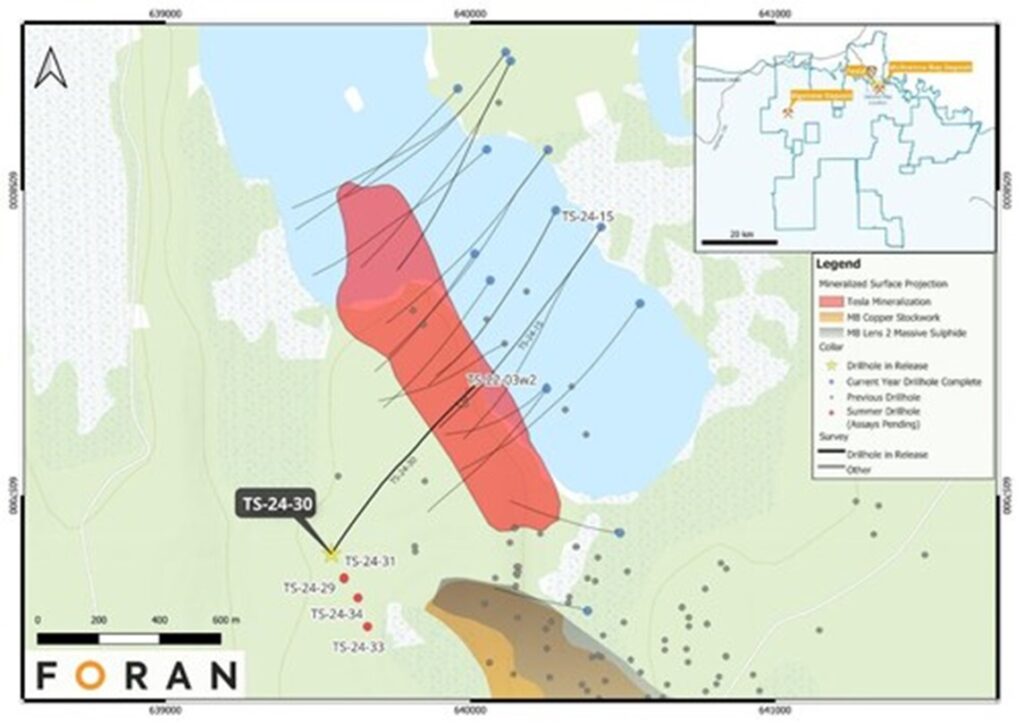
Plan view of the Tesla Zone and Bridge Zone (CNW Group/Foran Mining Corporation)
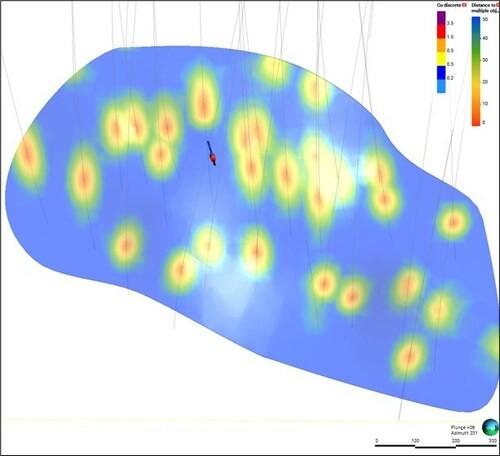
Drilling density of the Tesla Zone with hole trace for TS-24-30 shown in Black (CNW Group/Foran Mining Corporation)
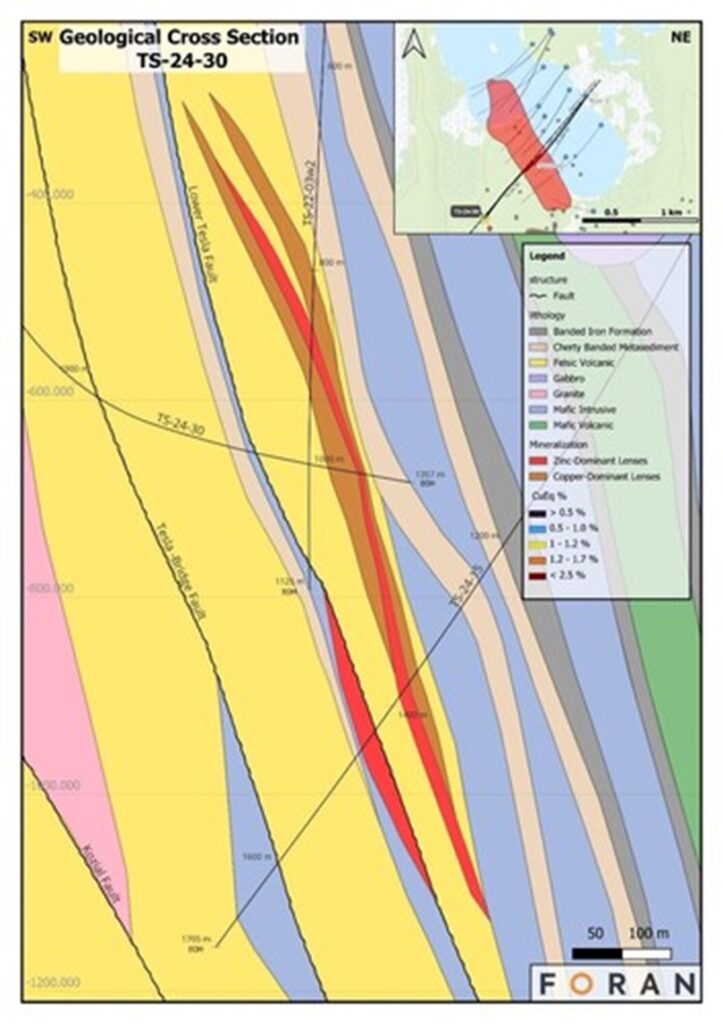
Geological Cross Section Through the Tesla Zone (CNW Group/Foran Mining Corporation)
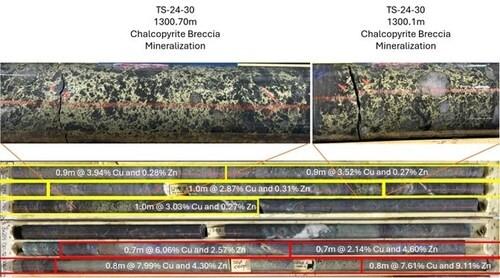
Examples of High Grade Copper Mineralization (CNW Group/Foran Mining Corporation)
Divests US$13.5M McEwen Copper Debt to Further Enhance Liquidity ... READ MORE
Aura Minerals Inc. (NASDAQ: AUGO) (B3: AURA33) is pleased to anno... READ MORE
Montero Mining and Exploration Ltd. (TSX-V: MON) (OTC Pink: MXTRF... READ MORE
Barksdale Resources Corp. (TSX-V: BRO) (OTCQB: BRKCF) (FSE: 2NZ) ... READ MORE
Getty Copper Inc. (TSX-V: GTC) (OTCQX: GTCDF) is pleased to an... READ MORE