








Capitan Silver Corp. (TSX-V: CAPT) (OTCQX: CAPTF) is pleased to report assay results from its 2025 reverse circulation drill program at its Cruz de Plata silver-gold project, located in Durango, Mexico. The Company is reporting assay results from ten drill holes.
Highlights:
Alberto Orozco, CEO of Capitan Silver, commented:
“Drilling at Cruz de Plata continues to deliver high-grade results. These recent assays not only continue to identify new high-grade zones of mineralization but also expand previously identified mineralization along strike and at depth and demonstrate excellent continuity.
Additionally, I am excited by what we are seeing in terms of silver mineralization at depth. Specifically, drill holes 25-ERRC-52 and 25-ERRC-38, which show that as we go deeper, we are seeing mineralized zones getting larger and intersecting multiple high-grade vein structures. Given the nature of intermediate sulfidation epithermal systems — which are known to have deep roots — these results signal the potential for greater scale at depth, which we will be drill testing this year with diamond core rigs.”
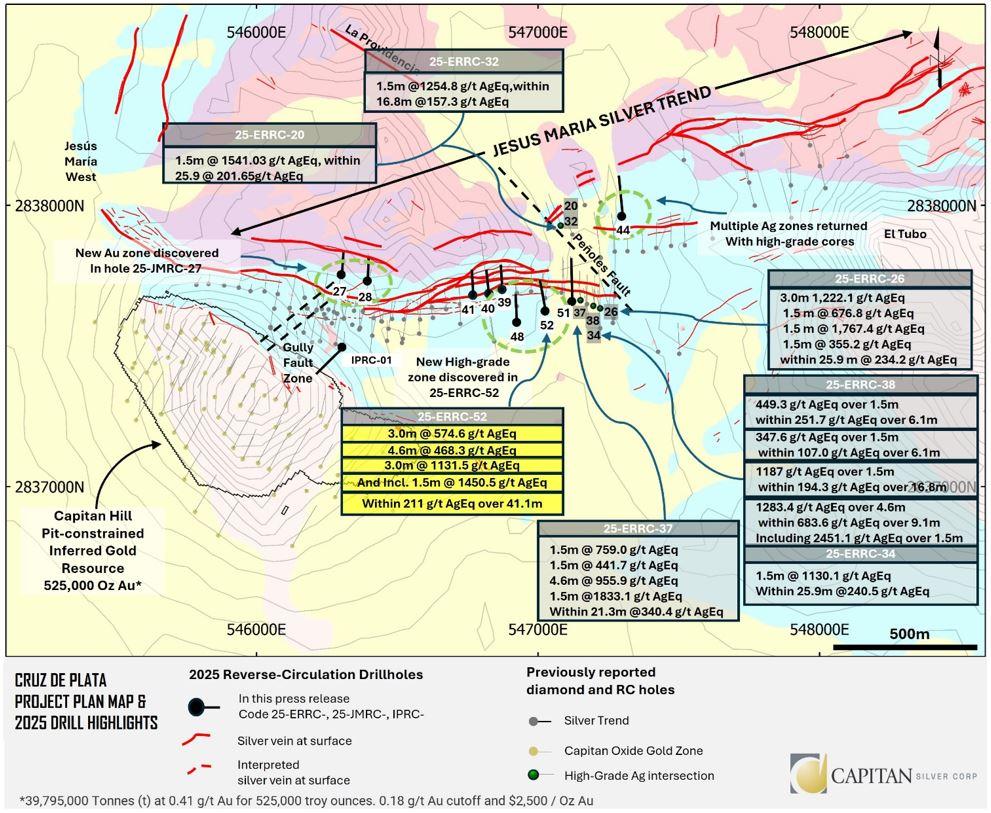
Figure 1: Drill Plan Map
Discussion of Drill Results
Drilling at the Company’s Cruz de Plata silver-gold project is ongoing, with the results reported in this release from several areas on the property, including the Jesus Maria Silver Trend (both west and east of the Peñoles Fault), the San Rafael area, as well as testing new targets along the Gully Fault. The most significant development is the discovery of a new zone of high-grade silver mineralization at depth, located approximately 240m west of the Peñoles Fault and 130m west of a previously reported new high-grade silver zone developing on the Jesus Maria Silver Trend, on the west side of the Peñoles Fault.
Drill hole 25-ERRC-52 (see Figure 2) was collared at the same location as previously reported drill hole JEMA-02 which was drilled by its previous owner, Minera Fresnillo S. A. de C. V. (a wholly owned subsidiary of Fresnillo plc) and was subsequently acquired by Capitan in 2022 (see Capitan news release dated December 6, 2022). Previously reported drill hole JEMA-02 intersected 531 g/t AgEq over 1.3m within 214 g/t AgEq over 6.85m, within a wider zone of 93 g/t AgEq over 29m.
Drill hole 25-ERRC-52 returned a wide, strong zone of silver mineralization, with several significant high-grade intervals including 1,450.5 g/t AgEq over 1.5m, within a wider zone of 1,131.5 g/t AgEq over 3.0m, 468.3 g/t AgEq over 4.6m, and 574.6 g/t AgEq over 3.0m, all within a broad interval of 211.0 g/t AgEq over 41.1m. This hole extended mineralization down-dip approximately 25m from drill hole JEMA-02, with the zone remaining open along strike and at depth. The diamond drill rig is currently completing additional drilling in this area, with results pending.
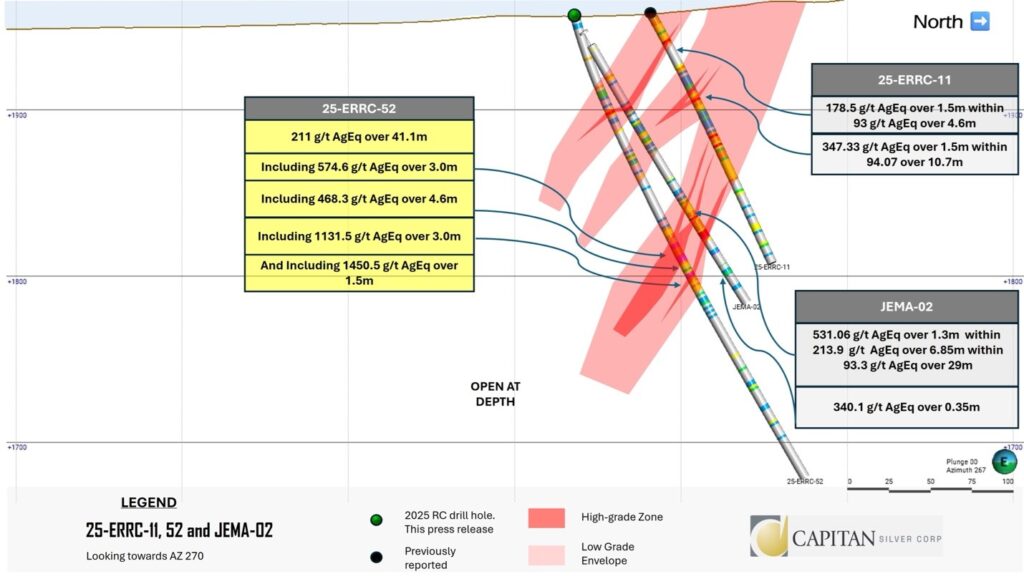
Figure 2: Cross section, drill hole 25-ERRC-52
Additional drilling along the Jesus Maria Silver Trend west of the Peñoles Fault continued to grow mineralization at depth, as well as increase confidence and continuity of mineralization along strike. Drill holes 25-ERRC-39, 25-ERRC-40, 25-ERRC-41, 25-ERRC-48, and 25-ERRC-51 all targeted down-dip, on-section extensions of mineralization along this trend. All drill holes returned multiple intervals of silver mineralization and extended mineralization to depth, along section between 20m to 50m, with the best values returned from holes 25-ERRC-48 and 51. Drill hole 25-ERRC-48 (see Figure 3) intersected 220.1 g/t AgEq over 1.5m, within 156.8 g/t AgEq over 3.0m, 175.3 g/t AgEq over 3.0, within 86.4 g/t AgEq over 15.2m, and drill hole 25-ERRC-51 intersected 171.8 g/t AgEq over 4.6m and 175.7 g/t AgEq over 3.0m
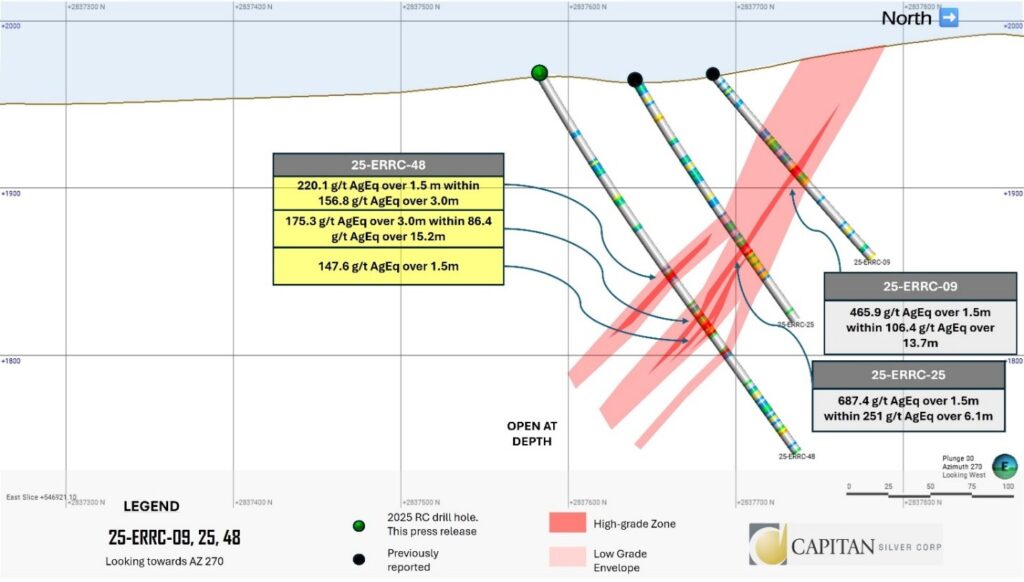
Figure 3: Cross section, drill hole 25-ERRC-48
Drilling at the Jesus Maria Silver Trend east of the Peñoles Fault continued to indicate that this area consists of multiple, sub-parallel zones of silver mineralization with strong silver grades. Drill hole 25-ERRC-44 intersected multiple zones of silver mineralization, over broad widths with higher-grade cores. Results include 256.3 g/t AgEq over 3.0m, within a broader zone of 181.3 g/t AgEq over 4.6m and 138 g/t AgEq over 1.5m, within a wider interval of 63.5 g/t AgEq over 9.1m, as well as 117.3 g/t AgEq over 1.5m, within a broader zone of 78.8 g/t AgEq over 4.6m. RC drilling in 2026 is focusing on this area, and has continued to build out this zone to the east, as well as testing additional trends to the north.
Evidence of Strong Silver Mineralization at Depth at the Jesus Maria Silver Trend
Given that the Cruz de Plata project is an intermediate sulphidation epithermal system, and that these systems have the potential for strong vertical continuity, there is an interesting opportunity for silver mineralized zones to widen at depth. Both drill hole 25-ERRC-52 and previously reported drill hole 25-ERRC-38 (see Figures 2 and 4) illustrate this opportunity, with broad silver mineralized zones intersecting multiple veins with higher silver grades being encountered at depth.
Thus far, the average hole depth for the 2025 program is 188m with a median depth of 173m, indicating that the majority of the drilling at Cruz de Plata is still relatively shallow, and remains open to expansion at depth. One of the key objectives of the 60,000m drill campaign that has been announced for 2026 is to extend silver mineralization to depth along the Company’s most advanced target, The Jesus Maria Silver Trend.
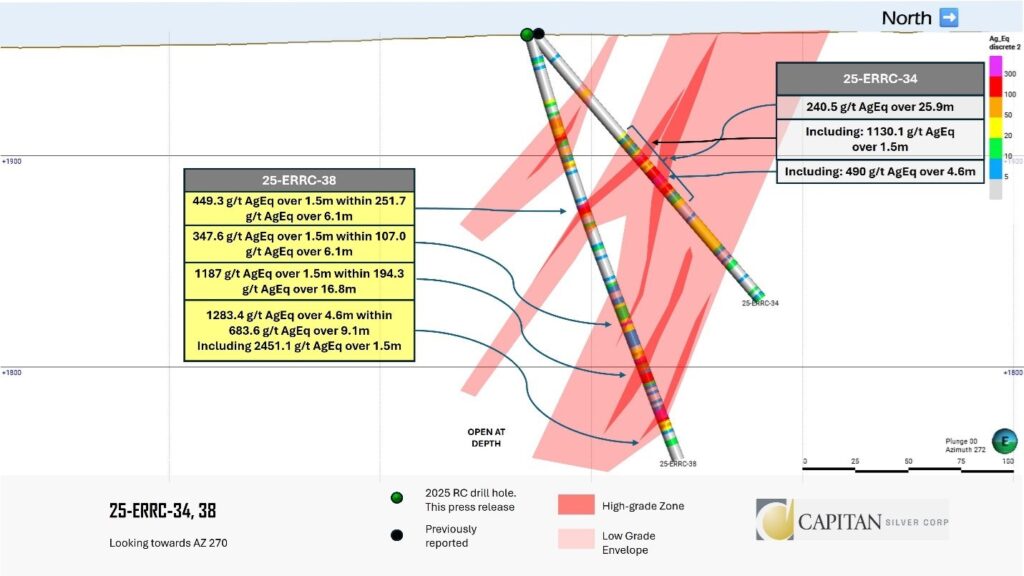
Figure 4: Cross sections of drill holes 25-ERRC-38 and 34
Discovery of New Gold Zone
Drill hole 25-JMRC-27 intersected a new zone of gold mineralization over significant widths. Results include 0.44 g/t Au over 24.4m, with additional gold mineralization intersected by drill hole 25-JMRC-28. This style of gold mineralization has been documented in the footwall where Jesus Maria intersects the Gully Fault. While not a focus of the program at this time, this new gold zone could present additional optionality for the Company due to its proximity to the Capitan Hill oxide gold deposit, where the Company delineated a pit-constrained inferred Mineral Resource of 525,000 ounces of gold at a grade of 0.4 g/t Au (see Capitan news release dated December 5, 2025).
Change of Analytical Laboratory
The Company also reports that it has engaged SGS Canada to be the primary laboratory for all drill hole and surface samples going forward. This decision ensures that all sample preparation and analysis remain in Mexico, within 3 hours of the project site. This shift is expected to help significantly streamline the analysis sequence, resulting in faster turnaround times as the 2026 drilling program continues to ramp-up.
Table 1: Drill Results
| Hole ID | From (m) |
To (m) | Interval (m) |
Ag Eq Rec (g/t) |
Ag (ppm) | Au (ppm) |
Pb (%) | Zn (%) |
| 25-ERRC-39 | ||||||||
| Interval | 56.4 | 57.9 | 1.5 | 71.9 | 28.3 | 0.012 | 0.201 | 1.140 |
| Interval | 86.9 | 91.4 | 4.6 | 67.4 | 51.8 | 0.073 | 0.113 | 0.308 |
| including | 89.9 | 91.4 | 1.5 | 151.9 | 125.1 | 0.019 | 0.214 | 0.793 |
| Interval | 178.3 | 179.8 | 1.5 | 74.6 | 30.0 | 0.197 | 0.179 | 0.817 |
| 25-ERRC-40 | ||||||||
| Interval | 6.1 | 9.1 | 3.0 | 37.2 | 32.5 | 0.067 | 0.015 | 0.050 |
| Interval | 54.9 | 56.4 | 1.5 | 34.3 | 29.7 | 0.055 | 0.008 | 0.069 |
| Interval | 59.4 | 61.0 | 1.5 | 27.0 | 18.9 | 0.008 | 0.103 | 0.169 |
| Interval | 71.6 | 73.2 | 1.5 | 60.5 | 50.1 | 0.044 | 0.103 | 0.220 |
| Interval | 125.0 | 128.0 | 3.0 | 37.7 | 28.3 | 0.081 | 0.068 | 0.107 |
| Interval | 187.5 | 189.0 | 1.5 | 26.6 | 9.7 | 0.125 | 0.137 | 0.148 |
| 25-ERRC-41 | ||||||||
| Interval | 0 | 4.6 | 4.6 | 26.3 | 20.6 | 0.071 | 0.013 | 0.048 |
| Interval | 13.7 | 15.2 | 1.5 | 52.7 | 43.4 | 0.150 | 0.018 | 0.032 |
| Interval | 19.8 | 21.3 | 1.5 | 28.7 | 21.8 | 0.105 | 0.004 | 0.027 |
| Interval | 59.4 | 61.0 | 1.5 | 57.2 | 36.5 | 0.044 | 0.241 | 0.386 |
| Interval | 70.1 | 73.2 | 3.0 | 41.4 | 36.0 | 0.021 | 0.078 | 0.116 |
| Interval | 96.0 | 97.5 | 1.5 | 32.8 | 9.8 | 0.033 | 0.125 | 0.525 |
| Interval | 147.8 | 149.4 | 1.5 | 131.3 | 93.0 | 0.039 | 0.587 | 0.726 |
| Interval | 158.5 | 160.0 | 1.5 | 66.7 | 68.4 | 0.014 | 0.012 | 0.031 |
| Interval | 211.8 | 213.4 | 1.5 | 26.9 | 5.6 | 0.187 | 0.161 | 0.124 |
| 25-ERRC-44 | ||||||||
| Interval | 65.5 | 70.1 | 4.6 | 181.3 | 183.0 | 0.111 | 0.008 | 0.041 |
| including | 65.5 | 68.6 | 3.0 | 256.3 | 261.0 | 0.130 | 0.012 | 0.052 |
| Interval | 74.7 | 76.2 | 1.5 | 33.7 | 11.2 | 0.328 | 0.001 | 0.017 |
| Interval | 91.4 | 100.6 | 9.1 | 63.5 | 54.2 | 0.170 | 0.006 | 0.019 |
| including | 97.5 | 99.0 | 1.5 | 138.0 | 128.3 | 0.234 | 0.011 | 0.030 |
| Interval | 141.7 | 146.3 | 4.6 | 78.8 | 67.6 | 0.183 | 0.038 | 0.048 |
| including | 143.2 | 144.8 | 1.5 | 117.3 | 107.7 | 0.170 | 0.070 | 0.070 |
| Interval | 214.9 | 217.9 | 3.0 | 79.6 | 74.1 | 0.081 | 0.037 | 0.099 |
| 25-IPRC-01 | ||||||||
| Interval | 88.4 | 89.9 | 1.5 | 50.8 | 19.7 | 0.466 | 0.001 | 0.005 |
| Interval | 146.3 | 147.8 | 1.5 | 72.8 | 70.7 | 0.075 | 0.015 | 0.024 |
| Interval | 271.3 | 272.8 | 1.5 | 54.1 | 51.1 | 0.022 | 0.046 | 0.096 |
| Interval | 278.9 | 280.4 | 1.5 | 59.9 | 29.4 | 0.025 | 0.085 | 0.829 |
| Interval | 300.2 | 301.8 | 1.5 | 44.0 | 19.1 | 0.024 | 0.365 | 0.416 |
| Interval | 307.8 | 309.4 | 1.5 | 35.6 | 10.7 | 0.009 | 0.284 | 0.499 |
| Interval | 315.5 | 317.0 | 1.5 | 25.6 | 25.1 | 0.014 | 0.014 | 0.020 |
| 25-JMRC-27 | ||||||||
| Interval | 21.3 | 45.7 | 24.4 | 38.1 | 6.4 | 0.436 | 0.004 | 0.059 |
| Interval | 50.3 | 51.8 | 1.5 | 26.4 | 23.0 | 0.018 | 0.006 | 0.098 |
| Interval | 106.7 | 108.2 | 1.5 | 32.8 | 15.8 | 0.134 | 0.091 | 0.180 |
| 25-JMRC-28 | ||||||||
| Interval | 0 | 1.5 | 1.5 | 45.5 | 16.4 | 0.234 | 0.150 | 0.287 |
| Interval | 27.4 | 30.5 | 3.0 | 33.5 | 10.1 | 0.310 | 0.013 | 0.070 |
| Interval | 36.6 | 42.7 | 6.1 | 26.8 | 8.5 | 0.178 | 0.024 | 0.172 |
| Interval | 114.3 | 115.8 | 1.5 | 53.2 | 18.8 | 0.488 | 0.030 | 0.033 |
| 25-ERRC-48 | ||||||||
| Interval | 59.4 | 61.0 | 1.5 | 31.9 | 30.0 | 0.047 | 0.005 | 0.011 |
| Interval | 83.8 | 85.3 | 1.5 | 27.4 | 21.0 | 0.089 | 0.004 | 0.042 |
| Interval | 140.2 | 143.3 | 3.0 | 156.8 | 153.0 | 0.162 | 0.018 | 0.039 |
| including | 140.2 | 141.7 | 1.5 | 220.1 | 228.0 | 0.052 | 0.021 | 0.048 |
| Interval | 169.2 | 184.4 | 15.2 | 86.4 | 60.3 | 0.105 | 0.192 | 0.503 |
| including | 176.8 | 179.8 | 3.0 | 175.3 | 153.0 | 0.175 | 0.120 | 0.472 |
| Interval | 196.6 | 198.1 | 1.5 | 147.6 | 121.0 | 0.343 | 0.232 | 0.112 |
| Interval | 228.6 | 230.1 | 1.5 | 31.3 | 26.0 | 0.006 | 0.046 | 0.151 |
| Interval | 245.4 | 246.9 | 1.5 | 46.0 | 37.0 | 0.010 | 0.019 | 0.294 |
| Interval | 254.5 | 257.6 | 3.0 | 50.6 | 39.5 | 0.039 | 0.065 | 0.264 |
| 25-ERRC-51 | ||||||||
| Interval | 13.7 | 19.8 | 6.1 | 45.8 | 43.8 | 0.057 | 0.004 | 0.018 |
| Interval | 41.1 | 42.7 | 1.5 | 43.5 | 35.0 | 0.149 | 0.002 | 0.009 |
| Interval | 62.5 | 73.2 | 10.7 | 84.8 | 82.9 | 0.063 | 0.017 | 0.062 |
| including | 68.6 | 73.2 | 4.6 | 171.8 | 172.7 | 0.080 | 0.034 | 0.090 |
| Interval | 85.3 | 86.9 | 1.5 | 35.3 | 35.0 | 0.016 | 0.006 | 0.033 |
| Interval | 91.4 | 99.1 | 7.6 | 104.3 | 99.8 | 0.087 | 0.042 | 0.096 |
| including | 93.0 | 96.0 | 3.0 | 175.7 | 170.5 | 0.143 | 0.071 | 0.110 |
| Interval | 140.2 | 143.3 | 3.0 | 74.3 | 75.5 | 0.022 | 0.016 | 0.041 |
| Interval | 161.5 | 163.1 | 1.5 | 55.3 | 54.0 | 0.023 | 0.012 | 0.076 |
| 25-ERRC-52 | ||||||||
| Interval | 25.9 | 27.4 | 1.5 | 80.2 | 28.0 | 0.777 | 0.003 | 0.011 |
| Interval | 44.2 | 45.7 | 1.5 | 74.0 | 70.0 | 0.105 | 0.004 | 0.025 |
| Interval | 59.4 | 62.5 | 3.0 | 62.7 | 59.0 | 0.082 | 0.015 | 0.036 |
| Interval | 73.2 | 74.7 | 1.5 | 33.0 | 22.0 | 0.177 | 0.001 | 0.004 |
| Interval | 138.7 | 179.8 | 41.1 | 211.0 | 192.7 | 0.163 | 0.249 | 0.341 |
| including | 149.4 | 152.4 | 3.0 | 574.6 | 517.0 | 0.515 | 0.831 | 0.878 |
| including | 157.0 | 161.5 | 4.6 | 468.3 | 391.0 | 0.595 | 0.805 | 1.095 |
| including | 169.2 | 172.2 | 3.0 | 1,131.5 | 1,143.0 | 0.188 | 0.605 | 0.801 |
| and including | 170.7 | 172.2 | 1.5 | 1,450.5 | 1,462.0 | 0.259 | 0.771 | 1.080 |
| Interval | 225.6 | 227.1 | 1.5 | 31.2 | 12.0 | 0.005 | 0.061 | 0.524 |
Metal Recovery: Ag 94%, Au 86%, Pb 93.5%, Zn 92%
AgEq considers Ag, Au, Pb and Zn and calculated as follows: AgEq = Ag g/t + (80x Au g/t) + (0.003 x Pb g/t) + (0.0037 x Zn g/t). High grades have not been capped. RC Drill samples have been analysed by Bureau Veritas using the following codes: MA300, 4-acid digestion, multi-element analysis (Vancouver Lab). Au is analyzed using Fire Assay (FA430, Hermosillo Lab). Overlimit (>200 ppm Ag) assays utilize method MA370, with gravimetric utilized for any overlimit thereafter. RC Drill samples have also been sent to SGS labs in Durango for Fire assay and Four-acid Multi-element analysis using the following codes: GE-FAA30V6 and GEICP40Q12, with over assays using the following codes: GO_FAG37V for Au and Ag. QAQC: Capitan Silver maintains a rigorous QAQC program and inserts multiple standards, blanks and duplicates into the sample stream at regular intervals. Check Assays will be performed at ALS laboratories in Zacatecas, Mexico. True widths along the Jesús María Trend are estimated to be 70-90% of the drilled width. At new drill targets/discoveries, true widths are unknown. Intervals are calculated at a 25 g/t AgEq cut-off and are cut at a maximum of 3 metres of internal dilution. Some numbers may not sum correctly due to rounding.
Qualified Person
The scientific and technical information in this news release has been reviewed and approved by Marc Idziszek, P.Geo, Vice President Exploration of Capitan, and a “qualified person” (with the meaning of National Instrument 43-101 – Standards of Disclosure for Mineral Projects).
About Capitan Silver Corp.
Capitan Silver is defining a new high-grade silver system at its Cruz de Plata project, located in the heart of Mexico’s primary silver belt. The Company is led by a proven and accomplished management team that has previously advanced three projects into production, on time and on budget. The Company has been diligent in maintaining a tight share structure and has one of the tightest share structures among its peer group, with the top three shareholders owning approximately 37% of the Company’s share capital. Capitan Silver is fully funded and actively drilling at its Cruz de Plata silver project.
Brutus Mining Inc. (CSE: BRU) (FSE: ZI3) is pleased to announce that it has closed its non-brokered ... READ MORE
Jaguar Uranium Corp. (NYSE American: JAGU) is pleased to announce an independent Mineral Resource E... READ MORE
Auro Metals Inc. (TSX-V: AURO) (OTCQB: AURFF), is pleased to announce the assay results of the fina... READ MORE
Endeavour Silver Corp. (NYSE: EXK) (TSX: EDR) is pleased to announce that repairs to the primary bal... READ MORE
Scorpio Gold Corp. (NASDAQ: SGLD) (TSX-V: SGLD) (OTCQB: SRCRF) (FSE: RY9) is pleased to announce re... READ MORE