







Alamos Gold Inc. (TSX:AGI) (NYSE:AGI) today reported its financial results for the quarter ended March 31, 2026.
“Our first quarter production was in line with guidance driven by a solid performance from the Island Gold District. Underground mining rates at Island Gold increased to a new record, and milling rates at Magino increased significantly over the past six weeks following the implementation of additional improvements. We expect all three of our operations to contribute to a 20% increase in production in the second quarter, with further growth into the second half of the year at substantially lower costs driven by the ongoing ramp up of mining rates at Island Gold. We expect this trend of growing production and declining costs to continue through the end of the decade as we advance our portfolio of high-return growth projects, underpinning one of the strongest outlooks in the sector,” said John A. McCluskey, President and Chief Executive Officer.
First Quarter 2026 Operational and Financial Highlights
(1) Refer to the “Non-GAAP Measures and Additional GAAP Measures” section at the end of this press release and associated MD&A for a description and calculation of these measures.
Highlight Summary
| Three Months Ended March 31, | ||
| 2026 | 2025 | |
| Financial Results (in millions) | ||
| Operating revenues | $596.7 | $333.0 |
| Cost of sales (1) | $205.5 | $195.2 |
| Earnings from operations | $344.8 | $94.7 |
| Earnings before income taxes | $315.2 | $25.7 |
| Net earnings | $191.4 | $15.2 |
| Adjusted net earnings (2) | $232.0 | $59.8 |
| Adjusted earnings before interest, taxes, depreciation and amortization (2) | $383.2 | $145.4 |
| Cash provided by operating activities | $242.5 | $79.6 |
| Cash provided by operating activities before changes in working capital and taxes paid (2) | $338.0 | $131.4 |
| Capital expenditures (sustaining) (2) | $45.2 | $26.8 |
| Sustaining finance leases (2)(3) | $3.8 | $4.3 |
| Capital expenditures (growth) (2) | $127.2 | $66.3 |
| Capital expenditures (capitalized exploration) | $11.1 | $6.6 |
| Free cash flow (2)(3) | $101.7 | ($20.1) |
| Operating Results | ||
| Gold production (ounces) | 123,900 | 125,000 |
| Gold sales (ounces) | 121,924 | 117,583 |
| Per Ounce Data | ||
| Average realized gold price (5) | $4,829 | $2,802 |
| Average spot gold price (London PM Fix) | $4,873 | $2,859 |
| Cost of sales per ounce of gold sold (includes amortization) (1) | $1,685 | $1,660 |
| Total cash costs per ounce of gold sold (2) | $1,230 | $1,158 |
| All-in sustaining costs per ounce of gold sold (2) | $1,862 | $1,661 |
| Share Data | ||
| Earnings per share, basic | $0.46 | $0.04 |
| Earnings per share, diluted | $0.45 | $0.04 |
| Adjusted earnings per share, basic (2) | $0.55 | $0.14 |
| Weighted average common shares outstanding (basic) (000’s) | 419,899 | 420,415 |
| Financial Position (in millions) | ||
| Cash and cash equivalents (4) | $659.5 | $623.1 |
| (1) | Cost of sales includes mining and processing costs, royalties, and amortization expense. |
| (2) | Refer to the “Non-GAAP Measures and Additional GAAP Measures” section at the end of this press release and associated MD&A for a description and calculation of these measures. |
| (3) | Sustaining finance leases at the Island Gold District are not included as additions to mineral property, plant and equipment in cash flows used in investing activities. |
| (4) | Cash and cash equivalents in the comparatives reflect the balance as at December 31, 2025. |
| (5) | Average realized gold price for the three months ended March 31, 2026 included the delivery of ounces into the gold prepayment facility based on the prepay price of $4,166 ($2,524 per ounce for the three months ended March 31, 2025). |
| Three Months Ended March 31, | ||
| 2026 | 2025 | |
| Gold production (ounces) | ||
| Island Gold District (7) | 61,200 | 59,200 |
| Young-Davidson | 30,000 | 35,400 |
| Mulatos District (8) | 32,700 | 30,400 |
| Gold sales (ounces) | ||
| Island Gold District (7) | 57,109 | 53,388 |
| Young-Davidson | 31,042 | 35,475 |
| Mulatos District (8) | 33,773 | 28,720 |
| Cost of sales (in millions) (1) | ||
| Island Gold District (7) | $87.8 | $79.5 |
| Young-Davidson | $67.4 | $65.1 |
| Mulatos District (8) | $50.1 | $50.6 |
| Cost of sales per ounce of gold sold (includes amortization) (1) | ||
| Island Gold District (7) | $1,537 | $1,489 |
| Young-Davidson | $2,171 | $1,835 |
| Mulatos District (8) | $1,483 | $1,762 |
| Total cash costs per ounce of gold sold (2) | ||
| Island Gold District (7) | $1,189 | $1,040 |
| Young-Davidson | $1,643 | $1,311 |
| Mulatos District (8) | $921 | $1,191 |
| Mine-site all-in sustaining costs per ounce of gold sold (2)(3) | ||
| Island Gold District (7) | $1,760 | $1,418 |
| Young-Davidson | $2,181 | $1,615 |
| Mulatos District (8) | $995 | $1,278 |
| Capital expenditures (sustaining, growth, and capitalized exploration) (in millions) (2) | ||
| Island Gold District (4)(7) | $123.0 | $72.3 |
| Young-Davidson (5) | $25.9 | $18.8 |
| Mulatos District (6)(8) | $17.3 | $4.0 |
| Other | $21.1 | $8.9 |
| (1) | Cost of sales includes mining and processing costs, royalties, and amortization expense. |
| (2) | Refer to the “Non-GAAP Measures and Additional GAAP Measures” section at the end of this press release and associated MD&A for a description and calculation of these measures. |
| (3) | For the purposes of calculating mine-site all-in sustaining costs, the Company does not include an allocation of corporate and administrative expense and corporate share-based compensation expense. |
| (4) | Includes capitalized exploration at Island Gold District of $3.4 million for the three months ended March 31, 2026 ($3.9 million for the three months March 31, 2025). |
| (5) | Includes capitalized exploration at Young-Davidson $3.4 million for the three months ended March 31, 2026 ($2.0 million for the three months ended March 31, 2025). |
| (6) | Includes capitalized exploration at Mulatos District $2.2 million for the three months ended March 31, 2026 ($0.7 million for the three months ended March 31, 2025). |
| (7) | The Island Gold District includes Island Gold and Magino mines. |
| (8) | The Mulatos District includes Mulatos and La Yaqui Grande mines. |
Environment, Social and Governance Summary Performance
Health and Safety
The Company’s Home Safe Every Day safety leadership training program, and newly introduced Home Safe Eight safety initiative, continue to be delivered across the workforce. Alamos’ Home Safe Eight is a new initiative consisting of eight non-negotiable safety rules targeting high-risk activities. These enhanced initiatives focus on areas such as energy isolation, working at heights, and safe vehicle operation, and are designed to significantly reduce the potential for injury through consistent and disciplined application.
Alamos strives to maintain a safe, healthy working environment for all, with a strong safety culture where everyone is continually reminded of the importance of keeping themselves and their colleagues healthy and injury-free. The Company’s overarching commitment is to have all employees and contractors return Home Safe Every Day.
Environment
There were four reportable spills in the first quarter. At the Young-Davidson mine, two reportable spills occurred: one involving a sodium sulfide container, and another resulting from a natural gas line leak. At the Island Gold District, one spill occurred involving an engine oil container. At the Mulatos District, a small amount of heap leach material spilled beyond the leach pad and was quickly remediated.
All spills were promptly addressed by site teams at the time of occurrence and are not expected to have any lasting impact on the natural environment. The Company remains committed to preserving the long-term health and viability of the natural environment surrounding its operations and projects. This includes investing in new initiatives to reduce the Company’s environmental footprint, with the goal of minimizing the impacts of its activities.
Community
Alamos continued to provide charitable donations, sponsorships, medical support and infrastructure investments within its local communities, including:
The Company believes that excellence in sustainability provides a net benefit to all stakeholders and continues to engage with local communities to better understand local challenges and priorities. Ongoing investments in local infrastructure, health care, education, cultural and community programs remain a focus of the Company.
Governance and Disclosure
The Company maintains the highest standards of corporate governance to ensure that corporate decision-making reflects its values, including the Company’s commitment to sustainable development.
(1) Frequency rate is calculated as incidents per 200,000 hours worked.
Outlook and Strategy
| 2026 Guidance | |||||
| Island Gold District |
Young- Davidson |
Mulatos District |
Lynn Lake | Total | |
| Gold production (000’s ounces) | 290 – 330 | 155 – 175 | 125 – 145 | — | 570 – 650 |
| Cost of sales, including amortization (in millions) (2) | $920 | ||||
| Cost of sales, including amortization ($ per ounce) (2) | $1,450 – $1,550 | ||||
| Total cash costs ($ per ounce) (1) | $875 – $975 | $1,350 – $1,450 | $930 – $1,030 | — | $1,020 – $1,120 |
| All-in sustaining costs ($ per ounce) (1) | $1,500 – $1,600 | ||||
| Mine-site all-in sustaining costs ($ per ounce) (1)(3) | $1,340 – $1,440 | $1,730 – $1,830 | $1,000 – $1,100 | — | |
| Capital expenditures ($ millions) | |||||
| Sustaining capital (1)(4) | $135 – $150 | $55 – $65 | $3 – $5 | — | $193 – $220 |
| Growth capital (1)(4) | $355 – $385 | $25 – $30 | $137 – $145 | $140 – $160 | $657 – $720 |
| Total sustaining and growth capital (1)(4) | $490 – $535 | $80 – $95 | $140 – $150 | $140 – $160 | $850 – $940 |
| Capitalized exploration (1) | $33 | $12 | $9 | $6 | $60 |
| Total capital expenditures and capitalized exploration (1) | $523 – $568 | $92 – $107 | $149 – $159 | $146 – $166 | $910 – $1,000 |
| (1) | Refer to the “Non-GAAP Measures and Additional GAAP” section at the end of this press release and associated MD&A for a description of these measures. |
| (2) | Cost of sales includes mining and processing costs, royalties, and amortization expense but excludes silver credit, and is calculated based on the mid-point of total cash cost guidance. |
| (3) | For the purposes of calculating mine-site all-in sustaining costs at individual mine sites the Company allocates a portion of share based compensation to the mine sites, but does not include an allocation of corporate and administrative expenses to the mine sites. |
| (4) | Sustaining and growth capital guidance excludes capitalized exploration. |
The Company’s objective is to operate a sustainable business model that supports growing returns to all stakeholders over the long-term, through growing production, expanding margins, and increasing profitability. This includes a balanced approach to capital allocation focused on generating strong ongoing free cash flow while re-investing in high-return internal growth opportunities, and supporting higher returns to shareholders.
During the first quarter, the Company delivered on these objectives across multiple fronts, including meeting quarterly guidance while continuing to advance its high-return growth projects. First quarter production of 123,900 ounces was in line with guidance with a strong performance from the Island Gold District more than offsetting lower production from Young-Davidson. As previously guided, total cash costs and AISC were above first half guidance, with both expected to decrease in the second quarter and more significantly in the second half of the year. Reflecting strong ongoing margins, the Company generated $101.7 million of free cash flow in the first quarter while funding its peer leading pipeline of growth projects, and net of $82.0 million of cash taxes paid. Higher production, lower costs and lower cash taxes are expected to drive stronger free cash flow through the remainder of year.
Underground mining rates at Island Gold increased to average a new record of over 1,400 tpd during the first quarter, while the addition of the supplementary crushed ore feed in the second half of February and other operational improvements supported the ramp up of processing rates in the Magino mill to average 9,200 tpd over the past six weeks. The ramp up of underground mining rates is expected to continue through the year supporting growing production from the Island Gold District.
All three operations are expected to contribute to a substantial growth in the second quarter with production expected to increase to between 145,000 and 155,000 ounces. With stronger production expected into the second half of the year, the Company remains on track to achieve full year guidance. Reflecting the stronger production, AISC are expected to decrease approximately 5% in the second quarter with a more significant improvement into the second half of the year. The Company continues to monitor the impact of ongoing inflationary pressures across its cost structure. This includes higher labour, contractor, diesel, electricity and natural gas costs, and the downstream impact of higher energy prices on other consumables. The Company expects to manage these cost pressures with productivity improvements through the year driving costs lower and significant margin expansion at current gold prices.
This trend of growing production and declining costs is expected to continue through the end of the decade driven by the Company’s portfolio of high-return and low-cost growth projects. This includes the Island Gold District shaft and mill expansion, PDA and Lynn Lake, all of which continued to advance during the first quarter. These projects are expected to nearly double gold production to approximately one million ounces annually by 2030, underpinning one of the strongest outlooks in the sector.
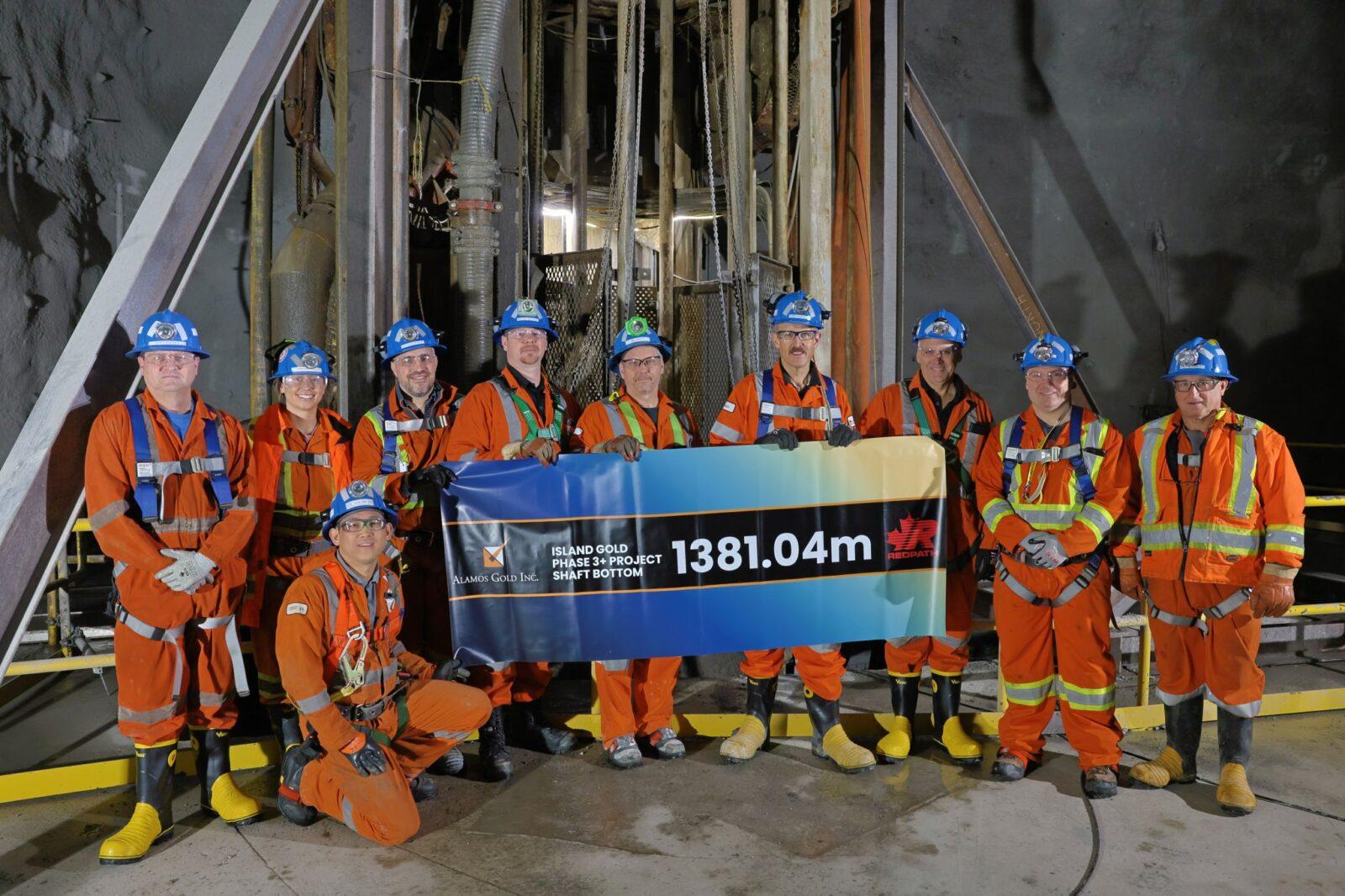
The Island Gold District will be a key driver of this growth over the next several years. The Phase 3+ Shaft Expansion achieved a significant milestone during the first quarter with the completion of the shaft sink to its planned depth of 1,381 metres. Work on the shaft bottom infrastructure will continue through 2026 with commissioning of the shaft expected to be completed early in 2027. This is expected to drive consolidated gold production to a range of between 650,000 and 730,000 ounces in 2027, a 13% increase from 2026.
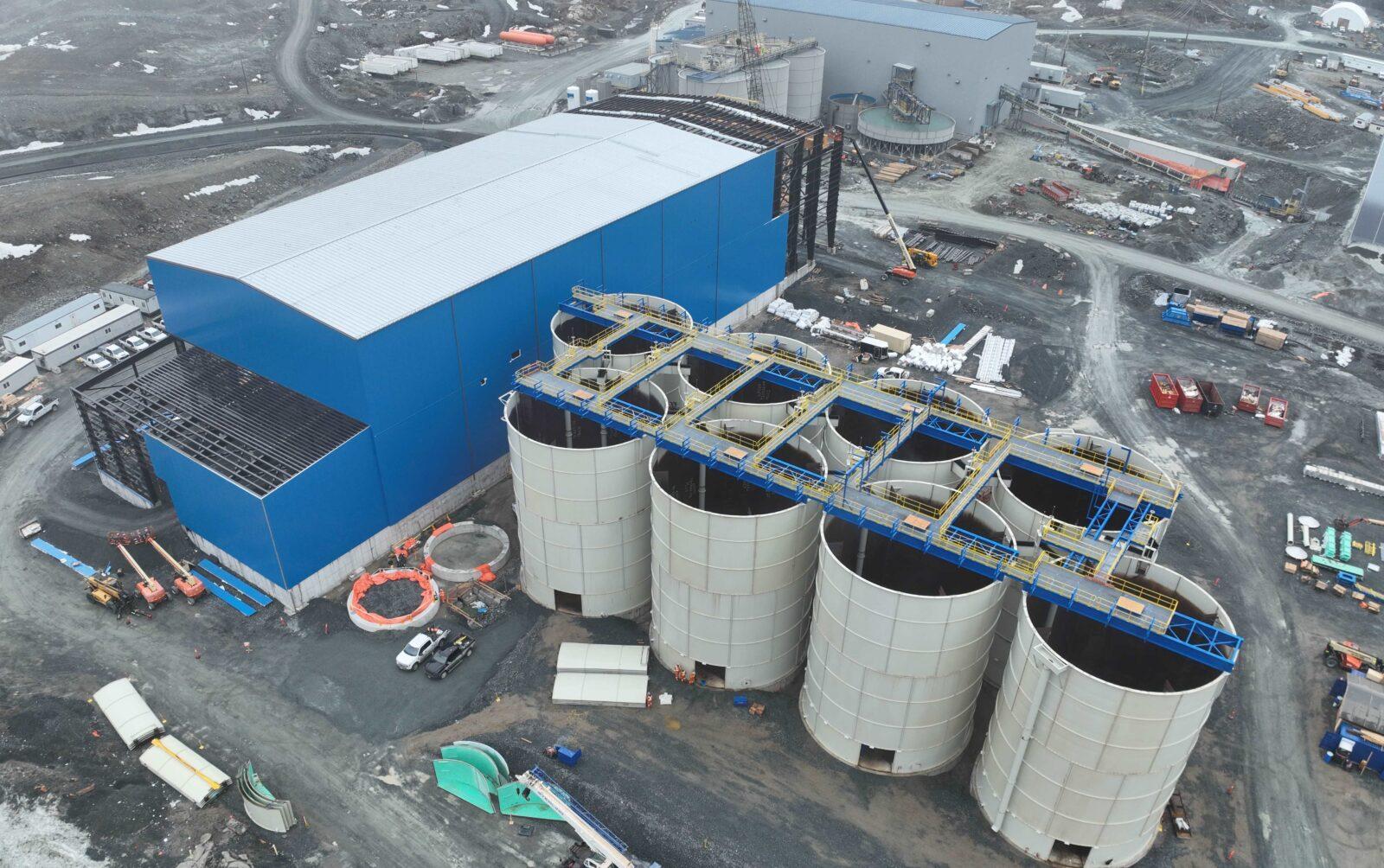
In parallel, work on the Magino mill expansion to 20,000 tpd continues to progress with construction and exterior cladding of the new mill building well underway. The completion of the IGD Expansion in 2028 is expected to support a further increase in production to a range of 755,000 to 835,000 ounces, representing a 15% increase from 2027 and cumulative 46% increase from 2025.
Further growth is expected into 2029 with initial production from Lynn Lake, and the ramp up of underground mining rates at Island Gold to 3,000 tpd, as outlined in the IGD Expansion Study. By 2030, production is expected to increase to a rate of approximately one million ounces annually.
Total cash costs and AISC in 2027 are expected to decrease 19% and 10%, respectively, from 2025 driven by low-cost growth from the Island Gold District with the completion of the shaft and connecting the Magino mill to low-cost grid power. A further decrease in costs is expected into 2028 with AISC expected to be between $1,200 and $1,300 per ounce, representing an 18% decrease from 2025. This is expected to be driven by the first full year of production from PDA in Mexico and a further increase in low-cost production from the Island Gold District with the completion of the IGD Expansion. Costs are expected to continue decreasing into 2029 and 2030 with the ramp up of underground mining rates at Island Gold to 3,000 tpd, and the start of production from the low-cost Lynn Lake project.
Capital spending in 2026 is expected to range between $850 and $940 million, excluding capitalized exploration of $60 million. The largest portion of this budget will be focused on the completion of the shaft expansion and larger mill expansion within the Island Gold District. Capital spending is expected to decline slightly in 2027 with increased spending at Lynn Lake offset by lower spending on PDA and the Island Gold District. In 2028, capital spending is expected to decrease approximately 24% compared to 2027 as the IGD Expansion is completed. A more significant decrease is expected into 2029 and 2030 with the completion of construction at Lynn Lake.
A record $97 million has been budgeted globally for exploration in 2026, a 37% increase from the $71 million spent in 2025. The increase reflects significant ongoing exploration success, including a 32% increase in Global Mineral Reserves to 15.9 million ounces in 2025, with grades also increasing 5% to 1.87 g/t Au (265 mt). This includes expanded budgets at each of the Island Gold District, Young-Davidson and Lynn Lake. The Island Gold District remains the largest portion of the budget with $43 million planned for 2026, following up on another year of substantial Mineral Reserve growth.
The Company remains well positioned to fund its high-return growth projects internally with strong ongoing free cash flow, $659.5 million of cash and cash equivalents at the end of the first quarter of 2026, and approximately $1.2 billion of total liquidity. At current gold prices, the Company expects to continue generating strong free cash flow while funding its growth projects, with significant increases starting in 2027 with the completion of the Phase 3+ Shaft Expansion. The Company also remains focused on shareholder returns. Given the strong ongoing free cash flow, and significant growth expected over the next several years, the Company increased its quarterly dividend rate by 60% to $0.04 per share in the first quarter, and will continue to assess opportunities to be active on its share buyback.
First Quarter 2026 Results
Island Gold District Financial and Operational Review
| Three Months Ended March 31 | ||
| 2026 | 2025 | |
| Gold production (ounces) | 61,200 | 59,200 |
| Gold sales (ounces) | 57,109 | 53,388 |
| Financial Review (in millions) | ||
| Operating Revenues | $279.3 | $152.0 |
| Cost of sales (1) | $87.8 | $79.5 |
| Earnings from operations | $189.7 | $71.4 |
| Cash provided by operating activities | $177.2 | $86.9 |
| Capital expenditures (sustaining) (2) | $27.9 | $15.5 |
| Lease payments (sustaining) (2),(5) | $3.8 | $4.3 |
| Capital expenditures (growth) (2) | $87.9 | $48.6 |
| Capital expenditures (capitalized exploration) (2) | $3.4 | $3.9 |
| Mine-site free cash flow (2),(5) | $58.0 | $18.9 |
| Cost of sales, including amortization per ounce of gold sold (1) | $1,537 | $1,489 |
| Total cash costs per ounce of gold sold (2) | $1,189 | $1,040 |
| Mine-site all-in sustaining costs per ounce of gold sold (2),(3) | $1,760 | $1,418 |
| Island Gold Mine | ||
| Underground Operations | ||
| Tonnes of ore mined | 128,113 | 110,226 |
| Tonnes of ore mined per day | 1,423 | 1,225 |
| Average grade of gold (4) | 9.38 | 11.50 |
| Metres developed | 1,756 | 2,157 |
| Island Gold Mill Operations (8) | ||
| Tonnes of ore processed | 113,164 | 109,067 |
| Tonnes of ore processed per day | 1,257 | 1,212 |
| Average grade of gold (4) | 9.95 | 11.36 |
| Contained ounces milled | 36,188 | 39,838 |
| Average recovery rate | 97% | 98% |
| Magino Mine | ||
| Open Pit Operations | ||
| Tonnes of ore mined – open pit (6) | 1,073,079 | 1,064,870 |
| Tonnes of ore mined per day | 11,923 | 11,832 |
| Total waste mined – open pit (7) | 3,418,216 | 3,446,128 |
| Total tonnes mined – open pit | 4,491,294 | 4,510,998 |
| Waste-to-ore ratio (7) | 3.19 | 3.24 |
| Average grade of gold (4) | 0.81 | 0.77 |
| Magino Mill Operations (8) | ||
| Tonnes of ore processed | 675,984 | 651,153 |
| Tonnes of ore processed per day | 7,511 | 7,235 |
| Average grade of gold processed (4) | 1.18 | 0.86 |
| Contained ounces milled | 25,539 | 17,920 |
| Average recovery rate | 94% | 92% |
| Island Gold District Mill Operations | ||
| Tonnes of ore processed per day | 8,768 | 8,447 |
| Average grade of gold processed (4) | 2.43 | 2.36 |
| Average recovery rate | 96% | 97% |
| (1) | Cost of sales includes mining and processing costs, royalties, and amortization. |
| (2) | Refer to the “Non-GAAP Measures and Additional GAAP Measures” section at the end of this press release and associated MD&A for a description and calculation of these measures. |
| (3) | For the purposes of calculating mine-site all-in sustaining costs, the Company does not include an allocation of corporate and administrative expense and corporate share-based compensation expense. |
| (4) | Grams per tonne of gold. |
| (5) | Mine-site free cash flow does not include lease payments which are classified as cash flows used in financing activities on the consolidated financial statements. |
| (6) | Includes ore stockpiled during the periods. |
| (7) | Total waste mined includes operating waste and capitalized stripping. |
| (8) | Magino mill results include the processing of open pit ore from Magino and excess underground ore not processed within the Island Gold mill for the three months ended March 31, 2026. Grades of gold processed from the Magino mine averaged 1.07 g/t Au. |
The Island Gold District produced 61,200 ounces in the first quarter of 2026, slightly higher than the fourth quarter of 2025 and prior year period.
Island Gold Operational Review
Underground mining rates increased to average a record 1,423 tpd in the first quarter, 16% higher than the prior year period and consistent with first quarter guidance. Mining rates are expected to steadily increase through the remainder of the year to 2,000 tpd by the end of 2026. A further increase in mining rates to 2,400 tpd is expected early in 2027 with the commissioning of the shaft infrastructure.
Underground grades mined averaged 9.38 g/t Au during the first quarter, in line with guidance. Grades are expected to remain at similar levels in the second quarter and increase in the second half of the year to average close to the mid-point of guidance for the full year.
Processing rates within the Island Gold mill averaged 1,257 tpd for the first quarter, with excess underground ore processed in the Magino mill. Mill recoveries averaged 97% for the first quarter, in line with expectations.
As outlined in the IGD Expansion Study, the Island Gold mill will continue operating until early 2028 and process approximately 1,265 tpd of higher grade underground ore. The remaining underground ore mined beyond the Island Gold mill capacity will be blended at increasing rates with open pit ore and processed within the Magino mill. Following the expected completion of the larger Magino mill expansion to 20,000 tpd in early 2028, the Island Gold mill will be shut down and all underground and open pit ore will be processed within the larger and more cost-effective Magino mill.
Magino Operational Review
Total mining rates averaged 49,903 tpd during the first quarter, including 11,923 tpd of ore, consistent with the prior year period. Grades mined of 0.81 g/t Au for the first quarter were 5% higher than the prior year period and slightly above annual guidance.
Milling rates averaged 7,511 tpd in the first quarter, 4% higher than the prior year period and slightly below first quarter guidance of 7,800 tpd. During the first quarter, a temporary crusher was added to provide supplemental ore feed after the existing secondary crusher arrangement. Following the completion of this new installation in the second half of February, milling rates increased substantially, averaging 9,200 tpd over the past six weeks. Milling rates are expected to remain at similar levels during the second quarter reflecting scheduled liner changes in the ball and SAG mills, as well as conveyor belt replacements. Milling rates are expected to increase to steady state levels of approximately 10,000 tpd by the third quarter, consistent with guidance.
As outlined in the IGD Expansion Study, further improvements are planned for the existing crushing and conveying circuit as part of a larger expansion to 20,000 tpd. These include the addition of a gyratory crusher, ore bins, and a new truck dump configuration allowing for the direct tipping of ore. In addition to the connection to grid power, these changes will significantly improve the performance of the existing crushing circuit by reducing ore rehandling and ensuring more consistent and higher ore flow to the mill.
Grades processed averaged 1.18 g/t Au during the first quarter, and included approximately 10,000 tonnes of higher grade underground ore. Recoveries for the first quarter were 94%.
Island Gold District Financial Review
Revenues of $279.3 million in the first quarter were 84% higher than the prior year period, driven by higher realized gold prices and an increase in ounces sold.
Cost of sales of $87.8 million in the first quarter were 10% higher than the prior year period, due to higher ounces sold and ongoing inflation.
Total cash costs of $1,189 per ounce and mine-site AISC of $1,760 per ounce in the first quarter were higher than the prior year period, driven by increased royalty costs, ongoing labour inflation, higher diesel and energy costs, and contractor costs. In addition, increased mine-site AISC reflected higher sustaining capital in support of the IGD Expansion to 20,000 tpd. Total cash costs and mine-site AISC were in line with plan and are expected to decrease in the second half of the year.
Capital expenditures totaled $123.0 million in the first quarter, including $27.9 million of sustaining capital, $3.8 million of sustaining lease payments, and $3.4 million of capitalized exploration. Growth capital spending of $87.9 million was primarily focused on the Phase 3+ Shaft Expansion, including shaft site infrastructure, paste plant, and underground development, as well as the larger Magino mill expansion to 20,000 tpd. The shaft sink was completed in the first quarter, reaching the planned depth of 1,381 m.
The Island Gold District generated strong mine-site free cash flow of $58.0 million in the first quarter, net of the significant capital investment related to the Phase 3+ Shaft and IGD Expansions. At current gold prices, the Island Gold District is expected to continue generating strong free cash flow while funding the expansion of the operation and a robust exploration program, with significant free cash flow growth starting in the latter part of 2026.
Young-Davidson Financial and Operational Review
| Three Months Ended March 31 | ||
| 2026 | 2025 | |
| Gold production (ounces) | 30,000 | 35,400 |
| Gold sales (ounces) | 31,042 | 35,475 |
| Financial Review (in millions) | ||
| Operating Revenues | $153.6 | $101.2 |
| Cost of sales (1) | $67.4 | $65.1 |
| Earnings from operations | $84.7 | $35.1 |
| Cash provided by operating activities | $97.4 | $58.0 |
| Capital expenditures (sustaining) (2) | $16.6 | $10.7 |
| Capital expenditures (growth) (2) | $5.9 | $6.1 |
| Capital expenditures (capitalized exploration) (2) | $3.4 | $2.0 |
| Mine-site free cash flow (2) | $71.5 | $39.2 |
| Cost of sales, including amortization per ounce of gold sold (1) | $2,171 | $1,835 |
| Total cash costs per ounce of gold sold (2) | $1,643 | $1,311 |
| Mine site all-in sustaining costs per ounce of gold sold (2),(3) | $2,181 | $1,615 |
| Underground Operations | ||
| Tonnes of ore mined | 648,489 | 608,601 |
| Tonnes of ore mined per day | 7,205 | 6,762 |
| Average grade of gold (4) | 1.73 | 2.00 |
| Metres developed | 2,387 | 2,132 |
| Mill Operations | ||
| Tonnes of ore processed | 610,700 | 599,215 |
| Tonnes of ore processed per day | 6,786 | 6,658 |
| Average grade of gold (4) | 1.75 | 2.01 |
| Contained ounces milled | 34,267 | 38,765 |
| Average recovery rate | 89% | 91% |
| (1) | Cost of sales includes mining and processing costs, royalties and amortization. |
| (2) | Refer to the “Non-GAAP Measures and Additional GAAP Measures” section at the end of this press release and associated MD&A for a description and calculation of these measures. |
| (3) | For the purposes of calculating mine-site all-in sustaining costs, the Company does not include an allocation of corporate and administrative expense and corporate share-based compensation expense. |
| (4) | Grams per tonne of gold. |
Operational review
Young-Davidson produced 30,000 ounces of gold in the first quarter, 15% lower than the prior year period due to lower grades mined and processed. With higher mining rates and grades expected to drive stronger production through the remainder of the year, the operation remains on track to achieve full year guidance.
Mining rates averaged 7,205 tpd in the first quarter, below first quarter guidance of 7,600 tpd reflecting a longer than expected timeline to complete rehabilitation work on one of three existing ore passes, as well as delays in commissioning a newly constructed ore pass resulting in more rehandling of ore. Both passes are now fully operational, bringing the total number of active ore passes to four. This is expected to increase operational flexibility and support increased mining rates of approximately 8,000 tpd in the second quarter and through the remainder of the year.
Grades mined of 1.73 g/t Au for the first quarter were below the low end of annual guidance of 1.90 g/t Au reflecting higher than planned mining dilution. This was primarily driven by stope overbreak within a small number of stopes. As part of ongoing standard operating practices, the Company continues to review its drilling and blasting design with a focus on minimizing dilution. Mined grades are expected to increase to within guided levels through the remainder of the year.
Milling rates averaged 6,786 tpd in the first quarter, below guidance reflecting longer than planned downtime for scheduled maintenance and an unscheduled repair to a transformer in the mill. Milling rates are expected to increase to average 8,000 tpd through the rest of the year. Excess underground ore mined but not processed in the first quarter will be processed through the remainder of the year. Milled grades averaged 1.75 g/t Au for the first quarter, consistent with mined grades. Mill recoveries averaged 89% for the first quarter, slightly lower than the prior year period and annual guidance reflecting lower grades processed.
Financial Review
Revenues increased to $153.6 million in the first quarter, 52% higher than the prior year period, driven by higher realized gold prices, partially offset by lower ounces sold.
Cost of sales of $67.4 million in the first quarter were 4% higher than the prior year period, reflecting inflation, partially offset by lower ounces sold.
First quarter total cash costs of $1,643 per ounce and mine-site AISC of $2,181 per ounce were higher than the prior year period, primarily due to lower grades processed, increased electricity and diesel costs, higher royalty expense, and ongoing labour inflation. The increase in mine-site AISC also reflected higher sustaining capital expenditures across a lower number of ounces sold. Both total cash costs and mine-site AISC are expected to decrease into the second quarter and through the rest of the year driven by higher mining rates and grades.
Capital expenditures in the first quarter totaled $25.9 million, including $16.6 million of sustaining capital and $5.9 million of growth capital. Additionally, $3.4 million was invested in capitalized exploration during the quarter.
Young-Davidson continues to generate strong ongoing mine-site free cash flow, including $71.5 million in the first quarter. With a 14-year Mineral Reserve life, the operation is well-positioned to generate strong ongoing free cash flow over the long-term.
Mulatos District Financial and Operational Review
| Three Months Ended March 31, | ||
| 2026 | 2025 | |
| Gold production (ounces) | 32,700 | 30,400 |
| Gold sales (ounces) | 33,773 | 28,720 |
| Financial Review (in millions) | ||
| Operating Revenues | $168.1 | $84.0 |
| Cost of sales (1) | $50.1 | $50.6 |
| Earnings from operations | $115.1 | $31.1 |
| Cash provided by operating activities | $78.1 | $4.6 |
| Capital expenditures (sustaining) (2) | $0.7 | $0.6 |
| Capital expenditures (growth) (2) | $14.4 | $2.7 |
| Capital expenditures (capitalized exploration) (2) | $2.2 | $0.7 |
| Mine-site free cash flow (2) | $60.8 | $0.6 |
| Cost of sales, including amortization per ounce of gold sold (1) | $1,483 | $1,762 |
| Total cash costs per ounce of gold sold (2) | $921 | $1,191 |
| Mine site all-in sustaining costs per ounce of gold sold (2),(3) | $995 | $1,278 |
| La Yaqui Grande Mine | ||
| Open Pit Operations | ||
| Tonnes of ore mined – open pit | 953,949 | 994,813 |
| Total waste mined – open pit | 3,784,228 | 4,085,874 |
| Total tonnes mined – open pit | 4,738,177 | 5,080,687 |
| Waste-to-ore ratio | 3.97 | 4.11 |
| Crushing and Heap Leach Operations | ||
| Tonnes of ore stacked | 981,923 | 1,022,583 |
| Average grade of gold processed (4) | 1.37 | 0.75 |
| Contained ounces stacked | 43,245 | 24,610 |
| Average recovery rate | 61% | 84% |
| Ore crushed per day (tonnes) | 10,900 | 11,400 |
| (1) | Cost of sales includes mining and processing costs, royalties, and amortization expense. |
| (2) | Refer to the “Non-GAAP Measures and Additional GAAP Measures” section at the end of this press release and associated MD&A for a description and calculation of these measures. |
| (3) | For the purposes of calculating mine-site all-in sustaining costs, the Company does not include an allocation of corporate and administrative expense and corporate share-based compensation expense. |
| (4) | Grams per tonne of gold. |
Mulatos District Operational Review
The Mulatos District produced 32,700 ounces in the first quarter, an 8% increase from the prior year period reflecting a stronger contribution from La Yaqui Grande, which more than offset lower production from residual leaching at Mulatos.
La Yaqui Grande produced 26,500 ounces in the first quarter, 28% higher than the prior year period reflecting higher grades stacked during the quarter, and the recovery of ounces stacked in previous quarters. Stacking rates averaged 10,900 tpd in the first quarter, consistent with the top end of the annual guidance range. Grades stacked averaged 1.37 g/t Au, consistent with the high-end of annual guidance. Recovery rates were 61% in the first quarter, lower than the prior year period, reflecting timing. Recovery rates are expected to increase in the second quarter and through the rest of the year as a significant portion of ounces stacked during the first quarter are recovered.
Mulatos has been in the residual leaching phase since December 2023 and produced 6,200 ounces in the first quarter.
Mulatos District Financial Review
Revenues of $168.1 million in the first quarter were 100% higher than the prior year period, reflecting higher realized gold prices and ounces sold.
Cost of sales of $50.1 million in the first quarter were consistent with the prior year period, reflecting a higher contribution of lower cost production from La Yaqui Grande. Total cash costs of $921 per ounce and mine-site AISC of $995 per ounce in the first quarter were lower than the prior year period, also a result of the higher contribution of lower cost ounces from La Yaqui Grande and higher grades stacked.
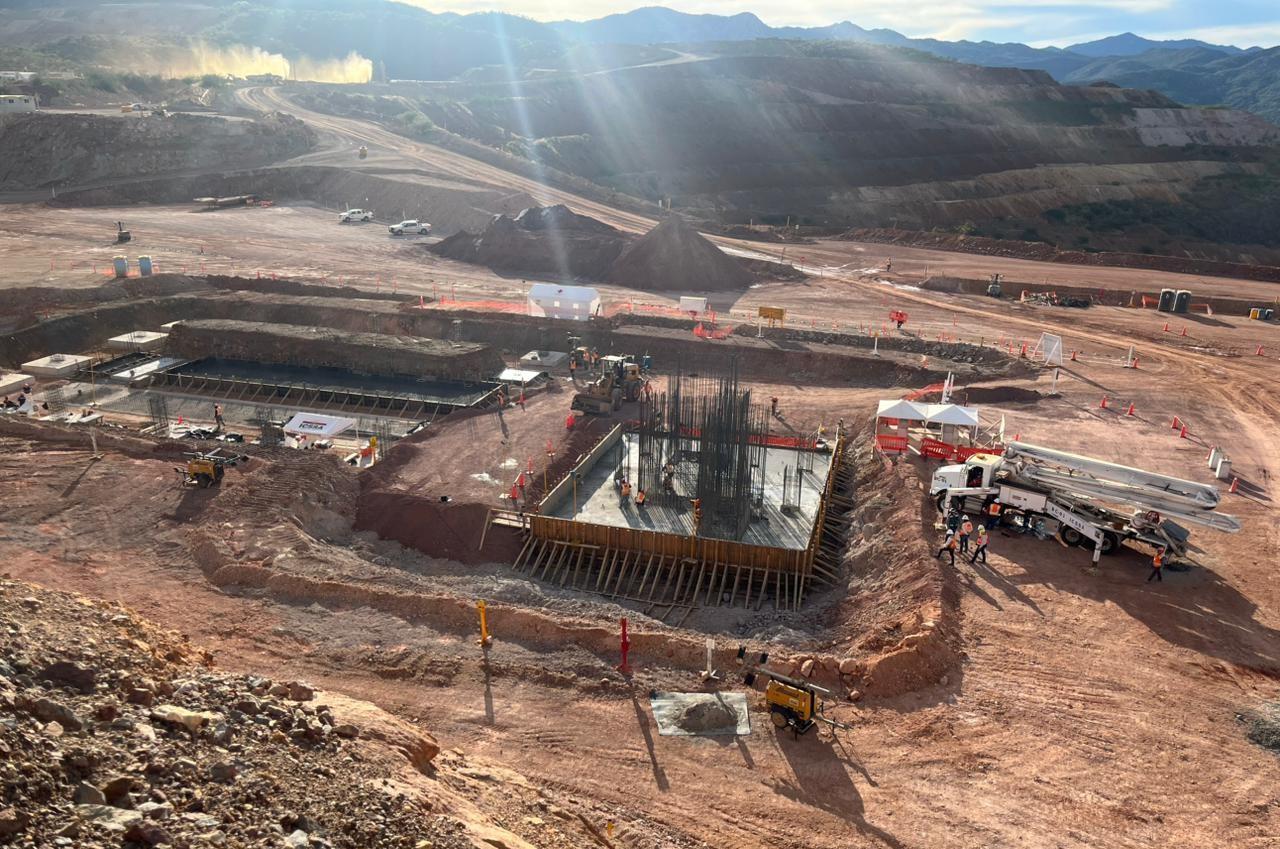
Capital expenditures totaled $17.3 million in the first quarter, including $0.7 million of sustaining capital and $2.2 million of capitalized exploration. Growth capital spending of $14.4 million was primarily related to portal construction, procurement activities, detailed engineering, and concrete foundation work for the PDA mill. Spending on PDA is expected to ramp up further during the second quarter and into the second half of the year as construction activities advance. The project remains on budget and on track for completion in mid-2027.
The Mulatos District generated strong mine-site free cash flow of $60.8 million in the first quarter, driven by higher realized gold prices and ounces sold compared to the prior year period. The strong free cash flow generation was net of $50.9 million of cash tax payments in the first quarter, primarily related to 2025 payable income and mining taxes. Cash tax installments in Mexico related to the 2026 fiscal year are expected to average between $20 and $25 million per quarter for the remainder of the year, based on a budgeted gold price of $4,000 per ounce. At current gold prices, the Mulatos District is expected to generate strong mine-site free cash flow through the remainder of the year while funding PDA and a significant exploration program.
First Quarter 2026 Development Activities
Island Gold District (Ontario, Canada)
Phase 3+ Shaft and IGD Expansion
In 2022, the Company announced the Phase 3+ Shaft Expansion at Island Gold from 1,200 tpd to 2,400 tpd. The expansion includes the construction of a shaft and paste plant, as well as accelerated development to support the higher mining rates. With the commissioning of the shaft expected to be completed in early 2027, the operation will transition from trucking ore and waste up the ramp to skipping ore and waste to surface, driving production higher and costs significantly lower. As at March 31, 2026, 100% of the Phase 3+ Shaft Expansion growth capital has been spent and committed.
On February 3, 2026, the Company announced the IGD Expansion Study outlining a larger, long-life, low-cost mine with an average annual gold production of 534,000 ounces over the initial 10 years (starting in 2028) at average mine-site AISC of $1,025 per ounce. The IGD Expansion growth capital of $542 million will be spent on the expansion of the Magino mill to 20,000 tpd, accelerated underground development, and mobile equipment to support higher underground and open pit mining rates of 3,000 tpd and 17,000 tpd, respectively.
As outlined in the IGD Expansion Study, the Island Gold mill will continue operating and will be dedicated to processing approximately 1,265 tpd of higher grade underground ore until the expected completion of the Magino mill expansion in first quarter of 2028. The remaining underground ore mined, beyond the Island Gold mill capacity of 1,265 tpd, will be blended at increasing rates with open pit ore and processed within the Magino mill. As at March 31, 2026, 11% of growth capital related to the IGD Expansion has been spent and committed, with the majority of spending focused on the Magino mill expansion.
During the first quarter of 2026, the Company spent $87.9 million in growth capital at the Island Gold District. Progress during the first quarter is summarized as follows:
Construction of shaft and surface infrastructure is expected to be substantially complete by the end of 2026, and commissioning of the shaft completed in early 2027. The IGD Expansion to 20,000 tpd remains on track to be completed in early 2028.
| (in US$M) Growth capital |
P3+ Estimate February 20261 |
Spent to date1,2 | Committed to date1 |
% of Spent & Committed |
| Shaft & Shaft Surface Complex | 324 | 275 | 34 | 95% |
| Accelerated Underground Development, Infrastructure, and Equipment | 255 | 218 | 37 | 100% |
| Site Infrastructure, Mill and Other 3,4 | 165 | 174 | 8 | 110% |
| General Indirect Costs | 91 | 84 | 3 | 96% |
| Total Phase 3+ Shaft Expansion Growth Capital | $835 | $751 | $82 | 100% |
| (in US$M) Growth capital |
IGD Expansion Estimate February 20261 |
Spent to date1,2 | Committed to date1 |
% of Spent & Committed |
| Mill Expansion | 199 | 20 | 28 | 24% |
| Accelerated Underground Development | 166 | 5 | — | 3% |
| Mining Equipment | 81 | — | — | —% |
| Site Infrastructure and Other | 96 | — | 6 | 6% |
| Total IGD Expansion Growth Capital | $542 | $25 | $34 | 11% |
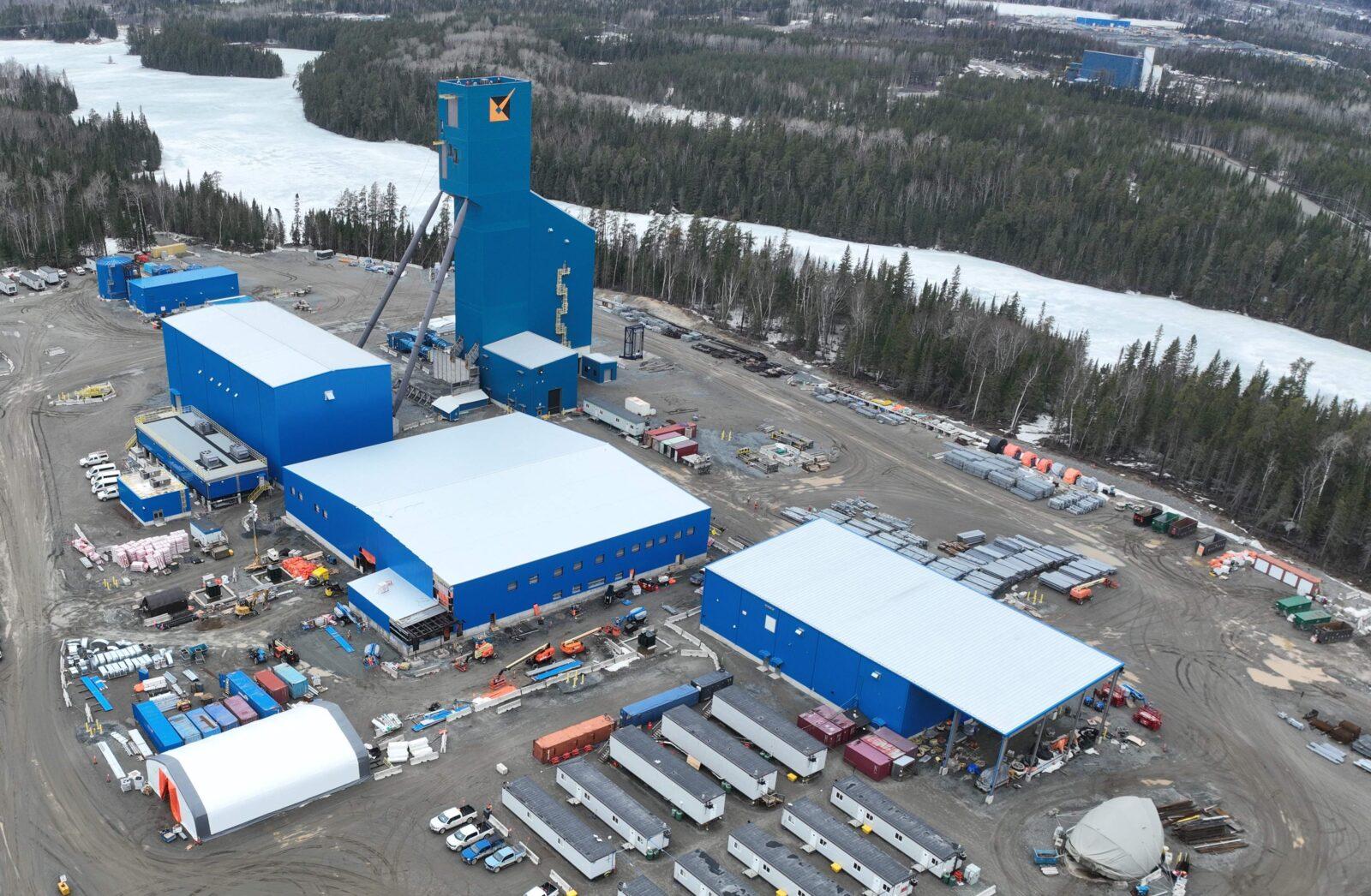
Island Gold shaft site area – April 2026
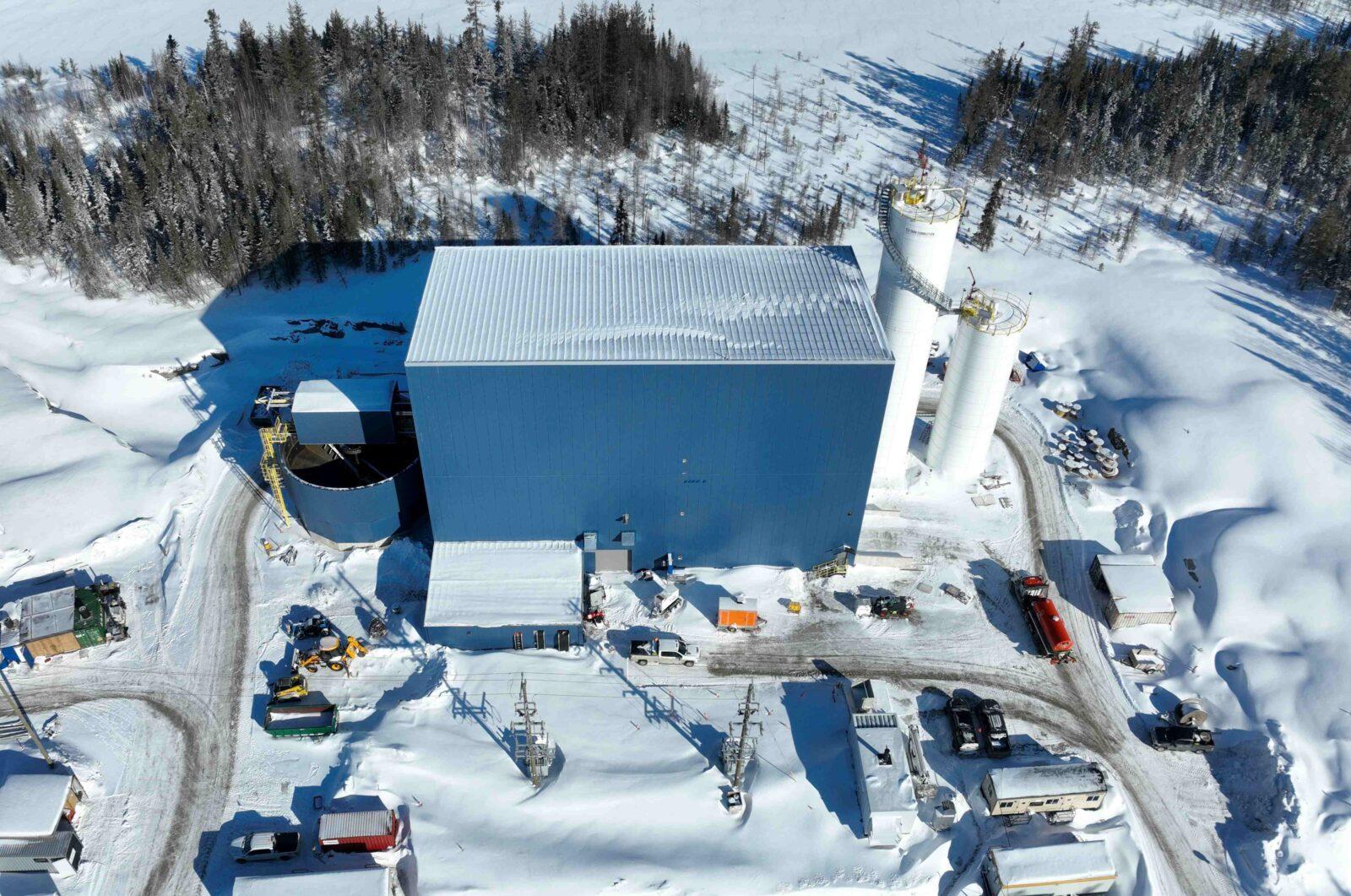
Island Gold paste plant – April 2026
Island Gold shaft sinking completed (depth of 1,381 m) – April 2026
Magino mill expansion – April 2026
Lynn Lake (Manitoba, Canada)
On January 13, 2025, the Company announced a positive construction decision on the Lynn Lake project. With the approval of the Closure Plan in January 2025, the required permitting and pre-construction conditions have been met allowing for the start of construction on the project.
In February 2025, an internal economic study and development plan was released on the BT and Linkwood satellite deposits located in proximity to the Lynn Lake project. The BT and Linkwood deposits are expected to provide a source of additional mill feed to the Lynn Lake project, extending the combined mine life of the project, increase longer term rates of production, and enhance the overall economics.
With significantly longer mine life, incorporating the BT and Linkwood deposits, the Company has re-engineered and optimized a number of elements within the broader Lynn Lake development plan. This includes several scope changes, most notably increasing the mill capacity by 13% to 9,000 tpd, driving production higher and stronger economics.
Reflecting scope changes to support a larger operation, three years of inflation since the 2023 Feasibility Study, and the longer construction timeline due to the 2025 wildfires, initial capital for the project was increased to $937 million, with $871 million remaining to be spent as of the start of 2026.
The updated parameters for the Lynn Lake project, incorporating the revised initial capital, larger Mineral Reserve base including BT and Linkwood, and increased mill throughput, are as follows:
Capital spending on the Lynn Lake project in 2026 is expected to be between $140 and $160 million, which will be second half-weighted with a gradual ramp up in the first half of the year. Construction activities in 2026 include permanent camp construction, bulk earthworks, power infrastructure upgrades, and orders for long lead-time items.
The majority of initial capital will be spent in 2027 and 2028, with first production expected in the first half of 2029. With attractive economics and significant exploration upside, the Lynn Lake project is a key component of the Company’s leading high-return organic growth profile.
During the first quarter of 2026, the Company spent $18.4 million in development capital at the Lynn Lake project, with key activities summarized as follows:
PDA (Sonora, Mexico)
On September 4, 2024, the Company reported the results of the development plan for the PDA project located within the Mulatos District. PDA is a higher-grade underground deposit adjacent to the Mulatos open pit and will benefit from the use of existing crushing infrastructure from Cerro Pelon, supporting lower initial capital and project execution risk.
In January 2025, the Company announced it was granted approval of an amendment to its existing environmental impact assessment (Manifestación de Impacto Ambiental) by Mexico’s Secretariat of Environment and Natural Resources, allowing for the start of construction on the PDA project. Total initial capital estimate of $165 million remains unchanged with the majority of spending expected in 2026, and first production on track for mid-2027.
As outlined in the 2024 development plan, PDA is expected to produce an average of 127,000 ounces per year over the first four years and 104,000 ounces over the current mine life. Total cash costs are expected to average $921 per ounce and mine-site AISC $1,003 per ounce.
Reflecting the low cost structure and low initial capital, PDA is expected to be a high-return project with significant exploration upside. Based on the development plan released in September 2024, PDA has an estimated after-tax IRR of 46% and after-tax NPV (5%) of $269 million using base case gold price assumption of $1,950 per ounce and a MXN/USD foreign exchange rate of 18:1. Using a $2,500 per ounce gold price, PDA’s after-tax IRR increases to 73%, and after-tax NPV (5%) increases to $492 million.
During the first quarter of 2026, the Company spent $14.4 million in growth capital at the PDA project, with key activities summarized as follows:
PDA mill area – April 2026
First Quarter 2026 Exploration Activities
Island Gold District (Ontario, Canada)
A total of $43 million has been budgeted for exploration at the Island Gold District in 2026, up from $24 million spent in 2025. The exploration program will continue to build on the success from 2025 with high-grade gold mineralization extended across the Island Gold deposit, as well as within multiple structures within the hanging wall and footwall.
In 2025, drilling programs at Island Gold and Magino focused on delineation drilling to convert a large Inferred Mineral Resource Base to Mineral Reserves. This program was executed successfully and resulted in a significant increase in Mineral Reserves at both Island Gold and Magino, which was incorporated into the Island Gold District Expansion study that was announced on February 3, 2026. With the deposit open laterally and at depth, there is significant potential for further growth in Mineral Reserves and Resources.
A total of 50,000 m of underground exploration drilling is planned in 2026 with a focus on defining new Mineral Reserves and Resources in proximity to existing production horizons and infrastructure. This includes drilling across the strike extent of main Island Gold deposit (E1E and C-Zones), as well as within a growing number of newly defined hanging-wall and footwall zones.
These potential high-grade Mineral Reserve and Resource additions would be low cost to develop, given their proximity to existing infrastructure, and provide increased operational flexibility as mining rates increase. To support the underground exploration program, 1,090 m of underground exploration drift development is planned to extend drill platforms on the multiple levels.
Additionally, 48,000 m of surface exploration drilling has been budgeted targeting the area between the Island Gold and Magino deposits, as well as the down-plunge extension of the Island Gold deposit, below a depth of 1,500 m.
The regional exploration program at the Island Gold District includes 16,000 m of surface drilling. The focus of the regional program will be following up on high-grade mineralization intersected in the 2025 drill program at Cline and Pick located approximately seven km northeast of the Island Gold mine.
During the first quarter of 2026, 8,664 m of underground exploration drilling was completed in 34 holes, and 3,819 m of underground delineation drilling across 18 holes. Additionally, 3,359 m of surface exploration drilling was completed in six holes. As part of the regional exploration program, 4,710 m of drilling was also completed in 10 holes.
Total exploration expenditures during the first quarter were $5.2 million, of which $3.4 million was capitalized.
Young-Davidson (Ontario, Canada)
A total of $17 million has been budgeted for exploration at Young-Davidson in 2026, up from $13 million spent in 2025. This includes 48,000 m of underground exploration drilling focused on extending mineralization within the Young-Davidson syenite, which hosts the majority of Mineral Reserves and Mineral Resources, and to test and expand on higher grade gold mineralization that has been intersected within two areas of focus in the hanging wall. This new style of higher-grade mineralization is located in close proximity to the existing Mid-Mine infrastructure, with grades intersected well above the current Mineral Reserve grade.
To support the underground exploration program, 200 m of development is planned which includes further extension of the 9620-level hanging wall exploration drift that was completed in 2025. The regional program includes 10,000 m of drilling focused on evaluating several targets including the Otisse NE target and the Biralger target located approximately 3 km and 17 km northeast of Young-Davidson, respectively. A comprehensive data compilation project commenced in 2025, and will be completed in 2026 for the Wydee and Matachewan projects, both acquired in 2024, and located to in proximity to Young-Davidson.
During the first quarter, 13,634 m of underground exploration drilling was completed in 32 holes across multiple levels. Drilling is targeting syenite-hosted mineralization, as well as continuing to test mineralization in the hanging wall sediments and mafic-ultramafic stratigraphy.
A total of 4,865 m of regional surface exploration drilling was also completed in 16 holes in the first quarter focused on evaluating the Otisse NE and Biralger targets.
Total exploration expenditures during the first quarter of 2026 were $4.9 million, of which $3.4 million was capitalized.
Mulatos District (Sonora, Mexico)
A total of $21 million has been budgeted at Mulatos for exploration in 2026, consistent with $20 million spent in 2025. The regional drilling program is expected to total 44,500 m and includes 20,000 m of surface exploration drilling at the Cerro Pelon sulphide target, 9,000 m at the recently discovered Halcon target, and an additional 15,500 m planned across several early to advanced stage targets within the Mulatos District. The planned addition of a mill to process higher-grade sulfides has created new opportunities for growth within the Mulatos District, including Cerro Pelon and the Halcon target.
During the first quarter, 5,270 m of surface exploration drilling was completed in 19 holes at Cerro Pelon, and 3,251 m were completed in 10 holes at Halcon. Additionally, 1,676 m were drilled in 9 regional holes across the district.
Total exploration expenditures during the first quarter were $5.1 million, of which $2.2 million was capitalized.
Lynn Lake (Manitoba, Canada)
A total of $6 million has been budgeted for exploration at the Lynn Lake project in 2026. This is up from $3 million spent in 2025. The exploration budget includes 13,500 m to test the potential for underground mining opportunities below the Gordon and MacLellan open pits.
During the first quarter of 2026, 7,195 m of surface exploration drilling was completed in 14 holes at Gordon, and 4,111 m in nine holes at MacLellan.
Exploration spending totaled $2.1 million in the first quarter, all of which was capitalized.
Qiqavik (Quebec, Canada)
A total of $7 million has been budgeted for exploration at the Qiqavik project in 2026, similar to 2025. Qiqavik is a camp-scale property covering 60,400 ha in the Cape Smith Greenstone Belt in Nunavik, Quebec. The Qiqavik project covers 50 km of strike covering prospective gold hosting environments and several major crustal-scale structures such as the Qiqavik break and the Bergeron fault. Early-stage exploration completed to date indicates that high-grade gold occurrences are controlled by structural splays off the Qiqavik Break.
The 2026 exploration program will follow up on discoveries made across several target areas during the 2025 drill program, and test the next series of highest priority targets as outlined in a press release dated January 28, 2026. The success of this early-stage greenfield drilling program across multiple target areas continues to support the significant gold endowment potential of the Qiqavik Project.
A total of 8,000 m of helicopter-supported exploration drilling is planned in 2026. The 2026 program will also focus on advancing other targets across the belt with ongoing geological mapping, drone magnetics, prospecting, and additional till sampling.
Exploration spending was $0.7 million in the first quarter, all of which was expensed.
Review of First Quarter Financial Results
During the first quarter of 2026, the Company sold 121,924 ounces of gold for record operating revenues of $596.7 million, representing a 79% increase from the prior year period. The increase was due to higher realized gold prices and higher ounces sold at the Island Gold District and Mulatos District.
The average realized gold price in the first quarter was $4,829 per ounce, 72% higher than the prior year period. This was $44 per ounce less than the London PM Fix price for the quarter, primarily reflecting the delivery of 6,127 ounces into the gold prepayment facility executed in the fourth quarter of 2025 based on the prepay price of $4,166 per ounce. The Company delivered 50% of the committed ounces under the facility during the quarter, with the remaining 50% scheduled for delivery in the second quarter.
Cost of sales (which include mining and processing costs, royalties, and amortization expense) were $205.5 million in the first quarter, 5% higher than the prior year period. Key drivers of changes to cost of sales as compared to the prior year period were as follows:
Mining and processing costs were $154.5 million, 11% higher than the prior year period. The higher costs primarily reflects higher ounces sold and increased unit costs.
Total cash costs of $1,230 per ounce and AISC of $1,862 per ounce were higher than the prior year period driven by the higher royalty costs, ongoing labour inflation, and increased diesel, energy, and contractor costs, as well as lower grades mined at Young-Davidson. AISC was also higher than the prior year period reflecting increased sustaining capital spending in support of the IGD Expansion to 20,000 tpd.
Royalty expense was $6.8 million in the first quarter, above the prior year period of $4.8 million, primarily due to a significantly higher average realized gold price and higher ounces sold.
Amortization of $44.2 million, or $363 per ounce sold in the first quarter, was 14% lower than the prior year period, primarily reflecting an increase in the depletion base resulting from the 2025 year-end Mineral Reserves and Resources update.
The Company recognized earnings from operations of $344.8 million in the first quarter, 264% higher than the prior year period, driven by record revenues and margin expansion.
In the first quarter, net losses on commodity derivatives of $29.7 million were lower compared to the prior year period, driven by the early settlement of 15,000 ounces of legacy Argonaut hedges which were scheduled to mature in the second half of 2026, as well as the mark-to-market revaluation of the remaining 2026 and 2027 Argonaut legacy hedges. The lower mark‑to‑market adjustment in the current period compared to the prior year period reflects a reduction in the ounces hedged given the early settlements, and a more significant change in gold price in the prior year period. The cost to eliminate the hedges in the current period was $42.7 million, representing an effective price of $4,667 per ounce. The elimination of the hedges has provided further upside to higher gold prices.
The Company reported net earnings of $191.4 million in the first quarter, compared to $15.2 million in the prior year period. Adjusted net earnings includes net losses on commodity derivatives of $20.2 million, net of tax, adjustments for unrealized foreign exchange losses recorded within deferred taxes and foreign exchange totaling $19.3 million, and other adjustments of $1.1 million.
Associated Documents
This press release should be read in conjunction with the Company’s consolidated financial statements for the three-month period ended March 31, 2026 and associated Management’s Discussion and Analysis, which are available from the Company’s website, www.alamosgold.com, in the “Investors” section under “Reports and Financials”, and on SEDAR+ (www.sedarplus.ca) and EDGAR (www.sec.gov).
Reminder of First Quarter 2026 Results Conference Call
Senior management will host a conference call on Thursday, April 30, 2026 at 11:00 am ET to discuss the results. Participants may join the conference call via webcast or through the following dial-in numbers:
Via Webcast:
To view the live webcast, please register at www.alamosgold.com, or through the following link view webcast.
Via Phone:
| Toronto and International: | (647) 495-7514 |
| Toll free (Canada and the United States): | (888) 596-4144 |
| Participant passcode: | 1813237# |
Alternatively, you may register your phone number here within 30 minutes of the scheduled start of the call to receive an instant automated call back.
A playback will be available until May 30, 2026 by dialling (647) 362-9199 or (800) 770-2030 within Canada and the United States. The passcode is 1813237#. The webcast will be archived at www.alamosgold.com.
Qualified Persons
Chris Bostwick, FAusIMM, Alamos’ Senior Vice President, Technical Services, who is a qualified person within the meaning of National Instrument 43-101 (“Qualified Person”), has reviewed and approved the scientific and technical information contained in this press release.
About Alamos
Alamos is a Canadian-based intermediate gold producer with diversified production from three operations in North America. This includes the Island Gold District and Young-Davidson mine in northern Ontario, Canada, and the Mulatos District in Sonora State, Mexico. Additionally, the Company has a strong portfolio of growth projects including the IGD Expansion, and the Lynn Lake project in Manitoba, Canada. Alamos employs more than 2,400 people and is committed to the highest standards of sustainable development. The Company’s shares are traded on the TSX and NYSE under the symbol “AGI”.
FOR FURTHER INFORMATION, PLEASE CONTACT:
| Scott K. Parsons | |
| Senior Vice-President, Corporate Development & Investor Relations | |
| (416) 368-9932 x 5439 | |
| Khalid Elhaj | |
| Vice President, Business Development & Investor Relations | |
| (416) 368-9932 x 5427 | |
The TSX and NYSE have not reviewed and do not accept responsibility for the adequacy or accuracy of this release.
Adjusted Net Earnings and Adjusted Earnings per Share
“Adjusted net earnings” and “adjusted earnings per share” are non-GAAP financial measures with no standard meaning under IFRS which exclude the following from net earnings:
The Company uses adjusted net earnings for its own internal purposes. Management’s internal budgets and forecasts and public guidance do not reflect the items which have been excluded from the determination of adjusted net earnings. Consequently, the presentation of adjusted net earnings enables shareholders to better understand the underlying operating performance of the core mining business through the eyes of management. Management periodically evaluates the components of adjusted net earnings based on an internal assessment of performance measures that are useful for evaluating the operating performance of our business and a review of the non-GAAP measures used by mining industry analysts and other mining companies.
Adjusted net earnings is intended to provide additional information only and does not have any standardized meaning under IFRS and may not be comparable to similar measures presented by other companies. It should not be considered in isolation or as a substitute for measures of performance prepared in accordance with IFRS. The measure is not necessarily indicative of operating profit or cash flows from operations as determined under IFRS. The following table reconciles this non-GAAP measure to the most directly comparable IFRS measure.
| (in millions) | ||
| Three Months Ended March 31, | ||
| 2026 | 2025 | |
| Net earnings | $191.4 | $15.2 |
| Adjustments: | ||
| Foreign exchange loss (gain) | 4.4 | (0.4) |
| Net loss on commodity derivatives, net of tax | 20.2 | 46.3 |
| Other loss | 1.4 | 1.1 |
| Unrealized foreign exchange loss (gain) recorded in deferred tax expense | 14.9 | (2.1) |
| Other income and mining tax adjustments | (0.3) | (0.3) |
| Adjusted net earnings | $232.0 | $59.8 |
| Adjusted earnings per share – basic | $0.55 | $0.14 |
Cash Flow from Operating Activities before Changes in Working Capital and Cash Taxes
“Cash flow from operating activities before changes in working+ capital and cash taxes” is a non-GAAP performance measure that could provide an indication of the Company’s ability to generate cash flows from operations, and is calculated by adding back the change in working capital and cash taxes to cash flow from operating activities. “Cash flow from operating activities before changes in working capital and cash taxes” is a non-GAAP financial measure with no standard meaning under IFRS. The following table reconciles this non-GAAP measure to the most directly comparable IFRS measure.
| (in millions) | ||
| Three Months Ended March 31, | ||
| 2026 | 2025 | |
| Cash flow from operating activities | $242.5 | $79.6 |
| Add: Changes in working capital and taxes paid | 95.5 | 51.8 |
| Cash flow from operating activities before changes in working capital and taxes paid | $338.0 | $131.4 |
Company-wide Free Cash Flow
“Company-wide free cash flow” is a non-GAAP performance measure calculated from cash flow from operating activities, less mineral property, plant and equipment expenditures and non-recurring costs. The Company believes this to be a useful indicator of our ability to operate without reliance on additional borrowing or usage of existing cash company-wide. Company-wide free cash flow is intended to provide additional information only and does not have any standardized meaning under IFRS and may not be comparable to similar measures of performance presented by other mining companies. Company-wide free cash flow should not be considered in isolation or as a substitute for measures of performance prepared in accordance with IFRS.
| (in millions) | ||
| Three Months Ended March 31, | ||
| 2026 | 2025 | |
| Cash flow from operating activities | $242.5 | $79.6 |
| Less: mineral property, plant and equipment expenditures | (183.5) | (99.7) |
| Add: early settlement of Argonaut legacy hedges (1) | 42.7 | — |
| Company-wide free cash flow | $101.7 | ($20.1) |
(1) Represents the early settlement of 15,000 ounces of the Argonaut legacy hedges scheduled to mature in the second half of 2026.
Mine-site Free Cash Flow
“Mine-site free cash flow” is a non-GAAP financial performance measure calculated as cash flow from operating mine-sites, less mine-site mineral property, plant and equipment expenditures. The Company believes this to be a useful indicator of our ability to operate without reliance on additional borrowing or usage of existing cash. Mine-site free cash flow is intended to provide additional information only and does not have any standardized meaning under IFRS and may not be comparable to similar measures of performance presented by other mining companies. Mine-site free cash flow should not be considered in isolation or as a substitute for measures of performance prepared in accordance with IFRS.
| Consolidated Mine-Site Free Cash Flow | Three Months Ended March 31, | |
| 2026 | 2025 | |
| (in millions) | ||
| Cash flow from operating activities | $242.5 | $79.6 |
| Add: operating cash flow used by non-mine site activity (1) | 110.2 | 69.9 |
| Cash flow from operating mine-sites | $352.7 | $149.5 |
| Mineral property, plant and equipment expenditures | $183.5 | $99.7 |
| Less: capital expenditures from development projects, and corporate | (21.1) | (8.9) |
| Capital expenditure and capital advances from mine-sites | $162.4 | $90.8 |
| Total mine-site free cash flow | $190.3 | $58.7 |
| Island Gold District Mine-Site Free Cash Flow | Three Months Ended March 31, | |
| 2026 | 2025 | |
| (in millions) | ||
| Cash flow from operating activities (1) | $177.2 | $86.9 |
| Mineral property, plant and equipment expenditures | (119.2) | (68.0) |
| Mine-site free cash flow | $58.0 | $18.9 |
| Young-Davidson Mine-Site Free Cash Flow | Three Months Ended March 31, | |
| 2026 | 2025 | |
| (in millions) | ||
| Cash flow from operating activities (1) | $97.4 | $58.0 |
| Mineral property, plant and equipment expenditures | (25.9) | (18.8) |
| Mine-site free cash flow | $71.5 | $39.2 |
| Mulatos District Mine-Site Free Cash Flow | Three Months Ended March 31, | |
| 2026 | 2025 | |
| (in millions) | ||
| Cash flow from operating activities | $78.1 | $4.6 |
| Mineral property, plant and equipment expenditures | (17.3) | (4.0) |
| Mine-site free cash flow | $60.8 | $0.6 |
| (1) | Cash from operating activities for the Canadian operations excludes the impact of the 6,127 ounces delivered into the gold prepayment arrangement for the three months ended March 31, 2026 (three months ended March 31, 2025 – 12,346 ounces). The non-cash adjustment to reflect the settlement of the gold prepayment arrangement is included in Company-wide free cash flow. |
Total Cash Costs per ounce
Total cash costs per ounce is a non-GAAP term typically used by gold mining companies to evaluate the costs of producing gold and to assess the ability of a mining company to generate cash flow from operating activities. Total cash costs per ounce includes mining and processing costs plus applicable royalties, and net of costs allocated to by-product and net realizable value adjustments. Total cash costs per ounce is exclusive of exploration costs. As well, the Company excludes mark-to-market adjustments for the revaluation of previously issued share-based compensation, therefore, total cash costs will incorporate the cost of long term incentives associated with the grant date fair value for instruments issued.
Total cash costs per ounce is intended to provide additional information only and does not have any standardized meaning under IFRS and may not be comparable to similar measures presented by other mining companies. It should not be considered in isolation or as a substitute for measures of performance prepared in accordance with IFRS. The measure is not necessarily indicative of cash flow from operating activities under IFRS or operating costs presented under IFRS.
All-in Sustaining Costs per ounce and Mine-site All-in Sustaining Costs
The Company adopted an “all-in sustaining costs per ounce” non-GAAP performance measure in accordance with the World Gold Council. The Company believes the measure more fully defines the total costs associated with producing gold; however, this performance measure has no standardized meaning. Accordingly, there may be some variation in the method of computation of “all-in sustaining costs per ounce” as determined by the Company compared with other mining companies. In this context, “all-in sustaining costs per ounce” for the consolidated Company reflects total mining and processing costs, corporate and administrative costs, share-based compensation, sustaining exploration costs, sustaining capital, sustaining finance leases and other operating costs. The Company excludes mark-to-market adjustments for the revaluation of previously issued share-based compensation, therefore all-in sustaining costs will incorporate the cost of long term incentives associated with the grant date fair value for instruments issued.
For the purposes of calculating “mine-site all-in sustaining costs” at the individual mine-sites, the Company does not include an allocation of corporate and administrative costs and share-based compensation, as detailed in the reconciliations below.
Sustaining capital expenditures are expenditures that do not increase annual gold ounce production at a mine site and excludes all expenditures at the Company’s development projects as well as certain expenditures at the Company’s operating sites that are deemed expansionary in nature. Non-sustaining capital expenditures or growth capital are expenditures primarily incurred at development projects and costs related to major projects at existing operations, where these projects will materially benefit the mine site. Capitalized exploration expenditures are expenditures that meet the IFRS definition for capitalization and are incurred to further expand the known Mineral Reserves and Resources at existing operations or development projects. For each mine-site reconciliation, corporate and administrative costs, and non-site specific costs are not included in the all-in sustaining cost per ounce calculation.
All-in sustaining costs per gold ounce is intended to provide additional information only and does not have any standardized meaning under IFRS and may not be comparable to similar measures presented by other mining companies. It should not be considered in isolation or as a substitute for measures of performance prepared in accordance with IFRS. The measure is not necessarily indicative of cash flow from operating activities under IFRS or operating costs presented under IFRS.
Total Cash Costs and All-in Sustaining Costs per Ounce Reconciliation Tables
The following tables reconciles these non-GAAP measures to the most directly comparable IFRS measures on a Company-wide and individual mine-site basis.
| Total Cash Costs and AISC Reconciliation – Company-wide | ||
| Three Months Ended March 31, | ||
| 2026 | 2025 | |
| (in millions, except ounces and per ounce figures) | ||
| Mining and processing | $154.5 | $139.0 |
| Share-based compensation mark-to-market allocated to sites (included in mining and processing) (2) | (3.2) | (4.1) |
| Costs allocated to silver by-product | (8.1) | (3.5) |
| Royalties | 6.8 | 4.8 |
| Total cash costs | $150.0 | $136.2 |
| Gold ounces sold | 121,924 | 117,583 |
| Total cash costs per ounce | $1,230 | $1,158 |
| Total cash costs | $150.0 | $136.2 |
| Corporate and administrative (1) | 11.9 | 10.0 |
| Sustaining capital expenditures (3) | 45.2 | 26.8 |
| Sustaining finance leases | 3.8 | 4.3 |
| Interest on sustaining finance leases | 0.4 | — |
| Share-based compensation expense | 27.0 | 27.9 |
| Share-based compensation mark-to-market allocated to corporate (2) | (14.3) | (12.8) |
| Sustaining exploration | 0.6 | 0.5 |
| Accretion of decommissioning liabilities | 2.4 | 2.4 |
| Total all-in sustaining costs | $227.0 | $195.3 |
| Gold ounces sold | 121,924 | 117,583 |
| Total all-in sustaining costs per ounce | $1,862 | $1,661 |
| (1) | Corporate and administrative expenses exclude expenses incurred at development properties. |
| (2) | Share-based compensation included in total cash costs and AISC excludes the impact of mark-to-market adjustments for changes in the Company’s share price in the periods allocated to sites (included in mining and processing costs) and corporate head office (included in share-based compensation expense). The prior year period comparatives have been restated to exclude the impact. See Note 10 (d) of the condensed interim consolidated financial statements for the periods ended March 31, 2026 and 2025 for further details. |
| (3) | Sustaining capital expenditures are defined as those expenditures which do not increase annual gold ounce production at a mine site and exclude all expenditures at growth projects and certain expenditures at operating sites which are deemed expansionary in nature. Total sustaining capital expenditures for the periods are as follow: |
| Three Months Ended March 31, | ||
| 2026 | 2025 | |
| (in millions) | ||
| Mineral property, plant and equipment expenditures | $183.5 | $99.7 |
| Less: non-sustaining capital expenditures at: | ||
| Island Gold District | (91.3) | (52.5) |
| Young-Davidson | (9.3) | (8.1) |
| Mulatos District | (16.6) | (3.4) |
| Corporate and other | (21.1) | (8.9) |
| Sustaining capital expenditures | $45.2 | $26.8 |
| Island Gold District Total Cash Costs and Mine-site AISC Reconciliation | ||
| Three Months Ended March 31, | ||
| 2026 | 2025 | |
| (in millions, except ounces and per ounce figures) | ||
| Mining and processing | $67.1 | $54.6 |
| Share-based compensation mark-to-market allocated to sites (included in mining and processing) (1) | (1.1) | (1.5) |
| Costs allocated to silver by-product | (0.8) | (0.4) |
| Royalties | 2.7 | 2.8 |
| Total cash costs | $67.9 | $55.5 |
| Gold ounces sold | 57,109 | 53,388 |
| Mine-site total cash costs per ounce | $1,189 | $1,040 |
| Total cash costs | $67.9 | $55.5 |
| Sustaining capital expenditures | 27.9 | 15.5 |
| Sustaining finance leases | 3.8 | 4.3 |
| Interest on sustaining finance leases | 0.4 | — |
| Accretion of decommissioning liabilities | 0.5 | 0.4 |
| Total all-in sustaining costs | $100.5 | $75.7 |
| Gold ounces sold | 57,109 | 53,388 |
| Mine-site all-in sustaining costs per ounce | $1,760 | $1,418 |
| Young-Davidson Total Cash Costs and Mine-site AISC Reconciliation | |||
| Three Months Ended March 31, | |||
| 2026 | 2025 | ||
| (in millions, except ounces and per ounce figures) | |||
| Mining and processing | $51.7 | $47.0 | |
| Share-based compensation mark-to-market allocated to sites (included in mining and processing)(1) | (1.2) | (1.4) | |
| Costs allocated to silver by-product | (1.9) | (0.7) | |
| Royalties | 2.4 | 1.6 | |
| Total cash costs | $51.0 | $46.5 | |
| Gold ounces sold | 31,042 | 35,475 | |
| Mine-site total cash costs per ounce | $1,643 | $1,311 | |
| Total cash costs | $51.0 | $46.5 | |
| Sustaining capital expenditures | 16.6 | 10.7 | |
| Sustaining exploration | — | — | |
| Accretion of decommissioning liabilities | 0.1 | 0.1 | |
| Total all-in sustaining costs | $67.7 | $57.3 | |
| Gold ounces sold | 31,042 | 35,475 | |
| Mine-site all-in sustaining costs per ounce | $2,181 | $1,615 | |
| Mulatos District Total Cash Costs and Mine-site AISC Reconciliation | |||
| Three Months Ended March 31, | |||
| 2026 | 2025 | ||
| (in millions, except ounces and per ounce figures) | |||
| Mining and processing | $35.7 | $37.4 | |
| Share-based compensation mark-to-market allocated to sites (included in mining and processing)(1) | (0.9) | (1.2) | |
| Costs allocated to silver by-product | (5.4) | (2.4) | |
| Royalties | 1.7 | 0.4 | |
| Total cash costs | $31.1 | $34.2 | |
| Gold ounces sold | 33,773 | 28,720 | |
| Mine-site total cash costs per ounce | $921 | $1,191 | |
| Total cash costs | $31.1 | $34.2 | |
| Sustaining capital expenditures | 0.7 | 0.6 | |
| Sustaining exploration | — | — | |
| Accretion of decommissioning liabilities | 1.8 | 1.9 | |
| Total all-in sustaining costs | $33.6 | $36.7 | |
| Gold ounces sold | 33,773 | 28,720 | |
| Mine-site all-in sustaining costs per ounce | $995 | $1,278 | |
| (1) | Share-based compensation included in mine-site total cash costs and mine-site AISC excludes the impact of mark-to-market adjustments for changes in the Company’s share price in the periods allocated to sites included in mining and processing costs. |
Adjusted EBITDA
Adjusted EBITDA represents net earnings before interest, taxes, depreciation, and amortization and removes the effects of certain items that the Company believes are not reflective of the Company’s underlying performance for the reporting period. The measure also removes the impact of non-cash items such as impairment loss charges or reversals, and net gain or loss on derivative financial instruments. Adjusted EBITDA is an indicator of the Company’s ability to generate liquidity by producing operating cash flow to fund working capital needs, service debt obligations, and fund capital expenditures.
Adjusted EBITDA does not have any standardized meaning under IFRS and may not be comparable to similar measures presented by other mining companies. It should not be considered in isolation or as a substitute for measures of performance prepared in accordance with IFRS. The following table reconciles this non-GAAP measure to the most directly comparable IFRS measure.
| (in millions) | ||
| Three Months Ended March 31, | ||
| 2026 | 2025 | |
| Net earnings | $191.4 | $15.2 |
| Adjustments: | ||
| Finance income | (5.9) | (0.1) |
| Amortization | 44.2 | 51.4 |
| Net loss on commodity derivatives | 29.7 | 68.4 |
| Deferred income tax expense (recovery) | 39.1 | (2.8) |
| Current income tax expense | 84.7 | 13.3 |
| Adjusted EBITDA | $383.2 | $145.4 |
Additional GAAP Measures
Additional GAAP measures are presented on the Company’s condensed interim consolidated financial statements and are not meant to be a substitute for other subtotals or totals presented in accordance with IFRS, but rather should be evaluated in conjunction with such IFRS measures. The following additional GAAP measures are used and are intended to provide an indication of the Company’s mine and operating performance:
Condensed Interim Consolidated Statements of Financial Position, Comprehensive
Income, and Cash Flow
ALAMOS GOLD INC.
Condensed Interim Consolidated Statements of Financial Position
(Unaudited – stated in millions of United States dollars)
| March 31, 2026 | December 31, 2025 | ||
| ASSETS | |||
| Current Assets | |||
| Cash and cash equivalents | $659.5 | $623.1 | |
| Equity securities | 44.4 | 58.9 | |
| Deferred payment consideration | 158.9 | — | |
| Amounts receivable | 40.5 | 45.0 | |
| Inventories | 234.0 | 225.4 | |
| Other current assets | 32.0 | 26.0 | |
| Total Current Assets | 1,169.3 | 1,135.5 | |
| Non-Current Assets | |||
| Mineral property, plant and equipment | 5,079.0 | 4,957.5 | |
| Deferred income taxes | 37.1 | 34.0 | |
| Inventories | 95.3 | 84.9 | |
| Deferred payment consideration | 143.8 | 142.0 | |
| Other non-current assets | 11.7 | 30.7 | |
| Total Assets | $6,536.2 | $6,384.6 | |
| LIABILITIES | |||
| Current Liabilities | |||
| Accounts payable and accrued liabilities | $321.9 | $316.1 | |
| Derivative liabilities | 174.4 | 128.0 | |
| Deferred revenue | 25.3 | 50.0 | |
| Income taxes payable | 37.5 | 53.6 | |
| Current portion of lease liabilities | 10.9 | 11.8 | |
| Current portion of decommissioning liabilities | 10.8 | 8.1 | |
| Total Current Liabilities | 580.8 | 567.6 | |
| Non-Current Liabilities | |||
| Deferred income taxes | 912.5 | 873.3 | |
| Derivative liabilities | 72.8 | 129.1 | |
| Debt and financing obligations | 200.0 | 200.0 | |
| Lease liabilities | 8.8 | 11.2 | |
| Decommissioning liabilities | 149.4 | 153.4 | |
| Other non-current liabilities | 4.1 | 4.2 | |
| Total Liabilities | 1,928.4 | 1,938.8 | |
| EQUITY | |||
| Share capital | $4,142.4 | $4,140.6 | |
| Contributed surplus | 84.8 | 87.7 | |
| Accumulated other comprehensive (loss) income | (11.4) | 0.3 | |
| Retained earnings | 392.0 | 217.2 | |
| Total Equity | 4,607.8 | 4,445.8 | |
| Total Liabilities and Equity | $6,536.2 | $6,384.6 | |
ALAMOS GOLD INC.
Condensed Interim Consolidated Statements of Comprehensive Income
For the Three Months Ended March 31, 2026 and 2025
(Unaudited – stated in millions of United States dollars, except share and per share amounts)
| Three Months Ended March 31, | ||
| 2026 | 2025 | |
| OPERATING REVENUES | $596.7 | $333.0 |
| COST OF SALES | ||
| Mining and processing | 154.5 | 139.0 |
| Royalties | 6.8 | 4.8 |
| Amortization | 44.2 | 51.4 |
| 205.5 | 195.2 | |
| EXPENSES | ||
| Exploration | 7.5 | 5.2 |
| Corporate and administrative | 11.9 | 10.0 |
| Share-based compensation | 27.0 | 27.9 |
| 251.9 | 238.3 | |
| EARNINGS FROM OPERATIONS | 344.8 | 94.7 |
| OTHER EXPENSES | ||
| Net loss on commodity derivatives | (29.7) | (68.4) |
| Finance income | 5.9 | 0.1 |
| Foreign exchange (loss) gain | (4.4) | 0.4 |
| Other loss | (1.4) | (1.1) |
| EARNINGS BEFORE INCOME TAXES | $315.2 | $25.7 |
| INCOME TAXES | ||
| Current income tax expense | (84.7) | (13.3) |
| Deferred income tax (expense) recovery | (39.1) | 2.8 |
| NET EARNINGS | $191.4 | $15.2 |
| Items that may be subsequently reclassified to net earnings: | ||
| Net change in fair value of currency hedging instruments, net of taxes | (2.0) | 2.5 |
| Net change in fair value of fuel hedging instruments, net of taxes | 1.0 | — |
| Items that will not be reclassified to net earnings: | ||
| Unrealized (loss) gain on equity securities, net of taxes | (10.7) | 4.8 |
| Total other comprehensive (loss) gain | ($11.7) | $7.3 |
| COMPREHENSIVE INCOME | $179.7 | $22.5 |
| EARNINGS PER SHARE | ||
| – basic | $0.46 | $0.04 |
| – diluted | $0.45 | $0.04 |
ALAMOS GOLD INC.
Condensed Interim Consolidated Statements of Cash Flows
For the Three Months Ended March 31, 2026 and 2025
(Unaudited – stated in millions of United States dollars)
| Three Months Ended March 31, | |||
| 2026 | 2025 | ||
| CASH PROVIDED BY (USED IN): | |||
| OPERATING ACTIVITIES | |||
| Net earnings | $191.4 | $15.2 | |
| Adjustments for items not involving cash: | |||
| Amortization | 44.2 | 51.4 | |
| Foreign exchange loss (gain) | 4.4 | (0.4) | |
| Current income tax expense | 84.7 | 13.3 | |
| Deferred income tax expense | 39.1 | (2.8) | |
| Share-based compensation | 30.7 | 32.3 | |
| Finance income | (5.9) | (0.1) | |
| Net loss on commodity derivatives | 29.7 | 68.4 | |
| Deferred revenue recognized | (25.5) | (31.2) | |
| Settlement of Argonaut legacy gold hedges | (42.7) | — | |
| Other items | (12.1) | (14.7) | |
| Changes in working capital and taxes paid | (95.5) | (51.8) | |
| 242.5 | 79.6 | ||
| INVESTING ACTIVITIES | |||
| Mineral property, plant and equipment | (183.5) | (99.7) | |
| Interest capitalized to mineral, property, plant and equipment | (3.1) | (2.0) | |
| (186.6) | (101.7) | ||
| FINANCING ACTIVITIES | |||
| Dividends paid | (16.1) | (9.7) | |
| Credit facility transaction costs, standby fees and interest | (0.4) | (1.6) | |
| Proceeds from the exercise of options and warrants | 0.6 | 0.2 | |
| Lease payments | (3.8) | (4.3) | |
| (19.7) | (15.4) | ||
| Effect of exchange rates on cash and cash equivalents | 0.2 | (0.2) | |
| Net increase (decrease) in cash and cash equivalents | 36.4 | (37.7) | |
| Cash and cash equivalents – beginning of period | 623.1 | 327.2 | |
| CASH AND CASH EQUIVALENTS – END OF PERIOD | $659.5 | $289.5 | |
Brutus Mining Inc. (CSE: BRU) (FSE: ZI3) is pleased to announce that it has closed its non-brokered ... READ MORE
Jaguar Uranium Corp. (NYSE American: JAGU) is pleased to announce an independent Mineral Resource E... READ MORE
Auro Metals Inc. (TSX-V: AURO) (OTCQB: AURFF), is pleased to announce the assay results of the fina... READ MORE
Endeavour Silver Corp. (NYSE: EXK) (TSX: EDR) is pleased to announce that repairs to the primary bal... READ MORE
Scorpio Gold Corp. (NASDAQ: SGLD) (TSX-V: SGLD) (OTCQB: SRCRF) (FSE: RY9) is pleased to announce re... READ MORE