







Gold X2 Mining Inc. (TSX-V: AUXX) (OTCQB: GSHRF) (FWB: DF8) is pleased to announce the assay results from the four hole phase one test program of the Bunker target along the prospective 5km long Deaty trend at the Moss Gold Project in Northwest Ontario, Canada.
Michael Henrichsen, CEO of Gold X2, commented, “We are very excited to have intersected two mineralized shear zones in our first pass drilling across the Deaty trend at the Bunker target. This area is completely under glacial cover, and the discovery of these mineralized zones has demonstrated that our greenfields exploration techniques are effective. We very much look forward to continuing an aggressive exploration program along the Deaty trend as we believe there is excellent potential for a meaningful discovery within 2-3 kilometers of the moss deposit.”
Highlights
Sand Shear
Wedge Shear
Technical Overview
The results of the Bunker scout drilling program are illustrated in the following figures and tables. Figure 1 shows the location map of the drill holes reported in this release. Figure 2 provides a cross-section through drill holes DBD-25-001 and DBD-25-003. The results are summarized in Tables 1 and 2, which include significant intercepts (Table 1) and drill hole locations (Table 2).
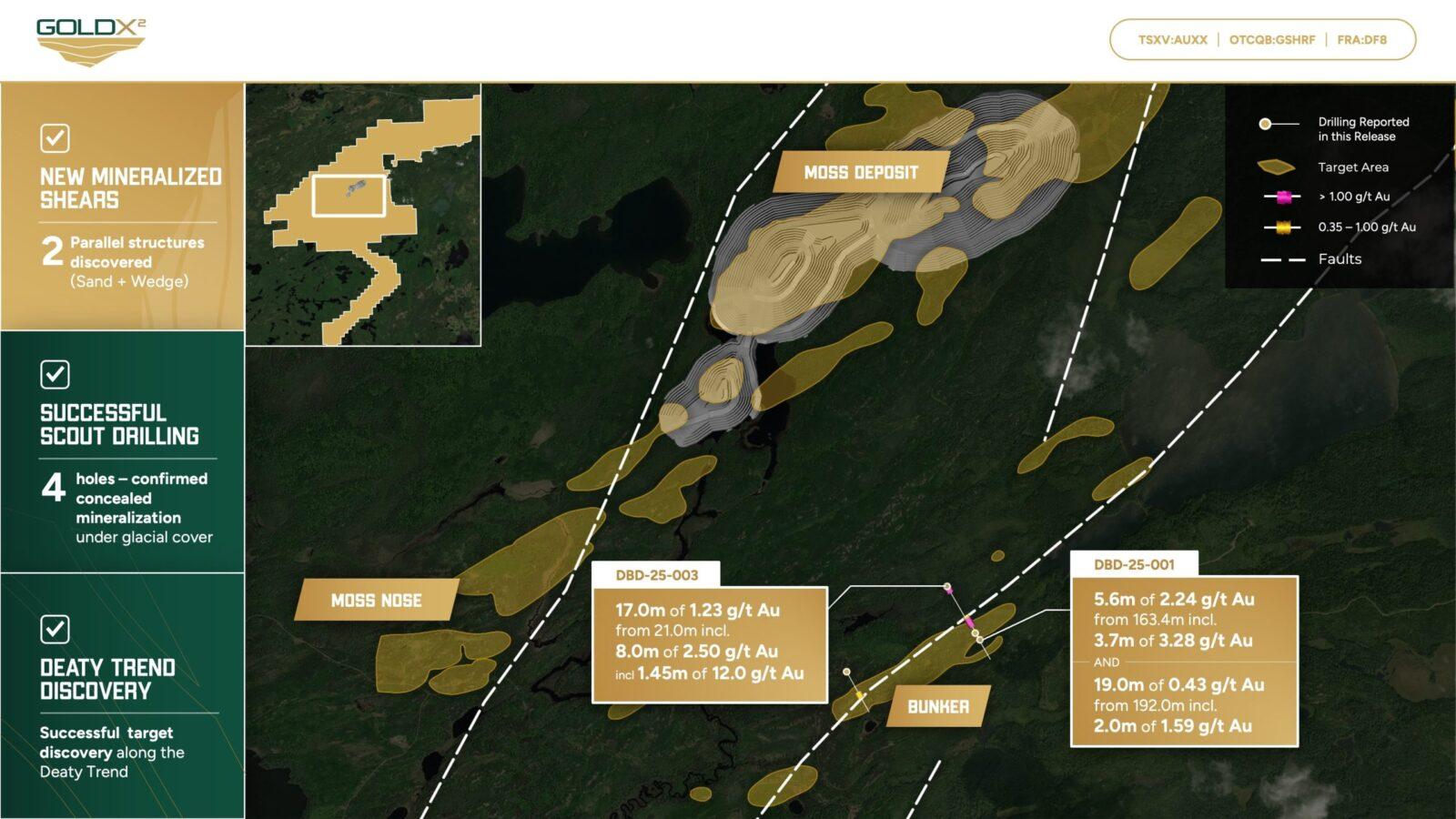
Figure 1: Illustrates the Bunker scout drill program. Drill holes being reported are highlighted in gold.
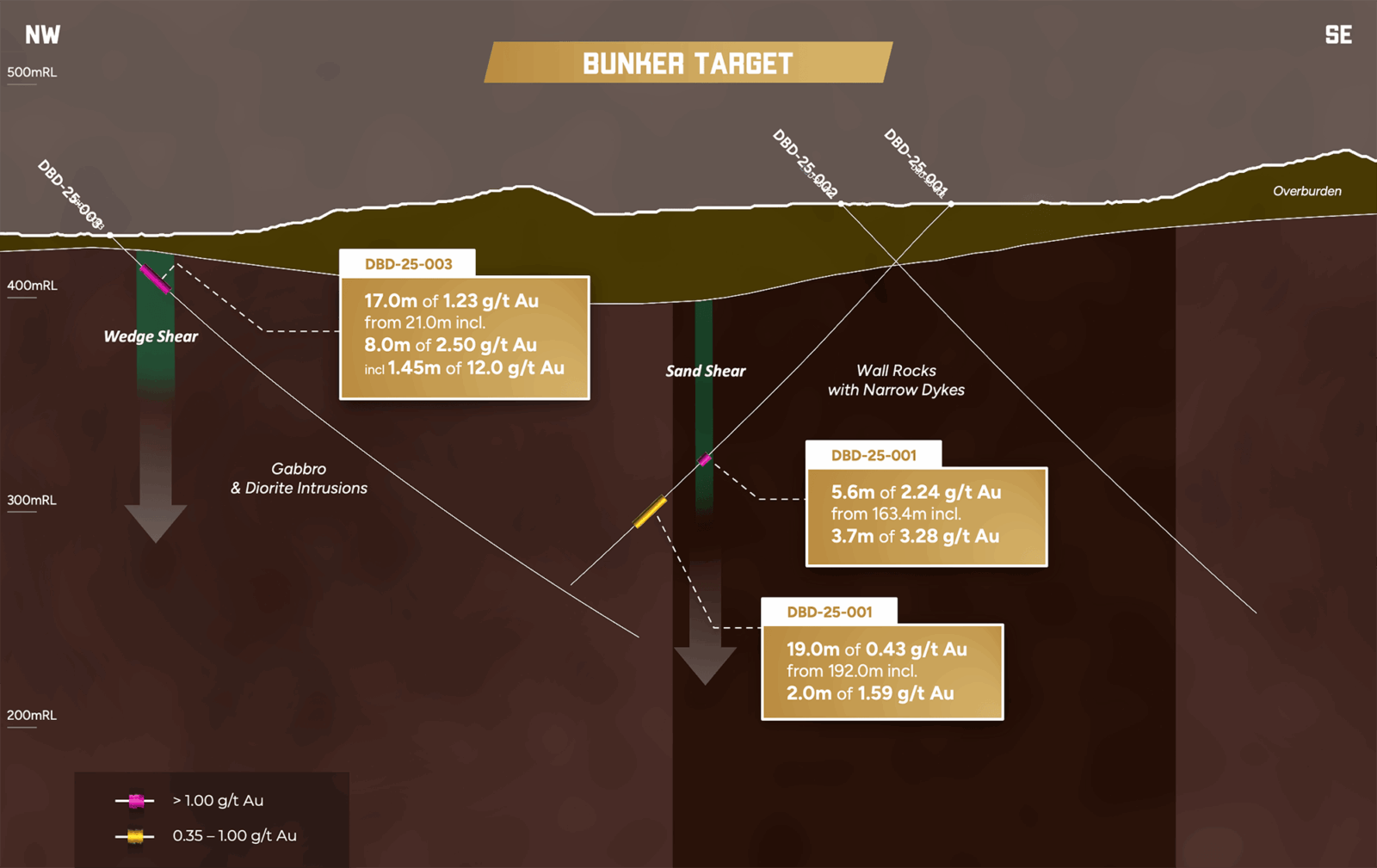
Figure 2: Shows the section across the Bunker Target.
Holes DBD-25-001, 002, and 003 targeted a wide anomalous zone outlined by systematic bedrock geochemistry and gradient array geophysics (press release dated October 16, 2025) concealed beneath glacial cover that is 10 to 50 meters thick.
Hole DBD-25-001 was drilled towards the northwest and intersected a sequence of andesitic lavas and tuffs with localized meter-scale metasedimentary beds, which frequently contain exhalative pyrite and strongly sheared graphitic argillite beds. The sequence is intruded by several 10-20m wide gabbroic bodies and remains in a wide gabbro-diorite intrusion beneath 172 meters depth. The entirety of the hole has experienced moderate to strong shearing, believed to be related to the nearby crustal-scale Knife Lake Fault, and is pervasively chloritized.
DBD-25-001 intersected two mineralized zones. The first – the Sand Shear – is hosted within an exhalative sulphide bearing graphitic argillite horizon along the contact of the sizeable gabbro-diorite (Figure 3). The Sand Shear returned a mineralized intercept of 5.6m of 2.24 g/t Au from 163.4m. The second mineralized zone, 19.0m of 0.43 g/t Au from 192.0m, is hosted within a more strongly sheared zone of the gabbro-diorite. Both zones contain elevated deformed quartz-carbonate veining.
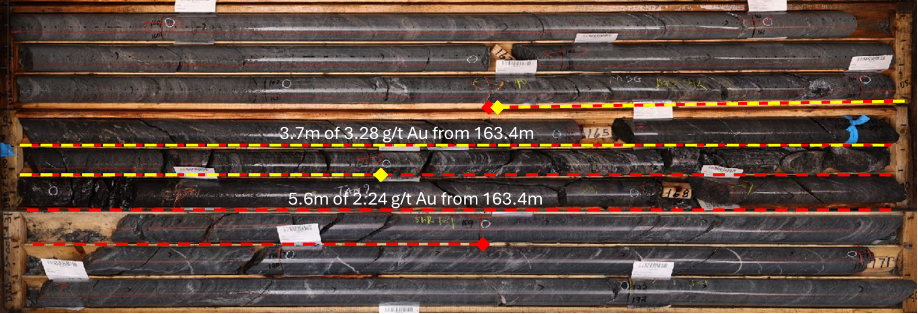
Figure 3: Hole DBD-25-001: Sheared metasedimentary rock horizon containing exhalative pyrite and strongly sheared graphitic argillite beds with deformed quartz-carbonate veins returning an intersection of 5.6m of 2.24 g/t Au from 163.4m, including 3.7m of 3.28 g/t Au from 163.4m.
Hole DBD-25-002 was drilled from a nearby setup towards the southeast and the nearby Hood Lake granitoid stock. The hole intersected a wide gabbro-diorite intrusion, locally porphyritic, until approximately 140m after which it intersected a similar andesitic volcanic package as encountered in DBD-25-001 until 215m, where it encountered a series of sheeted diorite intrusions, likely related to the stock. No mineralized zones were intersected.
Hole DBD-25-003 was drilled approximately 400 meters northwest of DBD-25-001 and 002 and drilled southeast towards them. The hole intersected a complex sequence of dacite volcanics intruded by strongly sheared gabbroic dykes and late syenite dykes until approximately 108 meters depth. Below this, it intersected a wide diorite intrusion, likely the same intrusion encountered at the end of DBD-25-001. The sheared gabbroic dykes are strongly chloritized and contain abundant pyrite-bearing quartz and quartz-carbonate veins. The late syenite dykes have a strong hematite-silica alteration overprint, which bleeds 5-10 meters into the surrounding wall rock, overprinting chlorite alteration, and hosts an additional non-sulphide bearing quartz-carbonate veining event.
The mineralized zone in DBD-25-003 is related to the sheared gabbro dykes – the Wedge Shear – near the boundary of the chlorite and hematite alteration systems (Figure 4). The Wedge Shear returned a mineralized intercept of 17.0m of 1.23 g/t Au from 21.0m, including 8.0m of 2.50 g/t Au from 30.0m based around an interval of 1.45m of 12.0 g/t Au from 30.0m.
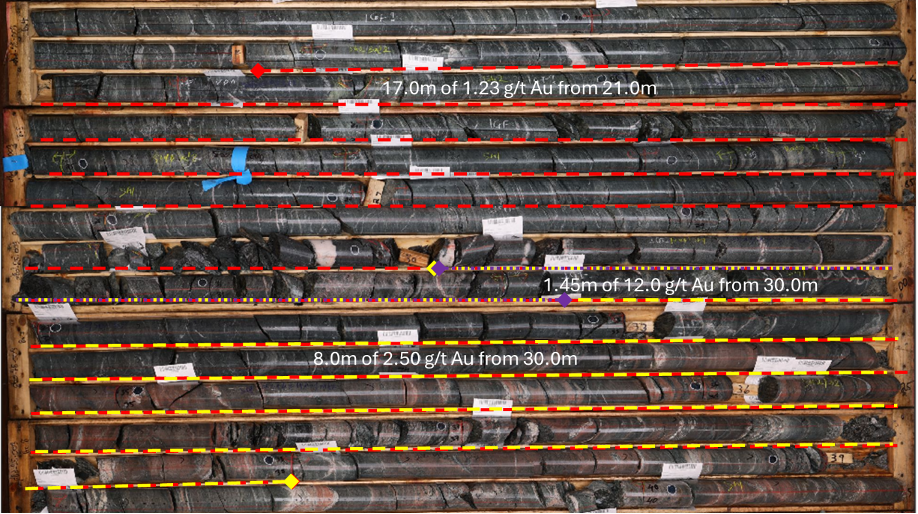
Figure 4: Hole DBD-25-003: Strongly chloritized and sheared gabbro intrusion overprinted by silica-hematite alteration returning an intersection of 17.0m of 1.23 g/t Au from 21.0m, including 8.0m of 2.50 g/t Au from 30.0m, including 1.45m of 12.0g/t Au from 30.0m.
Hole DBD-25-004 was drilled approximately 850 meters west, targeting a second, weaker anomalous zone outlined by the systematic bedrock geochemistry pattern, along strike from the first. The hole collared in 13 meters of till before intersecting a wide dioritic intrusive package until 190 meters depth. Below this, the hole intersected a dominantly clastic sedimentary sequence, containing exhalative pyrite and strongly sheared graphitic argillite beds with 5-10m scale diorite intrusions and tuffaceous andesites. Overall, the hole has notably weaker shear intensity and lacks the pervasive chlorite overprint. A minor mineralized zone, intersecting 2.0m of 1.29 g/t Au from 236m, is hosted within a graphitic argillite, like that in DBD-25-001 but with less shearing and veining.
The results of the initial scout drill program have been very encouraging and support the drill testing of the remaining four anomalies along the Deaty Trend that are outlined by the systematic bedrock geochemistry and gradient array geophysics programs that defined the Bunker Target discovery. Scout drilling of the remaining anomalies is expected to begin in Q1 2026. Follow up drilling at the Bunker Target is being planned for late Q2.
Table 1: Significant intercepts
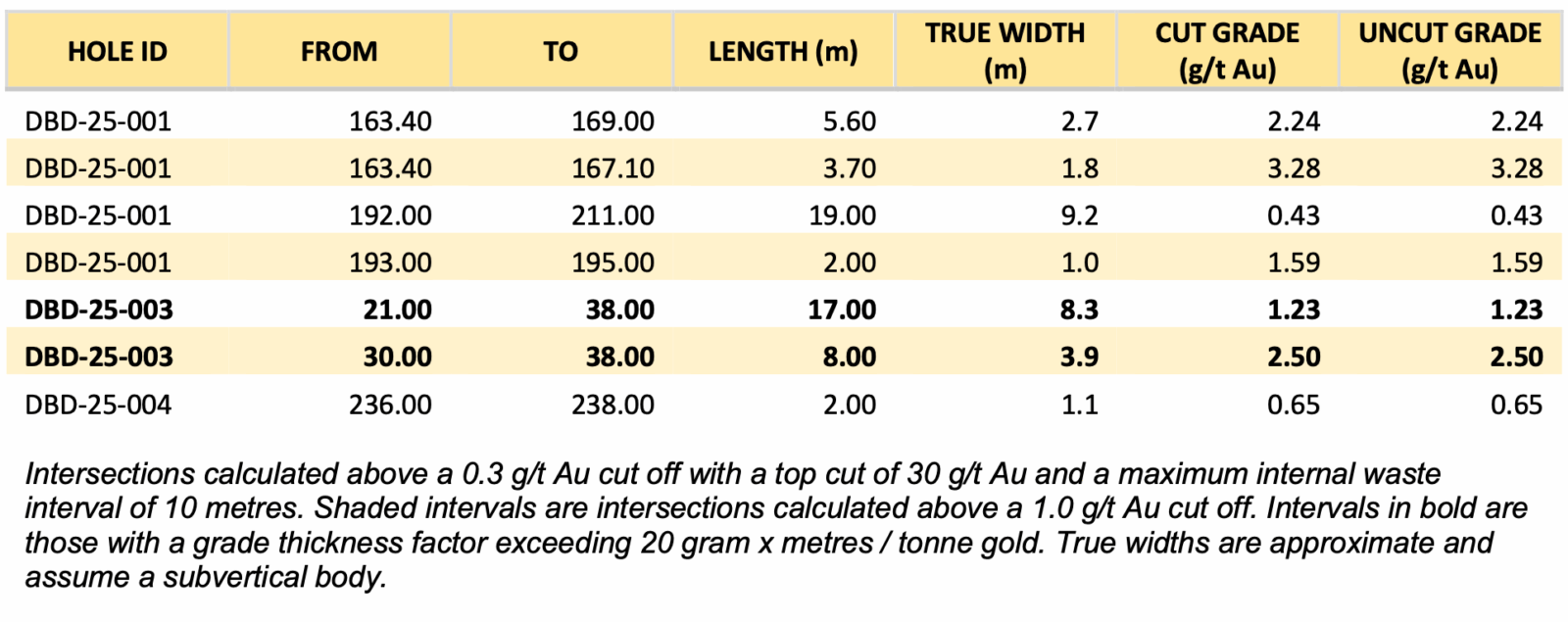
Table 2: Drill Collars

Equity Grant to Management and Consultants
The Company also wishes to announce that, pursuant to the Company’s omnibus incentive plan, it granted a total of 2,100,000 incentive stock options and 1,400,000 restricted share units to management and consultants of the Company. The Options are each exercisable to purchase one common share of the Company at an exercise price of $1.19 for a period of five years. Each RSU entitles the holder to be issued one Common Share of the Company upon vesting, the RSUs will vest one year from grant.
Analytical and QA/QC Procedures
The NQ diameter drill core has been oriented using ACTIII or equivalent tools and validated in the core shack. All core has been sawed in half cut just off the core orientation line (bottom of hole) with the right half (looking down hole) of the core bagged and sent a third-party analytical laboratory. The left half of the core was returned to core boxes and is stored at Gold X2’s Kashabowie core yard facility.
All samples were sent to ALS Geochemistry in Thunder Bay for preparation and analysis was performed in the ALS Vancouver analytical facility. ALS is accredited by the Standards Council of Canada (SCC) for the Accreditation of Mineral Analysis Testing Laboratories and CAN-P-4E ISO/IEC 17025. Samples were analysed for gold via fire assay with an AA finish (“Au-AA23”) and 48 pathfinder elements via ICP-MS after four-acid digestion (“ME-MS61”). Samples that assayed over 10 ppm Au were re-run via fire assay with a gravimetric finish (“Au-GRA21”).
In addition to ALS quality assurance / quality control protocols, Gold X2 has implemented a quality control program for all samples collected through the drilling program. The quality control program was designed by a qualified and independent third party, with a focus on the quality of analytical results for gold. Analytical results are received, imported to our secure on-line database and evaluated to meet our established guidelines to ensure that all sample batches pass industry best practice for analytical quality control. Certified reference materials are considered acceptable if values returned are within three standard deviations of the certified value reported by the manufacture of the material. In addition to the certified reference material, certified blank material is included in the sample stream to monitor contamination during sample preparation. Blank material results are assessed based on the returned gold result being less than ten times the quoted lower detection limit of the analytical method. The results of the on-going analytical quality control program are evaluated and reported to Gold X2 by Orix Geoscience Inc.
Qualified Person
Peter Flindell, PGeo, MAusIMM, MAIG, Vice-President, Exploration, of the Company, and a qualified person under National Instrument 43-101 – Standards of Disclosure for Mineral Projects, has approved the scientific and technical information contained in this news release.
Mr. Flindell has verified the data disclosed. To verify the information related to the winter drill program at the Moss Gold Project, Mr. Flindell has visited the property several times; discussed and reviewed logging, sampling, bulk density, core cutting and sample shipping processes with responsible site staff; discussed and reviewed assay and QA/QC results with responsible personnel; and reviewed supporting documentation, including drill hole location and orientation and significant assay interval calculations. He has also overseen the Company’s health and safety policies in the field to ensure full compliance, and consulted with the Project’s host indigenous communities on the planning and implementation of the drill program, particularly with respect to its impact on the environment and the Company’s remediation protocols.
About Gold X2 Mining
Gold X2 is a growth-oriented gold company focused on delivering long-term shareholder and stakeholder value through the acquisition and advancement of primary gold assets in tier-one jurisdictions. It is led by the ex-global head of structural geology for the world’s largest gold company and backed by one of Canada’s pre-eminent private equity firms. The Company’s current focus is the advanced stage 100% owned Moss Gold Project which is positioned in Ontario, Canada, with direct access from the Trans-Canada Highway, hydroelectric power near site, supportive local communities and skilled workforce. The Company has invested over $100 million of new capital and completed approximately 100,000 meters of drilling on the Moss Gold Project, which, in aggregate, has had over 300,000 meters of drilling. The 2026 updated NI 43-101 mineral resource estimate for the Moss and East Coldstream Deposits has expanded to 2.458 million ounces of Indicated gold resources at 1.04 g/t Au, contained within 73.8 million tonnes and 4.209 million ounces of Inferred gold resources at 0.97 g/t Au contained within 134.7 million tonnes. The Moss Deposit also has a silver MRE of 3.160 million ounces of indicated silver resources at 1.53 g/t Ag contained within 64.3 Mt and 6.273 million ounces of inferred silver resources at 1.55 g/t Ag contained within 125.9 Mt. Results of a preliminary economic assessment (“PEA”) of the Moss Gold Project suggest the potential for the deposit to support a long-life mining operation with a strong production profile and low production costs. The MRE and PEA are supported by a NI 43-101 technical report for the Moss Gold Project which will be filed on SEDAR+ (www.sedarplus.ca) and the Company’s website by March 12, 2026.
SAGA Metals Corp. (TSX-V: SAGA) (OTCQX: SAGMF) (FSE: 20H), a North American exploration company foc... READ MORE
Fredonia Mining Inc. (TSX-V: FRED) is pleased to announce that it has closed its previously announce... READ MORE
Legacy Gold Mines Ltd. (TSX-V: LEGY) is pleased to report assay results from core holes LG26-017 an... READ MORE
Inventus Mining Corp. (TSX-V: IVS) is pleased to report results from 100 drill holes from its now-... READ MORE
Abcourt Mines Inc. (TSX-V: ABI) (OTCQB: ABMBF) is pleased to present its operational report for the ... READ MORE