







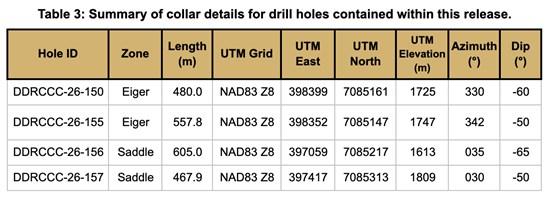
Sitka Gold Corp. (TSX-V: SIG) (FSE: 1RF) (OTCQX: SITKF) is pleased to announce assay results from four diamond drill holes completed at the Saddle Zone and the Eiger deposit, and to provide an update on the planned 60,000 metre diamond drilling program currently underway at its 100% owned, road accessible RC Gold Project in Canada’s Yukon Territory.
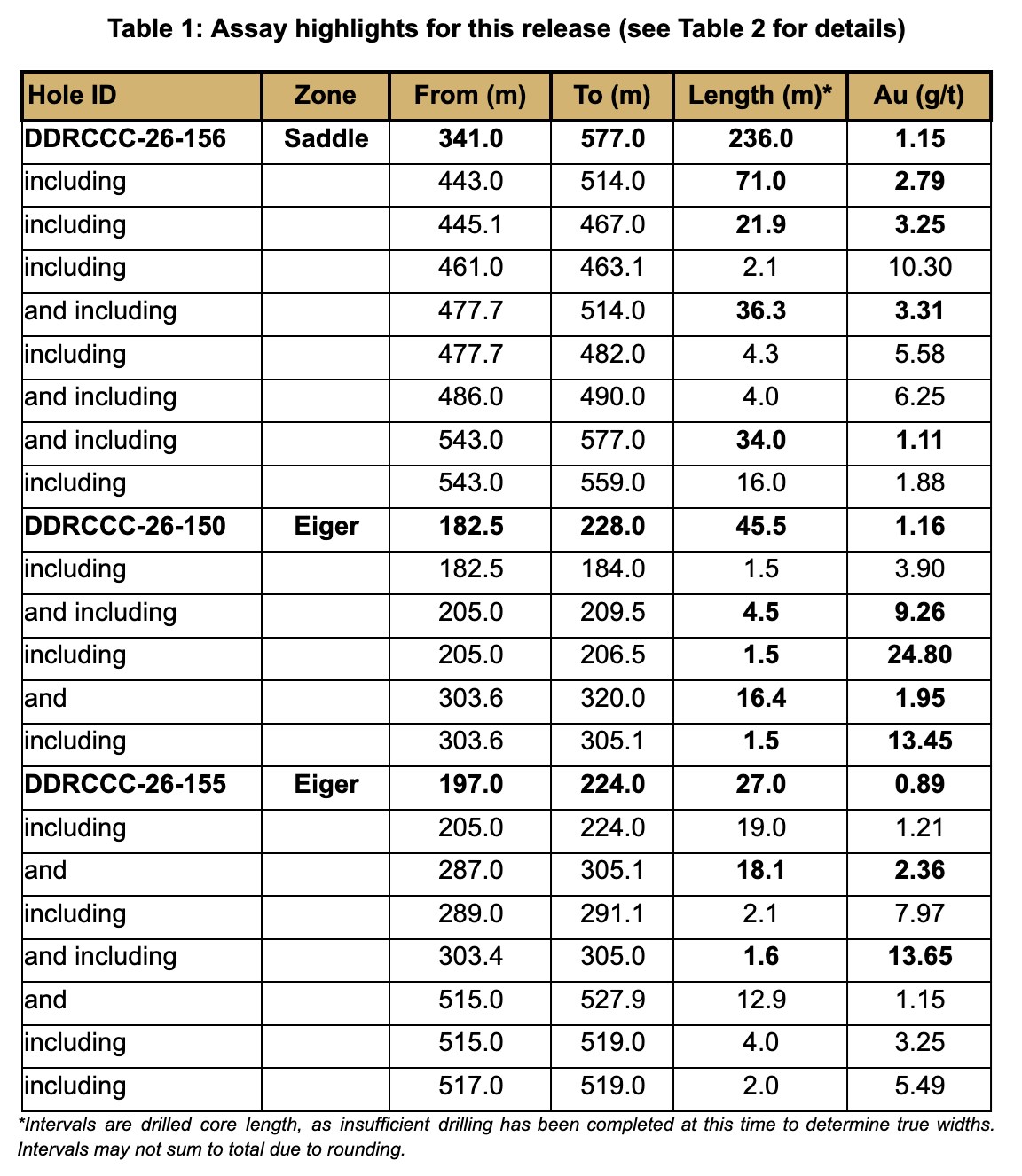
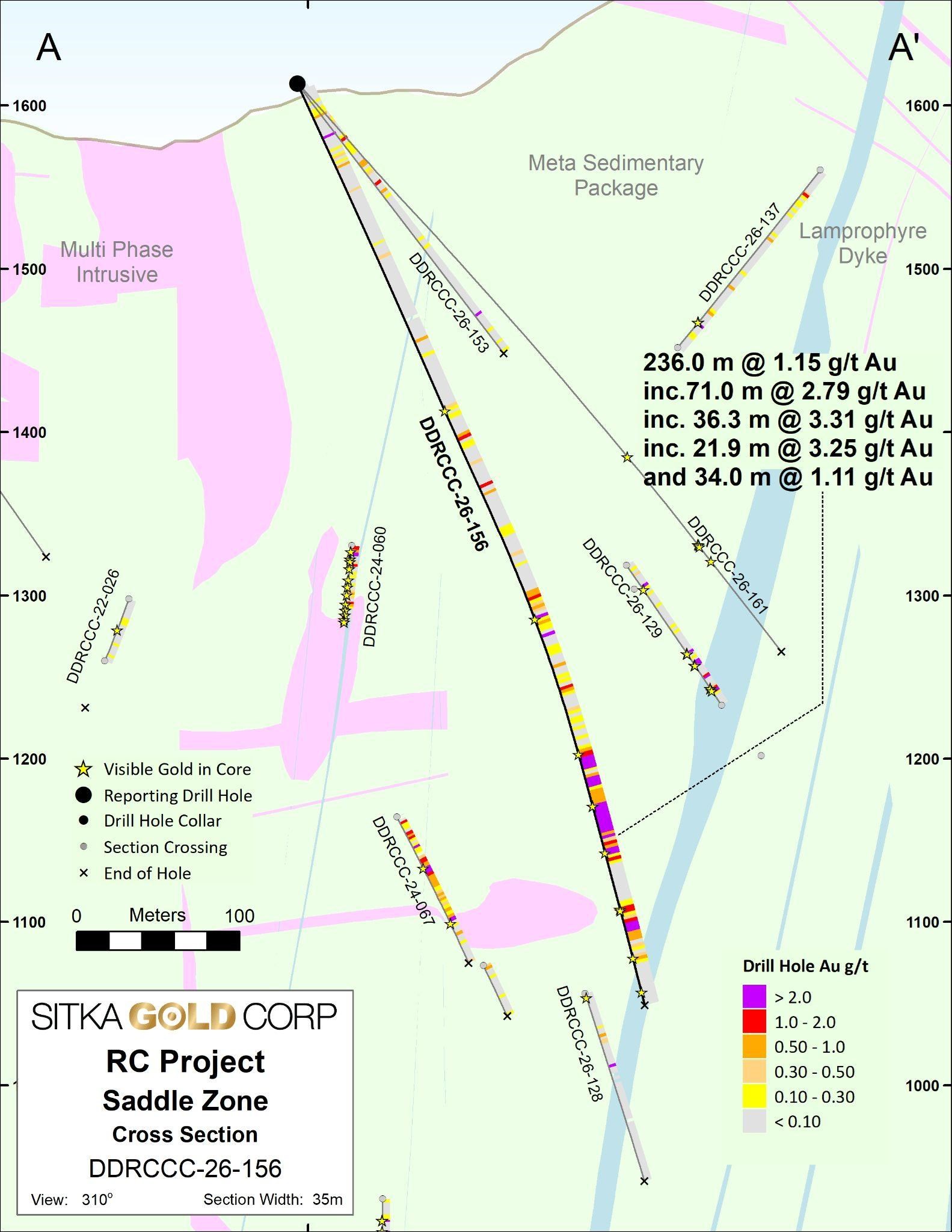
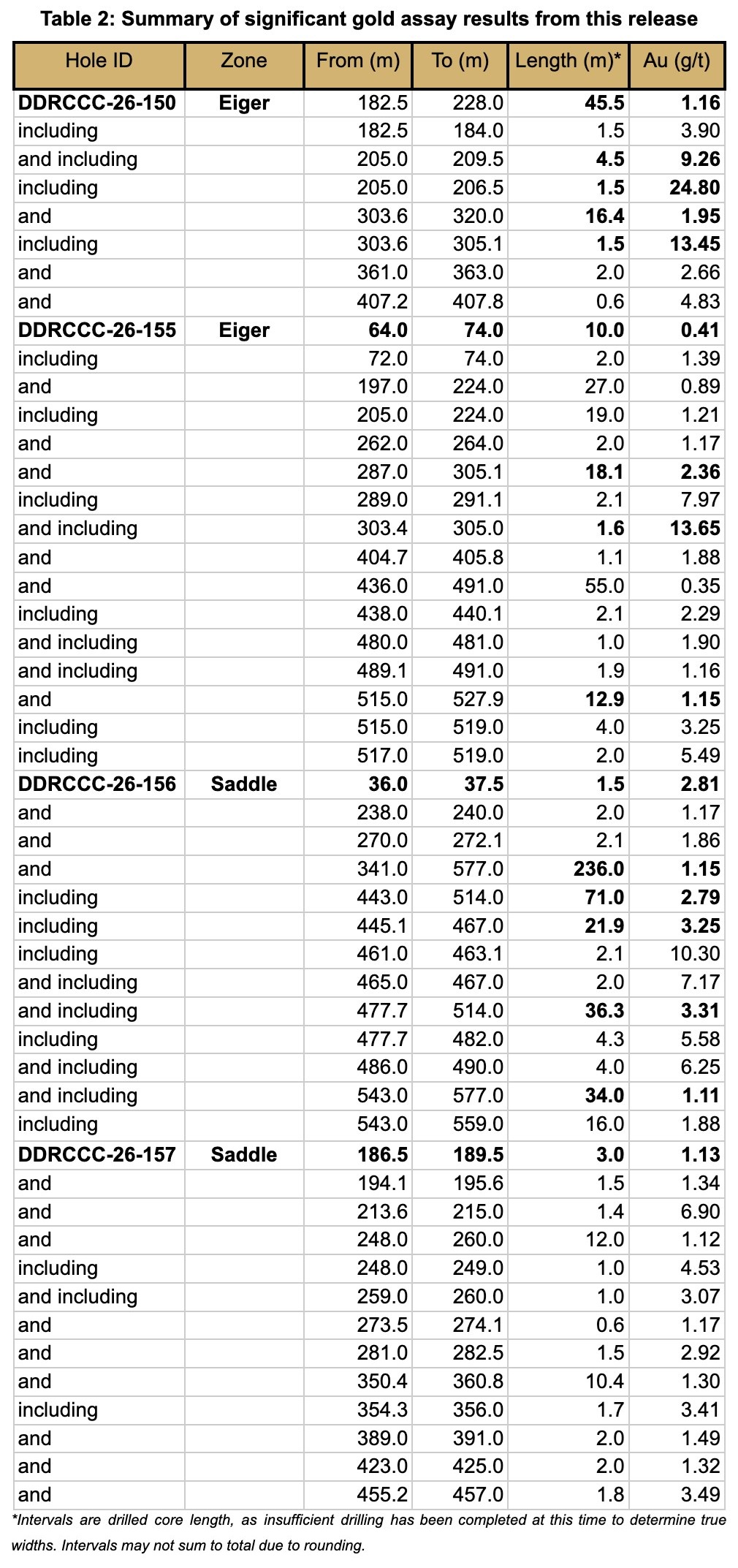
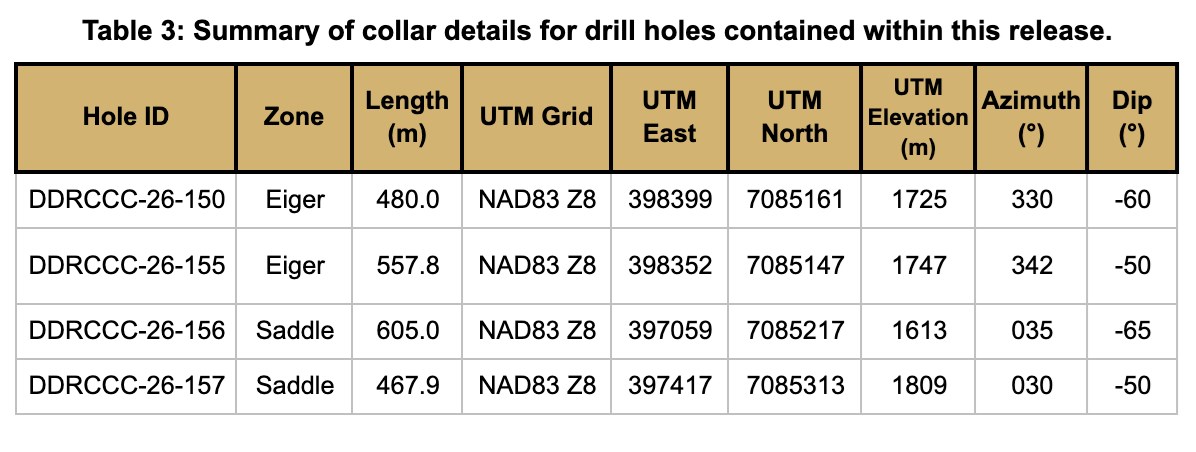
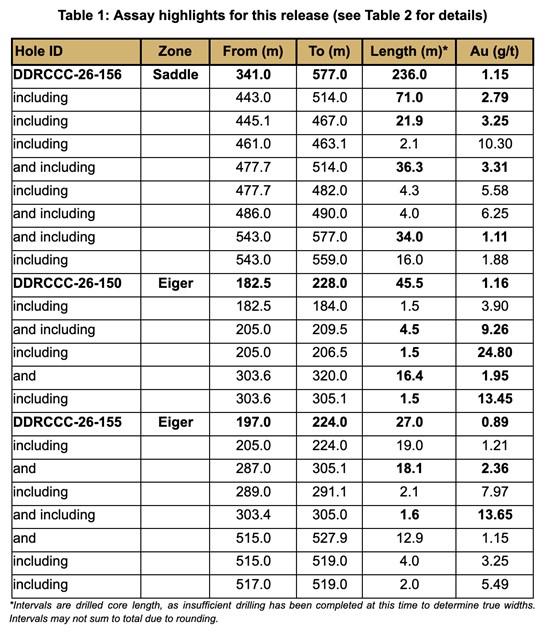
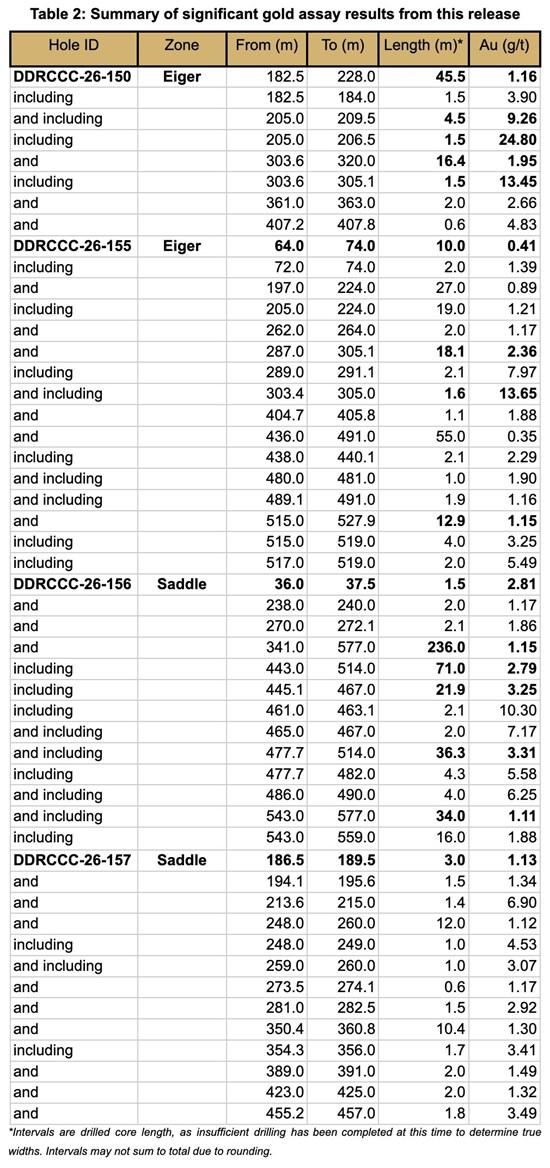
These results show continued expansion of gold mineralization across the Blackjack-Eiger area. At the Saddle Zone, Hole 156 intersected 236.0 m of 1.15 g/t gold, including 71.0 m of 2.79 g/t gold, 36.3 metres of 3.31 g/t gold and 21.9 metres of 3.25 g/t gold. The grade is carried by two separate higher-grade cores, and mineralization continues below with a further 34.0 metres of 1.11 g/t gold from 543.0 metres. Drilling this year at the Saddle Zone, which is located within the Blackjack pit shell, continues to intersect broad intervals of strong gold values in an area classified as waste in the current MRE and demonstrates the potential of this area to add significant tonnage to a future Blackjack MRE update.
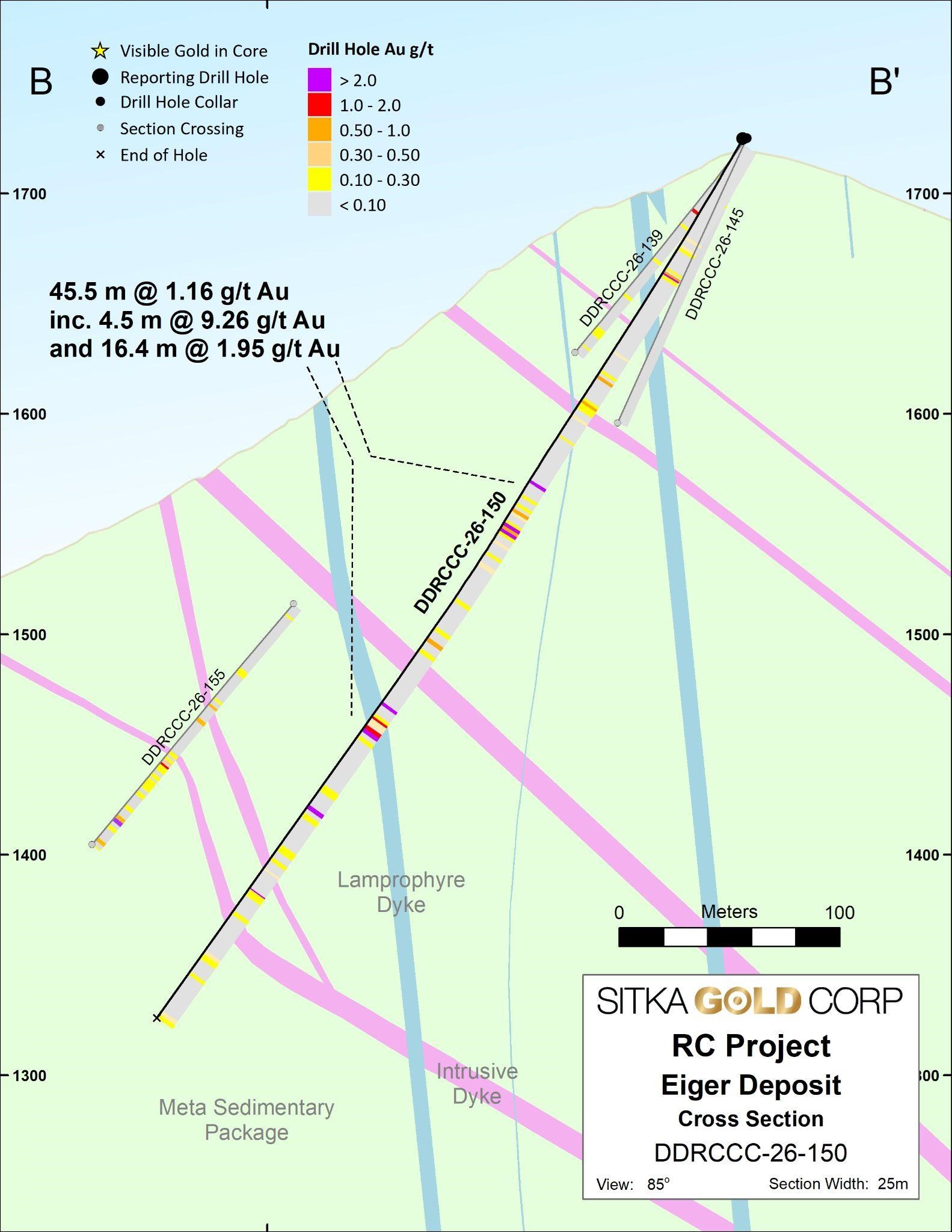
At the Eiger Deposit, step-out hole 150 returned 45.5 m of 1.16 g/t gold, including 4.5 m of 9.26 g/t gold, from 182.5 metres and a second interval of 16.4 m of 1.95 g/t gold from 303.6 m. Meanwhile, Hole 155 returned 18.1 m of 2.36 g/t gold from 287.0 m. This year’s step-out holes to the west of Eiger have been intersecting higher-grade intervals than what has previously been seen within the deposit, suggesting a higher-grade gold zone could be developing as mineralization is extended west towards Saddle.
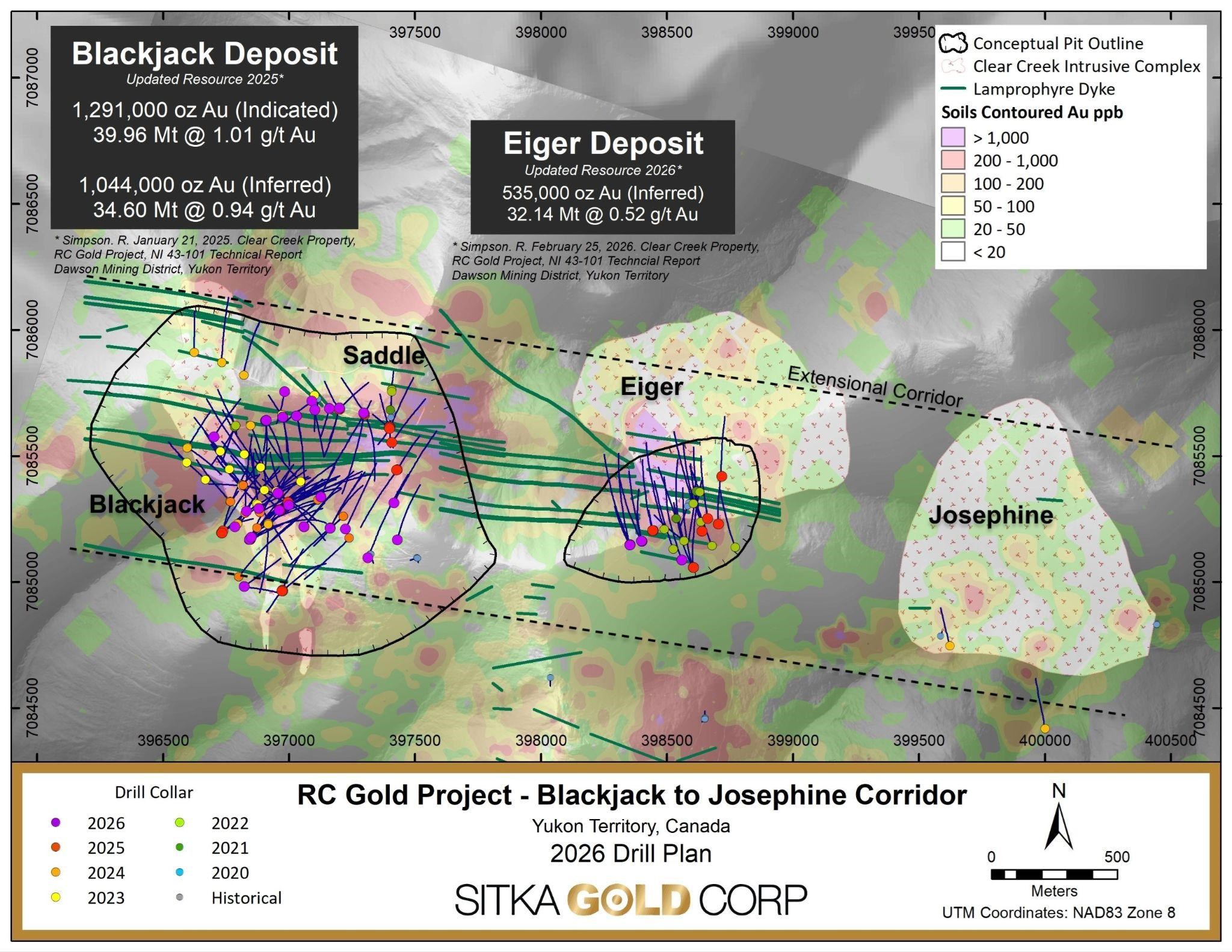
With Saddle extending mineralization east from Blackjack and Eiger expanding to the west, the two deposits continue to grow toward each other along the 2 km long Blackjack-Eiger area. In addition, a dominant lamprophyre dyke that marks a major conduit for gold mineralization has been shown by drilling to continue from Blackjack to Eiger, providing a clear linkage between the two deposits. The modeling of this main lamprophyre dyke within the 5 km extensional corridor provides a clear target for future drilling to connect not only the Blackjack-Eiger deposits but also for targeting mineralization within the entire corridor which projects west of Blackjack and east from Eiger to the Josephine Intrusion target (see Figure 8).
To view an enhanced version of this graphic, please visit:
https://images.newsfilecorp.com/files/6144/318891_b645718ef402db24_002full.jpg
“Drilling within the Blackjack-Saddle-Eiger corridor continues to impress, with Hole 156 returning some of the best results seen to date from the Saddle Zone,” stated Cor Coe, CEO and Director of Sitka Gold. “The strong gold values intercepted in DDRCCC-26-156 demonstrate that the Saddle Zone carries significant grades at depth as well as near surface. Given that the Saddle Zone is located within the existing Blackjack pit shell, the strong gold results coming from this year’s drilling across the Saddle Zone have the potential to add significant tonnage to a future MRE update for the Blackjack Deposit. In addition, stepout holes 150 and 155 at Eiger have also returned significant gold grades that continue to push mineralization west toward Saddle – Blackjack. Drilling has also confirmed that a dominant lamprophyre dyke, which marks a major structural conduit for gold mineralization, continues from Blackjack east through the Saddle Zone and to the Eiger Deposit, covering a distance of approximately 2 kilometres. Together, these results support our view that Blackjack, Saddle and Eiger may ultimately form one larger, continuous gold system. With the 60,000 metre program nearing completion, which will effectively double the total amount of diamond drilling completed to date at RC Gold, we look forward to the release of dozens of more pending drill holes and an updated mineral resource estimate.”
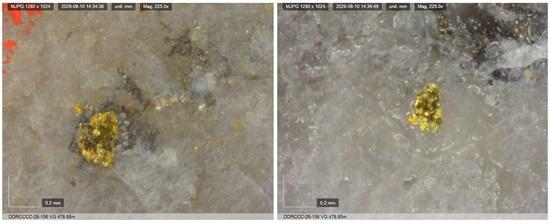
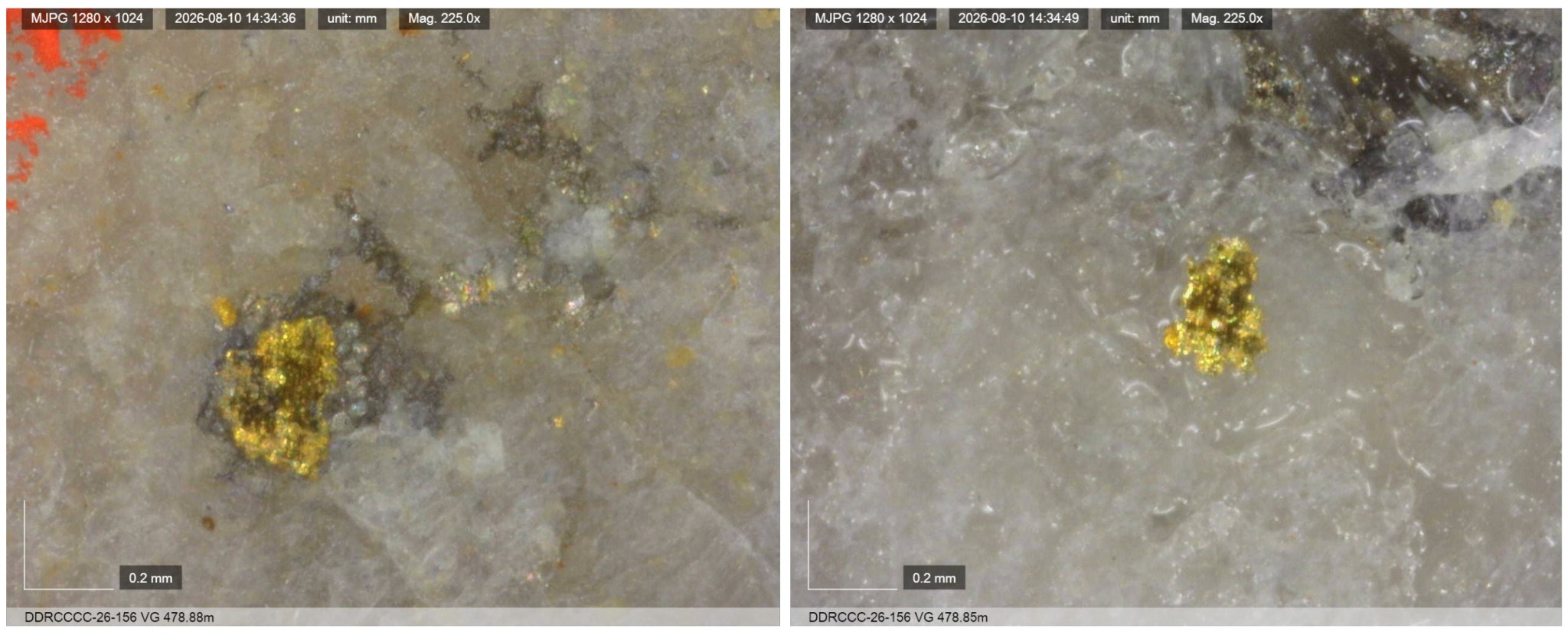
Figure 1: Examples of visible gold from DDRCCC-26-156
To view an enhanced version of this graphic, please visit:
https://images.newsfilecorp.com/files/6144/318891_b645718ef402db24_003full.jpg
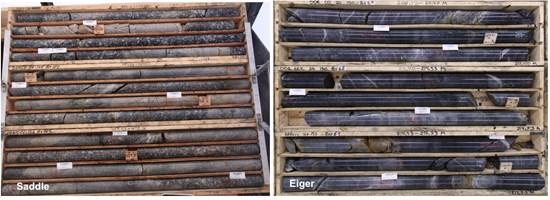
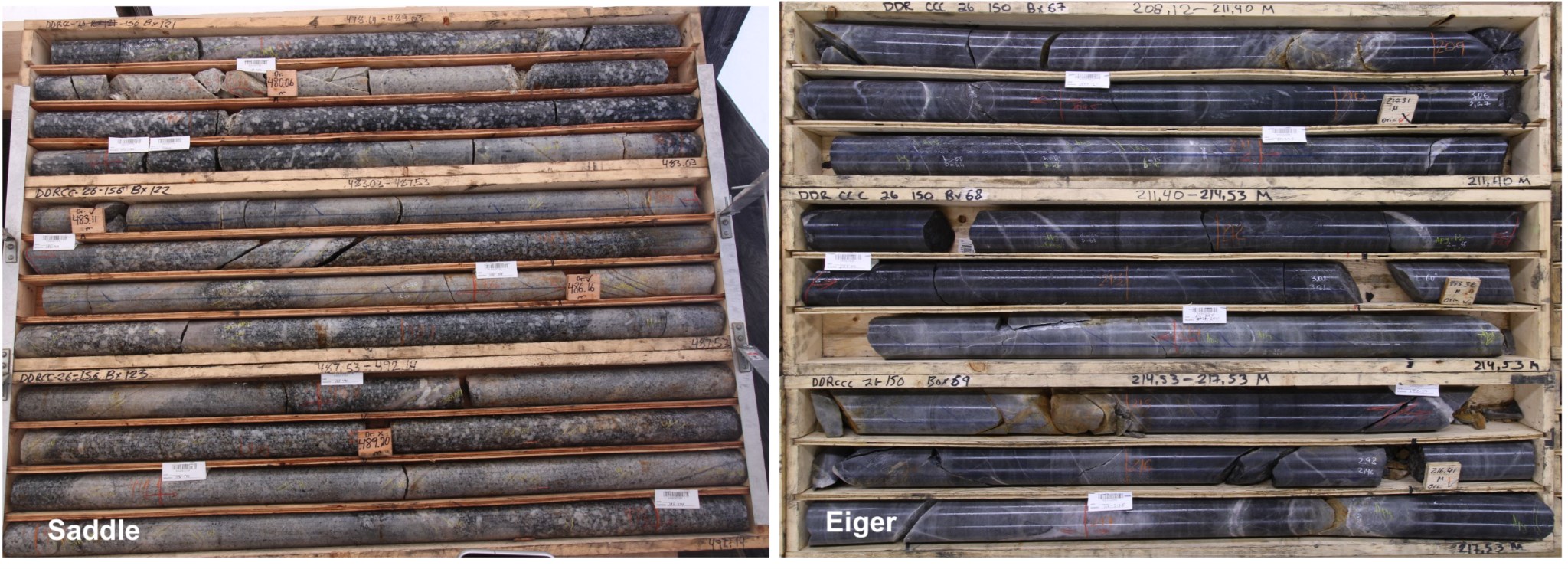
Figure 2: Examples of drill core from DDRCCC-26-156 at Saddle (478.6 m – 492.1 m) and DDRCCC-26-150 at Eiger (208.1 m – 217.5 m).
To view an enhanced version of this graphic, please visit:
https://images.newsfilecorp.com/files/6144/318891_b645718ef402db24_004full.jpg
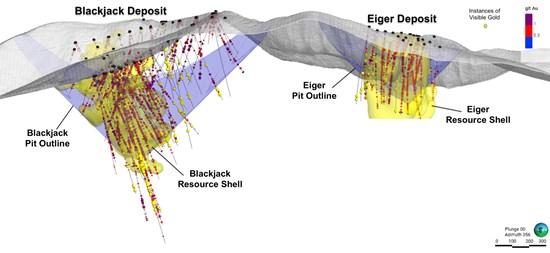
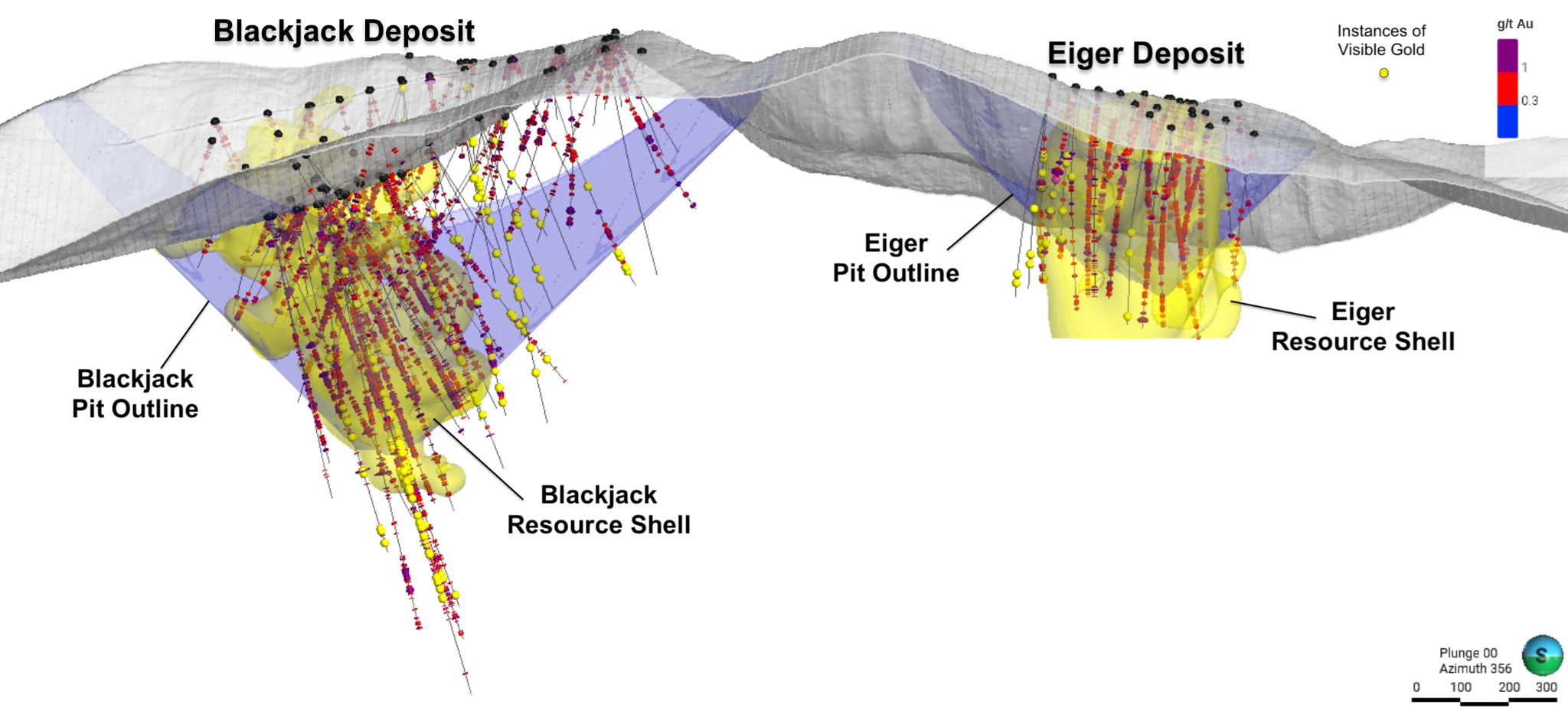
Figure 3: A 3D representation of the current Blackjack and Eiger resource block models showing the gold deposits that begin at surface and are open in all directions. Drill results from Saddle have confirmed gold mineralization extends approximately 550 metres east of the Blackjack resource (and within the pit limits) while drilling at Eiger has confirmed that gold mineralization extends approximately 120 m west of the current Eiger resource. The resource pit-limits for these deposits are currently about 200 m apart. Recent results show that mineralization at these deposits continues to grow towards each other and may ultimately form one larger, continuous gold system.
To view an enhanced version of this graphic, please visit:
https://images.newsfilecorp.com/files/6144/318891_b645718ef402db24_005full.jpg
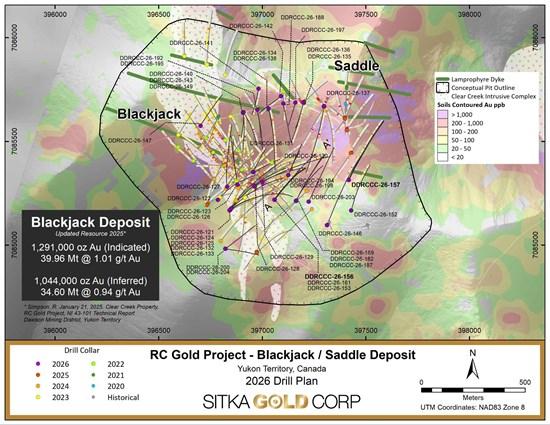
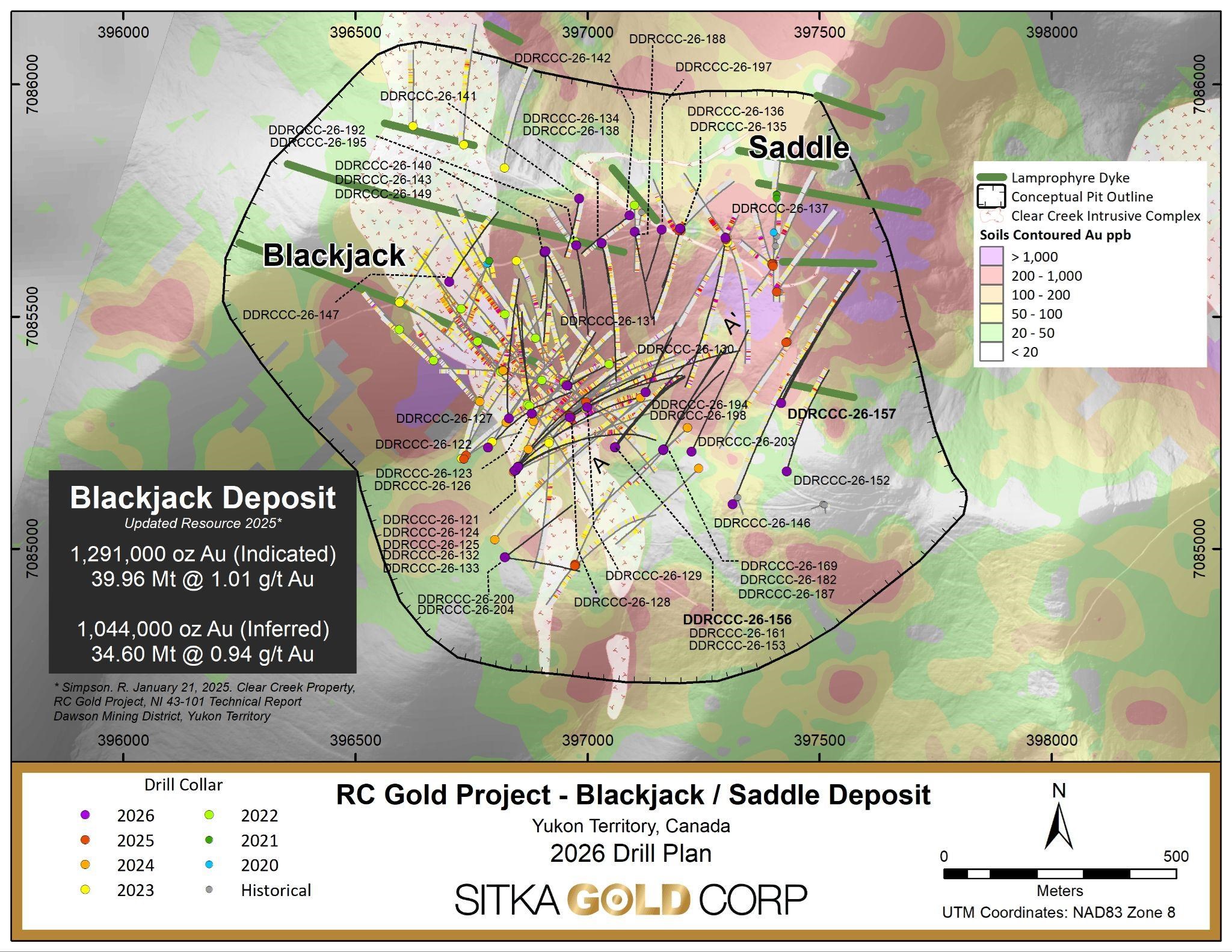
Figure 4: Plan map of drilling completed at the Blackjack deposit and Saddle Zone, highlighting results from drill hole DDRCCC-26-156 reported in this news release. The Blackjack deposit remains open in all directions.
To view an enhanced version of this graphic, please visit:
https://images.newsfilecorp.com/files/6144/318891_b645718ef402db24_006full.jpg
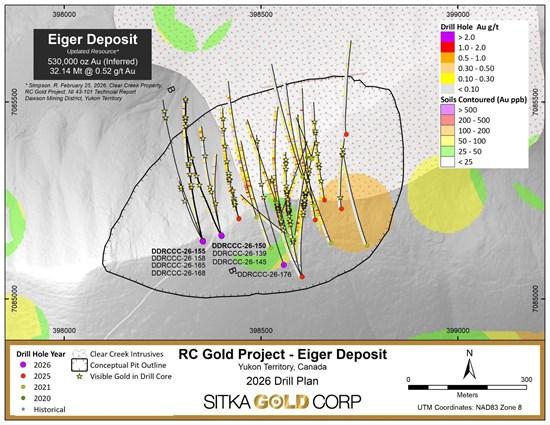
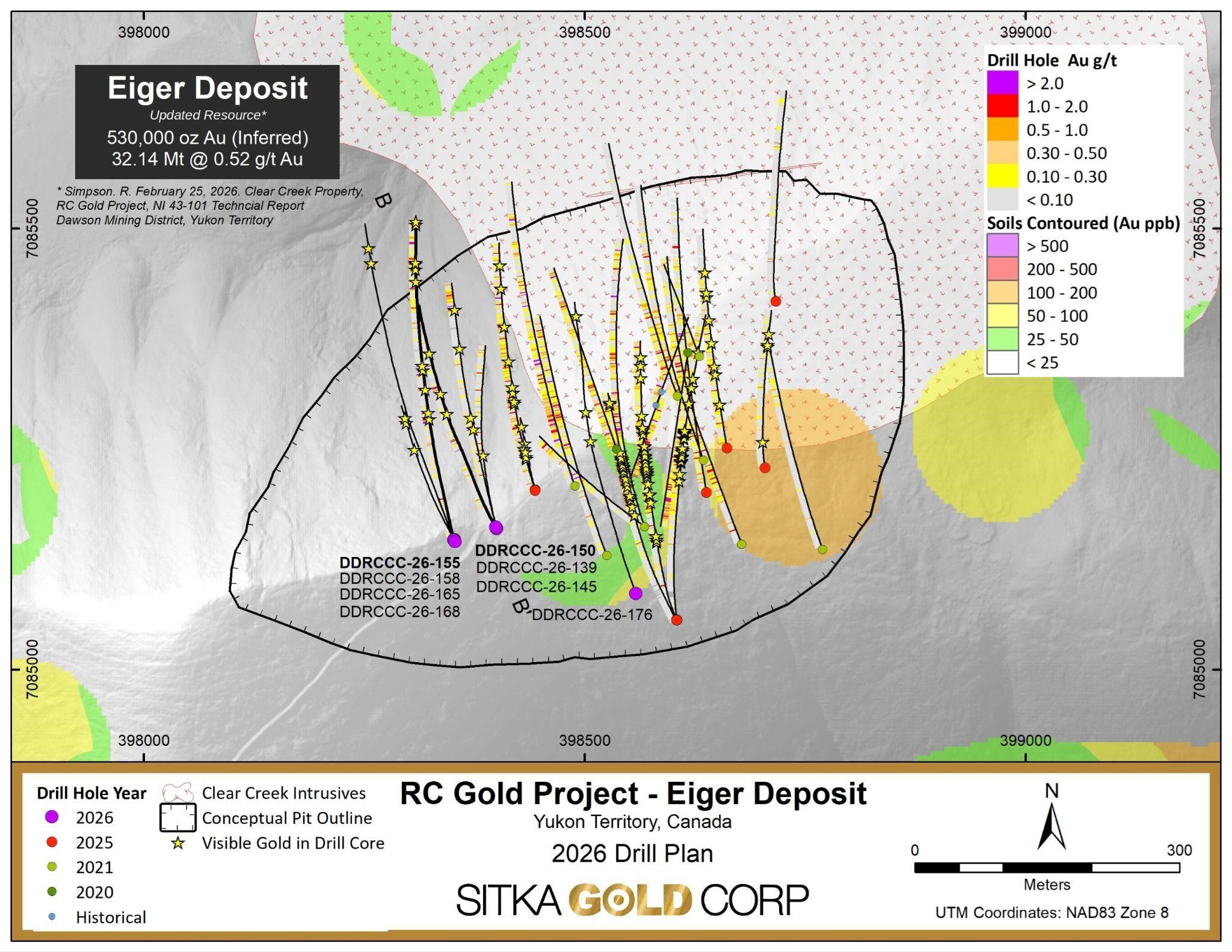
Figure 5: Plan map showing drilling completed to date at the Eiger deposit along with the current gold resource outline and resource pit outline. Drilling continues to expand mineralization to the west at Eiger towards the Saddle zone and Blackjack deposit. The Eiger deposit remains open in all directions.
To view an enhanced version of this graphic, please visit:
https://images.newsfilecorp.com/files/6144/318891_b645718ef402db24_007full.jpg
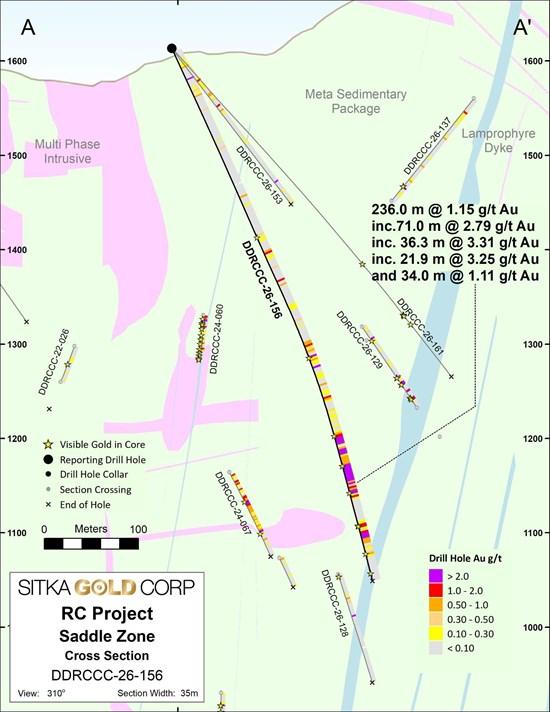
Figure 6: Cross section of drill hole DDRCCC-26-156 showing gold grades at the Saddle Zone.
To view an enhanced version of this graphic, please visit:
https://images.newsfilecorp.com/files/6144/318891_b645718ef402db24_008full.jpg
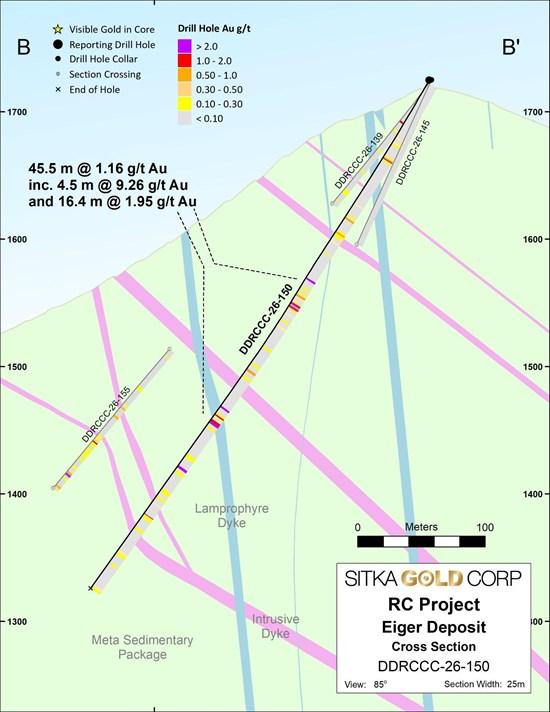
Figure 7: Cross section of drill hole DDRCCC-26-150 showing gold grades at the Eiger Deposit.
To view an enhanced version of this graphic, please visit:
https://images.newsfilecorp.com/files/6144/318891_b645718ef402db24_009full.jpg
Drilling at the Saddle zone has consistently intersected several lamprophyre dykes that define the 5 km Blackjack-Saddle-Eiger-Josephine extensional corridor. The drilling has confirmed a dominant lamprophyre that is continuous from the Blackjack deposit through the Saddle Zone and into the Eiger deposit. Gold mineralization has been consistently intersected in the hangwall of this lamprophyre within both intrusive and metasedimentary host rocks as seen in Hole 156, which returned some of the strongest intercepts drilled to date at Saddle. Geological modelling of the lamprophyre and previous geological mapping, rock and soil sampling suggests that this lamprophyre extends west of the Blackjack deposit and east of the Eiger deposit towards the Josephine intrusion. The modeling of this main lamprophyre dyke that is marking a conduit for gold mineralization within the 5 km corridor provides a clear target for future drilling to connect not only the Blackjack-Eiger deposits but also as a target for future drilling to target mineralization within the entire corridor (see Figure 8). This includes the Josephine target, where mapping has discovered lamprophyre dykes, along with visible gold and sheeted veins, and where the only diamond drill hole that has been drilled into the intrusion to date has confirmed reduced intrusion related gold mineralization is present, including up to 6.0 m of 0.85 g/t gold (see news release dated December 21, 2023).
The 2026 drill program continues to successfully intersect broad zones of Reduced Intrusion-Related Gold System mineralization across the Blackjack, Eiger, and Rhosgobel deposits, further expanding and defining known gold mineralization at all three of these deposits, each of which remains open in all directions. Ongoing drilling at Contact-Pukelman also continues to successfully intersect RIRGS mineralization. Six drill rigs are currently turning at the Project.
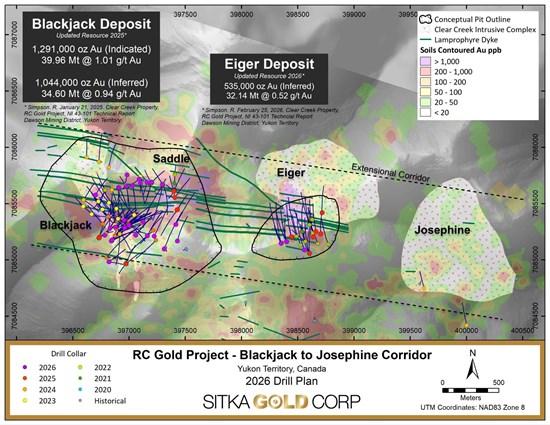
Figure 8 – Plan map showing the projected extensional corridor running from the Blackjack through Eiger and on to Josephine. Drilling has confirmed a dominant lamprophyre dyke that is continuous from the Blackjack deposit through the Saddle Zone and into the Eiger deposit. This lamprophyre marks a major conduit for gold mineralization and provides a linkage between the Blackjack and Eiger gold deposits.
To view an enhanced version of this graphic, please visit:
https://images.newsfilecorp.com/files/6144/318891_b645718ef402db24_010full.jpg
To view an enhanced version of this graphic, please visit:
https://images.newsfilecorp.com/files/6144/318891_sitka-table2.jpg
To view an enhanced version of this graphic, please visit:
https://images.newsfilecorp.com/files/6144/318891_b645718ef402db24_013full.jpg
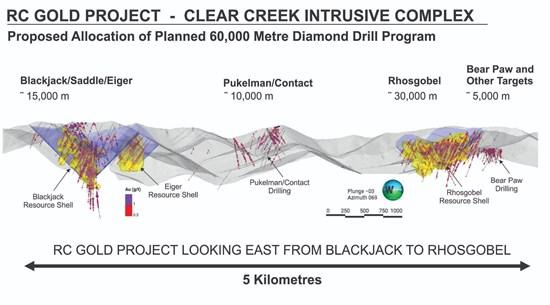
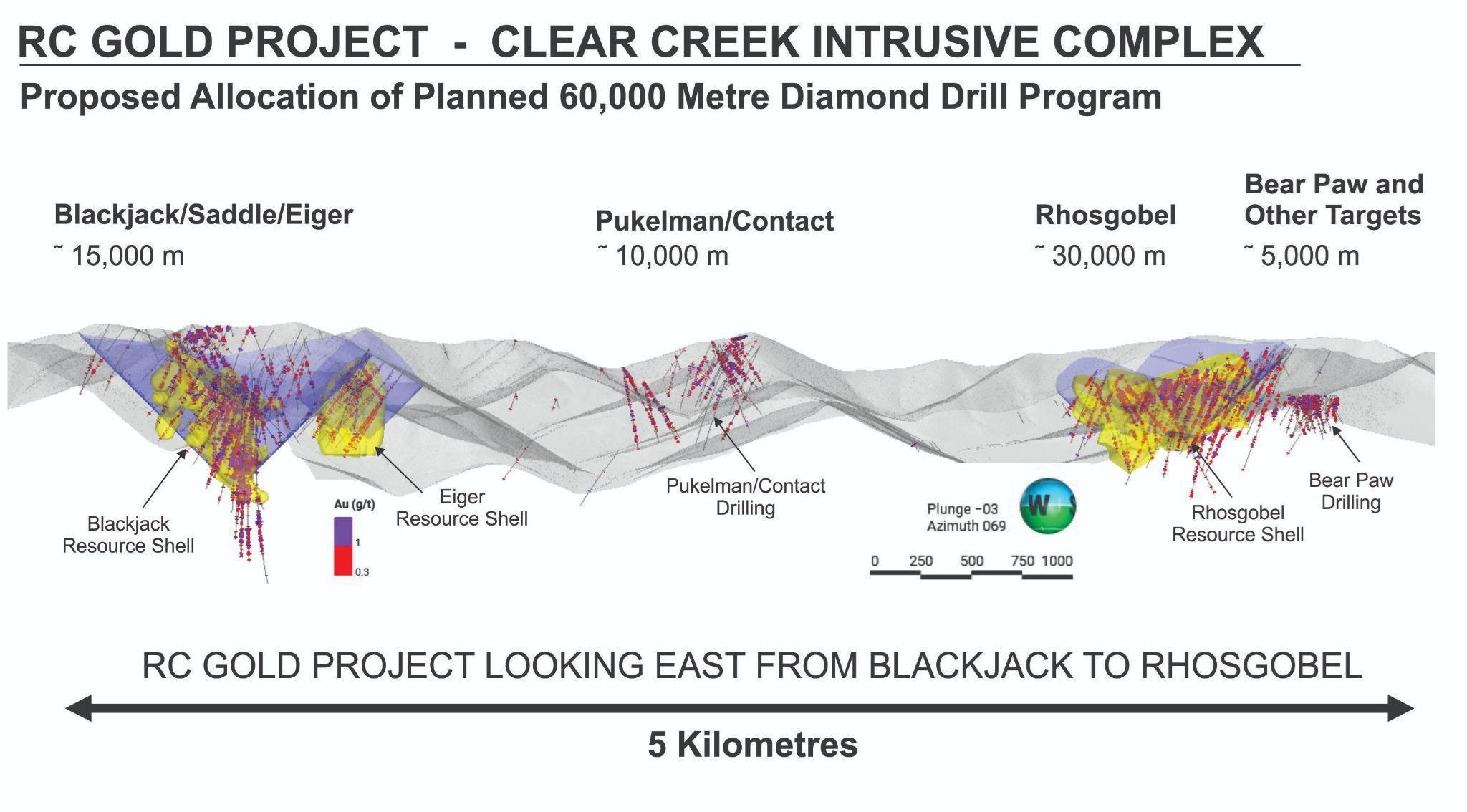
Figure 9: Longitudinal section showing locations of several of the intrusion targets and the current gold resources within the Clear Creek Intrusive Complex. A 60,000 metre diamond drilling program planned for 2026 will focus on further expansion of the 2 km long Blackjack-Eiger area with 15,000 metres of drilling. An additional 30,000 metres of drilling is planned at Rhosgobel to follow up on the initial diamond drilling conducted by Sitka in 2025. 10,000 metres of drilling has been allocated for the Pukelman-Contact zone and 5,000 metres of drilling will follow up on initial drilling results from Bear Paw and test other high-priority targets.
To view an enhanced version of this graphic, please visit:
https://images.newsfilecorp.com/files/6144/318891_b645718ef402db24_014full.jpg
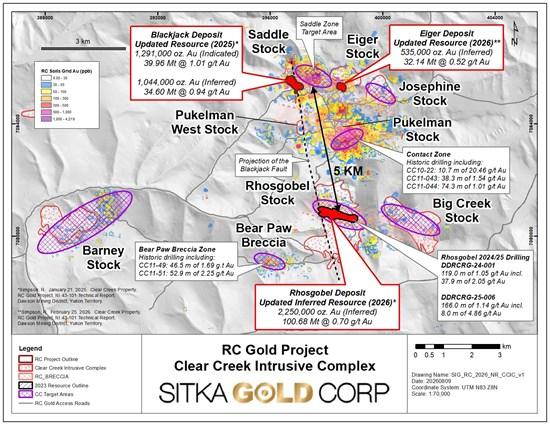
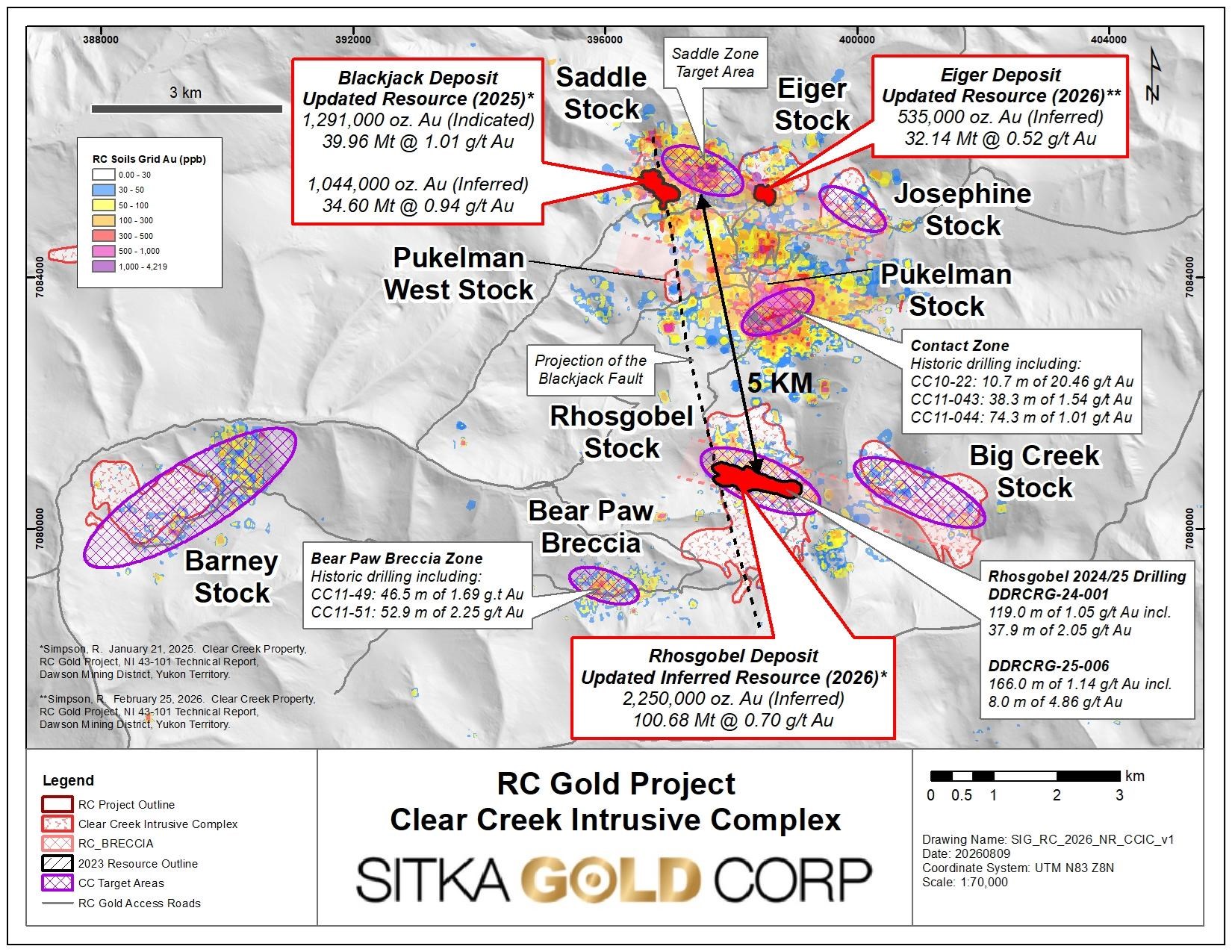
Figure 10*: A plan map of the Clear Creek Intrusive Complex showing the resource areas at Blackjack, Eiger and Rhosgobel and the six additional areas that have drill targets indicated by the mauve hatched areas. The map highlights the numerous drill targets that Sitka has outlined within the CCIC which all are connected by the road network on the project and occur in an area measuring five (5) km north-south and twelve (12) km east-west. Additional areas highlighted by strong gold in soil anomalies are being advanced to the drill ready stage with additional geological work planned in 2026.
To view an enhanced version of this graphic, please visit:
https://images.newsfilecorp.com/files/6144/318891_b645718ef402db24_015full.jpg
* References for Figure 10 drilling intervals:
Rhosgobel Intervals: Sitka Gold News Release dated November 25, 2024
Pukelman Intervals: Sitka Gold News Release dated January 7, 2025
Contact Intervals: O’Brien, 2010; Assessment Report, 2010 Diamond Drilling Program, Clear Creek Property (Assessment report 095539)
Shutty, 2011; Assessment Report, 2011 Exploration Program, Clear Creek Property (Assessment Report 095984)
Bear Paw Intervals: Shutty, 2011; Assessment Report, 2011 Exploration Program, Clear Creek Property (Assessment Report 095984)
About the RC Gold Project
Sitka’s 100% owned, flagship RC Gold Project consists of a 447 square kilometre contiguous district-scale land package located in the heart of Yukon’s Tombstone Gold Belt. The project is located approximately 100 kilometres east of Dawson City, which has a 5,000 foot paved runway, and is accessed via a secondary gravel road from the Klondike Highway which is usable year-round and is an approximate 2 hour drive from Dawson City. It is one of the largest consolidated land packages strategically positioned mid-way between the Eagle Gold Mine and the past producing Brewery Creek Gold Mine.
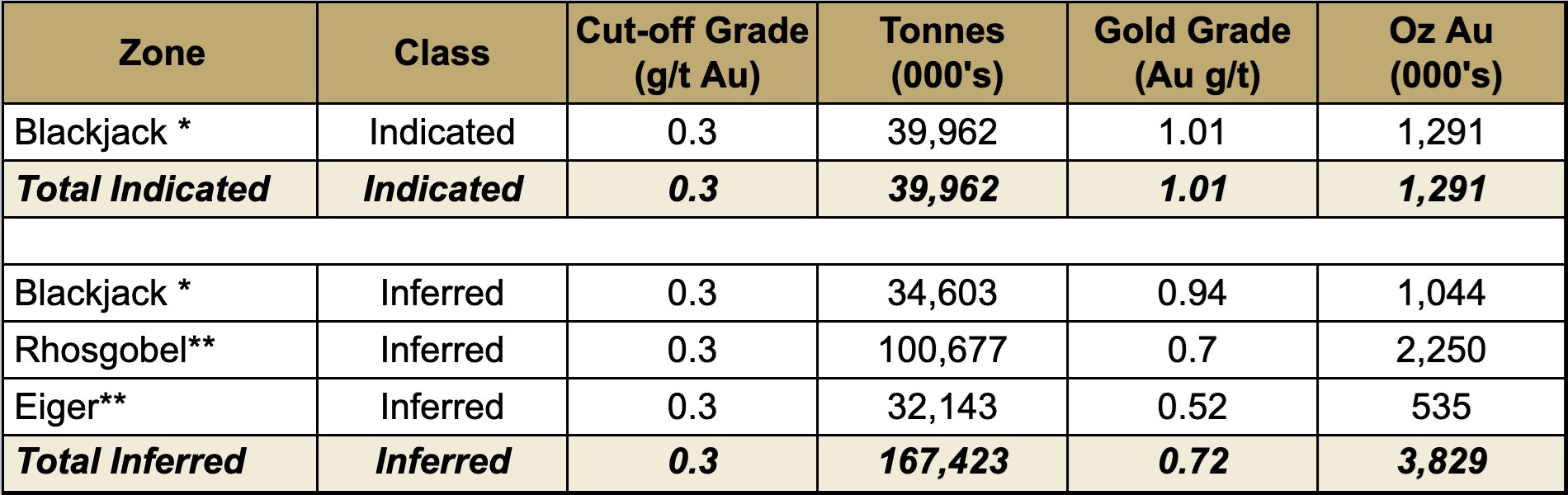
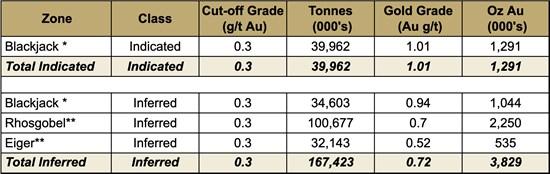
The RC Gold Project hosts an indicated MRE of 1,291,000 ounces of gold and an inferred MRE of 3,829,000 ounces of gold (see Table A below) hosted within three at surface, road-accessible pit constrained deposits. The 60,000 metre drill program planned for 2026 is focused on expanding all three known deposits in addition to testing other high potential targets in close proximity to the current resources.
Table A: Summary of Gold Mineral Resources at the RC Gold Project
To view an enhanced version of this graphic, please visit:
https://images.newsfilecorp.com/files/6144/318891_b645718ef402db24_016full.jpg
* Notes for Blackjack Resources:
** Notes for Rhosgobel and Eiger Resources:
All of these deposits begin at surface and are potentially open pit minable. Initial bottle roll metallurgical testing confirmed the non-refractory characteristics of the gold mineralization and returned gold extraction rates averaging around 85% for the Blackjack and Eiger deposits. Further metallurgical testwork in 2024 for Blackjack and Eiger returned recoveries ranging from 77.6 to 93% for gravity followed by cyanidation. Initial bottle roll testing for Rhosgobel has confirmed non-refractory characteristics of the gold mineralization with two composite samples returning gold recoveries of 89% and 96%. Additional metallurgical testing at Rhosgobel has returned an average gold recovery of 94.3% using conventional whole ore cyanidation leaching and an initial recovery of 84.7% tungsten in rougher concentrate using conventional flotation. Metallurgical testing for potential silver recovery has not yet been completed.
For the purposes of the current resource model, it is assumed that a likely mill flowsheet would consist of a gravimetric, flotation, and cyanidation circuit.
Upcoming Events
Sitka Gold will be attending and/or presenting at the following events*:
*All events are subject to change.
About Sitka Gold Corp.
Sitka Gold Corp. is a well-funded mineral exploration company headquartered in Canada. The Company is managed by a team of experienced industry professionals and is focused on exploring for economically viable mineral deposits with its primary emphasis on gold, silver and copper mineral properties of merit. Sitka is currently advancing its 100% owned, 447 square kilometre flagship RC Gold Project located within the Tombstone Gold Belt in the Yukon Territory. The Company has also announced plans to spin-out the Alpha Gold Project in Nevada and the Burro Creek Gold and Silver Project in Arizona into a new discovery-focused exploration company to be named at a later date.
A 60,000 metre diamond drilling program planned for 2026 is currently underway at the Company’s flagship RC Gold Project, located in Yukon Canada, where six diamond drill rigs are currently operating.
*For more detailed information on the Company’s properties, please visit our website at www.sitkagoldcorp.com
Quality Assurance/Quality Control
On receipt from the drill site, the HTW/NTW-sized drill core was systematically logged for geological attributes, photographed and sampled at Sitka’s core logging facility. Sample lengths as small as 0.3 m were used to isolate features of interest, otherwise a default 2.0 m downhole sample length was used. Each sample is identified by a unique sample tag number which is placed in the bag containing the core to be assayed. Core was cut in half lengthwise along a predetermined line, with one-half (same half, consistently) collected for analysis and one-half stored as a record. Standard reference materials, blanks and duplicate samples were inserted by Sitka personnel at regular intervals into the sample stream. Bagged samples were placed in secure bins to ensure integrity during transport. They were delivered by Sitka personnel or a contract expeditor to ALS Laboratories’ preparatory facility in Whitehorse, Yukon, with analyses completed in North Vancouver.
ALS is accredited to ISO 17025:2005 UKAS ref. 4028 for its laboratory analysis. Samples were crushed by ALS to over 70 per cent passing below two millimetres and split using a riffle splitter. One-thousand-gram splits were pulverized to over 85 per cent passing below 75 microns. Gold determinations are by fire assay with an inductively coupled plasma atomic emission spectroscopy (ICP-AES) finish on 50 g subsamples of the prepared pulp (ALS code: Au-ICP-22). Any sample returning over 10 g/t gold was re-analyzed by fire assay with a gravimetric finish on a 50 g subsample (ALS code: Au-GRA21). In addition, a 51-element analysis was performed on a 0.5 g subsample of the prepared pulps by an aqua regia digestion followed by an inductively coupled plasma mass spectroscopy (ICP-MS) finish (ALS code: ME-MS41).
The scientific and technical content of this news release has been reviewed and approved by Cor Coe, P.Geo., Director and CEO of the Company, and a Qualified Person as defined by National Instrument 43-101.
ON BEHALF OF THE BOARD OF DIRECTORS OF
SITKA GOLD CORP.
“Cor Coe“
CEO and Director
For more information, please contact:
Sitka Gold Corp.
+1-604-979-0509
info@sitkagoldcorp.com
Brutus Mining Inc. (CSE: BRU) (FSE: ZI3) is pleased to announce that it has closed its non-brokered ... READ MORE
Jaguar Uranium Corp. (NYSE American: JAGU) is pleased to announce an independent Mineral Resource E... READ MORE
Auro Metals Inc. (TSX-V: AURO) (OTCQB: AURFF), is pleased to announce the assay results of the fina... READ MORE
Endeavour Silver Corp. (NYSE: EXK) (TSX: EDR) is pleased to announce that repairs to the primary bal... READ MORE
Scorpio Gold Corp. (NASDAQ: SGLD) (TSX-V: SGLD) (OTCQB: SRCRF) (FSE: RY9) is pleased to announce re... READ MORE