








Trek South Moves Closer to the Porphyry Root as Phase 1 Drilling Sharpens the Target
Oreterra Metals Corp. (TSX-V: OTMC) (OTCQB: OTMCF) (FSE: D4R0) (WKN: A421RQ). In advance of the receipt of laboratory assays expected later this month and next, Oreterra’s CEO Kevin Keough is pleased to provide for the benefit of shareholders an assessment of the visual results and importance of the recently concluded (news, September 16) Phase 1 drill program at its new Trek South porphyry copper-gold prospect in BC’s Golden Triangle. This letter to shareholders is supported by a Trek South presentation available at Corporate Presentation.
“Trek South has now moved beyond the question of whether the prospect area encompasses a porphyry system,” states Mr. Keough. “The Phase 1 drill results have demonstrated that a broad, porphyry style alteration halo with locally abundant copper minerals is present across a wide area and extends at least several hundred metres in vertical depth. The more important question is now the location of the intrusive root believed to be the source underlying this broad area of alteration, as it is within that root that the highest-grade part of the system should be found. Across 11 holes and approximately 4,100 metres of drilling, our team has now built a much clearer picture of the system beneath the Trek South “A” Zone (Figure 1). Assays remain pending, but the combination of visual core observations, alteration patterns and magnetic modelling is pointing toward a specific target beneath the central holes in the drill fence – TS26-06, TS26-09 and TS26-10.
These three central holes combined particularly intense (and generally non-magnetic) alteration with visible copper minerals. The mineral assemblage included bornite, chalcopyrite, chalcocite, malachite and chrysocolla, with visible copper minerals occurring from trace amounts across several hundred metres to locally appreciable concentrations over shorter intervals. The combination of intense alteration and copper-bearing minerals has provided a strong vector toward what we believe to be the underlying high-temperature porphyry source. The presence of bornite, commonly intergrown with chalcopyrite and chalcocite, is considered a strong indication of an underlying, fertile intrusion source.
The Magnetic “Ship’s Prow”
Our latest interpretation combines the visual drill results with magnetic modelling. Beneath the A Zone holes, we have identified a distinctive “ship’s prow” shape in the underlying magnetic data. The resulting interpretation is a magnetically positive porphyry intrusion tilted toward the southeast, camouflaged beneath strongly magnetic volcanic rocks and later intrusions. Above it sits a large, lower-magnetic-susceptibility mineralized alteration halo (Figures 2 and 3).
In simplified terms, our geological interpretation points toward a deeper source beneath the area tested by our Phase 1 drilling. The broad surface alteration represents the outer expression of the system, while the stronger mineralization and higher-temperature assemblages encountered in the central holes provide a vector toward the underlying intrusive body. The magnetic model now suggests that this intrusive root may sit beneath and southeast of the central drill fence.
This model remains schematic and interpretive, but it provides us with something that exploration programs are designed to obtain: a more precise vector for our next drill holes.
Phase 1 Trek South ‘A’ Zone Drilling: What Changed
| Key Finding | Latest Result | What It Means |
| Drilling completed | 11 holes / ~4,100 m | Phase 1 has substantially tested the A Zone |
| Strongest central holes | TS26-06, TS26-09, TS26-10 | Central area produced the strongest visual results |
| Copper minerals | Bornite, chalcopyrite, chalcocite, malachite, chrysocolla | Indicates a fertile, copper-bearing hydrothermal environment |
| Alteration | Broad, multi-hundred-metre porphyry-style alteration | Shows the broad extent of the hydrothermal system |
| Magnetic interpretation | “Ship’s prow” magnetic feature | Helps define the geometry of the potential intrusive body |
| Current geological vector | Root interpreted beneath/southeast of central holes | Provides the target for Phase 2 drilling |
Phase 1 Has Put Our Drills Above the Interpreted Target
Our current interpretation is that the intrusive root lies below the locations of TS26-06, 09 and 10. The Phase 1 program therefore has accomplished something beyond simply testing for the presence of mineralization: it has progressively narrowed the search area and put the program directly over what we believe to be the core – or intrusive root – of the system, while Phase 2 is planned to drill directly into that target. Drilling to date has, therefore, been localized to the roof of the porphyry system. If our current geological model is correct, the higher-temperature intrusive body should lie deeper and to the southeast beneath the existing drill fence.
Our Next Test / Phase 2: Drill the Root
We are now planning our 2027 Phase 2 drilling program around this interpretation. The proposed drill holes are being designed to test beneath the Phase 1 drilling and into the interpreted intrusive root directly. Importantly, drill pads and other infrastructure from the Phase 1 program have been left in place, including camp and core-shack infrastructure, providing a head start for the next field season.
What the Trek South ‘A’ Zone Drilling Has – and Has Not – Established
There are now several pieces of the Trek South program that we can describe with greater confidence:
Established through Phase 1 drilling and modelling:
Still to be established:
In sum, our program has now moved from confirming a large alteration system to targeting the geological engine believed to have produced it. Our next holes will determine whether that interpretation holds when the drill bit reaches the intrusive root.
I will close by reminding shareholders, in the face of ever-turbulent markets, that Trek South is now more than ever a high-value copper-gold prospect strategically located directly adjacent to the Galore Creek development project, held jointly by Teck and Newmont and placing it squarely within one of the most geologically validated copper-gold corridors in North America. The terrain is moderate and, other than the necessary completion of the Hwy 37 to Galore Creek access road which currently ends just 1.2 kms downslope from our Trek South field camp, access to Trek South and any potential future development that might stem from continued exploration success, would be relatively straight-forward.”
Kevin Keough
Chief Executive Officer
Oreterra Metals Corp.
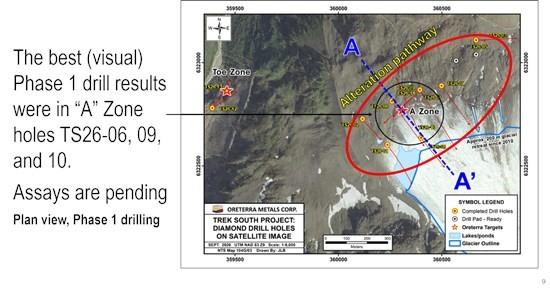
Figure 1: Trek South Phase 1 drill hole locations on satellite image
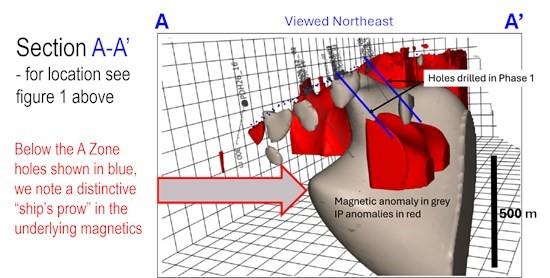
Figure 2: Trek South magnetic model (grey) with IP overlay (red)
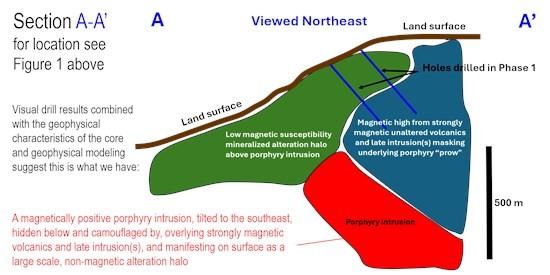
Figure 3: Interpreted lithologies and alteration overlay for Figure 2
Qualified Person
The technical information in this news release has been reviewed and approved by John Biczok, P.Geo., Vice President, Exploration for Oreterra Metals Corp. and a Qualified Person as defined by National Instrument 43-101.
About Oreterra Metals Corp.
Oreterra Metals Corp. is a TSXV-listed mineral exploration company focused primarily on copper and gold. The Company holds several wholly-owned porphyry copper-gold prospects in British Columbia’s Golden Triangle, the most significant of which is the large-scale Trek South prospect, only recently revealed by glacial ice melt, located adjacent to the southeast of Teck-Newmont’s Galore Creek project. Additional wholly-owned Oreterra interests include two former producers in Nevada: the Kinkaid claims in the Walker Lane trend covering numerous shallow Au-Cu-Ag workings over what is believed to be one or more porphyry centres, and the Scossa mine property in the Sleeper trend which is a former high-grade gold producer. The Company also holds a 100% interest in the large-scale Lundmark-Akow Lake Au-Cu property adjacent to the northwest of the Musselwhite Mine, where drilling by the Company has produced highly encouraging, broad VMS-style Au-Cu intersections. Oreterra also retains an ongoing interest in several properties including a 2% NSR on McEwen Mining’s Hislop gold property in Ontario and a 2% NSR on Enduro Metals’ Newmont Lake Au-Cu-Ag property in BC. Technical presentations on each of the Kinkaid, Scossa and Lundmark-Akow Lake properties, authored by J. Biczok, P.Geo, are available at https://www.oreterra.com/investors.
In this episode of The Prospector Podcast, Michael Fox speaks with Terry... READ MORE
Unleash Live will run live demonstrations of Prism, its always-on... READ MORE
Arizona copper producer supplying U.S. defense sector and Amazon ... READ MORE
What happens when reconciliation moves beyond words and into the decisions that shape our lan... READ MORE