








Mineralization Expanded Beyond B2B Breccia to the North and Eastern B2B Extent Better Defined; ATEX also Identified New Porphyry Targets
Phase VII to Advance Multiple High-Priority Targets Ahead of Updated Mineral Resource in 2H 2027
ATEX Resources Inc. (TSX: ATX) (OTCQX: ATXRF) is pleased to announce the final set of assay results for its Phase VI drill program, concluding the campaign at the Valeriano Copper-Gold Project, located in the Atacama Region, Chile. ATEX plans to begin its Phase VII drill program shortly with more details to be provided closer to program commencement.
Drilling highlights include:
Key drill hole highlights are summarized in the table below, with full technical context provided in the Technical Highlights section.
Table 1 – Drill Hole Highlights
| Drill holes | Key Intervals | Highlights and Interpretations |
| ATXD19A0Fi |
|
Extended B2B breccia approximately 200m south and increased the interpreted strike length by approximately 50%. |
| ATXD19B |
|
Wedged from ATXD19A, ended in mineralization and remains a priority Phase VII follow-up target. |
| ATXD25E |
|
Further refined the interpreted true width of the B2B zone while extending known limits to the east. |
| ATXD31B1Fii |
|
Defined the northern B2B margin and identified a 150m wide mineralized zone further north, highlighting expansion potential. |
| ATXD31C |
|
Further defined the northern geometry of B2B with potential for continued mineralization at depth. |
| ATXD37 |
|
New northern porphyry exploration vector more than 400m north of B2B suggests potential proximity to a porphyry centre. |
| ATXD39A |
|
Supports southern extension potential of the Valeriano system. |
Notes:
Chris Beer, Interim President and CEO, commented, “The drill results announced today continue to strengthen our understanding of the scale and geometry of the Valeriano mineralized system. At B2B, drilling has further defined the breccia geometry, demonstrated continuity at depth, expanded the known strike length to approximately 600 metres and delivered additional higher-grade intervals of approximately 2% CuEq and above. We are also seeing mineralization extend beyond the B2B breccia itself, including an approximately 150-metre true-width zone of mineralized host rock to the north.
“Beyond B2B, we are encouraged by the presence of copper mineralization, strong alteration and quartz veining characteristic of porphyry systems more than 400 metres north of the known B2B zone. Combined with encouraging geological indications to the south, these results reinforce the potential for the Valeriano system to extend well beyond the areas tested to date.
“Phase VI has given us a much stronger understanding of the architecture of Valeriano and, importantly, a growing pipeline of targets for the upcoming Phase VII program. We expect to provide additional details on our Phase VII objectives in the near future.”
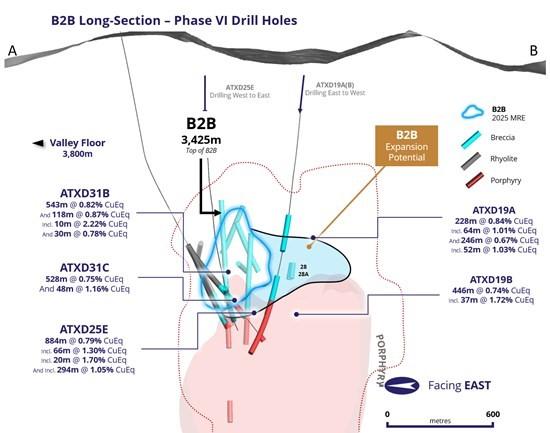
Figure 1. Long-Section of B2B and Porphyry Models
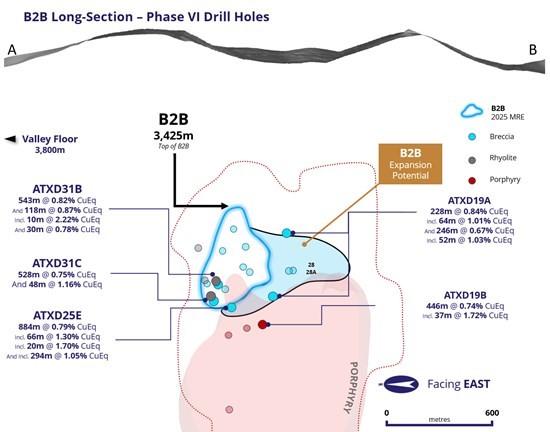
Figure 2. Long-Section of B2B and Porphyry Models with Pierce Points
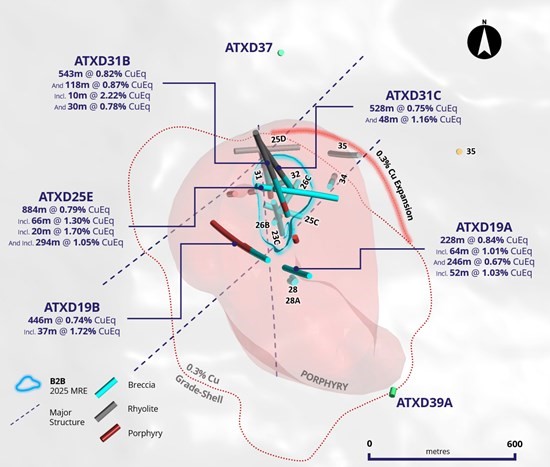
Figure 3. Plan Map of Phase VI Drill Holes
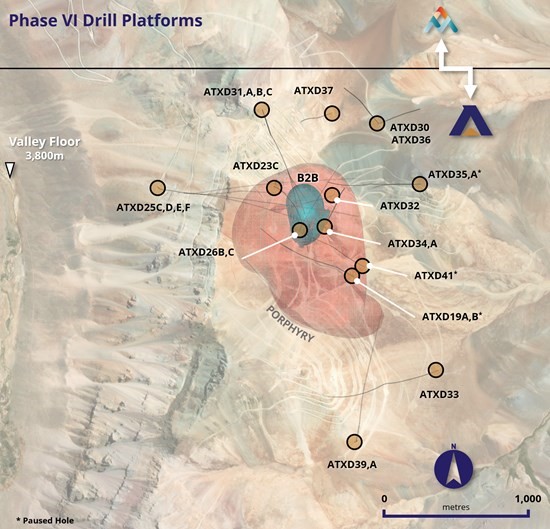
Figure 4. Plan Map of Phase VI Collars
Table 2 – Summary Results for Final Phase VI Assays
| Hole ID | From (m) | To (m) | Interval (m) | Cu (%) | Au (g/t) | Ag (g/t) | Mo (g/t) | CuEq (%) |
| ATXD19A | 828 | 1,056 | 228 | 0.54 | 0.23 | 1.0 | 129 | 0.84 |
| Incl. | 852 | 916 | 64 | 0.66 | 0.29 | 1.3 | 103 | 1.01 |
| And | 1,218 | 1,464 | 246 | 0.45 | 0.17 | 1.1 | 114 | 0.67 |
| Incl. | 1,228 | 1,280 | 52 | 0.65 | 0.26 | 1.7 | 252 | 1.03 |
| ATXD19B | 1,287 | 1,733 | 446 | 0.45 | 0.25 | 1.6 | 23 | 0.74 |
| Incl. | 1,696 | 1,733 | 37 | 0.93 | 0.71 | 4.2 | 2 | 1.72 |
| ATXD31B | 1,303 | 1,846 | 543 | 0.54 | 0.24 | 1.5 | 46 | 0.82 |
| And | 1,862 | 1,980 | 118 | 0.45 | 0.38 | 1.5 | 6 | 0.87 |
| Incl. | 1,894 | 1,904 | 10 | 1.36 | 0.79 | 3.2 | 3 | 2.22 |
| And | 1,988 | 2,018 | 30 | 0.33 | 0.41 | 1.8 | 9 | 0.78 |
| ATXD31C | 1,320 | 1,848 | 528 | 0.51 | 0.20 | 1.2 | 55 | 0.75 |
| Incl. | 1,700 | 1,748 | 48 | 0.68 | 0.43 | 2.2 | 11 | 1.16 |
| ATXD25E | 1,210 | 2,094 | 884 | 0.52 | 0.22 | 1.6 | 46 | 0.79 |
| Incl. | 1,590 | 1,656 | 66 | 0.84 | 0.41 | 2.5 | 10 | 1.30 |
| Incl. | 1,626 | 1,646 | 20 | 1.08 | 0.56 | 3.1 | 12 | 1.70 |
| And Incl. | 1,672 | 1,966 | 294 | 0.63 | 0.38 | 2.5 | 17 | 1.05 |
| ATXD37 | 1,570 | 1,612 | 42 | 0.39 | 0.06 | 0.8 | 102 | 0.50 |
| And | 1,716 | 1,770 | 54 | 0.25 | 0.05 | 0.6 | 105 | 0.35 |
| ATXD39A | 1,632 | 1,668 | 36 | 0.27 | 0.09 | 0.6 | 42 | 0.39 |
Notes:
(1) CuEq was calculated using the metal recoveries assumed in the 2025 Mineral Resource Estimate, as described in the Valeriano Technical Report, using the following formula: Cu (%) + 1.04991243188302 x Au (g/t) + 0.00824244819238401 x Ag (g/t) + 0.000357909627766355 x Mo (g/t).
(2) CuEq reported assuming metal prices of US$2,750/oz Au, US$3.80/lb Cu, US$27/oz Ag, and US$22/lb Mo.
(3) CuEq reported assuming recoveries of Cu 94%, Au 95%, Ag 80% and Mo 64%.
(4) Drill holes were composited at a cut-off of 0.3% CuEq.
(5) ATXD19B was wedged from ATXD19A, and paralleled ATXD19A from 1,287 to 1,464.2m at a distance of <3m.
(6) ATXD19A contained internal dilution of 4m for the 828m to 1,056m composite, 6m for the 1,218m to 1,464m composite and 2m for the 1,228m to 1,280m composite. ATXD19B contained internal dilution of 24m for the 1,287m to 1,733m composite. ATXD31B contained internal dilution of 8m for the 1,303m to 1,846m composite. ATXD31C contained internal dilution of 8m for the 1,320m to 1,848m composite. ATXD25E contained internal dilution of 20m for the 1,210m to 2,094m composite.
(7) True widths are unknown except where an interpreted true width is specifically stated.
(8) Drill holes ATXD30 and ATXD36 did not return any significant mineralized intervals based on the 0.3% CuEq cut-off used for the composites reported in Table 2.
Technical Highlights
Quality Assurance and Quality Control
Drill holes are collared with a PQ drill bit, reduced to HQ and, sequentially, to NQ as the drill holes progressed deeper. Drill core produced by the drill rigs was extracted from the core tubes by the drill contractor under the supervision of ATEX employees, marked for consistent orientation and placed in core boxes with appropriate depth markers added. Full core boxes were then sealed before being transported by ATEX personnel to the Valeriano field camp. Core at the field camp is processed, quick logged, checked for recovery, photographed, and marked for specific gravity, geotechnical studies and for assays. From camp, the core is transferred to a secure core-cutting facility in Vallenar, operated by IMG, a third-party consultant. Here, the core trays are weighed before being cut using a diamond saw under ATEX personnel oversight. ATEX geologists working at this facility double-check the selected two-metre sample intervals, placing the samples in seal bags and ensuring that the same side of the core is consistently sampled. Reference numbers are assigned to each sample and each sample is weighed. The core trays with the remaining half-core are weighed and photographed. Additionally, core logs are updated, and specific gravity and geotechnical samples are collected. The remaining core is stored in racks at the Company’s secure facility in Vallenar.
From Vallenar samples are sent to an ALS preparation facility in Copiapó. ALS is an accredited laboratory which is independent of the Company. The prepared samples were sent to the ALS assay laboratories in either Santiago, Chile or Lima, Peru for gold (Au-AA24), copper (Cu-AA62), molybdenum (Mo-AA62) and silver (Ag-AA62) assays as well as and multi-element ICP (ME-MS61) analysis. The QA/QC program consists of insertion rates of 6% for Certified Reference Material, 2% for certified ‘blank’ material and 2% duplication of pulp and coarse reject material. No data quality problems were indicated by the QA/QC program.
Qualified Person
Brad Ulry, P.Geo., has reviewed and approved the scientific and technical information in this news release. Mr. Ulry is the Chief Operating Officer of Dahrouge Geological Consulting Ltd., which has been retained by the Company to provide geological consulting services. Mr. Ulry is a “Qualified Person” as defined by National Instrument 43-101 – Standards of Disclosure for Mineral Projects (“NI 43-101”) and is independent of the Company for purposes of Section 1.5 of NI 43-101.
Mineral Resource Estimate
The mineral resource estimate for Valeriano is supported by the technical report titled “Independent Technical Report for the Valeriano Copper-Gold Project, Atacama Region, Chile” and dated November 3, 2025 (with an effective date of September 23, 2025), which was prepared for ATEX by SRK Consulting (Canada) Inc. in accordance with NI 43-101. The Valeriano Technical Report is available on ATEX’s website at www.atexresources.com.
About ATEX
ATEX Resources is a mineral exploration company advancing its flagship Valeriano Copper-Gold Project, located in the Atacama Region III of Chile, widely recognized as one of the world’s most prospective and mining-friendly jurisdictions. The Valeriano Project is emerging as one of the leading undeveloped copper assets globally and anchors an expanding, globally significant copper district. As such, it is well positioned to play an important role in meeting future demand amid increasingly constrained global copper supply. Valeriano currently has an Indicated Mineral Resource of 475 Mt at 0.88% CuEq (0.58% Cu, 0.25 g/t Au, 1.39 g/t Ag and 70.4 g/t Mo) and an Inferred Mineral Resource of 1,511 Mt at 0.75% CuEq (0.50% Cu, 0.20 g/t Au, 1.16 g/t Ag and 70.6 g/t Mo), as reported on September 23, 2025.
Brutus Mining Inc. (CSE: BRU) (FSE: ZI3) is pleased to announce that it has closed its non-brokered ... READ MORE
Jaguar Uranium Corp. (NYSE American: JAGU) is pleased to announce an independent Mineral Resource E... READ MORE
Auro Metals Inc. (TSX-V: AURO) (OTCQB: AURFF), is pleased to announce the assay results of the fina... READ MORE
Endeavour Silver Corp. (NYSE: EXK) (TSX: EDR) is pleased to announce that repairs to the primary bal... READ MORE
Scorpio Gold Corp. (NASDAQ: SGLD) (TSX-V: SGLD) (OTCQB: SRCRF) (FSE: RY9) is pleased to announce re... READ MORE