







Morocco Strategic Minerals Corporation (TSX-V: MCC) is pleased to report assay results from first-phase sampling programs at the Ouneine and Aït Zekri projects and to provide an operational update on its Western High Atlas portfolio in Morocco.
Highlights
Operational Progress and Field Capacity
Through its trusted Moroccan contractors, MCC has established a full-time field presence consisting of two geologists and three technicians, supervised by the Company’s Canada-based independent Qualified Person. The team is advancing detailed geological mapping, structural interpretation and systematic surface and underground sampling. Rehabilitation and safety work has also commenced in selected historical workings, including dewatering, scaling of loose rock, stability assessments, ventilation improvements and secondary-egress work, in preparation for future drilling of targets generated by the current program.
In addition, the Company has completed a high-resolution drone-based topographic survey covering the Ounein Property, as well as a 3D laser scan of the accessible underground workings, providing an accurate digital representation of the historical mine infrastructure to support the geological/structural mapping, and drill targeting.
Ouneine Copper-Silver Sampling Results
At Ouneine, field mapping and prospecting have identified multiple structurally controlled copper-bearing zones hosted principally within carbonate rocks. Mineralization is associated with quartz veins, fault corridors, hydrothermal breccias and stockwork veinlets, and consists predominantly of malachite, azurite and chalcocite in oxidized zones, with pyrite, chalcopyrite, bornite and locally galena and barite observed at surface. Copper mineralization is spatially associated with E–W to WNW–ESE structures and their intersections with subsidiary fractures, with local extension into limestone wall rocks along fractures, bedding planes and veinlet networks, consistent with a polymetallic hydrothermal system.
A total of 49 rock surface samples were collected from the principal mineralized structures across the license. The reported assay results confirm the presence of high-grade copper mineralization up to 14.88% Cu (ON-GB0043) with 37 samples showing more than 1% Cu including eight samples showing more than 5.29%Cu (figure 1).
Silver values reached up to 696 g/t Ag, demonstrating a strong association between copper and silver mineralization (figure 2)
Selected results include:
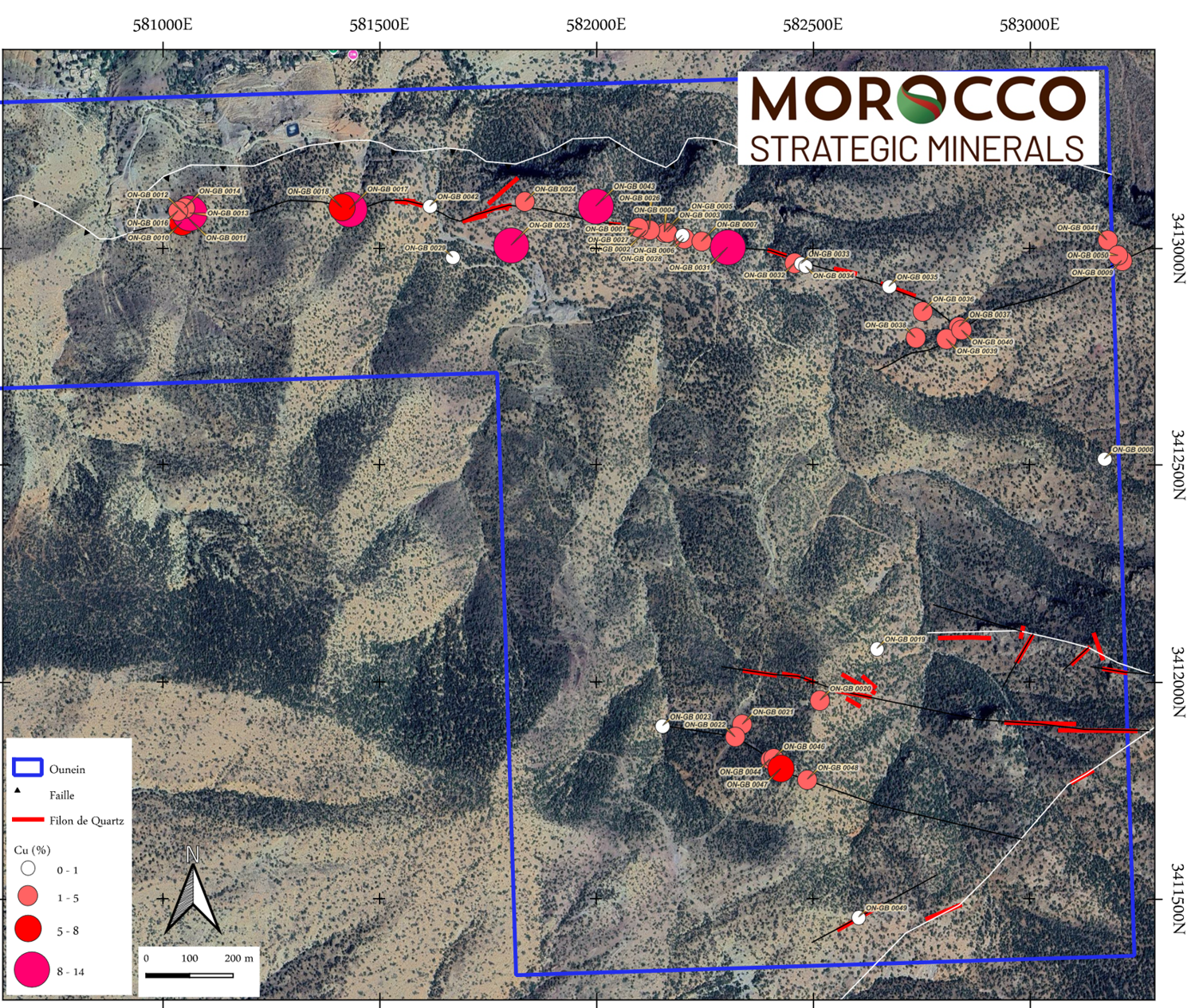
Figure 1: Copper (Cu) assay results from surface grab sampling at the Ouneine Property.
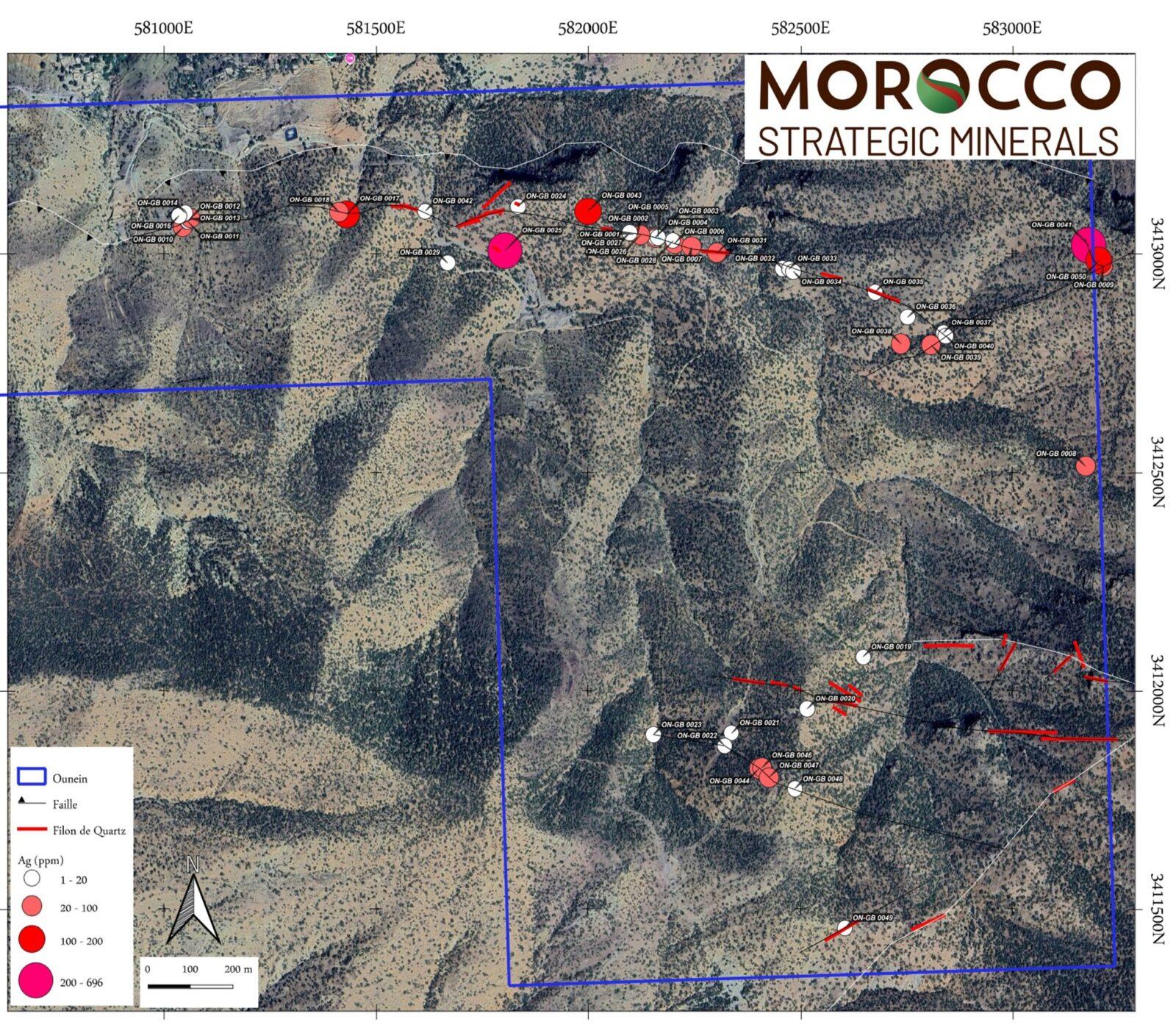
Figure 2: Silver (Ag) assay results from surface grab sampling at the Ouneine Property.
Aït Zekri Gold Sampling Results
At Aït Zekri, MCC completed first-pass lithological and structural mapping together with a 23-sample grab program comprising 17 surface rock samples and five grab samples from the historical gallery. Gold assays range from below 0.05 g/t to 4.16 g/t Au . Nineteen samples returned at least 0.10 g/t Au, six samples returned more than 0.52 g/t Au, with two of them returned more than 2.10 g/t Au*.
Selected results include:
Mapping identified several N20-trending quartz veins with subvertical dips, widths generally ranging from approximately 0.5 to 2.0 metres and lateral continuity over tens of metres. Within the gallery, the principal mineralized structure trends between N40 and N50, dips subvertically and displays a brecciated quartz-carbonate texture with disseminated pyrite and strong limonite-hematite oxidation. Malachite and azurite occur locally in surface oxide zones, and an intensely altered fault corridor with argillic alteration and finely disseminated pyrite has been identified as a priority follow-up target.
The results support continued evaluation of the historical gold-silver system. Historical records describe approximately 300 metres of underground development and 18 drill holes totalling 2,018.6 metres, including previously disclosed results of 6.70 g/t Au over 1.0 metre and underground samples reportedly returning up to 3.31 g/t Au and 240 g/t Ag. These historical data have not been independently verified by the QP and should not be relied upon as current mineral resources or mineral reserves.
*Grab samples are selective and may not represent the underlying mineralization, width, continuity or average grade.
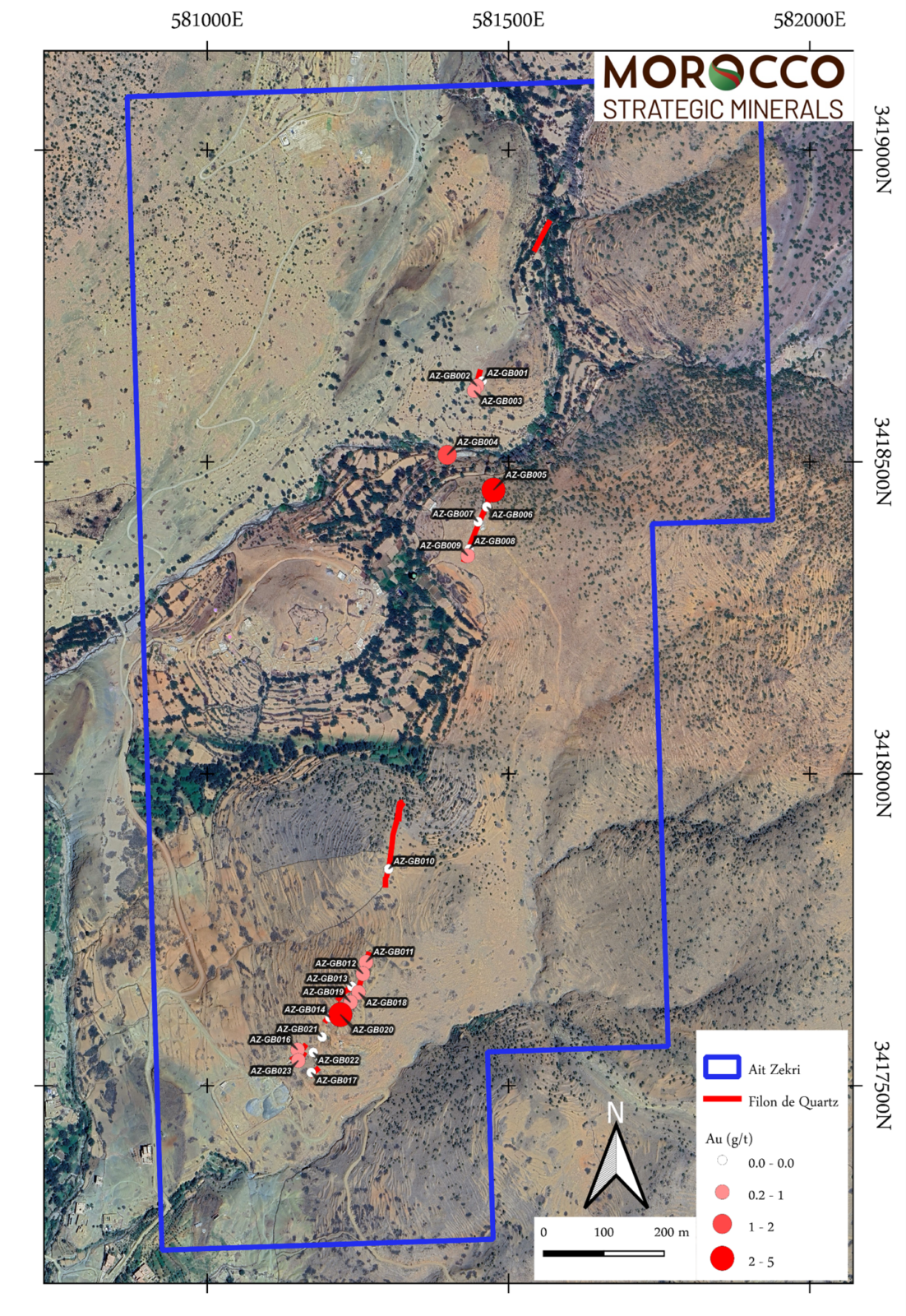
Figure 3: Aït Zekri licence showing mapped quartz veins and grab-sample locations.
District-Wide Exploration Activities
As previously announced on April 20, 2026, MCC entered into an option agreement dated April 15, 2026 with MNF Groupe Inc. a leading Moroccan mining company and subsidiary of Broychim S.A., pursuant to which the Company has been granted an exclusive option to acquire up to an 80% interest in a district-scale portfolio in Morocco’s Western High Atlas (figure 4). The portfolio comprises five exploitation licences, two research permits and the environmental authorization for a proposed central flotation plant in the Ouneine Valley, including the Tanfit, Ijoukak, Amsghni, Aït Zekri, Ighrm, Tamadghoust and Tizgui properties. In parallel, MCC also holds a separate option to acquire a 100% interest in exploitation licence 393512 (Ouneine Mine), which remains in good standing. The Company currently expects to exercise this option before the end of 2026, subject to completion of the administrative renewal process for the exploitation licence.
The current exploration program forms part of MCC’s broader district-scale evaluation of the Western High Atlas portfolio. In addition to the work currently underway at Ouneine and Aït Zekri, contractors are advancing access, rehabilitation and target-generation activities across several properties, including pumping, underground cleaning, scaling, ventilation improvements and secondary-egress assessments at selected historical workings, with Tanfit representing the next operational priority. Geological compilation, reconnaissance mapping and target evaluation are also progressing at Ijoukak, Amsghni, Ighrm, Tamadghoust and Tizgui. No analytical results from these properties are reported in this release. The Company continues to evaluate additional opportunities in Morocco that could complement its growing regional portfolio while maintaining a disciplined approach to technical evaluation and capital allocation.
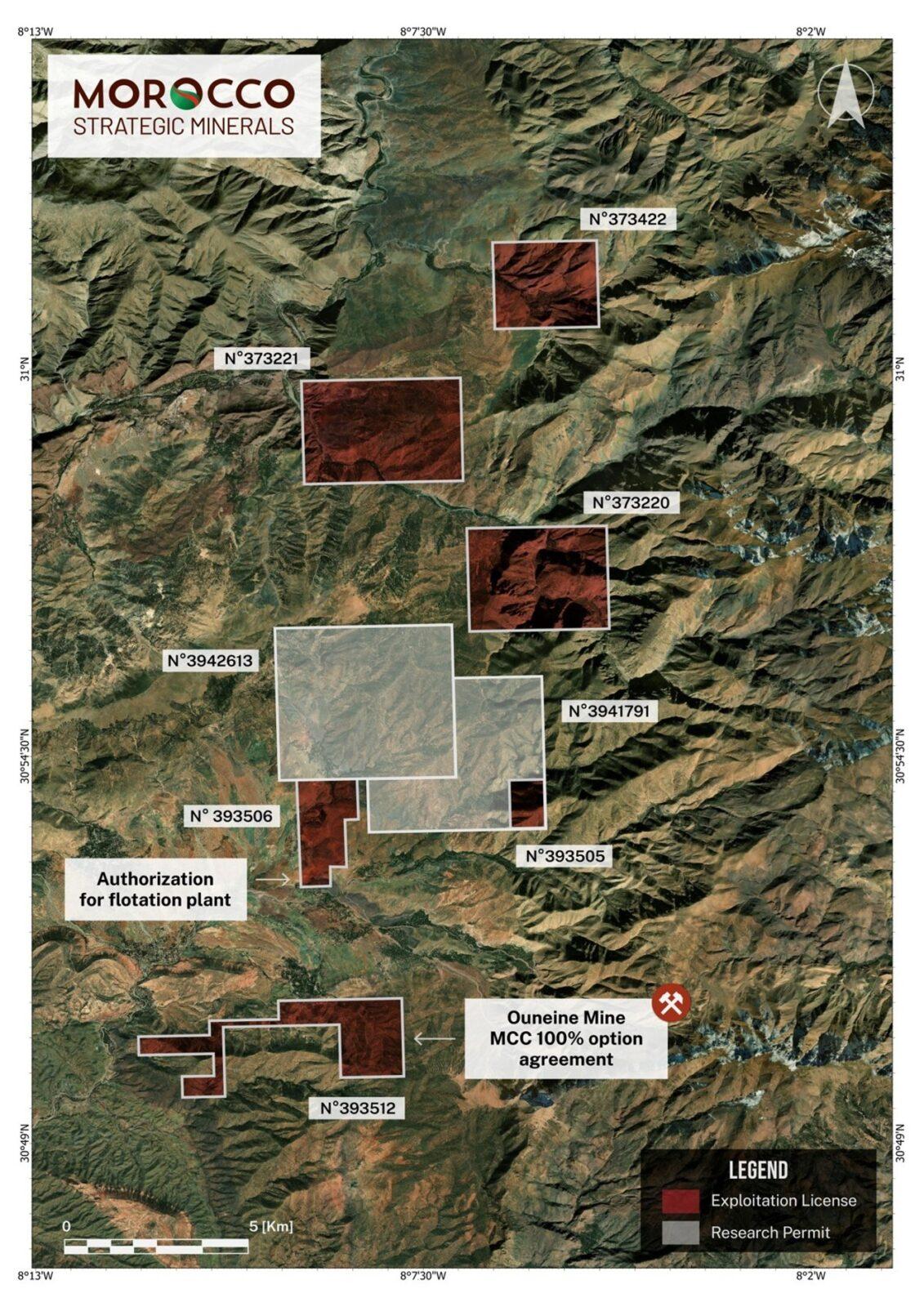
Figure 4: MCC’s Ouneine-Ijoukak hub in Morocco’s Western High Atlas.
Sampling, Analytical Methods and Quality Assurance / Quality Control
All samples were submitted to the African Laboratory for Mining and Environment (Afrilab – SGS Certified) in Marrakech, Morocco. Samples were analyzed for silver, copper, iron, lead and zinc using aqua regia digestion with an atomic absorption spectroscopy finish. Samples containing greater than 5% Cu were reanalyzed using titration, and gold was assayed by fire assay.
The initial QA/QC program included the insertion of certified reference materials (standards) and blank samples at a rate of one every 15 samples, together with pulp duplicates at the same frequency (one every 15 samples).
Qualified Person
The scientific and technical information in this release has been reviewed and approved by Merouane Rachidi, Ph.D., P.Geo., an independent Qualified Person as defined by National Instrument 43-101. Dr. Rachidi provides technical oversight and support to the Company’s Moroccan field program.
About Morocco Strategic Minerals
Morocco Strategic Minerals Corp. is a Canadian mineral exploration company focused on the acquisition, exploration and, if warranted, development of natural resource properties of merit in Canada and Morocco.
SAGA Metals Corp. (TSX-V: SAGA) (OTCQX: SAGMF) (FSE: 20H), a North American exploration company foc... READ MORE
Fredonia Mining Inc. (TSX-V: FRED) is pleased to announce that it has closed its previously announce... READ MORE
Legacy Gold Mines Ltd. (TSX-V: LEGY) is pleased to report assay results from core holes LG26-017 an... READ MORE
Inventus Mining Corp. (TSX-V: IVS) is pleased to report results from 100 drill holes from its now-... READ MORE
Abcourt Mines Inc. (TSX-V: ABI) (OTCQB: ABMBF) is pleased to present its operational report for the ... READ MORE