








Board of Directors Approves Fast-Track Construction
Minera Alamos Inc. (TSX-V: MAI) (OTCQX: MAIFF) is pleased to announce the results of a pre-feasibility study on its 100%-owned, past-producing Copperstone project located in La Paz County, Arizona, USA. A technical report for the Copperstone PFS is being prepared in accordance with National Instrument 43-101 and will be filed under the Company’s profile on SEDAR+ and on the Company’s website within 45 days of this news release.
All dollar amounts in this news release are expressed in U.S. dollars, unless otherwise noted. Metric tonnes are referred to as “t”, imperial short tons as “st”, grams as “g”, gold as “Au”, troy ounces as “oz”, thousands of troy ounces as “koz”, and millions as “M”.
Copperstone Pre-Feasibility Highlights
Darren Koningen, President & COO, commented, “The Copperstone PFS results show a high-return, low capital underground gold mining project with first gold production anticipated in mid-2027 and which will more than double our Company’s annual gold production once ramped up. Our Board has made a formal investment decision for construction of the Copperstone project, with full-scale engineering, procurement and construction activities commencing in June, and mobilizing the underground mining contractor in the near-term. The increase in initial capital cost versus the 2025 PEA allows for an expanded process plant capable of increasing throughput from 600 tons per day to 1,000 tons per day. In addition, a planned 3-month ore stockpile ahead of mill startup helps to de-bottleneck the commissioning and ramp-up of the project.
The PFS represents an excellent starting point for the project while the Company continues to evaluate opportunities for resource expansion underground and potentially including a new open pit.”
Figure 1 – Copperstone project site overview
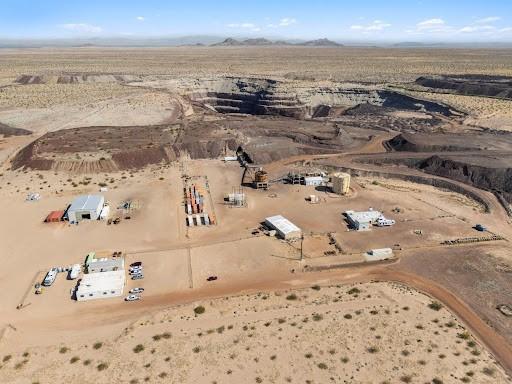
Table 1 – Copperstone PFS Highlights
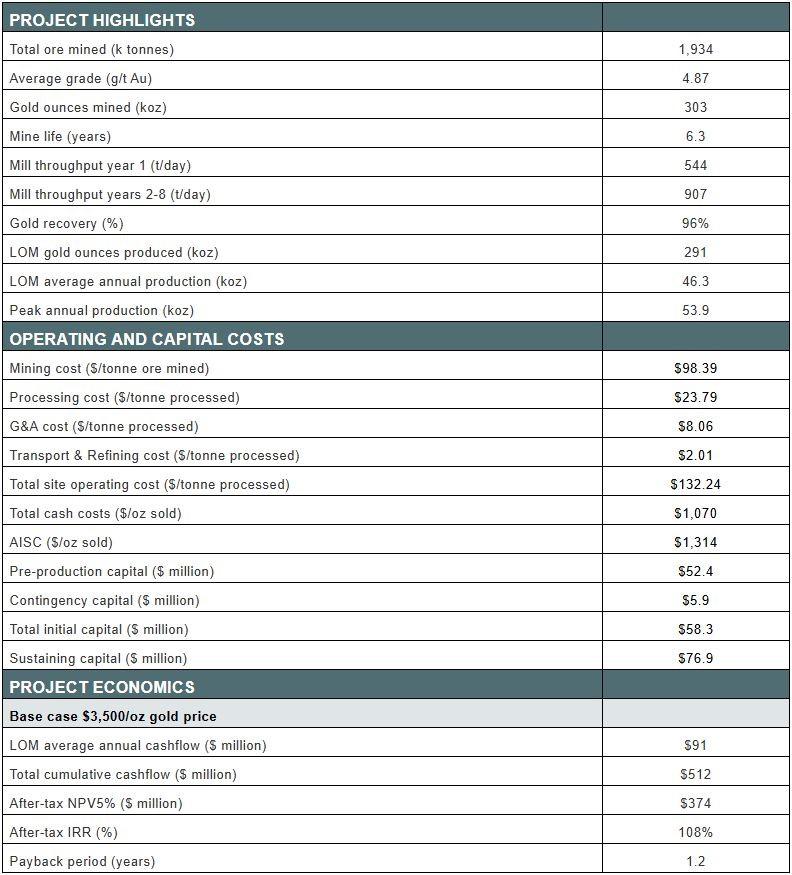
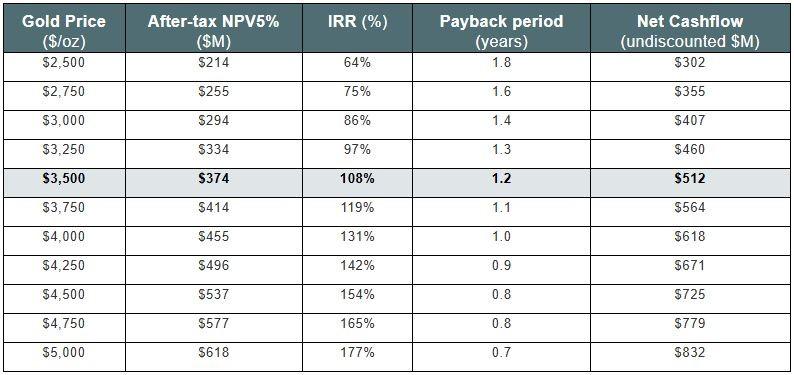
Table 2 – Copperstone PFS After-Tax Gold Price Sensitivity
Property Location, Access, and Infrastructure
The Copperstone property is located 125 miles west of Phoenix, Arizona and is accessed via Interstate I-10 to the town of Quartzsite, Arizona. The site access road is located about 9 miles north of Quartzsite along US Highway 95. The access road is a well-maintained gravel road, the Cyprus Mine Road, that travels west for 5.5 miles to the project site.
The Project is situated on the flat, sandy desert terrain of the La Posa Plain, at the northeastern end of the Dome Rock Mountains, and is surrounded by a natural desert scrub environment. Major supply centres and ample skilled and unskilled labour are available locally, in Phoenix and in Yuma. Access to the Sante Fe rail line is available nearby, and international air service and railway access are both available in Phoenix.
The project benefits from the presence of significant existing operations infrastructure including power distribution, buildings, roads, tailings storage facility, water rights, and part of the process facility.
Updated Mineral Resource Estimate
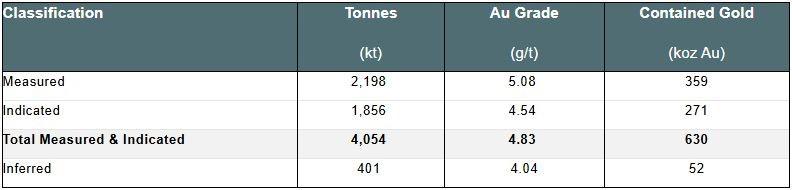
The Copperstone mineral resource estimate (“MRE”) is presented in Table 3 below.
The MRE is reported at an underground mining cut-off of 0.064 oz/ton gold (2.2 g/t Au). Resources were estimated using an inverse-distance-squared methodology within an overall indicator-kriged model boundary to approximately delineate the boundary between mineralized and unmineralized material. After the block grade estimations were complete, Deswik Stope Optimizer was used as a guide to generate mineralized zones based on $3,000/oz gold price and minimum mining widths and economic parameters consistent with the type of mineral system present at Copperstone. This Resource is considered by the author to have reasonable prospects for eventual economic extraction.
Table 3 – Copperstone Mineral Resource estimate, effective December 1, 2025
Notes to Mineral Resource estimate:
Scott Zelligan, P. Geo. is responsible for reviewing and approving the Copperstone mine underground Mineral Resource Estimate. Mr. Zelligan is a Qualified Person (“QP”) as set out in NI 43-101
Mineral Reserve Estimate
The mineral reserves for the Copperstone underground gold project are estimated in accordance with the CIM Definition Standards. Measured mineral Resources are converted to Proven Reserves, while Indicated mineral Resources are converted to Probable Reserves. Inferred Resources are excluded from the reserve calculation and are treated as waste.
Table 4 – Copperstone Mineral Reserve estimate, effective December 1, 2025
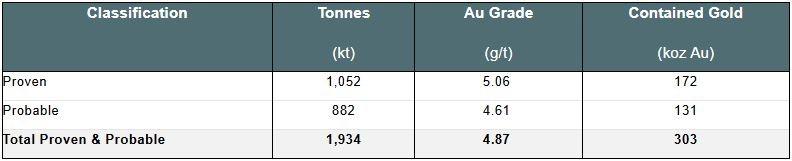
Notes to Mineral Reserve estimate:
Peter Szkilnyk, P.Eng., is responsible for reviewing and approving the Copperstone mine underground Mineral Reserve Estimate. Mr. Szkilnyk is a Qualified Person (“QP”) as set out in the NI 43-101.
Mine Design and Production Profile
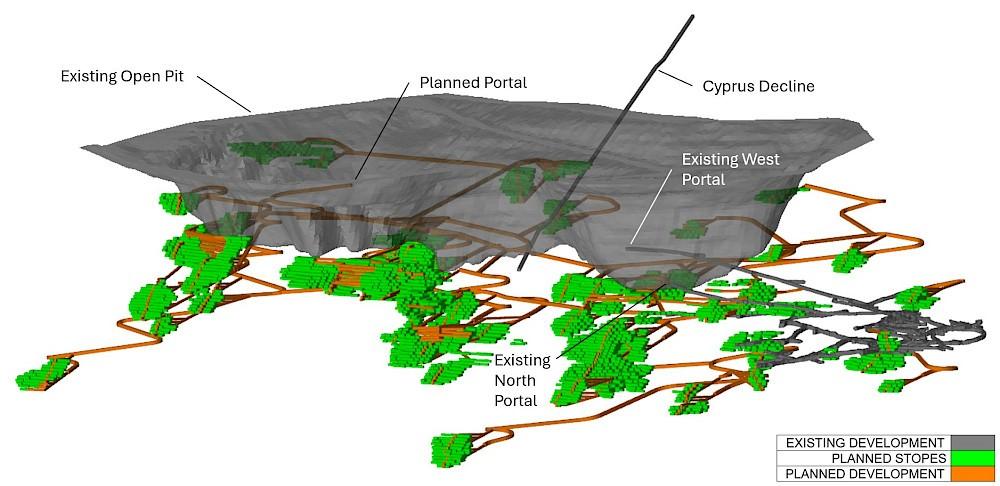
The proposed mining method for the Copperstone Project is an overhand mechanized cut-and-fill approach utilizing cemented rock fill. This method was selected for its flexibility in efficiently extracting ore from zones with low vein dip angles. It also helps minimize dilution through precise geological control and disciplined mining practices. Underground mining methods were evaluated with the objectives of minimizing dilution, capital and operating costs, and maximizing resource recovery while sustaining the planned mill throughput. The Copperstone mineralization is relatively shallow, with an average dip of approximately 38 degrees. Although certain zones exceed a 45-degree dip and can be mined using gravity-assisted methods, most of the deposit is too flat to be efficiently mined using long hole stoping.
Figure 2 – Copperstone PFS LOM Plan Tonnes and Grade
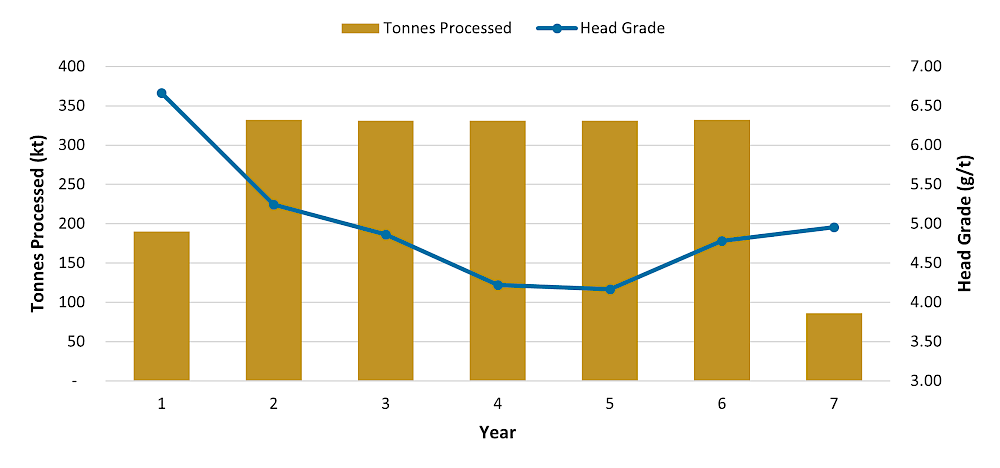
Figure 3 – Copperstone PFS LOM Plan Production
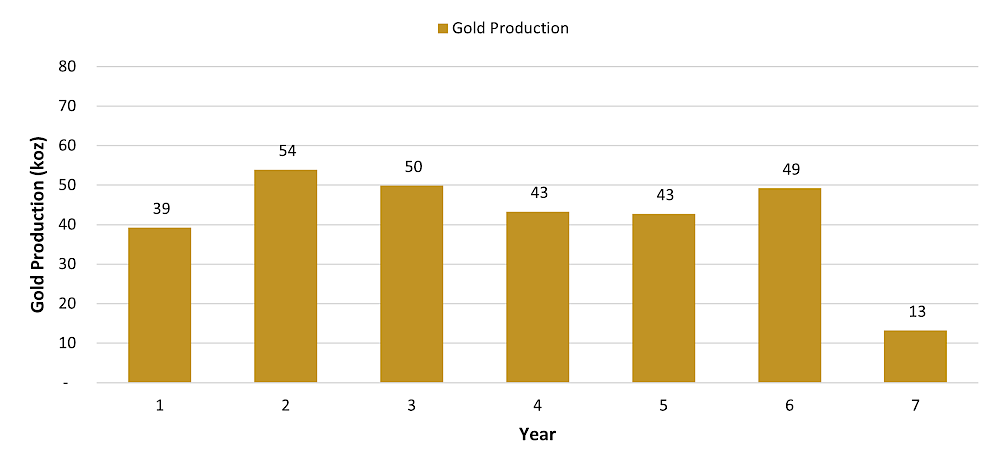
Figure 4 – Copperstone Underground Mine Design (looking southwest)
Process Plant Design
The proposed flowsheet will incorporate crushing, grinding, flotation, and cyanide leaching circuits to produce a gold concentrate and gold-loaded carbon products. The saleable gold concentrate will be shipped to a port on the west coast for shipping to a refinery, while the loaded carbon will be transported to the Company’s Pan mine processing facility for further processing (refining). The “hybrid” process was selected to provide maximum flexibility to maintain overall high gold recoveries regardless of fluctuations in the mineralization recovered from the mine.
The process plant is designed wherever possible to maximize the use of existing plant infrastructure and equipment, including the primary and secondary crushers, screens, ore bin conveyors, laboratory, and electrical distribution systems. The plant has been designed with an anticipated availability of 92% and projected overall gold recovery of approximately 96%. Initial effective processing capacity is expected to be 544 tpd (600 stpd) during the first year of operations, increasing to 907 tpd (1,000 stpd) from the second year onward.
Tailings Storage Facility
Part of the existing infrastructure at the Copperstone project is a previously constructed and permitted tailings storage facility (“TSF”). Based on current production rate assumptions used in the PFS, the existing TSF is estimated to provide approximately 1.5 years of tailings storage capacity. The Company has planned a TSF expansion to accommodate production beginning late in year 1 of operations, with an additional lift planned later in the mine life. These planned expansions are already considered in the TSF permits for the project.
Operating Cost Estimates
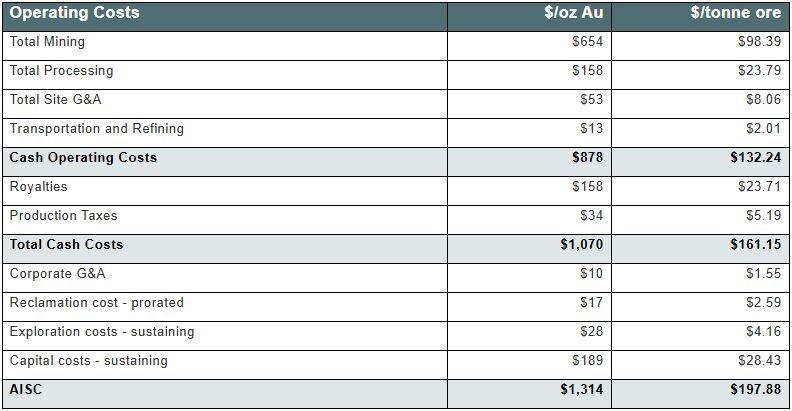
The operating costs include the ongoing cost of operations related to mining, processing, tailings disposal, and general administration activities. The operating costs were determined based on the Company’s in-house database of projects and studies, budgetary mining contractor quotes and data/estimates provided by GR Engineering Services Inc. LOM average costs are summarized in the table below.
Table 5 – Operating Cost Summary
Capital Cost Estimates
The basis of the PFS capital cost estimate included capacity sufficient for an expansion in processing throughput up to 1,000 stpd after the initial production startup.
Cost estimates are based on the Company’s in-house database of operations, projects, and prior studies, as well as budgetary quotations from mining contractor and mine equipment suppliers. GRES prepared the capital estimates for the re-build of the process plant. Apart from the primary grinding mill, process plant estimates are based on new equipment pricing. However, the Company intends to utilize a combination of new and refurbished equipment to optimize capital costs while minimizing the risk of cost overruns.
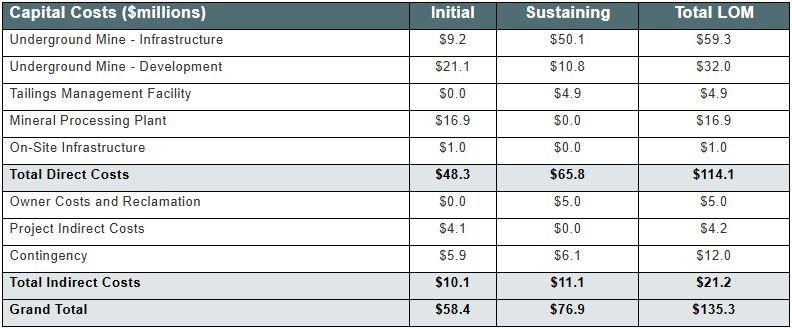
Pre-production capital includes mine refurbishment and underground development activities, including the establishment of a planned three-month ore stockpile to support smooth commissioning and ramp-up of the new milling complex. Two planned phases of expansions of the tailings facility have been accounted for in the sustaining capital period.
A summary of the initial and sustaining capital costs over the LOM are shown below.
Table 6 – Capital Cost Summary
Construction Decision and Next Steps
As a result of the Copperstone PFS results showing a robust, high-return underground gold project, the Company’s Board of Directors has made a positive formal construction decision. The construction period is expected to last approximately one year, with initial production anticipated by mid-2027.
Pre-construction activities commenced earlier this year, with select major process plant components having been delivered to the project site in recent weeks. Mobilization of an underground mining contractor is expected to occur in the coming 2-3 months. Benefitting from over 4 km of existing underground development, the overall goals for underground work this year will be to rehabilitate areas where required, access new stoping areas, and establish all underground infrastructure required for mining operations.
Recommendations
Non-IFRS Measures. This news release refers to certain financial measures, such as cash costs and all-in-sustaining costs, which are not measures recognized under IFRS and do not have a standardized meaning prescribed by IFRS. These measures may differ from those used by other companies and, accordingly, may not be comparable to such measures as reported by other companies. These measures have been derived from the Company’s financial statements because the Company believes that they are of assistance in understanding the results of operations and its financial position. Certain additional disclosures for these specified financial measures have been incorporated by reference and can be found in the Company’s MD&A, available on SEDAR+.
Total cash costs. The Company uses total cash costs per gold ounce sold to monitor its operating performance internally. The most directly comparable measure prepared in accordance with IFRS is cost of sales. The Company believes this measure provides investors and analysts with useful information about its underlying total cash costs of operations. The Company also believes it is a relevant metric used to understand its operating profitability and ability to generate cash flow. Total cash costs are measures developed by metals companies in an effort to provide a comparable standard; however, there can be no assurance that the Company’s reporting of these non-GAAP financial measures are similar to those reported by other mining companies. They are widely reported in the metals mining industry as a benchmark for performance, but do not have a standardized meaning and are disclosed in addition to IFRS measures. Total cash costs include production costs, refinery and transportation costs, royalties and production taxes. Total cash costs exclude non-cash depreciation and depletion and site share-based compensation. Production costs include mining, crushing, processing, and direct overhead at the operation sites.
AISC. AISC more fully defines the total costs associated with producing precious metals. The AISC is calculated based on guidelines published by the World Gold Council (WGC), which were first issued in 2013. In light of new accounting standards and to support further consistency of application, the WGC published an updated Guidance Note in 2018. Other companies may calculate this measure differently because of differences in underlying principles and policies applied. Differences may also arise due to a different definition of sustaining versus growth capital. Note that in respect of AISC metrics within the technical reports, because such economics are disclosed at the project level, corporate general and administrative expenses were not included in the AISC calculations. AISC per ounce includes mining, processing, direct overhead, reclamation and sustaining capital.
Qualified Persons and NI 43-101 Technical Report
The scientific and technical information contained in this news release has been reviewed and approved by Darren Koningen, P.Eng., President and COO of the Company, who is a “Qualified Person” as defined under National Instrument 43-101 – Standards of Disclosure for Mineral Projects (“NI 43-101”). Mr. Koningen is not considered independent within the meaning of NI 43-101.
The Copperstone PFS referenced in this news release was prepared by the Company with contributions from, and review by, Independent Qualified Persons as defined by NI 43-101. The PFS will be supported by a NI 43-101 technical report, which the Company expects to file under its profile on SEDAR+ and on the Company’s website within 45 days of the date of this news release.
The following independent Qualified Persons were responsible for preparing or supervising the preparation of the scientific and technical information contained in the Copperstone Project technical report and have reviewed and approved the corresponding disclosure contained in this news release:
The Qualified Persons have verified the data disclosed herein in accordance with industry-standard practices and have determined that the data, assumptions, and methodologies used are appropriate for the purposes of the technical report and this news release. A description of the data verification procedures and quality assurance/quality control measures will be included in the applicable sections of the NI 43-101 technical report.
Cautionary Note to U.S. Investors Regarding Mineral Resources and Mineral Reserves
Mineral Resources that are not Mineral Reserves do not have demonstrated economic viability, and U.S. investors are cautioned that terms such as “Measured,” “Indicated” and “Inferred Mineral Resource” are recognized and required by Canadian regulations but may not be comparable to similar terms used in U.S. reporting standards.
About Minera Alamos
Minera Alamos is a growing North American gold production and development company with projects in Nevada, Arizona, and Mexico. The Company owns the Pan Operating Complex in White Pine County, Nevada, comprised of the producing Pan mine and the adjacent permitted Gold Rock project, as well as the nearby past-producing Illipah project.
The Company also owns the Copperstone project in La Paz County, Arizona, a permitted, advanced underground gold project. The Company maintains a portfolio of high-quality Mexican assets, including the Cerro de Oro project, an open pit heap leach gold development project in northern Zacatecas.
The Company’s strategy is to become a leading, U.S.-focused intermediate gold producer by growing production at its Pan Operating Complex and developing its pipeline of high-quality, low-capital projects while expanding gold resources across its portfolio.
The Company announced a proposed name change to Mining Americas Inc., subject to the approval of its shareholders at the Company’s Annual General Meeting to be held on June 25, 2026 and the TSX Venture Exchange. Refer to the Company’s news release dated May 11, 2026 for more details.
Scandium Canada Ltd. (TSX-V: SCD) is pleased to announce additional assay results from the 2... READ MORE
Search Minerals Inc. (TSX-V: SMY) (OTC Pink: SHCMF) is pleased to announce that it has closed the th... READ MORE
Golden Spike Resources Corp. (CSE: GLDS) (OTCQB: GSPRF) (FSE: L5Y) is pleased to announce the... READ MORE
GoldHaven Resources Corp. (CSE: GOH) (OTCQB: GHVNF) (FSE: 4QS) is pleased to announce that it has cl... READ MORE
Independence Gold Corp. (TSX-V: IGO) (OTCQB: IEGCF) (FSE: 625) is pleased to announce assay r... READ MORE